Introduction
The professional beauty market is entering a new stage of technology-driven growth. In 2026, aesthetic clinics, medspas, dermatology practices, and professional beauty salons are looking beyond individual devices. They are increasingly evaluating how technology can improve treatment precision, expand service menus, support personalized care, and create a more efficient client experience.
This shift is particularly visible in non-invasive and energy-based aesthetics. Recent market research estimates that the global energy-based aesthetic devices market will reach approximately $8.1 billion in 2026, with radiofrequency, ultrasound, laser, and light-based technologies representing major categories. The broader non-invasive aesthetic treatment market is also expanding as clients continue to seek effective treatments with limited downtime.
For professional operators, however, the question is no longer simply, “Which machine is popular?” A better question is: Which technologies can help a clinic deliver consistent treatments, address different client concerns, and build a sustainable treatment portfolio?
Here are five aesthetic device trends shaping the professional beauty market in 2026.
1. AI-Powered Skin Analysis Is Making Consultations More Personalized
Artificial intelligence is becoming an important supporting technology in professional aesthetics.
Traditional consultations often rely on visual observation, client descriptions, photographs, and the operator's experience. While professional expertise remains essential, AI-assisted skin analysis can add a more standardized layer to the consultation process.
Modern skin analysis systems can use digital imaging and computer vision to evaluate visible characteristics such as wrinkles, pigmentation, pores, texture, redness, and other skin conditions. The information can then help professionals organize treatment priorities and track changes over multiple sessions.
The value of AI is not necessarily replacing the aesthetic professional. Instead, it can help turn a subjective consultation into a more structured process.
For example, a clinic may use digital skin analysis before beginning a treatment program. After several sessions involving LED therapy, RF, ultrasound, or other technologies, standardized images can be captured again. Comparing the data can make the treatment journey easier to explain to clients.
This creates an important commercial advantage: better consultation can lead to better communication.
AI-enabled analysis is also increasingly being discussed as a growth opportunity for aesthetic device manufacturers. Market research identifies AI-enabled imaging and skin analysis as an emerging direction for the aesthetics industry.
However, professional clinics should treat AI as a decision-support tool rather than an independent medical authority. Image quality, algorithm validation, data privacy, and regulatory requirements remain important considerations.
In 2026, the strongest approach is likely to be a combination of AI-assisted analysis + professional evaluation + appropriate device-based treatment.
2. Precision Energy Delivery Is Becoming the Core of Modern Aesthetic Equipment
The second major trend is the continued development of energy-based aesthetic technologies.
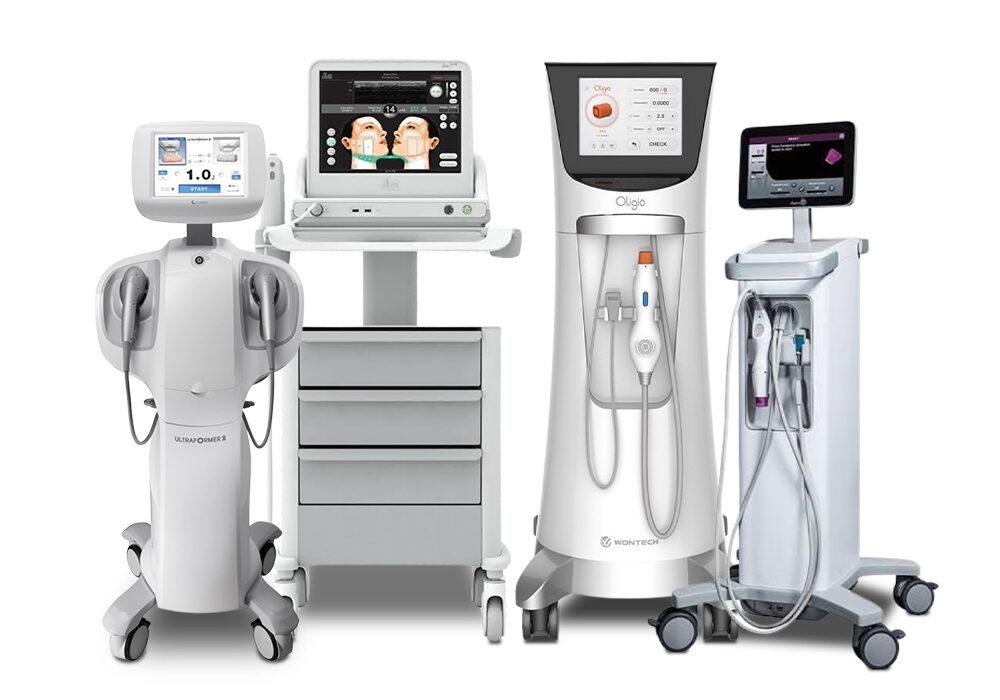
Radiofrequency (RF), ultrasound, HIFU, laser, IPL, LED, and related technologies work by delivering controlled forms of energy to targeted tissues or skin structures. Their applications can range from skin tightening and wrinkle care to hair reduction, pigmentation management, body contouring, and skin rejuvenation.
The technology itself is not new. What is changing is the industry's focus on precision, controllability, and treatment versatility.
For example, RF devices can use controlled electromagnetic energy to generate thermal effects in tissue. Depending on the system, energy can be delivered at different depths and with different treatment parameters. Ultrasound-based technologies use acoustic energy, while laser and light-based platforms rely on specific wavelengths and optical absorption characteristics.
For professional operators, precise energy control matters because treatment quality depends on more than simply having a powerful machine.
A professional device should ideally provide controllable parameters, appropriate applicators, stable energy output, ergonomic handpieces, and treatment protocols that can be adapted to different areas and client needs.
This is one reason energy-based platforms remain attractive to clinics. They can potentially support multiple treatment categories without requiring a completely new technology for every client concern.
Current market research continues to identify laser, light, RF, and ultrasound as major segments of the energy-based aesthetic device market.
The opportunity for manufacturers is therefore moving beyond “high power.” Buyers increasingly need controlled power, repeatability, usability, and application flexibility.
3. Multi-Function Platforms Are Helping Clinics Build Broader Treatment Menus
Another major trend in 2026 is the growing interest in multi-function aesthetic equipment.
For a professional beauty business, equipment is not simply a technical purchase. It is also a business investment.
A single-purpose machine may perform one treatment extremely well, but a multi-function platform can allow a clinic to combine several complementary services. Depending on the system, a platform may integrate functions such as RF, vacuum, cavitation, LED, ultrasound, EMS, or different facial treatment technologies.
This approach can be particularly attractive for growing salons, medspas, and clinics that want to expand their service menus without purchasing a completely separate machine for every treatment.
Consider a body treatment program. Vacuum technology may be used for mechanical stimulation, RF for controlled thermal treatment, and other modalities for complementary body-care applications. A multi-function platform can make it easier for operators to design a treatment menu around different client objectives.
The key, however, is not simply to add as many functions as possible.
Professional buyers should evaluate whether the functions are technically meaningful, whether each handpiece is practical, whether operating parameters are sufficiently adjustable, and whether the device can be incorporated into a clear treatment workflow.
The best multi-function machines are not necessarily those with the longest specification sheet. They are the ones that help a clinic serve more client needs without making the treatment process unnecessarily complicated.
This is also why multi-function equipment continues to attract attention among manufacturers and buyers entering the professional aesthetic market.
4. Non-Invasive Body Contouring Is Expanding Beyond Traditional Fat-Reduction Concepts
Body aesthetics is another important area of development.
Clients increasingly want body-contouring services that fit into busy lifestyles. Many are looking for treatments that do not require surgery and involve limited interruption to daily activities.
This demand is encouraging professional clinics to explore technologies such as cryolipolysis, RF, ultrasound, vacuum-based systems, EMS, and other energy-based body-contouring approaches.
The broader non-invasive aesthetic market is being supported by consumer interest in lower-downtime procedures and technological improvements in energy delivery.
Importantly, the modern body-contouring market is becoming less focused on a single promise such as “fat reduction.”
Clients may instead be interested in a combination of concerns:
- Body contouring
- Skin firmness
- The appearance of cellulite
- Localized body shaping
- Post-weight-loss appearance
- Overall body aesthetics
This creates opportunities for professional equipment that combines complementary technologies.
For example, a vacuum and RF platform may be positioned around body-care and skin-firming applications, while ultrasound or other modalities can serve different treatment objectives depending on the device design and applicable regulations.
Professional operators can also create structured treatment programs rather than selling isolated sessions. A consultation, baseline assessment, treatment course, progress monitoring, and maintenance plan can create a more complete client experience.
This shift from selling a machine to building a treatment program is one of the most commercially important developments for professional aesthetics.
5. Connected, Data-Driven Devices Are Becoming More Valuable to Professional Clinics
The fifth trend is the gradual movement toward smarter and more connected aesthetic equipment.
A modern professional device is increasingly expected to do more than generate energy. Operators also want intuitive interfaces, preset treatment parameters, usage records, maintenance information, and potentially connectivity with broader clinic workflows.
Data can become useful at several stages of the client journey.
Before treatment, consultation data can help professionals understand the client's concerns. During treatment, standardized parameters can help operators maintain consistency. After treatment, photographs and treatment records can help monitor progress.
For larger clinics and multi-location beauty businesses, this type of standardization becomes even more important.
Imagine two operators working in different treatment rooms. If both devices provide clear operating protocols, adjustable parameters, treatment records, and standardized workflows, the clinic has a better opportunity to deliver a consistent experience.
This is especially important as professional aesthetics becomes increasingly focused on measurable outcomes and repeatable treatment processes.
The same principle applies to device maintenance. Smart systems may eventually provide more detailed information about operating hours, component status, usage patterns, and service requirements.
The industry is therefore gradually moving from equipment as hardware toward equipment as part of a digital treatment ecosystem.
At the same time, manufacturers need to avoid using “smart” or “AI” as purely marketing language. Data security, validation, user training, and regulatory compliance must remain part of the product strategy.
Advantages: Why Professional Equipment Still Matters
These five trends share a common direction: professional aesthetics is becoming more precise, personalized, and technology-driven.
Compared with many consumer home-use devices, professional equipment can generally provide greater treatment flexibility, more sophisticated applicators, higher levels of parameter control, and workflows designed for repeated clinical or salon use.
Professional equipment also allows trained operators to evaluate the client's needs before selecting an appropriate modality.
For example, two clients may both request “skin tightening,” but their skin condition, treatment area, tolerance, and desired outcome may differ. A professional consultation can determine whether RF, ultrasound, LED, another modality, or a combination approach is more appropriate.
The value is therefore not only in the device itself. It lies in the combination of:
Professional operator + appropriate technology + controlled parameters + structured treatment protocol.
That combination is becoming increasingly important as clients become more informed and expect personalized experiences.
Applications: What These Trends Mean for Clinics and Clients
For professional beauty businesses, these trends create several practical opportunities.
Facial Aesthetics
AI-assisted skin analysis can support consultation and treatment planning, while RF, ultrasound, LED, and other energy-based devices can be incorporated into customized facial treatment programs.
Skin Tightening and Rejuvenation
RF and ultrasound technologies can be used in professional skin-care programs where controlled energy delivery is part of the treatment strategy.
Body Contouring
Vacuum, RF, ultrasound, EMS, and other body-focused technologies can support different body-care services, depending on device specifications, local regulations, and operator training.
Multi-Service MedSpas
Multi-function platforms can help businesses build broader treatment menus and create combinations of complementary services.
Premium Client Experience
Digital analysis, treatment records, standardized protocols, and progress photography can make the consultation and follow-up process more professional and measurable.
For manufacturers, this means product development should focus not only on technical specifications but also on workflow, ergonomics, training, reliability, customization, and after-sales support.
Conclusion
The professional beauty market in 2026 is not being shaped by one single breakthrough technology. Instead, it is being transformed by the combination of several developments.
AI is making consultations more data-driven. Energy-based technologies are becoming more precise and controllable. Multi-function platforms are helping businesses expand their treatment menus. Non-invasive body contouring continues to evolve around changing client expectations. And connected devices are gradually turning aesthetic equipment into part of a broader digital treatment workflow.
For clinics and beauty businesses, the most valuable device may not simply be the newest or most powerful machine. It is the technology that fits naturally into the business model, supports professional operators, addresses real client needs, and can be integrated into a repeatable treatment program.
For aesthetic device manufacturers, this creates a clear direction for product development: build equipment around professional applications, not specifications alone.
As the market continues to mature, successful aesthetic technology will increasingly be defined by precision, versatility, usability, and the ability to deliver a more personalized professional experience
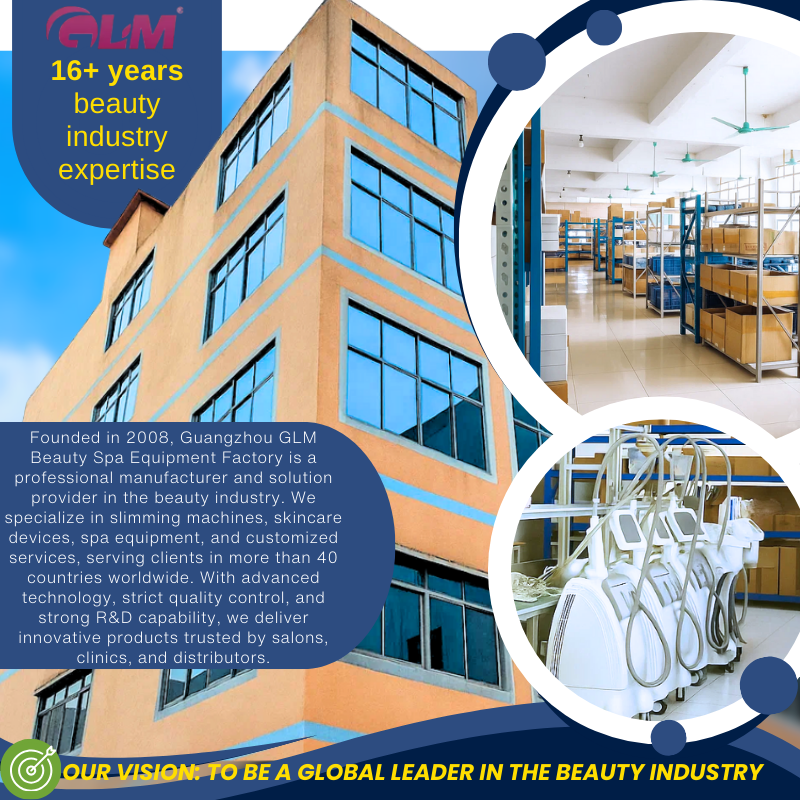
Founded in 2008, Guangzhou GLM Beauty Spa Equipment Factory specializes in research, development, manufacture and selling of beauty and slimming machines. Our production base is located in Guangzhou City, Guangdong Province, China. Since our foundation, we have introduced advanced technologies and equipment, to assure high quality and high performance of our products. With professional marketing guide and excellent after-sales service, our products have been exported to over 20 countries and regions, including Southeast Asia, the Middle East, Europe and the United States, won worldwide praises and gained a good reputation