Introduction
Radio Frequency (RF) and Electrical Muscle Stimulation (EMS) beauty devices have become increasingly popular among consumers seeking non-invasive ways to improve skin firmness, reduce the appearance of wrinkles, and maintain a youthful complexion. The convenience of performing treatments at home has made these devices attractive alternatives to frequent salon visits.
However, while home-use devices are designed with safety in mind, achieving professional-looking results requires more than simply following basic instructions. Many users unknowingly develop habits that reduce treatment effectiveness or even cause temporary skin irritation. As a result, they may conclude that RF or EMS technology "doesn't work," when in reality, the issue lies in improper application rather than the technology itself.
Professional aesthetic clinics understand that successful skin treatments rely on a combination of advanced technology, customized treatment protocols, and experienced operation. Home devices can serve as excellent maintenance tools between professional appointments, but understanding their limitations—and avoiding common mistakes—is essential for obtaining satisfying results.
In this article, we'll explain how RF and EMS technologies work, highlight five common mistakes users make at home, and discuss why professional beauty equipment continues to play an important role in comprehensive skin rejuvenation programs.
Background: Why More People Are Choosing Home Beauty Devices
The demand for non-invasive aesthetic treatments continues to grow worldwide. Consumers increasingly seek solutions that require little to no downtime while supporting healthier, younger-looking skin.
Several factors have accelerated the popularity of home-use RF and EMS devices:
- Growing awareness of preventive skincare.
- Increasing interest in anti-aging treatments before visible aging becomes severe.
- Flexible self-care routines that fit busy lifestyles.
- Improved accessibility of compact beauty technologies.
While these factors have expanded the home beauty market, they have also created unrealistic expectations. Many consumers expect immediate lifting effects after only one or two sessions, similar to promotional images they see online.
In reality, collagen remodeling, improved circulation, and muscle stimulation are gradual biological processes. Whether treatments are performed at home or in professional clinics, consistency and proper technique remain essential for achieving visible improvements.
Professional clinics recognize this principle by developing treatment plans based on skin analysis, treatment intervals, energy adjustment, and ongoing evaluation. Home users often skip these important steps, leading to disappointing outcomes.
Understanding RF and EMS Technology
Before discussing common mistakes, it's important to understand what these technologies actually do.
How Radio Frequency (RF) Works
Radio Frequency delivers controlled thermal energy into the deeper layers of the skin without damaging the epidermis.
The generated heat stimulates fibroblasts to produce new collagen and elastin, two structural proteins responsible for maintaining skin firmness, elasticity, and smoothness.
Potential benefits of properly performed RF treatments include:
- Improved skin firmness
- Reduced appearance of fine lines
- Better facial contour definition
- Enhanced skin texture
- Gradual collagen regeneration
Professional RF systems typically feature higher power output, precise temperature monitoring, multiple treatment modes, and specialized applicators for different facial and body areas. These capabilities allow practitioners to customize treatments according to skin thickness, treatment goals, and individual tolerance.
By comparison, home RF devices operate at significantly lower energy levels to prioritize user safety. While this reduces the risk of burns, it also means results generally require more sessions and greater consistency.
How EMS Works
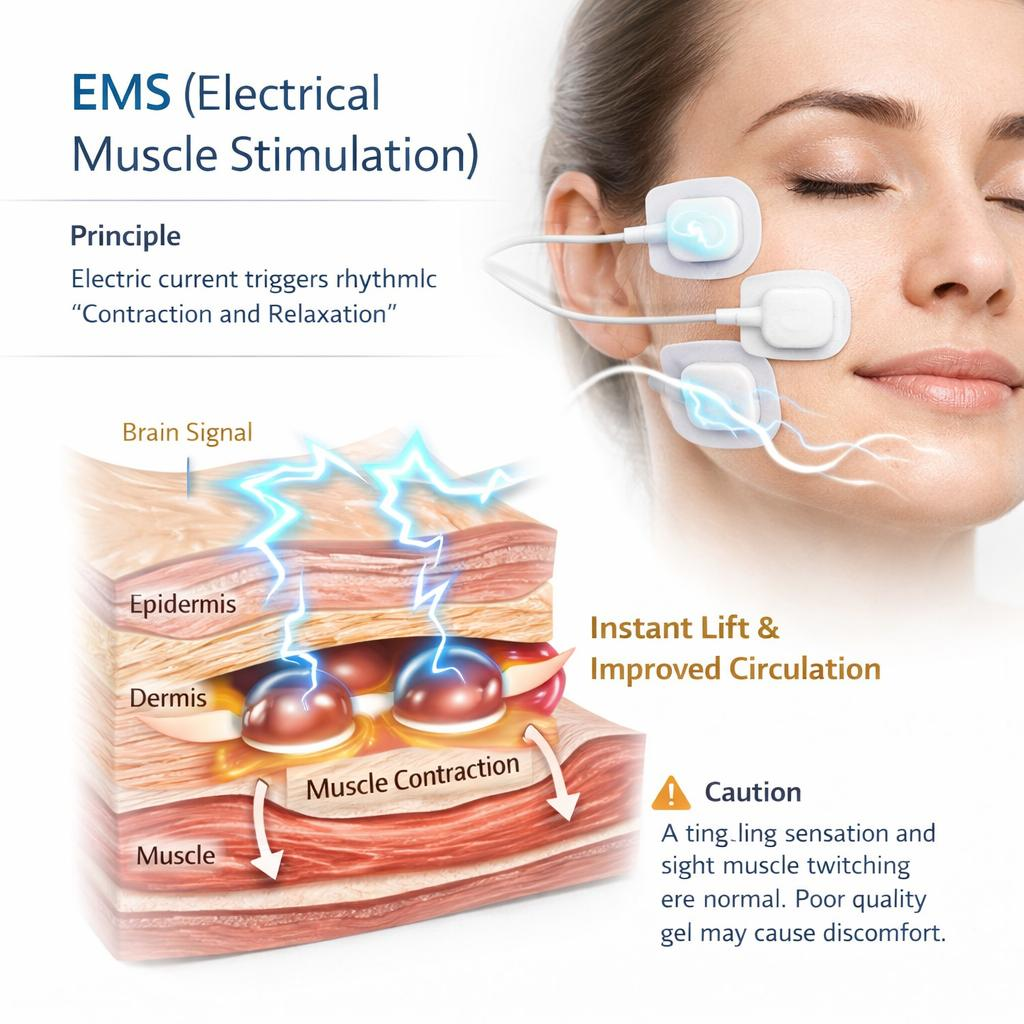
Electrical Muscle Stimulation uses gentle electrical impulses to activate facial or body muscles beneath the skin.
These controlled contractions help improve muscle engagement, potentially contributing to:
- Better facial muscle tone
- Improved jawline appearance
- Temporary lifting effects
- Enhanced circulation
- Support for overall facial rejuvenation routines
Unlike RF, EMS primarily targets muscles rather than collagen production. Because these technologies work through different biological mechanisms, many professional treatment protocols combine both RF and EMS to address multiple aspects of facial aging simultaneously.
Professional multi-function aesthetic platforms often integrate RF, EMS, LED therapy, ultrasound, electroporation, or microcurrent technologies into a single treatment system. This allows practitioners to personalize treatments according to different skin conditions instead of relying on one technology alone.
Why Professional Treatment Protocols Produce More Consistent Results
Technology alone does not determine treatment success.
Professional operators evaluate multiple factors before selecting treatment parameters, including:
- Skin sensitivity
- Age-related concerns
- Hydration level
- Facial anatomy
- Treatment history
- Contraindications
Energy settings, treatment duration, movement speed, treatment sequence, and post-treatment care are all adjusted based on individual needs.
Home devices simplify these variables for safety and convenience. While this makes them easier to use, it also limits customization and treatment intensity, making correct operation even more important
5 Mistakes to Avoid When Using RF or EMS Devices at Home
Understanding how RF and EMS technologies work is only the first step. To achieve consistent, visible improvements, proper technique matters just as much as the device itself. Below are five of the most common mistakes professionals see among home users—and how to avoid them.
Mistake #1: Using the Device Too Frequently
One of the biggest misconceptions is that more treatments automatically produce faster results. In reality, skin and underlying tissues need time to respond to stimulation.
RF treatments work by triggering a natural healing response that encourages collagen remodeling. This process continues for days or even weeks after a session. Performing treatments too frequently does not accelerate collagen production and may instead lead to temporary redness, sensitivity, or discomfort.
Similarly, EMS stimulates muscle contractions. Just like skeletal muscles, facial muscles also benefit from adequate recovery time. Excessive stimulation may reduce comfort without improving outcomes.
Professional practitioners carefully schedule treatment intervals based on skin condition, treatment goals, and device specifications. Rather than recommending daily high-intensity sessions, they typically create treatment plans that allow the skin to recover while gradually building results.
For home users, following the manufacturer's recommended treatment schedule is usually the safest and most effective approach.
Mistake #2: Skipping Conductive Gel or Using the Wrong Products
Many first-time users underestimate the importance of conductive gels.
For RF devices, conductive gels help improve energy transmission while maintaining smooth contact between the applicator and the skin. They also reduce friction and help distribute heat more evenly across the treatment area.
For EMS devices, conductivity is even more critical because electrical impulses require efficient contact with the skin to reach the targeted muscles comfortably.
Using unsuitable skincare products instead of conductive gel may reduce treatment efficiency or interfere with energy delivery. Thick creams, oils, or products containing active acids can also increase the likelihood of irritation.
Professional clinics typically use medical-grade conductive gels formulated specifically for energy-based treatments. These products are selected to optimize performance while supporting skin comfort throughout the procedure.
Choosing compatible products at home can significantly improve both treatment comfort and consistency.
Mistake #3: Holding the Device in One Spot for Too Long
Another common mistake is moving the device too slowly—or not moving it at all.
RF technology generates heat beneath the skin. If the applicator remains in one location for an extended period, localized heat may accumulate unnecessarily, increasing the chance of temporary discomfort or redness.
Professional operators are trained to maintain continuous movement using controlled patterns such as circular motions, lifting strokes, or overlapping passes. These techniques help distribute energy evenly while treating the entire target area.
Likewise, EMS devices should be positioned according to facial muscle anatomy. Incorrect placement may reduce treatment effectiveness because the intended muscles are not being properly stimulated.
Modern professional systems often include real-time temperature monitoring, intelligent energy control, and customized treatment modes to maintain consistent energy delivery across different facial regions. These features reduce operator variability and contribute to more predictable clinical outcomes.
Although home devices are designed with lower output levels for safety, proper movement techniques remain essential for achieving the best possible results.
Mistake #4: Expecting Immediate or Dramatic Results
Consumers are often influenced by social media videos that appear to show dramatic lifting effects after a single treatment.
While mild temporary tightening may occur due to tissue hydration or muscle activation, meaningful improvements in collagen structure develop gradually.
Collagen synthesis is a biological process that takes time. Most users begin noticing progressive improvements after several weeks of consistent treatment, while more significant changes typically require multiple sessions combined with good skincare habits.
Professional clinics manage expectations by explaining treatment timelines before beginning a program. They often combine RF or EMS with complementary technologies—such as LED light therapy, ultrasound, electroporation, or specialized skincare—to maximize overall outcomes.
This comprehensive approach addresses multiple skin concerns simultaneously, including hydration, elasticity, circulation, and collagen stimulation.
Home users should view RF and EMS devices as part of a long-term skincare routine rather than expecting overnight transformation.
Mistake #5: Choosing the Wrong Device for the Wrong Concern
Not every skin concern responds equally to every technology.
For example:
| Concern | Most Suitable Technology |
|---|---|
| Mild skin laxity | RF |
| Reduced facial muscle tone | EMS |
| Fine lines | RF |
| Muscle definition | EMS |
| Overall rejuvenation | Combination treatments |
Some consumers purchase devices based solely on online popularity without understanding what each technology is designed to achieve.
Professional consultations typically begin with a detailed skin assessment before recommending an appropriate treatment plan. Factors such as age, skin quality, facial anatomy, treatment history, and aesthetic goals all influence technology selection.
Professional aesthetic platforms offer additional flexibility because they integrate multiple technologies into one system. Instead of relying on a single treatment modality, practitioners can combine RF, EMS, ultrasound, LED therapy, vacuum therapy, or electroporation to address complex skin conditions more comprehensively.
This multi-technology approach often delivers more balanced and individualized results than relying on one standalone home device.
Why Professional Treatments Still Offer Distinct Advantages
Home beauty devices provide convenience and can support regular skincare maintenance. However, professional aesthetic treatments continue to offer several important advantages that are difficult to replicate at home.
Higher Energy with Greater Precision
Professional RF and EMS systems are engineered to deliver stronger, more consistent energy while incorporating advanced safety features such as temperature monitoring, intelligent power adjustment, and multiple treatment protocols. This allows practitioners to target deeper tissues more effectively without compromising patient comfort.
Customized Treatment Plans
Every individual's skin condition is different. Professional operators evaluate factors such as skin thickness, elasticity, sensitivity, age, and treatment goals before selecting the appropriate technology, treatment intensity, and session frequency.
Rather than using a one-size-fits-all approach, clinics can tailor treatments to achieve more predictable outcomes.
Combination Therapies
Modern aesthetic practices rarely rely on a single technology. A treatment plan may combine RF for collagen stimulation, EMS for muscle toning, LED therapy to support skin recovery, and electroporation to enhance the absorption of active ingredients.
This integrated strategy enables practitioners to address multiple concerns during the same treatment course, often improving both efficiency and patient satisfaction
Applications: Who Can Benefit from RF and EMS Treatments?
RF and EMS technologies are suitable for a wide range of aesthetic applications when selected appropriately and performed according to professional guidelines.
Individuals Beginning Preventive Anti-Aging Care
Many people now start anti-aging treatments in their late twenties or early thirties rather than waiting for visible signs of aging to become pronounced. Regular RF treatments can help support collagen production, while EMS may assist in maintaining facial muscle tone as part of a proactive skincare routine.
Clients with Mild to Moderate Skin Laxity
For individuals experiencing early skin laxity around the cheeks, jawline, neck, or forehead, RF-based treatments may help improve skin firmness over time. EMS can complement these treatments by stimulating underlying facial muscles to enhance facial contours.
Beauty Clinics Expanding Their Service Portfolio
Professional salons, medi-spas, and aesthetic clinics increasingly invest in multifunctional beauty platforms that combine RF, EMS, ultrasound, LED therapy, electroporation, and other technologies. These systems allow practitioners to customize treatment plans for different skin concerns while maximizing equipment utilization and return on investment.
Compared with single-function devices, multifunction systems offer greater flexibility, improve treatment efficiency, and enable clinics to provide more comprehensive non-invasive facial rejuvenation programs.
Home Users Seeking Long-Term Maintenance
For consumers who have already completed professional treatment programs, home RF or EMS devices can serve as valuable maintenance tools. Regular use between clinic visits may help extend treatment results when combined with appropriate skincare products and healthy lifestyle habits.
Rather than replacing professional procedures, home devices work best as part of a broader skin management strategy that includes expert assessment, customized treatments, and ongoing maintenance.
Conclusion
RF and EMS technologies have transformed the landscape of non-invasive aesthetic treatments by providing effective options for improving skin firmness, facial contours, and overall skin appearance without surgery.
However, even the most advanced technology delivers its best results only when used correctly. Avoiding common mistakes—such as overusing the device, skipping conductive gel, remaining in one area for too long, expecting immediate results, or selecting the wrong technology—can significantly improve both safety and treatment outcomes.
Home beauty devices offer convenience and are excellent for routine maintenance, but they are designed with lower energy levels and standardized settings to prioritize user safety. Professional aesthetic equipment, operated by trained practitioners, provides higher precision, greater treatment flexibility, and the ability to combine multiple technologies for more personalized care.
As consumer demand for non-invasive beauty solutions continues to grow, the future of skin rejuvenation will likely involve a balanced approach: professional treatments for targeted, high-performance results, supported by home maintenance routines that reinforce long-term skin health.
Whether you are a skincare enthusiast, a beauty clinic owner, or a distributor exploring advanced aesthetic equipment, understanding the strengths and limitations of both home and professional devices is essential for achieving safe, effective, and lasting results
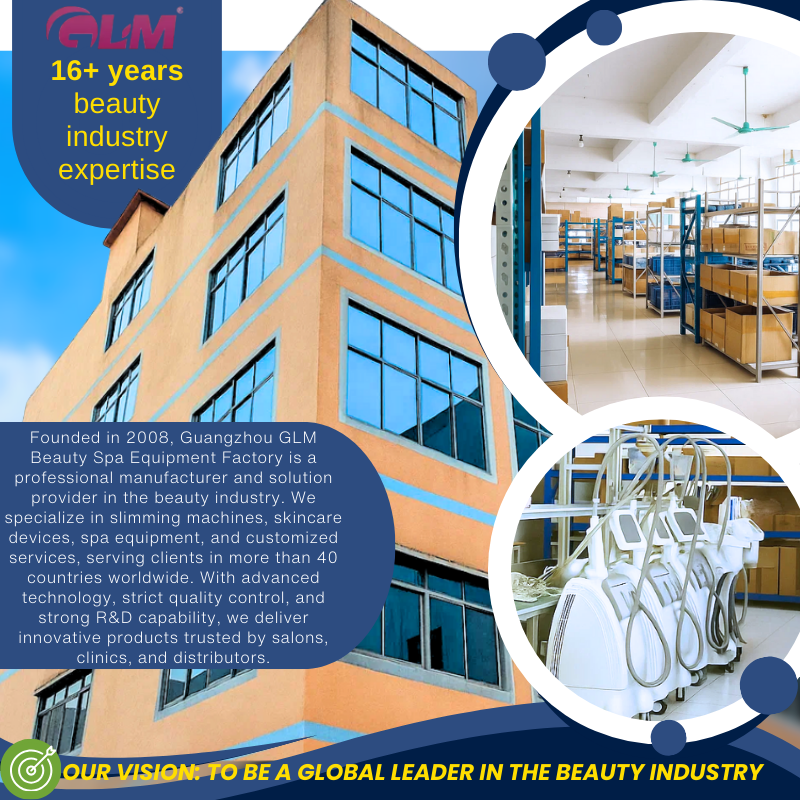
Founded in 2008, Guangzhou GLM Beauty Spa Equipment Factory specializes in research, development, manufacture and selling of beauty and slimming machines. Our production base is located in Guangzhou City, Guangdong Province, China. Since our foundation, we have introduced advanced technologies and equipment, to assure high quality and high performance of our products. With professional marketing guide and excellent after-sales service, our products have been exported to over 20 countries and regions, including Southeast Asia, the Middle East, Europe and the United States, won worldwide praises and gained a good reputation