Introduction
Laser hair removal has evolved significantly as professional aesthetic technology continues to advance. Among the most important developments is the use of multiple laser wavelengths in a single professional system. Instead of relying on one wavelength for every client and treatment area, modern diode laser platforms can combine 755nm, 808nm, and 1064nm wavelengths to provide a more versatile approach to hair reduction.
But what actually makes these three wavelengths different?
For beauty clinics, aesthetic centers, and professional salons, understanding the differences between 755nm, 808nm, and 1064nm is more than a technical exercise. Wavelength selection can influence how laser energy interacts with melanin, how deeply the energy penetrates, and which treatment areas or hair characteristics may be more suitable for a particular setting.
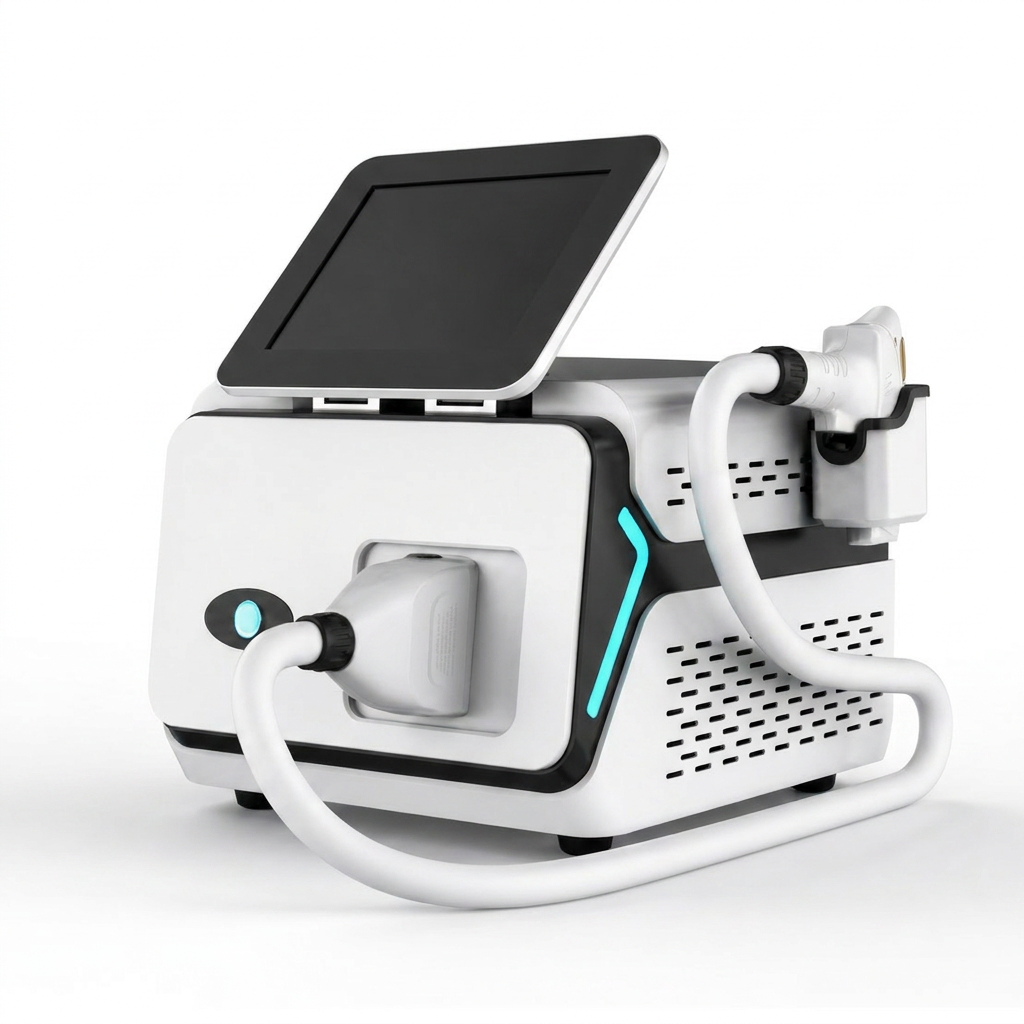
A triple wavelength diode laser system brings these options together in one professional platform. This can simplify treatment planning, improve operational flexibility, and help practitioners accommodate a wider range of client needs.
Background: Why Does Laser Wavelength Matter?
Laser hair removal works by delivering controlled optical energy toward the hair follicle. The primary target is melanin within the hair structure. When the appropriate laser energy is absorbed, it is converted into heat, which can damage the follicular structures responsible for hair growth.
However, not all hair or skin responds to laser energy in exactly the same way.
Hair thickness, hair color, skin tone, follicle depth, and treatment area can all affect how efficiently laser energy reaches its target. A wavelength that performs well for one client or body area may not necessarily be the most appropriate choice for another.
This is one reason wavelength selection matters in professional aesthetic practice.
The three commonly integrated wavelengths—755nm, 808nm, and 1064nm—occupy different positions in the optical spectrum. Their penetration characteristics and interaction with melanin vary, giving practitioners different tools for different treatment scenarios.
Rather than thinking of one wavelength as universally “better,” it is more useful to understand the strengths of each wavelength and how a multi-wavelength system can expand treatment versatility.
Technology & Mechanism: How Do 755nm, 808nm, and 1064nm Work?
755nm: Precise Energy Interaction
The 755nm wavelength is commonly associated with strong melanin absorption and relatively superficial energy delivery.
Because melanin absorbs this wavelength efficiently, 755nm can be particularly useful when targeting finer or lighter hair that still contains sufficient pigment. It is often considered a valuable option for areas where precision is important.
For professional operators, this can make 755nm useful for treatment planning involving smaller or more delicate areas, depending on the client's skin and hair characteristics.
However, stronger melanin absorption also means that treatment parameters must be selected carefully. Professional systems typically provide adjustable settings so trained operators can select appropriate energy, pulse duration, and repetition parameters based on the individual treatment scenario.
808nm: The Professional Workhorse
The 808nm wavelength is one of the most widely recognized wavelengths in diode laser hair removal.
It offers a practical balance between melanin absorption and penetration depth, making it suitable for a broad range of professional hair removal applications. This versatility is one reason 808nm has become a familiar wavelength in clinics and salons.
For larger treatment areas such as the legs, arms, back, chest, or other body areas, 808nm can provide an efficient option when used with appropriate professional protocols.
From an operational perspective, its versatility can also make it a core wavelength for clinics that perform hair reduction on a wide range of clients.
1064nm: Deeper Penetration
Compared with shorter wavelengths, 1064nm generally penetrates deeper into tissue and has lower melanin absorption.
This characteristic makes 1064nm particularly valuable when treatment planning needs to consider deeper hair follicles or clients with higher levels of epidermal melanin.
For professional operators, this can provide an additional treatment option when working across different skin tones and hair characteristics.
The key point is that 1064nm should not simply be viewed as a “stronger” version of 755nm or 808nm. It behaves differently because its interaction with tissue is different. Professional treatment therefore depends on appropriate parameter selection rather than simply increasing energy.
755nm vs 808nm vs 1064nm: Key Differences
Understanding the three wavelengths becomes easier when comparing their general characteristics.
| Wavelength | General Characteristic | Typical Professional Consideration |
|---|---|---|
| 755nm | Higher melanin absorption, more superficial interaction | Fine or lighter pigmented hair and precision-focused areas |
| 808nm | Balanced absorption and penetration | Versatile option for many common body hair treatments |
| 1064nm | Deeper penetration, lower melanin absorption | Deeper follicles and treatment planning for higher-melanin skin |
These descriptions should not be interpreted as fixed treatment rules. Actual suitability depends on the client's skin type, hair characteristics, treatment area, device specifications, and the parameters selected by a trained professional.
The main advantage of combining all three wavelengths is therefore flexibility.
A single-wavelength system may require practitioners to work within a narrower range of treatment scenarios. A triple wavelength platform can provide additional options without requiring the clinic to purchase several separate laser systems.
Why Triple Wavelength Technology Is Valuable for Professional Clinics
For a professional beauty business, equipment value is not determined only by the technical specifications on a product sheet. Practical versatility, workflow efficiency, client coverage, and equipment utilization also matter.
A triple wavelength diode laser platform can provide several operational advantages.
1. Broader Client Coverage
Professional clinics may serve clients with significantly different skin tones, hair thicknesses, and treatment requirements.
A multi-wavelength platform gives operators more flexibility when developing individualized treatment protocols. Instead of treating every client with the same wavelength, practitioners can select or combine wavelengths according to the characteristics of the treatment.
This supports a more personalized professional experience.
2. Multiple Treatment Areas
A clinic may perform facial hair reduction in the morning and larger body treatments later in the day.
Different areas can have different hair density, thickness, follicle depth, and sensitivity. A multi-wavelength system allows operators to adapt their approach instead of relying on a single wavelength for every application.
This is particularly useful for businesses that want one platform to support a wider range of services.
3. Better Equipment Utilization
Purchasing separate systems for different wavelengths can increase equipment investment, floor space requirements, maintenance considerations, and operator training needs.
A triple wavelength system consolidates multiple wavelength capabilities into one platform.
For clinics with limited treatment rooms or businesses looking to maximize the utilization of each device, this can be commercially attractive.
4. More Professional Treatment Planning
Modern aesthetic treatments increasingly emphasize personalization.
Rather than presenting laser hair removal as a one-size-fits-all procedure, professional operators can assess skin tone, hair characteristics, treatment area, and client history before selecting an appropriate protocol.
The technology becomes a tool that supports professional decision-making.
Applications: Where Can Triple Wavelength Diode Lasers Be Used?
Triple wavelength diode laser platforms are commonly positioned for professional hair reduction applications across multiple areas.
Facial Hair
Areas such as the upper lip, chin, jawline, and sideburn region may contain hair with different thicknesses and growth patterns.
A multi-wavelength platform gives trained operators greater flexibility when selecting treatment parameters for different facial areas.
Because facial skin can be more sensitive and treatment areas are often smaller, accurate parameter selection and professional operation are particularly important.
Arms and Legs
Large body areas require efficient treatment workflows.
For professional salons and clinics, a diode laser system with appropriate spot sizes, cooling technology, and adjustable parameters can help make larger treatment areas more manageable.
The 808nm wavelength is often considered a practical option for many general body treatments, while the availability of 755nm and 1064nm adds flexibility for different client profiles.
Back and Chest
Male clients may present with thicker, denser hair and deeper follicles across areas such as the back and chest.
In these scenarios, wavelength selection and treatment parameters can become especially important. A multi-wavelength platform allows the practitioner to consider follicle depth and pigmentation rather than automatically applying one wavelength to every client.
Underarms and Bikini Areas
These areas can contain relatively coarse and dense hair, while surrounding skin may have greater pigmentation.
Professional systems that provide multiple wavelengths can give trained practitioners additional flexibility when determining suitable treatment settings.
Triple Wavelength vs. Single-Wavelength Systems
Single-wavelength diode laser systems can still provide effective professional solutions when their specifications and treatment protocols are appropriate.
However, their application range may be more limited.
A triple wavelength system essentially adds another level of treatment flexibility. Instead of asking, “Which clients can this wavelength treat?” the clinic can approach the question from a broader perspective: “Which wavelength or wavelength combination is most appropriate for this treatment scenario?”
This difference can be meaningful for businesses serving a diverse client base.
It can also simplify equipment planning. Rather than investing in multiple machines for different wavelength capabilities, a well-designed triple wavelength platform can consolidate several functions into one professional system.
For manufacturers and distributors, this makes triple wavelength technology particularly attractive as a versatile professional solution rather than simply another technical specification.
What Should Clinics Look for in a Triple Wavelength Laser?
Wavelengths are important, but they are not the only factors that determine the value of a professional laser system.
Clinics should also evaluate:
- Energy and pulse control: Adjustable parameters allow practitioners to customize treatments.
- Cooling technology: Effective skin cooling can improve treatment comfort and support consistent operation.
- Spot size: Appropriate spot sizes can influence treatment efficiency across different body areas.
- Handpiece ergonomics: Comfortable handling becomes increasingly important during high-volume treatments.
- User interface: Clear controls can simplify parameter adjustment and daily operation.
- System stability: Consistent energy output is important for professional treatment workflows.
- Maintenance and service: Reliable after-sales support can influence the long-term operating cost of equipment.
- Training and protocols: Professional training is essential for appropriate wavelength and parameter selection.
In other words, three wavelengths alone do not automatically create a superior device. The value comes from how effectively the entire system integrates wavelength technology, energy control, cooling, ergonomics, and professional workflow.
Meeting Different Client Needs with One Professional Platform
One of the strongest advantages of triple wavelength technology is its ability to support individualized treatment strategies.
Consider a clinic that serves several different clients. One may have relatively fine facial hair, another may have coarse body hair, while another may have a darker skin tone requiring particularly careful treatment planning.
Using a single wavelength for all three situations may not provide the same level of flexibility.
A 755nm, 808nm, and 1064nm platform gives the operator more tools to work with.
This does not mean that every client needs all three wavelengths. Instead, the technology allows the professional to select the most appropriate approach based on the individual.
That distinction is important.
The value of advanced aesthetic equipment is not simply having more functions. It is having useful functions that support better professional decision-making.
Conclusion
The difference between 755nm, 808nm, and 1064nm is fundamentally about how each wavelength interacts with melanin and penetrates tissue.
755nm offers stronger melanin absorption and can be valuable for precision-focused applications and certain finer hair characteristics.
808nm provides a practical balance of absorption and penetration, making it a versatile wavelength for many common professional hair reduction treatments.
1064nm offers deeper penetration and lower melanin absorption, giving practitioners an additional option when treatment planning involves deeper follicles or higher levels of epidermal pigmentation.
The real advantage comes from combining these wavelengths into one professional platform.
For beauty salons, aesthetic clinics, and professional treatment centers, triple wavelength diode laser technology can provide broader treatment flexibility, support individualized protocols, improve equipment utilization, and reduce the need for multiple separate wavelength-specific systems.
As the professional aesthetics market continues moving toward personalized treatment and multifunctional equipment, 755nm + 808nm + 1064nm technology represents a practical evolution of diode laser platforms.
For clinics, the goal is not simply to own a machine with more wavelengths. The goal is to have a professional system that gives trained operators more options for serving different clients, different treatment areas, and different treatment requirements
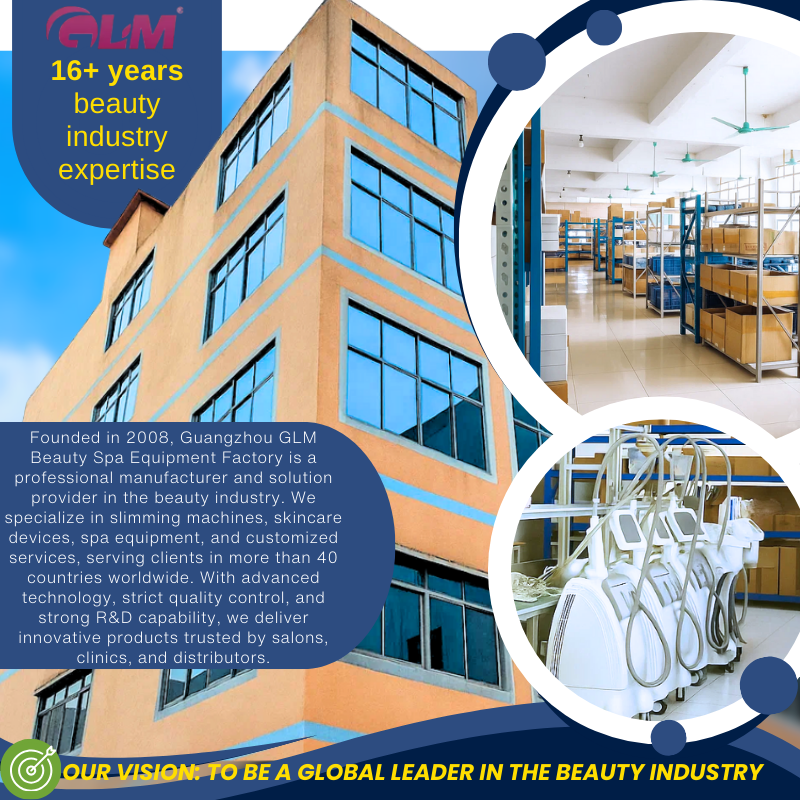
Founded in 2008, Guangzhou GLM Beauty Spa Equipment Factory specializes in research, development, manufacture and selling of beauty and slimming machines. Our production base is located in Guangzhou City, Guangdong Province, China. Since our foundation, we have introduced advanced technologies and equipment, to assure high quality and high performance of our products. With professional marketing guide and excellent after-sales service, our products have been exported to over 20 countries and regions, including Southeast Asia, the Middle East, Europe and the United States, won worldwide praises and gained a good reputation