
Introduction
The beauty industry is moving toward treatments that combine visible results, non-invasive technology, and professional treatment experiences. For beauty salons, aesthetic clinics, and professional skincare centers, this shift creates opportunities to expand beyond traditional facials and introduce technology-based services that address skin firmness, facial contours, and signs of aging.
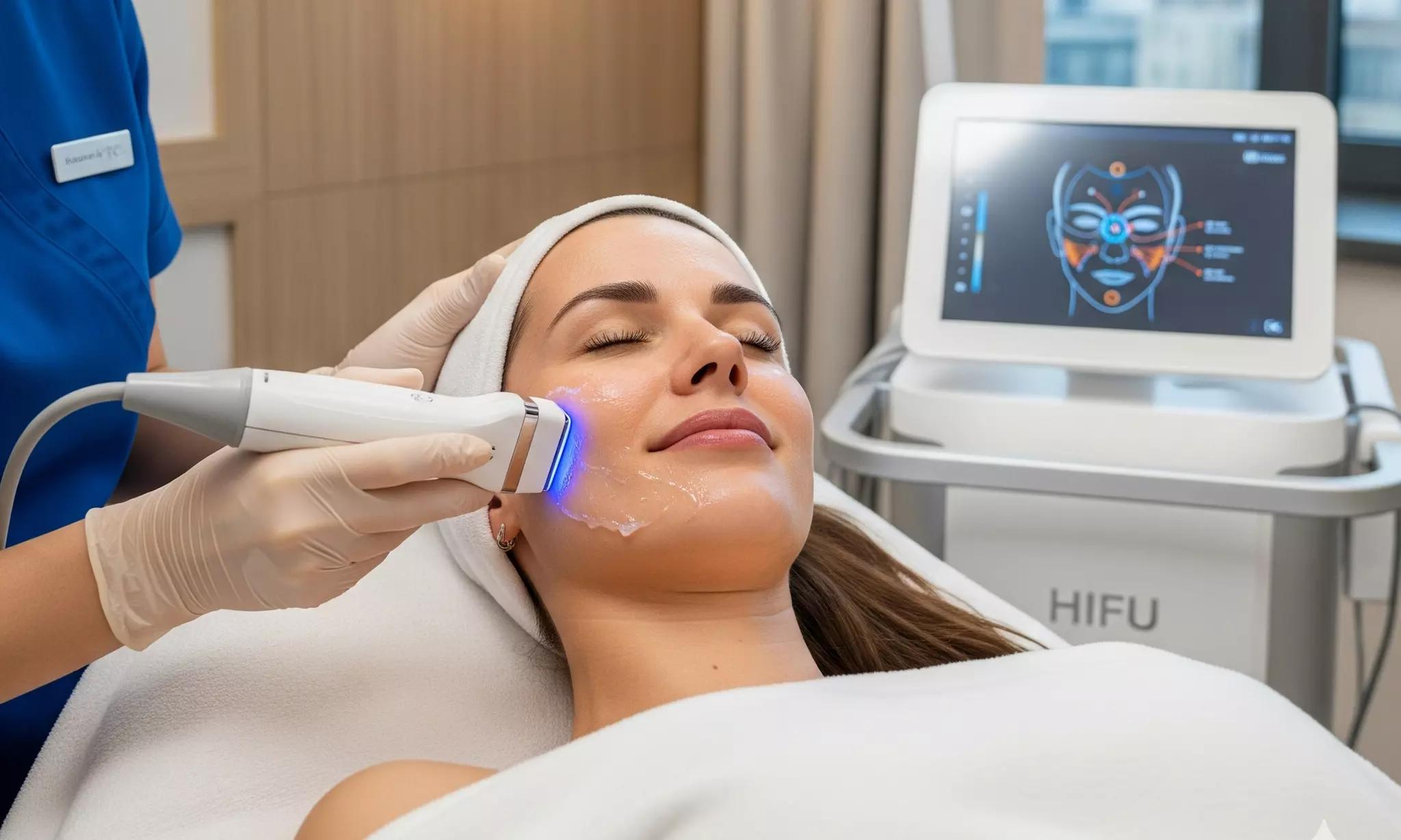
One technology that has become increasingly relevant to professional aesthetics is HIFU, or High-Intensity Focused Ultrasound. Unlike surface-level skincare treatments, HIFU uses focused ultrasound energy to deliver controlled thermal energy into selected tissue depths. Professional clinics commonly position HIFU treatments around non-surgical lifting, skin tightening, contour refinement, and collagen remodeling.
For a beauty business, however, adding HIFU is not simply a matter of purchasing a machine and adding “HIFU Facial” to a price list. A successful service requires appropriate equipment, trained operators, treatment planning, customer education, and a clear understanding of which clients and concerns are suitable for the technology.
When these elements are combined, HIFU can become more than another treatment on the menu. It can become part of a professional aesthetic service strategy.
Background: Why Beauty Businesses Are Adding Advanced Lifting Treatments
Many clients visit beauty salons and aesthetic clinics because they notice changes that conventional skincare products cannot fully address.
The skin may gradually lose elasticity. Facial contours can become less defined, the jawline may appear softer, and the neck can show increasing laxity. At the same time, many clients are not ready for—or simply do not want—surgical procedures.
This creates an important middle ground between conventional skincare and invasive cosmetic procedures.
Professional HIFU services are designed to occupy part of this space. Current aesthetic clinics commonly market focused ultrasound for areas such as the cheeks, jawline, chin, neck, décolletage, and selected body areas. Treatment protocols can vary according to the device, treatment area, tissue characteristics, and practitioner assessment.
For a beauty business, this creates several potential advantages.
First, HIFU gives the business a technology-based service that is clearly different from conventional facials. Second, it can attract clients specifically searching for non-surgical skin tightening and lifting. Third, it creates opportunities to develop structured treatment programs rather than relying entirely on individual facial appointments.
The key is to treat HIFU as a professional service platform, not simply as another beauty machine.
Technology and Mechanism: How Does HIFU Work?
HIFU stands for High-Intensity Focused Ultrasound.
The fundamental concept is relatively straightforward. Instead of distributing energy broadly across the surface of the skin, a professional HIFU system focuses ultrasound energy at a selected depth beneath the skin.
At the focal point, the concentrated ultrasound energy generates controlled thermal effects. These localized treatment points can trigger tissue responses associated with collagen contraction and subsequent remodeling. Because the energy is focused beneath the surface, the objective is to influence deeper tissue while minimizing unnecessary disruption to the skin surface.
This is one of the main differences between HIFU and many conventional facial technologies.
A skincare cream primarily works through topical application. Many surface-oriented beauty devices focus on the epidermis or superficial dermis. HIFU, by comparison, is designed around controlled energy delivery at defined depths.
Professional systems may use different cartridges or transducers for different treatment depths. Some clinical protocols use depths such as 1.5 mm, 3.0 mm, and 4.5 mm depending on the treatment area and device. The appropriate depth should not simply be selected according to a standard template; it should correspond to the client's anatomy, treatment objective, and the specifications and approved indications of the equipment being used.
For professional operators, this depth-control concept is particularly important.
A client with mild cheek laxity may require a different treatment strategy from a client primarily concerned with the jawline or neck. The same energy setting and treatment pattern should therefore not automatically be applied to every face.
This is where the value of professional HIFU equipment becomes apparent: precision, controllability, treatment planning, and repeatability matter as much as the basic energy technology
Why Professional HIFU Equipment Matters
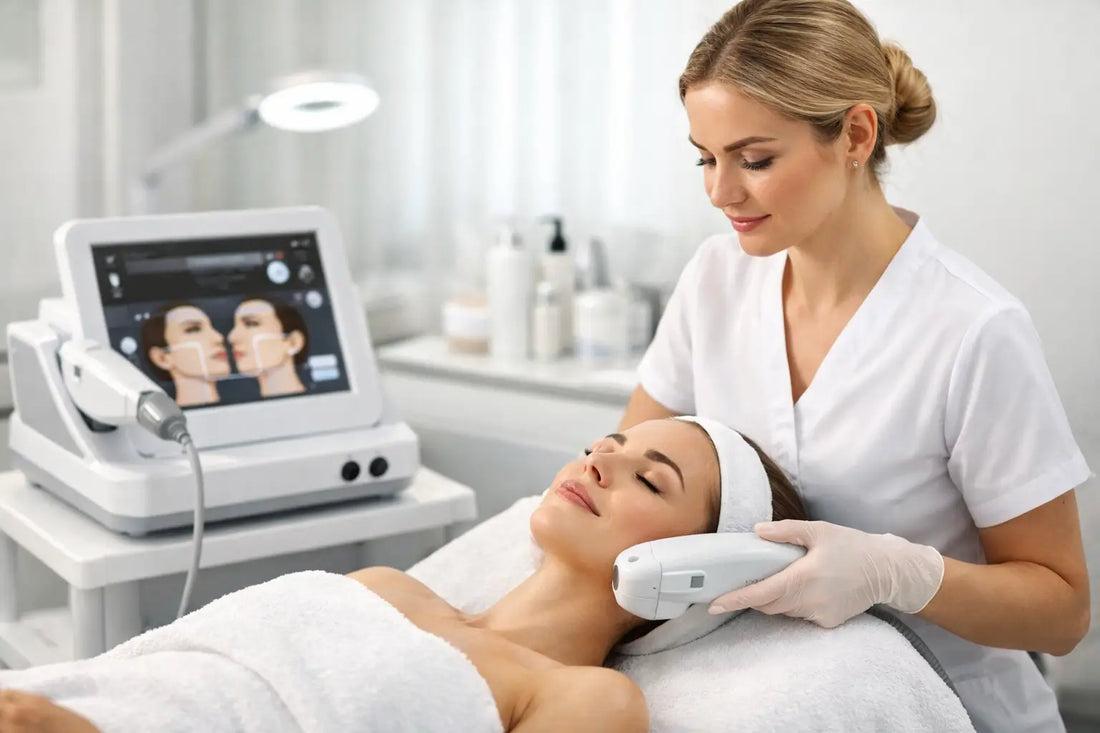
Not all HIFU systems provide the same user experience or treatment workflow.
For a professional beauty business, equipment selection should go beyond appearance and purchase price. The machine should fit the type of services the business intends to provide.
Important considerations include:
1. Treatment Depth Options
Different facial and body areas may require different treatment depths. A professional system with multiple compatible transducers can give operators greater flexibility when designing treatment protocols.
2. Energy Control
Controlled energy output is essential for professional treatment. Operators need to understand how energy settings relate to treatment objectives, client comfort, treatment area, and device specifications.
3. Treatment Precision
A well-designed handpiece and user interface can make it easier for practitioners to maintain consistent treatment patterns. Clear parameter displays and organized treatment modes can also reduce unnecessary operational complexity.
4. Professional Workflow
A machine used repeatedly in a busy clinic needs to support an efficient workflow. Quick parameter adjustment, intuitive controls, reliable handpieces, and straightforward maintenance can have a meaningful impact on daily operations.
5. Training and Support
Even a technically advanced HIFU system cannot replace operator knowledge. Professional suppliers should ideally provide appropriate product training, operating guidance, and technical support.
This is particularly important because HIFU is not simply a “one setting fits all” technology. Modern professional practices increasingly emphasize consultation, anatomical assessment, customized treatment depths, and practitioner training.
Advantages of Adding HIFU to Your Beauty Business
1. Expand Beyond Traditional Facial Services
A conventional facial primarily focuses on cleansing, hydration, exfoliation, nourishment, or surface-level skin maintenance.
HIFU gives a business the opportunity to introduce an advanced energy-based treatment category.
This can help create a more diversified service menu:
- HIFU facial lifting
- Jawline tightening
- Neck tightening
- Under-chin treatments
- Décolletage treatments
- Selected body tightening applications
- Combination aesthetic programs
The exact applications should always follow the device's specifications, local regulations, practitioner qualifications, and permitted indications.
2. Appeal to Clients Seeking Non-Surgical Options
A significant attraction of HIFU is its positioning as a non-surgical aesthetic treatment.
Many clients want to improve skin firmness and facial definition but are hesitant about surgery, needles, or lengthy recovery periods. Professional HIFU can provide another option for appropriately selected clients.
Clinics currently promote focused ultrasound as a non-surgical approach to facial lifting and skin tightening, often emphasizing limited or no downtime depending on the specific technology and treatment protocol.
For a beauty business, this creates a useful marketing message:
advanced results-oriented treatment without turning the experience into a surgical procedure.
3. Create Higher-Value Treatment Packages
HIFU does not have to be sold only as a single treatment.
A professional beauty business can develop treatment packages around specific customer goals.
For example:
Facial Contour Program
Consultation → facial assessment → HIFU treatment → post-treatment care → follow-up evaluation
Jawline Definition Program
Assessment → targeted lower-face treatment → under-chin evaluation → follow-up
Skin Firmness Program
HIFU → complementary skincare treatments → maintenance appointments
This type of service design changes the conversation from “How much is one treatment?” to “What treatment plan is appropriate for my concern?”
That can help a clinic communicate value more effectively.
HIFU vs. Home Beauty Devices
One of the most important distinctions for professional businesses is the difference between a professional aesthetic platform and a consumer home-use device.
Home beauty devices are generally designed around convenience, simple operation, and consumer accessibility. Professional HIFU systems, by contrast, are intended to be operated within a controlled professional treatment environment and can offer more sophisticated treatment planning and parameter control, depending on the specific device.
A professional treatment also includes something a home device cannot easily reproduce: operator assessment.
Before treatment, a trained professional can evaluate the client's skin condition, facial structure, treatment objectives, and contraindications according to the relevant professional and regulatory framework.
During treatment, the operator can adjust the treatment strategy according to the actual treatment area.
After treatment, the client can receive professional aftercare and follow-up.
Therefore, the competitive advantage of a beauty clinic is not simply owning a HIFU machine. It is combining technology + expertise + consultation + service experience.
Applications and Client Needs
Facial Skin Tightening
Facial lifting is one of the most recognizable applications of HIFU.
Clients may be concerned about early signs of laxity, softer cheeks, reduced facial definition, or changes around the lower face.
Rather than treating every client with an identical pattern, professional operators can assess where tightening may be most appropriate.
Jawline and Under-Chin Treatments
The jawline is another commercially attractive application.
As facial tissues change with age, the boundary between the lower face, jawline, and neck can become less defined. For appropriately selected clients, focused ultrasound may be incorporated into a treatment plan intended to improve the appearance of firmness and contour.
Some professional clinics specifically offer jawline and under-chin HIFU as individual treatment areas or as part of larger facial protocols.
Neck and Décolletage
The neck and décolletage are often overlooked in traditional skincare routines.
For clients concerned about visible skin laxity in these areas, HIFU can become an additional professional service category where the equipment and practitioner qualifications allow it.
This can also help businesses build more comprehensive anti-aging programs rather than focusing exclusively on the face.
Body Applications
Some HIFU platforms are designed for selected body applications, including skin tightening and contour-related treatments.
However, body HIFU should not be presented as universally interchangeable with facial HIFU. Tissue thickness, treatment depth, energy requirements, anatomy, and intended outcomes can be different.
For this reason, clinics should develop body protocols specifically around the capabilities and approved applications of their chosen equipment. Professional clinics currently offer focused ultrasound treatments for areas such as the abdomen, thighs, arms, and other body zones, but treatment suitability varies considerably by technology and client.
Building a Successful HIFU Service
Adding HIFU successfully requires more than equipment investment.
Step 1: Define Your Target Client
Decide whether your service is primarily aimed at:
- Facial lifting
- Skin tightening
- Jawline definition
- Neck rejuvenation
- Body tightening
- Premium anti-aging programs
A clear target makes marketing much easier.
Step 2: Choose Equipment Based on Your Service Model
Consider treatment depths, handpiece options, energy control, user interface, reliability, training, maintenance, and after-sales support.
Step 3: Develop Standardized Treatment Protocols
Create clear procedures for consultation, treatment preparation, parameter selection, treatment mapping, aftercare, and follow-up.
Step 4: Train Operators
HIFU should be performed only by appropriately trained personnel within the legal and regulatory requirements of the market where the service is offered.
Step 5: Educate Clients
Avoid promising instant or permanent transformation.
Explain that results can develop progressively as tissue remodeling occurs, and that individual outcomes vary. Some clinics describe noticeable changes over several weeks, with further improvement developing over subsequent months.
This creates more realistic expectations and helps build long-term client trust.
Conclusion
Adding HIFU services can be a practical way for a beauty salon or aesthetic clinic to move toward a more technology-driven service model.
The value of HIFU is not simply the ability to deliver focused ultrasound energy. Its greater value lies in how professional equipment allows trained operators to combine controlled energy delivery, treatment depth, consultation, customized protocols, and professional service.
For businesses, this can create new treatment categories around facial lifting, skin tightening, jawline definition, neck care, and selected body applications. It can also provide a foundation for higher-value treatment packages and long-term client relationships.
However, HIFU should be approached as a professional technology rather than a simple beauty gadget. Equipment quality, operator training, treatment planning, safety procedures, regulatory compliance, and realistic client communication all contribute to the final service experience.
For beauty businesses looking to expand their professional treatment portfolio, a well-selected HIFU system can become a useful addition—not because it replaces every other beauty technology, but because it adds another precise, technology-based option to a modern aesthetic service menu
Founded in 2008, Guangzhou GLM Beauty Spa Equipment Factory specializes in research, development, manufacture and selling of beauty and slimming machines. Our production base is located in Guangzhou City, Guangdong Province, China. Since our foundation, we have introduced advanced technologies and equipment, to assure high quality and high performance of our products. With professional marketing guide and excellent after-sales service, our products have been exported to over 20 countries and regions, including Southeast Asia, the Middle East, Europe and the United States, won worldwide praises and gained a good reputation