1. Introduction
The aesthetic industry is entering a new era of precision-driven skincare. In 2026, professional MedSpas are increasingly exploring artificial intelligence (AI), advanced skin imaging, and energy-based technologies to deliver more personalized and data-informed treatments.
Traditional skin assessments often rely on visual observation, client descriptions, and the experience of aesthetic professionals. Although these methods remain important, they may not always provide a comprehensive understanding of underlying skin conditions, especially when concerns such as pigmentation, fine lines, enlarged pores, uneven texture, and skin laxity occur simultaneously.
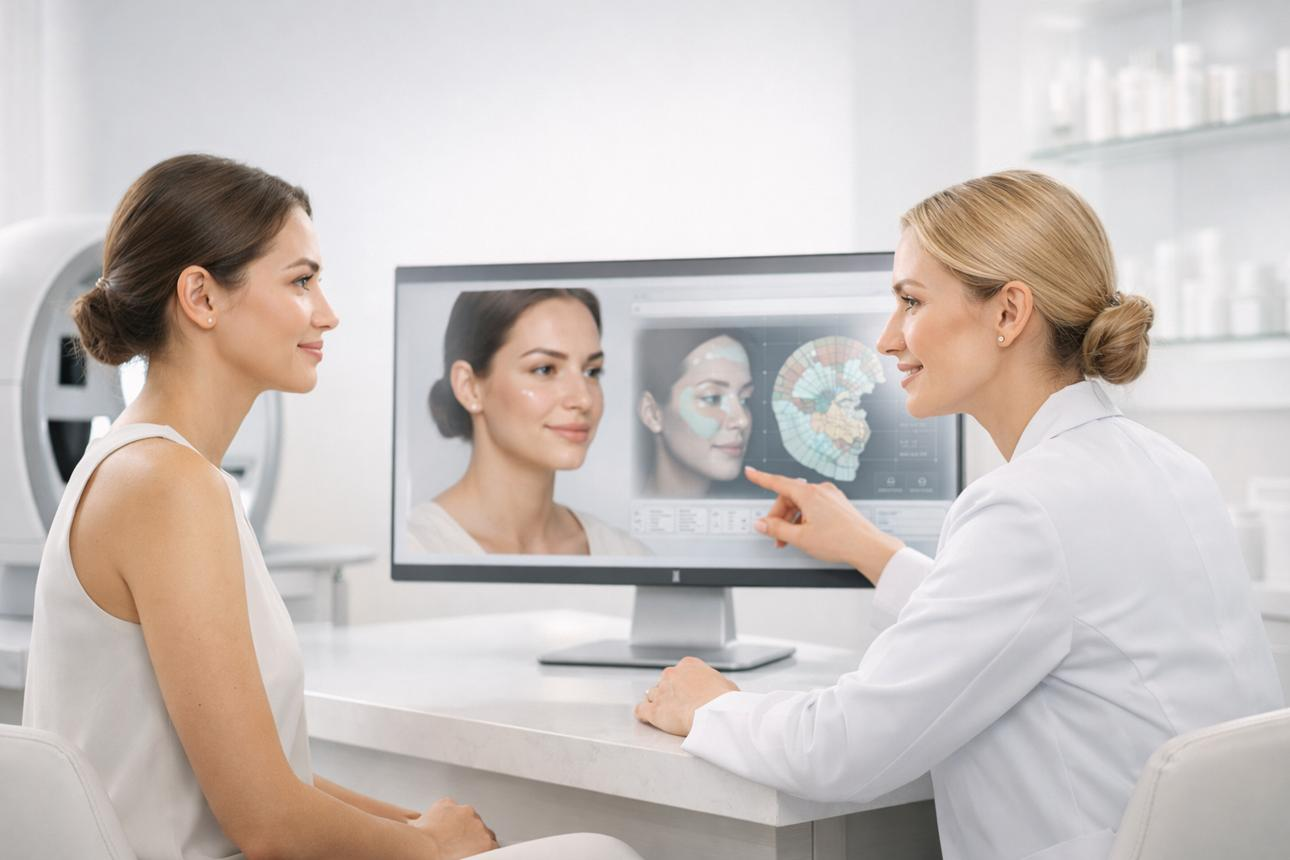
AI skin diagnostics are changing this approach. By analyzing high-resolution facial images and identifying multiple skin characteristics, intelligent assessment systems can help professionals understand individual skin conditions more systematically. When combined with professional aesthetic equipment, these insights can support more targeted treatment planning.
For modern MedSpas, the combination of AI diagnostics and energy-based treatments represents more than a technological upgrade. It offers an opportunity to improve consultation efficiency, personalize treatment programs, strengthen client confidence, and create a more professional service experience.
The future of aesthetic treatments is not simply about using more advanced equipment. It is about selecting the right technology for the right skin concern at the right time.
2. Background: Why Traditional Skin Assessment Is No Longer Enough
Clients visiting professional beauty clinics rarely have just one skin concern. A person may experience uneven pigmentation, reduced elasticity, enlarged pores, dehydration, and early signs of aging at the same time.
Treating these concerns individually without considering their relationship can make treatment planning complicated.
Traditional skin assessments generally involve visual examination, questionnaires, skin-type classification, and professional judgment. These methods provide valuable information, but several limitations remain.
First, visual assessments can be subjective. Different practitioners may interpret the same skin condition differently. Subtle changes in pigmentation, texture, and pore visibility can also be difficult to evaluate consistently under different lighting conditions.
Second, treatment needs are highly individual. Two clients with similar visible wrinkles may have different skin thicknesses, pigmentation patterns, sensitivity levels, and treatment histories. Applying identical treatment settings simply because their visible concerns appear similar may not be appropriate.
Third, treatment progress is not always easy to measure. Without standardized imaging and consistent evaluation methods, comparing skin conditions before and after multiple treatment sessions can be challenging.
These challenges have encouraged aesthetic professionals to adopt more objective assessment technologies.
According to recent research in cosmetic dermatology, AI-assisted image analysis is becoming an important application in aesthetic practice. It can help quantify visible skin characteristics, support treatment planning, and improve communication between practitioners and clients.
For professional MedSpas, this creates a more structured approach: assess first, identify priorities, select appropriate technologies, and monitor progress.
3. Technology and Mechanism: How AI Skin Diagnostics Work
AI skin diagnostic systems typically combine digital imaging, image-processing technologies, and machine-learning algorithms to evaluate different skin characteristics.
3.1 Advanced Facial Imaging and Skin Mapping
The first step is image acquisition.
Professional skin analysis systems may use high-resolution cameras, controlled lighting, polarized imaging, ultraviolet imaging, or multiple imaging modes to capture different aspects of the skin.
Depending on the device, these systems can evaluate:
-
Pigmentation and uneven skin tone.
-
Fine lines and visible wrinkles.
-
Enlarged pores and skin texture.
-
Redness and visible vascular patterns.
-
Acne-related concerns and blemishes.
-
Surface oiliness and hydration-related appearance.
-
Visible signs of photoaging.
Some advanced systems also generate facial skin maps, allowing practitioners to identify areas requiring different treatment approaches.
For example, a client may show pigmentation concentrated around the cheeks, enlarged pores around the nose, and early skin laxity along the jawline. Rather than recommending one general facial treatment, practitioners can use the assessment to prioritize different concerns.
It is important to understand that image-based analysis evaluates visible characteristics and does not automatically establish a medical diagnosis or reveal every underlying biological condition.
3.2 AI Algorithms and Personalized Skin Assessment
After image acquisition, AI algorithms process the collected information.
Machine-learning models are trained to recognize patterns across large image datasets. Deep-learning technologies, particularly convolutional neural networks, can identify visual features and classify different skin characteristics.
More advanced platforms may compare multiple facial images, calculate changes in specific areas, and generate visual reports.
This provides several advantages for professional operators:
-
More standardized skin assessments.
-
Better visualization of individual skin concerns.
-
Easier comparison between treatment sessions.
-
More structured client consultation.
-
Data-supported treatment recommendations.
Some emerging systems are also exploring predictive analytics. By combining imaging information with client history, skin characteristics, and treatment records, these platforms may eventually help estimate treatment responses and identify potential risks.
However, predictive capabilities should be interpreted carefully. AI recommendations require clinical validation and should never replace professional evaluation.
3.3 Connecting AI Analysis with Energy-Based Technologies
The real value of AI skin diagnostics becomes more apparent when the assessment results are connected to professional treatment technologies.
Energy-based aesthetic devices use different forms of energy to interact with targeted skin structures.
Radiofrequency (RF) Technology
RF devices deliver controlled electromagnetic energy into targeted tissue, generating heat through tissue resistance. Depending on the device configuration and treatment protocol, this thermal effect can support collagen remodeling and improve the appearance of skin laxity.
AI-assisted assessment may help practitioners identify areas where skin firmness and texture deserve attention. Professional operators can then evaluate whether RF treatment is appropriate and determine suitable device-specific settings.
High-Intensity Focused Ultrasound (HIFU)
HIFU technology concentrates ultrasound energy at selected tissue depths, producing localized thermal effects. These controlled energy points are designed to stimulate tissue remodeling and collagen-related responses.
When clients show concerns involving facial contour and skin laxity, practitioners may consider ultrasound-based treatments following an appropriate assessment.
IPL and Laser Technologies
Intense Pulsed Light (IPL) and laser systems use light energy to target specific chromophores or tissue structures.
Depending on the wavelength, pulse characteristics, and device design, these technologies can be used for concerns such as unwanted pigmentation, visible vascular lesions, hair reduction, and selected skin-rejuvenation applications.
AI skin imaging can help document visible pigmentation patterns and support treatment-area evaluation. However, skin phototype, recent sun exposure, contraindications, and individual risk factors must also be considered.
LED Light Therapy
LED devices deliver specific wavelengths of light for non-ablative aesthetic applications. Different wavelength ranges are commonly incorporated into professional facial protocols for skin appearance, acne-related care, and post-treatment skincare support.
AI-based assessments can help practitioners document visible concerns and determine whether LED therapy may complement a broader treatment program.
The key principle is that AI supports the assessment process, while professional equipment delivers the treatment. The two technologies serve different but complementary purposes.
4. Advantages and Comparison: AI-Assisted Professional Treatments vs. Traditional Approaches
The integration of AI diagnostics into professional aesthetic services provides several practical advantages.
4.1 More Personalized Treatment Planning
One of the biggest advantages is the ability to move beyond general treatment recommendations.
Instead of offering every client the same facial package, MedSpas can develop treatment programs according to individual skin characteristics.
For example:
-
Clients with visible pigmentation may require an appropriately selected light-based treatment.
-
Clients concerned about skin laxity may benefit from evaluating RF or ultrasound-based technologies.
-
Clients with uneven texture may be assessed for suitable resurfacing or skin-rejuvenation procedures.
-
Clients with acne-related concerns may require a combination of professional skin management and carefully selected light-based treatments.
The final treatment plan should always account for skin condition, treatment history, professional assessment, and device-specific indications.
4.2 Improved Consultation and Client Communication
AI skin analysis can make consultations more visual and easier to understand.
Instead of relying entirely on verbal explanations, practitioners can show clients imaging results, highlight specific areas, and explain why certain technologies may be suitable.
This creates a more transparent consultation process.
It can also help clients understand that professional aesthetic treatments are not simply about purchasing a particular machine-based procedure. Effective treatment planning begins with identifying individual needs.
4.3 More Consistent Treatment Monitoring
Standardized facial imaging allows MedSpas to document client conditions at different stages.
Comparing baseline images with follow-up assessments can help practitioners evaluate visible changes in skin texture, pigmentation, and other measurable characteristics.
This information supports treatment reviews and helps practitioners determine whether an existing program should be continued, adjusted, or reconsidered.
However, image comparisons should use consistent lighting, positioning, imaging settings, and evaluation conditions to reduce measurement errors.
4.4 Why Professional Equipment Matters
At-home beauty devices have become increasingly popular, particularly among consumers seeking convenient skincare solutions.
However, home-use devices and professional aesthetic equipment are designed for different applications.
Professional equipment generally offers more specialized treatment configurations, adjustable operating parameters, dedicated treatment handpieces, and device-specific operating protocols.
Depending on the technology, professional platforms may support more controlled energy delivery, different treatment depths, and broader clinical or aesthetic applications.
They also require appropriate operator training, maintenance, safety procedures, and compliance with local regulations.
AI diagnostics further strengthen the professional service model by helping practitioners connect assessment findings with suitable equipment and treatment protocols.
The advantage is not simply higher energy output. It is the combination of professional assessment, appropriate technology selection, controlled treatment delivery, and continuous monitoring.
5. Applications and Client Needs: How MedSpas Can Build AI-Driven Treatment Programs
AI-assisted diagnostics can be integrated into several professional aesthetic service scenarios.
5.1 Anti-Aging and Skin Firming Programs
Skin aging involves multiple changes, including collagen reduction, loss of elasticity, changes in skin texture, and the gradual development of fine lines.
AI skin imaging can help document visible signs of aging and identify areas requiring attention.
Based on the assessment, practitioners may consider RF skin tightening, HIFU treatments, or other appropriate collagen-focused technologies.
For MedSpas, combining objective skin assessment with professional energy-based treatments can create a more structured anti-aging service program.
5.2 Pigmentation and Skin Tone Management
Uneven pigmentation is a common concern among clients seeking professional facial treatments.
AI-assisted imaging may help visualize pigmentation distribution and document changes over time.
After evaluating skin phototype, pigmentation characteristics, sun exposure, and potential contraindications, practitioners can determine whether an appropriate IPL or laser treatment is suitable.
For clients with sensitive skin or increased pigmentation risks, careful treatment selection and parameter management are especially important.
5.3 Acne and Skin Texture Improvement
Acne-related concerns may involve active breakouts, enlarged pores, uneven texture, and post-acne marks.
AI imaging can help practitioners document visible blemishes and changes in skin appearance.
Depending on the client's condition, professional treatment programs may incorporate LED light therapy, suitable cleansing technologies, or other carefully selected aesthetic procedures.
A comprehensive approach is often more appropriate than relying on a single device.
5.4 Multi-Technology Treatment Solutions
Modern MedSpas increasingly recognize that different skin concerns may require different technologies.
A professional multi-function aesthetic platform can provide several treatment options within one service environment, depending on its actual technical configuration.
For example, a clinic may combine skin cleansing and hydration procedures with RF treatments, LED therapy, or other suitable technologies.
AI-assisted skin assessment can help determine which services deserve priority and how different treatments may be organized over multiple sessions.
However, combining technologies does not automatically produce better results. Treatment sequence, recovery time, compatibility, and individual tolerance must be considered.
5.5 A More Professional Client Experience
Beyond treatment selection, AI diagnostics can improve the overall client journey.
A structured consultation may include:
-
Initial skin assessment and image capture.
-
Review of skin characteristics and client concerns.
-
Professional evaluation and contraindication screening.
-
Selection of suitable energy-based technologies.
-
Individualized treatment planning.
-
Follow-up imaging and progress evaluation.
This workflow gives clients a clearer understanding of the treatment process and helps MedSpas establish a more professional service standard.
6. Conclusion: The Future of Personalized Aesthetic Treatments
AI skin diagnostics are becoming an important part of the evolution of professional aesthetic services.
By combining advanced facial imaging, intelligent data analysis, and professional energy-based equipment, MedSpas can move toward more structured, individualized, and measurable treatment approaches.
The greatest opportunity does not come from AI or aesthetic equipment working independently. It comes from integrating both technologies into a complete professional workflow.
AI helps practitioners understand visible skin concerns and organize assessment information. Professional RF, HIFU, IPL, laser, and LED systems provide different treatment capabilities to address appropriately selected aesthetic needs.
As technology continues to develop, professional beauty clinics and MedSpas will increasingly focus on precision, personalization, treatment documentation, and client experience.
For aesthetic equipment manufacturers and professional service providers, this trend also highlights the growing importance of reliable device performance, versatile treatment configurations, operator-friendly interfaces, and comprehensive technical support.
Ultimately, the future of professional aesthetics is not about offering the most treatments. It is about making more informed decisions and delivering the most appropriate treatment for each individual client
Founded in 2008, Guangzhou GLM Beauty Spa Equipment Factory specializes in research, development, manufacture and selling of beauty and slimming machines. Our production base is located in Guangzhou City, Guangdong Province, China. Since our foundation, we have introduced advanced technologies and equipment, to assure high quality and high performance of our products. With professional marketing guide and excellent after-sales service, our products have been exported to over 20 countries and regions, including Southeast Asia, the Middle East, Europe and the United States, won worldwide praises and gained a good reputation