Introduction
Radiofrequency (RF) technology has become an important part of modern aesthetic treatments. From skin-firming programs to facial rejuvenation and body-care services, RF devices use controlled radiofrequency energy to deliver thermal effects within targeted tissue. Today, consumers can choose between compact at-home RF devices and professional RF systems used in beauty salons, aesthetic clinics, and professional treatment centers.
Although both categories are based on radiofrequency technology, they are designed for very different treatment environments. At-home devices generally focus on convenience, simple operation, and routine personal care. Professional RF machines, by contrast, are designed around operator control, adjustable treatment parameters, treatment protocols, ergonomic handpieces, and repeated client use.
For beauty professionals, understanding the difference between these two categories is important when selecting equipment for a clinic or salon. The question is not simply whether one device uses RF energy. It is how the technology is delivered, controlled, and incorporated into a professional treatment workflow.
Background/Problem
The growing popularity of home beauty technology has changed consumer expectations. Clients are increasingly familiar with facial devices, RF rollers, handheld skin-tightening devices, LED systems, and other portable beauty tools. This familiarity can make an at-home RF device appear similar to a professional RF machine at first glance.
However, the similarities are mainly related to the underlying technology. The treatment experience can be significantly different.
At-home RF devices are typically designed for individual users who need a straightforward operating process. Their compact structure makes them convenient for regular personal use, while preset or simplified settings reduce the need for technical knowledge.
Professional environments have different requirements.
A beauty salon may perform several treatments each day for clients with different skin conditions, treatment goals, and tolerance levels. Operators need to control parameters according to the treatment area and client response. They may also need different handpieces, adjustable energy levels, treatment timers, cooling functions, or other integrated features depending on the equipment configuration.
This creates an important distinction: consumer convenience and professional treatment flexibility are not the same thing.
A professional RF machine is therefore not simply a larger version of a home beauty device. It is part of a complete treatment system designed for professional workflows.
Technology/Mechanism
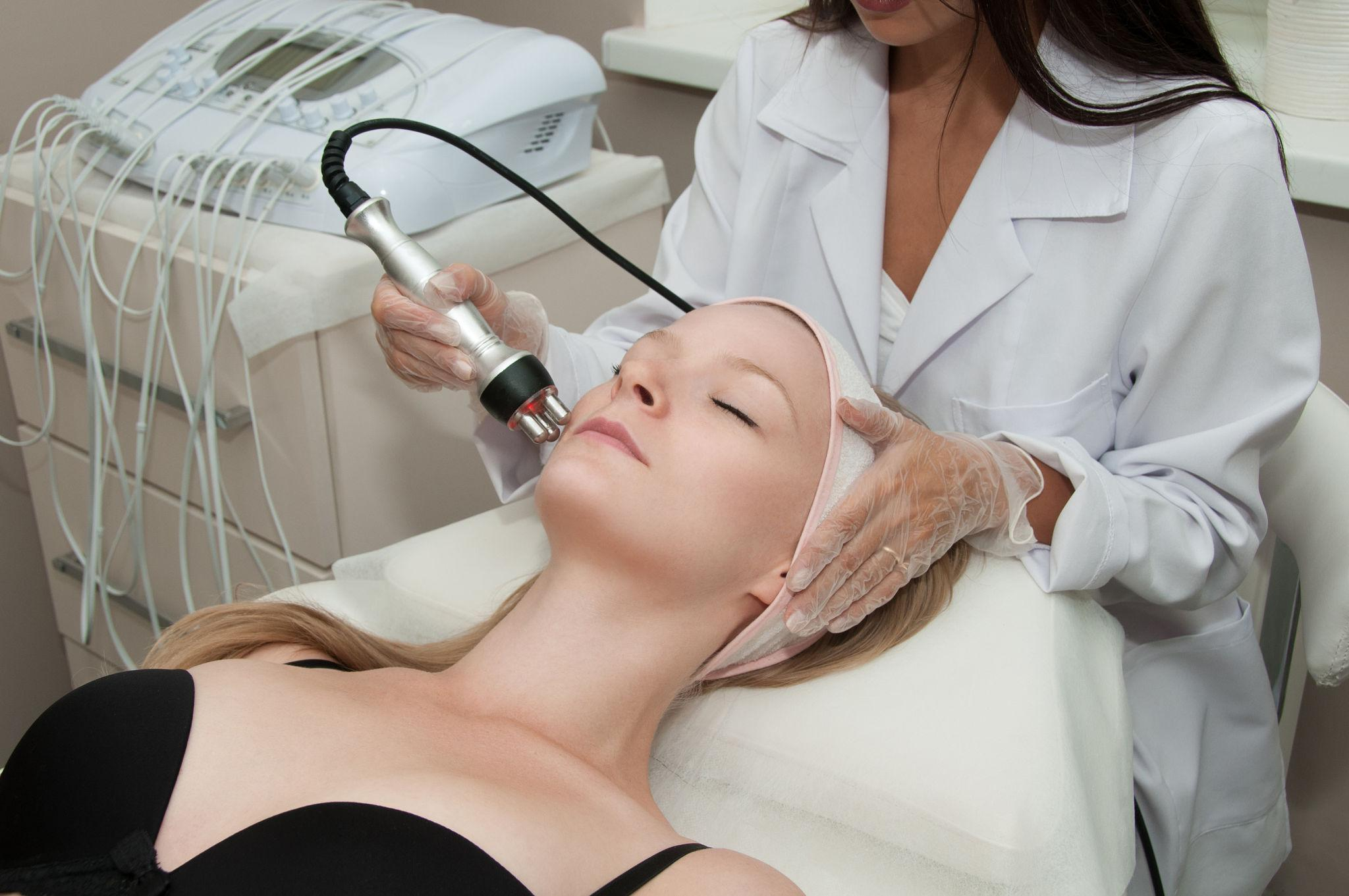
RF stands for radiofrequency. In aesthetic equipment, RF energy is delivered through an applicator or handpiece and interacts with tissue to produce controlled thermal effects.
Depending on the device design, RF systems may use different electrode configurations, frequencies, energy levels, and delivery methods. Common professional configurations include monopolar, bipolar, multipolar, and other proprietary RF technologies.
The basic principle is relatively straightforward: RF energy is converted into heat as it interacts with tissue. The resulting thermal effect can be used as part of professional skin-care and aesthetic treatment protocols.
However, the actual performance of an RF device depends on much more than the word “RF” on the product specification.
1. Energy Delivery
At-home devices are generally designed around lower-energy operation and simplified delivery. The objective is to make the device manageable for non-professional users.
Professional equipment can provide a broader range of adjustable parameters depending on its configuration. Operators can select suitable settings for different treatment areas and protocols.
This level of control is particularly useful when a salon provides customized treatment programs instead of a single standardized routine.
2. Treatment Control
Temperature, energy level, treatment duration, contact quality, and movement technique can all influence the treatment process.
A professional RF system may integrate controls that help the operator manage these variables more consistently. Digital displays, timers, adjustable intensity, temperature monitoring, and different treatment modes are examples of features commonly found in professional equipment.
For operators, these features are not merely technical specifications. They can make treatment procedures easier to standardize across different clients.
3. Handpiece Design
The handpiece is another major difference between professional and home equipment.
A compact home device usually has one primary applicator designed for convenient facial use. Professional machines may provide multiple handpieces or applicator sizes for different areas.
For example, a smaller applicator may be suitable for facial contours, while a larger treatment head can improve workflow efficiency when working on broader areas.
Ergonomic design also matters. Professional operators may hold and move a handpiece repeatedly throughout the working day, so weight distribution, grip design, cable arrangement, and control accessibility can influence practical usability.
4. Thermal Management
RF treatment involves controlled heat, making thermal management an important part of equipment design.
Professional RF systems may incorporate temperature monitoring, cooling functions, contact detection, or other control technologies depending on the model. These systems are designed to help operators maintain a controlled treatment process.
This is one reason professional RF should be evaluated as a complete system rather than by looking only at its RF frequency or maximum power.
[Suggested In-Article Image]
Visual concept: Split-screen comparison of an at-home RF handheld device and a professional RF machine in a beauty clinic. Show simplified RF energy diagrams, adjustable parameters, professional handpieces, and treatment workflow.
Suggested image caption: At-Home RF vs Professional RF: Differences in Control, Applicators, and Treatment Workflow
Advantages/Comparison
The differences between at-home and professional RF become clearer when evaluated from a salon or clinic perspective.
| Feature | At-Home RF | Professional RF |
|---|---|---|
| Primary User | Individual consumer | Trained beauty professional |
| Operating Process | Simplified | More adjustable |
| Treatment Parameters | Usually limited | Typically broader |
| Applicators | Compact, often single-purpose | Multiple options may be available |
| Treatment Areas | Mainly personal facial care | Facial and selected body applications |
| Workflow | Personal routine | Structured professional treatment |
| Customization | Relatively limited | Greater protocol flexibility |
| Daily Usage | Personal use | Designed for repeated professional use |
| Client Management | Self-operated | Operator-controlled |
The biggest difference is therefore not simply “power.” Professional value comes from control, repeatability, customization, and workflow integration.
Customized Treatment
A professional beauty therapist can assess the client's treatment area and adjust the procedure accordingly. Different areas may require different movement speeds, treatment durations, or energy settings.
A professional RF machine can therefore become part of a customized service rather than a fixed home routine.
Treatment Efficiency
For a professional business, time is an important operational factor.
A home user may spend several minutes using a small handheld device. A salon operator, however, needs to manage a complete appointment efficiently. Larger applicators, adjustable treatment modes, multiple handpieces, and integrated controls can help create a more organized workflow.
Consistency
Professional clients expect a standardized service.
When treatment parameters can be recorded and repeated, operators can create clearer internal protocols. This is particularly useful for salons that have multiple therapists or offer treatment packages over several sessions.
Professional Service Value
The equipment itself is only part of the customer experience. Professional RF treatments combine equipment technology with operator knowledge, treatment planning, consultation, and aftercare guidance.
This creates a service model that is difficult to reproduce with a basic handheld device at home.
For manufacturers and distributors, this distinction is important. Professional RF equipment should be positioned around the complete treatment experience rather than competing with consumer devices solely on appearance or basic RF functionality.
Applications/Client Needs
Professional RF equipment can be incorporated into different beauty and aesthetic service programs depending on the device configuration and applicable treatment protocols.
Facial Skin-Firming Programs
Facial treatments are one of the most common applications associated with professional RF technology.
Beauty professionals can incorporate RF into structured facial programs focused on improving the appearance of skin firmness and supporting a more refined-looking facial contour.
The operator can work systematically across areas such as the cheeks, jawline, forehead, or other appropriate facial zones according to the equipment's intended use.
Professional Facial Rejuvenation Services
RF can also be integrated into broader facial rejuvenation programs.
Instead of treating RF as a standalone procedure, clinics and salons may combine it with cleansing, hydration, serum application, massage, or other compatible professional treatments.
This creates opportunities for customized treatment menus and multi-step service packages.
Body-Care Applications
Certain professional RF systems are designed for selected body areas as well as facial applications.
Depending on the equipment configuration, larger applicators can support professional body-care workflows. This may be useful for salons offering comprehensive beauty and body-treatment services.
The exact treatment area, energy level, and protocol should always follow the manufacturer's intended use and professional operating instructions.
Client Consultation
Professional RF equipment also supports a consultation-based business model.
Before treatment, operators can discuss the client's concerns, treatment goals, previous procedures, and expectations. The equipment can then be incorporated into an appropriate professional protocol.
This human element is an important difference between professional treatment and consumer self-care.
Clinics and Beauty Salons
For clinics and salons, equipment selection should extend beyond technical specifications.
Important considerations include:
- Adjustable treatment parameters
- Handpiece configuration
- Treatment-area compatibility
- Temperature or thermal-control functions
- User interface
- Operator ergonomics
- Maintenance requirements
- Training and operating procedures
- Manufacturer support
- Warranty and service availability
- OEM and private-label options
For equipment manufacturers, these factors can also influence how a product is positioned for international markets.
A professional RF system with customizable branding, packaging, multiple handpiece options, and flexible configurations can provide distributors with more opportunities to develop their own treatment solutions.
Conclusion
At-home RF and professional RF are based on the same broad radiofrequency principle, but they serve different users and treatment environments.
At-home RF devices prioritize convenience, compact design, and simplified operation. Professional RF machines focus more heavily on operator control, treatment flexibility, workflow efficiency, and repeatable professional service.
For beauty salons and aesthetic clinics, the value of professional RF is therefore not defined by RF technology alone. The combination of adjustable parameters, suitable applicators, thermal management, ergonomic design, treatment protocols, and professional operation can turn RF technology into a more structured service solution.
As consumers become increasingly familiar with home beauty devices, professional providers have an opportunity to differentiate their services through customized treatment, operator expertise, and professional-grade equipment.
For manufacturers and distributors, this also means that the future of professional RF equipment is not simply about making devices more powerful. It is about making them more controllable, practical, customizable, and suitable for real-world professional treatment workflows
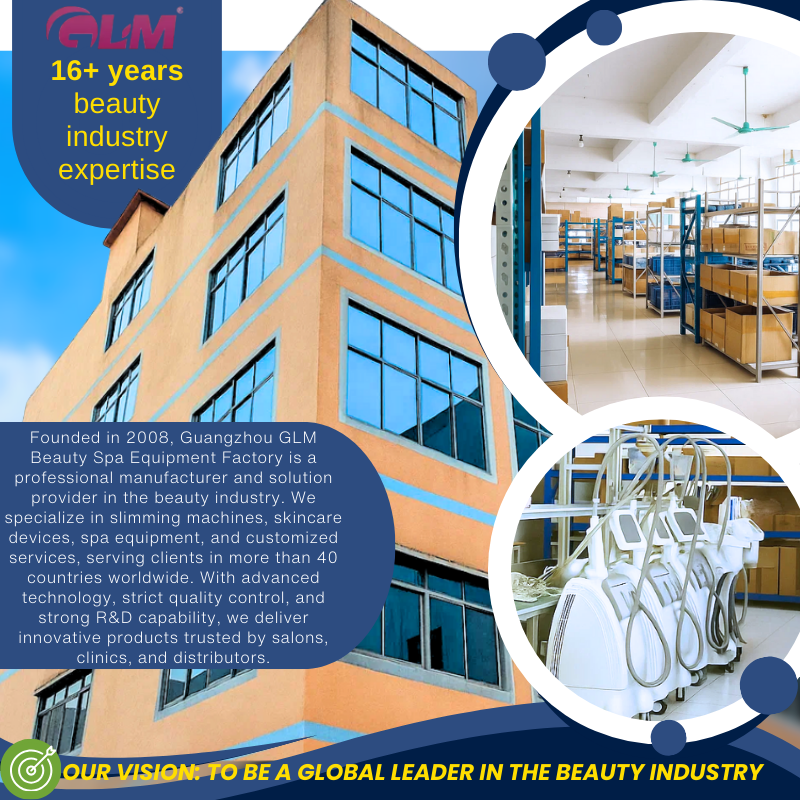
Founded in 2008, Guangzhou GLM Beauty Spa Equipment Factory specializes in research, development, manufacture and selling of beauty and slimming machines. Our production base is located in Guangzhou City, Guangdong Province, China. Since our foundation, we have introduced advanced technologies and equipment, to assure high quality and high performance of our products. With professional marketing guide and excellent after-sales service, our products have been exported to over 20 countries and regions, including Southeast Asia, the Middle East, Europe and the United States, won worldwide praises and gained a good reputation