
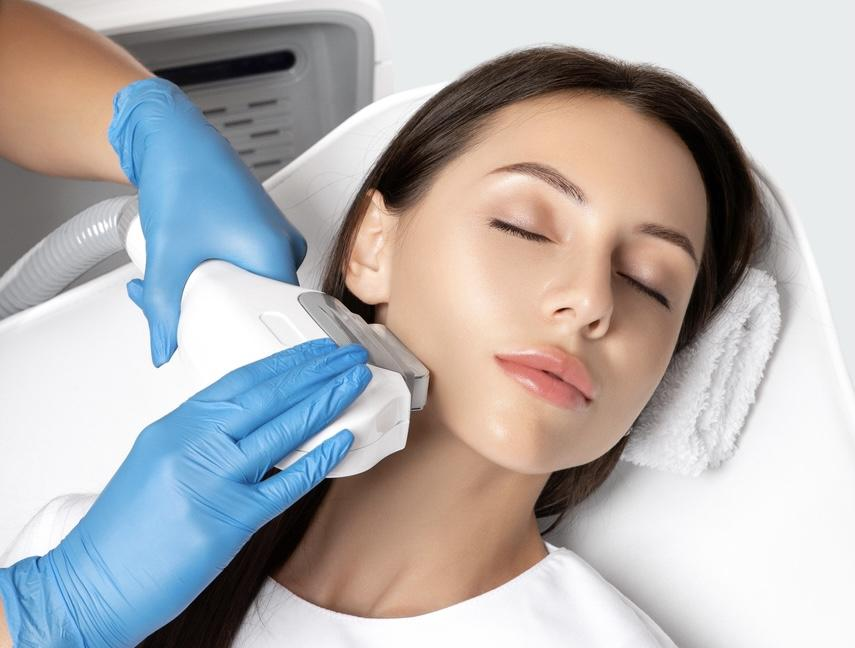
Introduction
A double chin, clinically referred to as submental fullness, is one of the most common concerns affecting the appearance of the lower face and neck. It can be associated with localized fat accumulation, skin laxity, genetics, age-related changes, or a combination of these factors. Importantly, it is not always a direct reflection of overall body weight. Even people with a healthy body composition can have noticeable fullness beneath the chin.
This is why the question of how to get rid of a double chin naturally is more complicated than simply losing weight. General weight management can help when excess body fat contributes to submental fullness, but targeted fat distribution and loose skin may remain.
For clients who want to avoid surgery, modern aesthetic clinics can offer a broader range of non-surgical approaches. These may include lifestyle management, professional skin-tightening treatments, controlled thermal technologies, cryolipolysis, ultrasound-based procedures, and carefully designed combination protocols.
Rather than trying to change the entire face, the professional approach is to identify what is actually creating the appearance of a double chin and select an appropriate treatment strategy.
Background: Why Does a Double Chin Appear?
A double chin usually develops because of changes in the tissue beneath the jawline. The main contributors include submental fat, reduced skin elasticity, aging, genetics, and facial structure.
For some clients, the primary issue is a relatively thick layer of subcutaneous fat. In these cases, reducing localized fat can make the jawline appear more defined. However, reducing fat alone does not automatically tighten loose skin.
For other clients, the amount of fat may be moderate, while reduced collagen and elastin make the skin appear less firm. In this situation, a treatment focused exclusively on fat reduction may not provide the desired contour.
There is also an important distinction between overall weight loss and localized contouring. Diet and physical activity can support healthy body composition, but they cannot reliably determine exactly where the body loses fat. This is one reason why professional aesthetic treatments focus on localized areas rather than attempting to replace healthy lifestyle habits.
Recent reviews of nonsurgical submental treatments have evaluated approaches including deoxycholic acid injections, cryolipolysis, radiofrequency, high-intensity focused ultrasound, and other energy-based technologies. Evidence supports the potential of several approaches, although results vary according to treatment type, patient characteristics, protocol, and study design.
Technology and Mechanism: What Can Professional Beauty Devices Do?
Modern aesthetic devices do not all work in the same way. Understanding the mechanism is essential because fat reduction and skin tightening are different treatment goals.
1. Radiofrequency for Skin Firming
Radiofrequency, commonly known as RF, delivers controlled electromagnetic energy into tissue to generate thermal effects.
In professional aesthetic treatments, RF is often used when the objective includes improving the appearance of skin laxity and supporting a firmer-looking contour. Controlled heating can influence collagen remodeling and tissue contraction, depending on the technology, energy level, treatment depth, and protocol.
For clients whose double chin is partly related to loose skin, RF may therefore be considered as part of a contouring strategy rather than simply a fat-reduction procedure.
This distinction is particularly important in professional practice. A client may have only moderate submental fat but significant laxity. Treating both concerns may produce a more balanced visual result than focusing on fat alone.
2. Cryolipolysis for Localized Fat
Cryolipolysis uses controlled cooling to target subcutaneous fat cells. The principle is based on the greater sensitivity of lipid-rich adipocytes to cold compared with surrounding tissues.
A clinical study of submental cryolipolysis reported a mean reduction of approximately 2.0 mm in fat-layer thickness, with visible contour improvement reported by many participants. The study also found that common side effects were generally mild and temporary.
This technology is particularly relevant when the primary concern is a localized pocket of fat beneath the chin rather than generalized facial fullness.
However, cryolipolysis is not a universal solution. Clients with substantial skin laxity or anatomical factors beyond localized fat may require a different treatment strategy. Professional assessment is therefore important before treatment.
3. Ultrasound-Based Technologies
Ultrasound-based aesthetic technologies can use acoustic energy to influence targeted tissue. Depending on the device and technology, ultrasound may be used for tissue remodeling, skin tightening, or localized contouring.
Focused ultrasound technologies have been investigated for lower-face and submental concerns, particularly when skin laxity is part of the aesthetic problem. Current literature suggests that ultrasound-based approaches can have a role in nonsurgical facial rejuvenation, although treatment parameters and evidence vary considerably between devices.
This is why professional operators should avoid treating every ultrasound device as if it provides the same effect. Frequency, energy delivery, focal depth, treatment area, and device design all influence how the technology should be used.
4. Combination Treatment
In professional clinics, the most practical approach is often not to ask, “Which machine removes a double chin?”
A better question is:
“What combination of tissue characteristics is creating the client's concern?”
A client may have localized fat plus mild skin laxity. Another may have relatively little fat but more noticeable tissue looseness. A third may have a naturally less defined jawline because of facial anatomy.
Depending on the assessment, a professional protocol may therefore combine different technologies or treatment stages.
This concept reflects a broader trend in aesthetic practice: device selection is increasingly based on treatment objectives rather than simply machine categories.
Advantages and Comparison: Natural Lifestyle vs Professional Treatment
The word “naturally” can create confusion when discussing double-chin reduction.
A healthy lifestyle remains an important foundation. Regular physical activity, balanced nutrition, adequate sleep, and stable body weight can support overall health and help reduce excess body fat when weight loss is appropriate.
However, lifestyle changes do not selectively remove fat from beneath the chin.
Lifestyle Management
Lifestyle-based improvement is most appropriate when overall excess body fat is a significant contributor. It is accessible, sustainable, and beneficial for general health.
Its limitation is that fat distribution is largely individual. Someone may lose weight without seeing a dramatic change in the submental region.
Facial Exercises
Jaw and neck exercises are frequently marketed as a way to eliminate a double chin. They may help improve muscle awareness or movement, but they should not be presented as a proven method for directly eliminating submental fat.
A professional clinic should therefore distinguish between muscle conditioning and localized adipose reduction.
Professional Energy-Based Treatments
Professional devices provide something lifestyle approaches cannot easily provide: controlled energy delivery to a specific anatomical area.
Depending on the technology, this may involve controlled cooling, thermal energy, acoustic energy, or other forms of tissue stimulation.
The advantage is not that professional equipment replaces healthy habits. Instead, it allows trained operators to address a localized aesthetic concern using a standardized treatment protocol.
A 2026 systematic review and meta-analysis found that several nonsurgical approaches produced measurable reductions in submental fat thickness, while also emphasizing substantial differences between modalities and limitations in direct head-to-head comparisons.
This means professional clinics should avoid one-size-fits-all claims. The appropriate device depends on the patient's anatomy, treatment objective, tolerance, skin condition, and applicable regulatory requirements.
Applications: How Clinics Can Build a Double-Chin Treatment Plan
A professional consultation should begin with assessment rather than immediately selecting a machine.
Step 1: Identify the Main Concern
The operator can evaluate whether the visible fullness is primarily related to:
- Localized submental fat
- Skin laxity
- Age-related tissue changes
- Facial structure
- A combination of these factors
This initial assessment helps prevent inappropriate treatment selection.
Step 2: Define the Treatment Objective
The goal should be specific.
For example:
Fat-focused objective: reduce the appearance of localized fullness.
Firming-focused objective: improve the appearance of loose or less resilient skin.
Contour-focused objective: create a more visually defined transition between the chin, jawline, and neck.
Different objectives may require different technologies.
Step 3: Select the Appropriate Technology
For localized fat, a suitable professional fat-reduction technology may be considered where legally cleared and clinically appropriate.
For mild skin laxity, RF or ultrasound-based skin-tightening technologies may be considered depending on the device and treatment indication.
For combination concerns, clinics may develop staged protocols rather than attempting to address every tissue layer during one session.
Step 4: Monitor the Treatment Process
Professional treatment should include appropriate skin assessment, device parameter selection, treatment mapping, and post-treatment observation.
This is one of the major differences between professional equipment and many consumer-oriented beauty devices. Professional systems can provide more controlled energy delivery and are generally used within defined operating protocols by trained practitioners.
The objective is not simply to use more energy. Controlled treatment is more important than maximum intensity.
Step 5: Set Realistic Expectations
A double chin may not disappear completely after one treatment. Depending on the technology and patient's condition, multiple sessions may be required.
Results can also develop gradually. For example, some fat-reduction technologies rely on biological processes that occur after the treatment rather than producing an immediate visual change.
Clients should therefore understand that professional contouring is generally about gradual improvement and proportion, not instant transformation.
Client Needs: Why Non-Surgical Contouring Is Increasingly Relevant
Many aesthetic clients are not necessarily looking for dramatic surgery. They may simply want a cleaner jawline, a more defined profile, or a subtle improvement in facial proportions.
This creates an opportunity for professional beauty clinics and aesthetic centers to develop non-surgical contouring services.
From the operator's perspective, these services can be integrated into broader facial rejuvenation programs. A client interested in skin tightening, facial contouring, or anti-aging care may also have concerns about the submental area.
Professional equipment can therefore become part of a broader service strategy rather than a standalone “double chin machine.”
For manufacturers and beauty-equipment suppliers, this also changes how devices should be presented. Instead of focusing only on technical specifications, product communication can explain:
- The target treatment area
- The technology behind the treatment
- The intended aesthetic objective
- Suitable professional applications
- Treatment workflow
- Operator considerations
- Potential combination protocols
This approach makes the technology easier for clinics to understand and position within their existing services.
Professional Devices vs. At-Home Approaches
At-home beauty products can be convenient for general skincare and maintenance, but professional equipment is designed for a different environment.
Professional systems typically emphasize controlled parameters, repeatable protocols, ergonomic treatment design, and operator-guided application.
More importantly, professional treatment begins with assessment.
The operator can determine whether a client actually has excess submental fat, skin laxity, or another anatomical factor contributing to the appearance of a double chin. This prevents the common mistake of assuming that every visible fullness should be treated as fat.
For manufacturers, this professional positioning is particularly valuable. The machine is not simply a product that “gets rid of a double chin.” It is a tool that allows trained professionals to deliver a targeted aesthetic service based on individual client needs.
Conclusion
Getting rid of a double chin naturally does not necessarily mean relying only on diet, exercise, or facial exercises. A more realistic interpretation is to pursue non-surgical, gradual, and professionally guided improvement.
Lifestyle management remains important for overall body composition, but it cannot selectively control where fat is lost. When localized submental fullness or skin laxity remains, professional aesthetic technologies can provide additional options.
RF, cryolipolysis, ultrasound-based technologies, and other energy-based approaches each work through different mechanisms and may be suitable for different treatment objectives. Current research supports the role of several nonsurgical approaches, while also showing that results vary and that no single technology should be treated as universally appropriate.
For beauty clinics, the key is not simply choosing the most powerful machine. It is understanding the client's anatomy, identifying the primary concern, selecting the appropriate technology, and building a controlled treatment plan.
Beyond the scalpel, modern aesthetic care is increasingly about precision, personalization, and gradual contour improvement. For professional clinics, the right technology can become part of a broader facial-contouring service—helping clients pursue a more defined jawline without making unrealistic promises about overnight transformation
Founded in 2008, Guangzhou GLM Beauty Spa Equipment Factory specializes in research, development, manufacture and selling of beauty and slimming machines. Our production base is located in Guangzhou City, Guangdong Province, China. Since our foundation, we have introduced advanced technologies and equipment, to assure high quality and high performance of our products. With professional marketing guide and excellent after-sales service, our products have been exported to over 20 countries and regions, including Southeast Asia, the Middle East, Europe and the United States, won worldwide praises and gained a good reputation