
Introduction
Radio frequency technology has become one of the most widely used solutions in modern aesthetic clinics and professional beauty centers. As non-invasive skin tightening treatments continue to grow in popularity, RF-based devices are increasingly recognized for their ability to improve skin firmness, elasticity, and overall facial rejuvenation without surgery or extended downtime.
Among the various RF technologies available today, bipolar RF and monopolar RF are two of the most commonly used systems in professional aesthetic equipment. Although both technologies rely on radio frequency energy to generate heat within the skin, they differ significantly in treatment depth, energy delivery, treatment goals, and clinical applications.
For beauty clinics, med spas, and professional operators, understanding the differences between bipolar RF and monopolar RF is essential when selecting equipment or designing treatment protocols. Different technologies may be better suited for specific treatment areas, skin conditions, or client expectations.
As the demand for personalized aesthetic treatments continues to rise, modern clinics are increasingly seeking flexible RF systems that can deliver customized treatment experiences while maintaining safety and comfort. This has also led to the development of multi-function RF platforms that integrate various technologies into one professional device.
In this article, we will explore how bipolar RF and monopolar RF work, compare their key differences, and examine how professional aesthetic clinics use these technologies to address modern skin tightening and anti-aging concerns.
Background / Problem
Skin aging is one of the most common concerns among aesthetic clients worldwide. Over time, the skin gradually loses collagen, elastin, and moisture, leading to visible changes such as:
- Fine lines and wrinkles
- Sagging skin
- Loss of facial contours
- Enlarged pores
- Reduced skin elasticity
- Uneven skin texture
Environmental stress, sun exposure, lifestyle habits, and natural aging processes all contribute to the breakdown of collagen structures within the skin.
Traditionally, surgical facelifts were considered one of the primary methods for addressing skin laxity. However, many clients today prefer non-invasive alternatives that require less recovery time and involve fewer risks.
This shift in consumer demand has significantly increased interest in energy-based aesthetic technologies, especially radio frequency treatments.
RF technology became popular because it offers several advantages:
- Non-invasive treatment experience
- Minimal downtime
- Comfortable procedures
- Gradual, natural-looking improvements
- Compatibility with multiple skin types
As the industry evolved, different RF systems were developed to target various skin depths and treatment goals. Bipolar RF and monopolar RF emerged as two major categories, each with unique treatment characteristics.
For aesthetic professionals, choosing the right RF technology is not simply about energy output. It also involves understanding tissue depth, treatment precision, client comfort, and long-term treatment strategies.
This is why professional RF devices continue to play an important role in modern anti-aging and skin rejuvenation programs.
Technology / Mechanism
Although both bipolar RF and monopolar RF use radio frequency energy to generate heat inside the skin, the way the energy travels through tissue is fundamentally different.
Understanding this difference is key to understanding their clinical applications.
How Monopolar RF Works
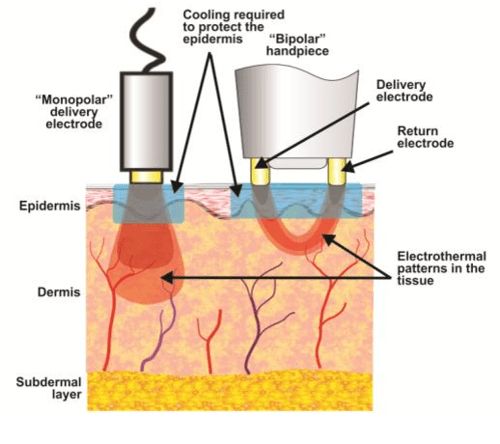
Monopolar RF uses a single treatment electrode placed on the skin while a separate grounding electrode is attached elsewhere on the body.
The RF energy travels from the treatment handpiece through deeper layers of tissue toward the grounding pad. Because the energy penetrates more deeply, monopolar RF is commonly used for:
- Deep skin tightening
- Facial contouring
- Body tightening
- Collagen remodeling
- Loose skin improvement
The deeper penetration allows monopolar RF to target tissues beneath the dermis, including subcutaneous layers.
As the tissue heats, collagen fibers contract and stimulate new collagen production over time. This gradual remodeling process contributes to firmer and tighter-looking skin.
Modern professional monopolar RF systems often include:
- Intelligent temperature control
- Cooling technology
- Adjustable energy levels
- Real-time monitoring systems
- Large treatment applicators
These features help improve both safety and treatment comfort.
Because monopolar RF works at deeper tissue levels, treatments are often associated with stronger lifting and tightening effects.
How Bipolar RF Works
Bipolar RF uses two electrodes positioned within the same treatment handpiece.
Instead of traveling through the entire body, the RF energy flows only between these two electrodes, concentrating the heating effect within more superficial skin layers.
This controlled and localized energy delivery makes bipolar RF especially suitable for:
- Surface skin tightening
- Fine lines
- Delicate facial areas
- Eye area rejuvenation
- Skin texture improvement
- Mild skin laxity
Compared with monopolar RF, bipolar RF generally penetrates less deeply but offers greater treatment precision and controlled heating.
Many professional bipolar RF devices are designed for facial treatments that require accuracy and comfort.
Because the energy remains localized, bipolar RF treatments are often perceived as more comfortable and suitable for clients seeking gentler maintenance procedures.
The Importance of Professional RF Systems
In professional clinic settings, RF performance depends heavily on equipment quality, energy stability, and operator experience.
Advanced aesthetic RF devices often include:
- Multiple RF modes
- Adjustable frequencies
- Smart temperature sensors
- Customized treatment protocols
- Ergonomic treatment handles
- Integrated cooling systems
These technologies help operators provide safer, more personalized treatment experiences.
As modern aesthetic clinics increasingly focus on customized skincare solutions, many professional systems now combine monopolar RF, bipolar RF, vacuum therapy, EMS, or microneedling into multi-technology platforms.
This trend reflects the growing demand for comprehensive anti-aging solutions rather than single-function treatments.
Advantages / Comparison
Although both technologies use RF energy, bipolar RF and monopolar RF differ significantly in treatment depth, treatment goals, and clinical applications.
Treatment Depth
Monopolar RF
Monopolar RF penetrates deeper into the tissue, making it more suitable for:
- Significant skin laxity
- Facial lifting
- Jawline contouring
- Body tightening
- Deep collagen stimulation
Bipolar RF
Bipolar RF focuses more on superficial skin layers, making it ideal for:
- Fine lines
- Mild sagging
- Skin texture refinement
- Sensitive facial zones
- Maintenance treatments
Energy Distribution
Monopolar RF
Energy travels through a broader tissue area, allowing deeper volumetric heating.
This often produces stronger tightening effects.
Bipolar RF
Energy remains localized between electrodes, offering more controlled and targeted heating.
This can improve treatment precision.
Comfort Level
Monopolar RF
Because the energy penetrates deeper, treatments may feel warmer and more intensive.
Modern cooling systems help improve comfort significantly.
Bipolar RF
Bipolar RF is generally considered gentler and more comfortable for sensitive facial areas.
Treatment Areas
Monopolar RF
Most commonly used for:
- Face lifting
- Neck tightening
- Abdomen tightening
- Body contouring
- Larger treatment zones
Bipolar RF
Most commonly used for:
- Eye area
- Forehead
- Nasolabial folds
- Fine facial wrinkles
- Localized rejuvenation
Professional Treatment Flexibility
In professional aesthetic clinics, many operators combine both monopolar and bipolar RF technologies within customized treatment programs.
For example:
- Monopolar RF may be used for deep lifting.
- Bipolar RF may be used for surface refinement.
This layered treatment approach helps clinics deliver more personalized anti-aging results.
Modern multi-function RF platforms increasingly support this combined strategy, allowing clinics to expand treatment versatility while improving client satisfaction.
Professional RF vs Home RF Devices
Home-use RF devices have become more common in recent years, but professional RF systems continue to maintain major advantages.
Higher Energy Stability
Professional devices provide more consistent and controlled energy delivery.
Better Safety Systems
Advanced clinic-grade machines include intelligent temperature monitoring and safety protection systems.
Deeper Treatment Capability
Professional RF systems are capable of reaching deeper tissue layers more effectively.
Customized Clinical Protocols
Experienced operators can adjust parameters according to skin type, treatment area, and client goals.
These factors make professional RF treatments significantly more effective for advanced anti-aging and skin tightening procedures.
Applications / Client Needs
Both monopolar RF and bipolar RF are widely used across professional beauty clinics, med spas, and aesthetic centers.
Their versatility makes them suitable for a wide range of client concerns.
Common Applications for Monopolar RF
- Facial lifting
- Jawline definition
- Neck tightening
- Body skin tightening
- Post-weight-loss skin laxity
- Abdomen contouring
Monopolar RF is often recommended for clients who want more visible lifting and tightening improvements without surgery.
Common Applications for Bipolar RF
- Eye rejuvenation
- Fine wrinkle reduction
- Skin smoothing
- Sensitive facial areas
- Preventive anti-aging treatments
- Skin texture improvement
Bipolar RF is especially suitable for clients seeking gentle, regular maintenance treatments.
Growing Demand for Personalized RF Treatments
Modern aesthetic clients increasingly expect personalized treatment plans rather than one-size-fits-all procedures.
As a result, clinics are moving toward:
- Customized RF protocols
- Combination therapies
- Multi-technology platforms
- Layered anti-aging treatments
Professional RF systems with flexible treatment options allow clinics to better address diverse client needs while improving treatment efficiency.
For distributors and beauty equipment suppliers, this trend also highlights the growing value of multifunction RF devices that support multiple treatment modes within one platform.
Conclusion
Both bipolar RF and monopolar RF play important roles in modern aesthetic medicine and professional beauty treatments. While they share the same fundamental principle of radio frequency energy, their differences in penetration depth, energy distribution, and treatment focus make them suitable for different clinical applications.
Monopolar RF is generally preferred for deeper lifting and tightening treatments, while bipolar RF offers greater precision and comfort for superficial rejuvenation and delicate facial areas.
As aesthetic technology continues to evolve, professional clinics are increasingly integrating multiple RF modalities into comprehensive anti-aging treatment programs. This approach allows operators to create more personalized solutions while improving treatment versatility and client satisfaction.
For professional beauty clinics, med spas, and equipment distributors, understanding the strengths of different RF technologies is essential for meeting modern market demands and delivering effective non-invasive skin rejuvenation treatments.
With continued advancements in intelligent RF systems, multi-function platforms, and customized treatment strategies, RF technology is expected to remain one of the core foundations of professional aesthetic treatments in the years ahead.
Founded in 2008, Guangzhou GLM Beauty Spa Equipment Factory specializes in research, development, manufacture and selling of beauty and slimming machines. Our production base is located in Guangzhou City, Guangdong Province, China. Since our foundation, we have introduced advanced technologies and equipment, to assure high quality and high performance of our products. With professional marketing guide and excellent after-sales service, our products have been exported to over 20 countries and regions, including Southeast Asia, the Middle East, Europe and the United States, won worldwide praises and gained a good reputation.