
1. Introduction
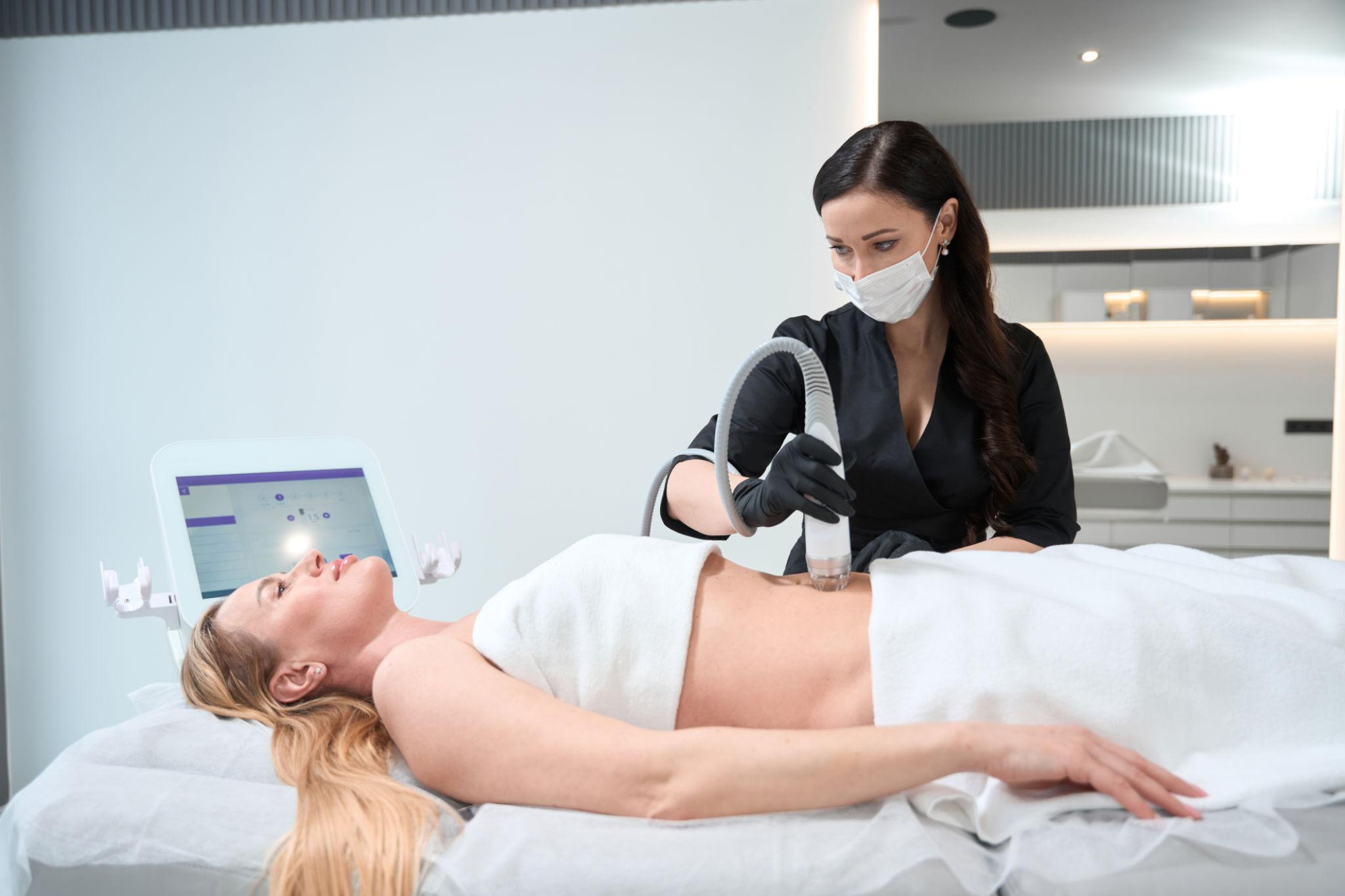
The demand for non-invasive body contouring continues to influence the professional beauty and aesthetics industry in 2026. More clients are looking for ways to improve body shape, address stubborn fat deposits, enhance skin firmness, and refine their overall appearance without undergoing invasive surgery or experiencing extended recovery periods.
For beauty salons, medical spas, and aesthetic clinics, this growing demand creates opportunities to expand treatment services with advanced body sculpting equipment. Instead of relying on a single technology, professional establishments are increasingly exploring different energy-based and muscle-stimulation approaches to address individual body concerns.
Among the most widely discussed technologies are Radio Frequency (RF), ultrasound, cryolipolysis, and Electrical Muscle Stimulation (EMS). Although these technologies share the goal of improving body appearance, they work through different physical mechanisms and serve different treatment purposes.
RF focuses primarily on tissue heating and skin tightening. Ultrasound uses acoustic energy for targeted tissue applications, depending on the system design. Cryolipolysis applies controlled cooling to target subcutaneous fat, while EMS stimulates muscle contractions through electrical impulses.
Understanding how these technologies work helps professional operators select appropriate equipment, develop more effective treatment programs, and communicate realistic expectations to clients.
In 2026, the future of body sculpting is not simply about offering more powerful machines. It is about combining suitable technologies, professional treatment protocols, and personalized client care to deliver more comprehensive body contouring services.
2. Background and Problems: Why Is Non-Invasive Body Contouring Growing?
Traditional body contouring procedures, particularly surgical liposuction, can produce significant changes in body shape. However, surgery involves considerations such as anesthesia, procedural risks, recovery time, and financial investment. These factors lead many consumers to explore non-surgical alternatives.
At the same time, diet and exercise do not always address every aesthetic concern. Some clients maintain relatively stable body weight but remain concerned about localized fat deposits, uneven body contours, loose-looking skin, or insufficient muscle definition.
These concerns are particularly common in areas such as:
-
Abdomen and waistline
-
Thighs and hips
-
Upper arms
-
Back and flanks
-
Buttocks
-
Submental and other selected areas, depending on device indications
For professional beauty establishments, this creates a need for equipment that can support different treatment objectives.
However, one technology cannot address every concern equally well. A client interested in improving skin firmness may require a different approach from someone seeking treatment for localized subcutaneous fat or muscle conditioning.
This is why understanding the differences between RF, ultrasound, cryolipolysis, and EMS is essential when developing a professional body sculpting service.
Non-invasive treatments should also be positioned realistically. They are not substitutes for weight-loss programs or surgical procedures, and their outcomes vary according to the technology, device specifications, treatment protocol, and individual client characteristics.
3. Technology and Mechanisms: Four Major Body Sculpting Technologies in 2026
3.1 Radio Frequency (RF): Supporting Skin Tightening and Body Firmness
Radio Frequency (RF) is one of the most established technologies in professional aesthetic equipment. It uses controlled electromagnetic energy to generate heat within targeted tissue layers, making it particularly useful for treatments focused on skin firmness and the appearance of cellulite.
When RF energy passes through tissue, electrical resistance generates thermal effects. Depending on the device design, treatment parameters, and delivery method, this heat can reach the dermal and subcutaneous layers.
Controlled heating can influence collagen fibers and stimulate biological remodeling processes associated with collagen production. As a result, the treated skin may gradually appear firmer and smoother.
In body contouring applications, RF technology is commonly used to address:
-
Mild to moderate skin laxity.
-
Loose-looking abdominal skin.
-
Uneven skin texture and the appearance of cellulite.
-
Reduced skin firmness around the thighs and upper arms.
-
Body areas requiring improved skin appearance after changes in body weight.
Professional RF systems may use different configurations, including monopolar, bipolar, multipolar, and vacuum-assisted RF. Each configuration has different energy-delivery characteristics and treatment considerations.
For beauty salons and aesthetic clinics, RF equipment offers considerable flexibility. Operators can select appropriate handpieces and treatment parameters according to the body area and the client's skin condition.
Some advanced systems also integrate RF with vacuum massage or mechanical rolling. This combination can provide additional mechanical stimulation and support treatments targeting the appearance of cellulite.
However, RF is not a universal fat-removal solution. Its primary value in many body treatments is tissue heating and improving the appearance of skin firmness. Appropriate temperature control, continuous handpiece movement where required, and professional operating protocols are essential for safe treatment.
3.2 Ultrasound: Targeting Subcutaneous Tissue with Acoustic Energy
Ultrasound technology uses high-frequency sound waves to deliver acoustic energy into targeted tissues. In professional body sculpting equipment, different ultrasound systems are designed for different purposes, so understanding the distinction between them is important.
One commonly used approach is ultrasonic cavitation. Certain systems deliver low-frequency ultrasound into the subcutaneous fat layer, where acoustic pressure variations can produce cavitation effects. These effects are intended to influence fat tissue and may contribute to localized circumference reduction.
Another approach is High-Intensity Focused Ultrasound (HIFU). Unlike conventional cavitation systems, focused ultrasound concentrates energy at selected depths to generate localized thermal effects. Depending on the device's design and approved indications, it may be used for tissue tightening or targeted fat reduction.
The main applications of professional ultrasound body contouring include:
-
Localized abdominal fat concerns.
-
Waistline and flank contouring.
-
Thigh and hip treatment programs.
-
Selected areas requiring targeted tissue treatment.
-
Combination programs involving RF or other body contouring technologies.
Ultrasound equipment offers an advantage in its ability to deliver energy beneath the skin without relying solely on surface heating. However, treatment depth, frequency, intensity, and energy distribution differ considerably between devices.
Professional operators must understand the specific technology used by their equipment rather than assuming that all ultrasound machines provide identical effects.
For example, a cavitation handpiece and a focused ultrasound applicator should not be described as interchangeable technologies. Their mechanisms, treatment protocols, and safety requirements are different.
Proper skin contact, suitable coupling gel where required, controlled treatment movement, and attention to the manufacturer's operating instructions are important considerations.
For clinics seeking to expand their localized body contouring services, ultrasound equipment can provide another treatment option that complements RF-based skin tightening.
3.3 Cryolipolysis: Using Controlled Cooling for Localized Fat Reduction
Cryolipolysis, commonly known as fat freezing, is a non-invasive body contouring technology that uses controlled cooling to target localized subcutaneous fat.
The underlying principle is based on the different responses of fat cells and surrounding tissues to cold exposure. Under carefully controlled conditions, fat cells are more susceptible to cold-induced injury than the skin.
During treatment, an applicator may use vacuum suction to draw a selected area of tissue into a cooling chamber. The device then delivers controlled cooling according to its specified treatment protocol.
The cooling process can trigger a gradual biological response in the targeted fat cells. Over the following weeks and months, the body gradually processes and clears affected cells, potentially reducing the visible fat bulge in the treated area.
Cryolipolysis is generally intended for localized fat reduction rather than overall weight loss.
Typical treatment areas include:
-
Abdomen.
-
Flanks and waistline.
-
Inner and outer thighs.
-
Upper arms.
-
Other approved treatment areas, depending on the device.
Compared with RF and ultrasound, cryolipolysis has a different treatment objective. While RF commonly focuses on tissue heating and skin firmness, cryolipolysis specifically targets localized fat through controlled cooling.
This distinction is important when developing treatment plans for clients.
However, cryolipolysis requires careful client screening and professional operation. Cold-related conditions, circulation problems, treatment-area suitability, and other contraindications must be considered.
Potential adverse effects include temporary redness, swelling, bruising, discomfort, and numbness. A rare but important complication is paradoxical adipose hyperplasia (PAH), in which the treated fat tissue increases rather than decreases.
For this reason, professional equipment should include reliable temperature monitoring and appropriate protective measures. Treatment should only be performed according to the device's authorized indications and manufacturer protocols.
3.4 EMS: Improving Muscle Conditioning and Body Definition
Electrical Muscle Stimulation (EMS) uses electrical impulses to activate motor nerves and produce muscle contractions. In professional body sculpting applications, repeated muscle stimulation is intended to support muscle conditioning, firmness, and definition.
Some advanced body contouring systems use electromagnetic stimulation, including High-Intensity Focused Electromagnetic (HIFEM) technology. Although these systems are often discussed alongside EMS, they are not technically identical. EMS typically delivers electrical stimulation through electrodes, whereas HIFEM systems use electromagnetic fields to induce muscle activation.
During treatment, applicators or electrode pads are positioned over selected muscle groups. The device delivers controlled stimulation that produces repeated contractions.
Depending on the system, treatment may focus on:
-
Abdominal muscle conditioning.
-
Buttock muscle activation.
-
Thigh muscle stimulation.
-
Arm muscle conditioning.
-
Improving the appearance of muscle firmness and definition.
Unlike cryolipolysis, which targets fat cells, EMS primarily focuses on muscle activity. This makes it a complementary option for clients whose concerns involve reduced muscle definition rather than localized fat alone.
For professional salons and clinics, EMS equipment can also support structured body conditioning programs. Treatment intensity and session duration should be adjusted according to the client's tolerance, physical condition, and device instructions.
It is important to distinguish muscle stimulation from weight-loss treatment. EMS should not be marketed as a replacement for exercise, nor should muscle contraction automatically be interpreted as significant fat reduction.
Professional screening is essential, particularly for clients with implanted electronic devices, certain medical conditions, or other contraindications.
4. Advantages and Comparison: Which Technology Is Best for Body Contouring?
The four technologies offer different advantages because they target different tissue structures and aesthetic concerns. Rather than identifying one universal winner, professional operators should evaluate each technology according to its intended application.
|
Technology |
Primary mechanism |
Main treatment focus |
|---|---|---|
|
RF |
Controlled radiofrequency heating |
Skin firmness and cellulite appearance |
|
Ultrasound |
Acoustic energy |
Targeted subcutaneous tissue applications |
|
Cryolipolysis |
Controlled cooling |
Localized fat reduction |
|
EMS |
Electrical muscle stimulation |
Muscle conditioning and definition |
RF: Flexible treatment applications
RF is particularly suitable for treatment programs focusing on skin firmness. Its adaptable handpiece configurations also make it useful for clinics offering multiple body treatment services.
Ultrasound: Targeted energy delivery
Ultrasound provides a different approach to localized body contouring. Depending on whether the system uses cavitation or focused ultrasound, it can support different tissue-targeting objectives.
Cryolipolysis: Fat-focused treatment
Cryolipolysis is designed specifically for localized fat reduction. Its cooling mechanism differentiates it from technologies that mainly focus on skin or muscle.
EMS: Muscle-focused conditioning
EMS complements fat-focused treatments by addressing muscle activity and definition. It can be particularly relevant when clients want a more defined appearance rather than simply a smaller body circumference.
Another important advantage of professional multi-technology equipment is treatment flexibility.
Some beauty machines integrate RF, ultrasound, vacuum massage, or other functions into a single platform. Such systems can help salons expand their service offerings while making more efficient use of treatment rooms and equipment investments.
However, integrating several functions does not automatically make a machine more effective. Each function must have appropriate technical specifications, independent safety considerations, and clearly defined treatment applications.
The most suitable equipment is not necessarily the machine with the greatest number of handpieces. It is the equipment that matches the clinic's target customers, treatment objectives, operator capabilities, and business model.
5. Applications and Client Needs: Building Professional Body Sculpting Programs
In professional beauty environments, successful body sculpting services depend on matching the technology to the client's primary concern.
A structured consultation should begin with an assessment of the treatment area, skin condition, localized fat distribution, muscle tone, medical history, and expected outcomes.
Scenario 1: Clients concerned about loose-looking skin
For clients whose primary concern is reduced skin firmness around the abdomen, arms, or thighs, RF-based treatments may be considered where appropriate.
The treatment objective is to improve the appearance of skin firmness rather than promise substantial fat removal.
Scenario 2: Clients with localized fat deposits
For suitable clients with pinchable subcutaneous fat, cryolipolysis or an appropriately indicated ultrasound system may be considered.
The selection depends on the treatment area, device specifications, contraindications, and the client's expectations.
Scenario 3: Clients seeking improved muscle definition
EMS-based treatments may be considered for clients who want to complement their fitness routines with professional muscle stimulation.
These treatments are intended to support muscle conditioning, not replace physical exercise or guarantee weight loss.
Scenario 4: Clients with multiple body concerns
Some clients have a combination of localized fat, reduced skin firmness, and insufficient muscle definition.
In such situations, a professional may consider a staged treatment strategy using different technologies that address complementary tissue targets.
For example, a suitable client may benefit from a fat-focused procedure followed by a separately scheduled skin-firming or muscle-conditioning program, provided that the device instructions and clinical assessment support the combination.
Treatments should not simply be stacked together to increase the number of procedures. The sequence, timing, and compatibility of each technology require professional evaluation.
Why professional equipment matters
Compared with basic home-use devices, professional body sculpting equipment is generally designed around more specialized treatment functions, adjustable operating parameters, and dedicated applicators.
Professional systems may also provide:
-
Multiple handpiece configurations for different body areas.
-
Adjustable energy or stimulation parameters.
-
Treatment monitoring and safety controls.
-
More structured operating protocols.
-
Technical support and equipment maintenance.
-
Training resources for professional operators.
These features can help salons and clinics build more consistent treatment workflows.
However, professional equipment must still be selected according to its actual performance, regulatory status, documentation, and intended use. More advanced specifications do not eliminate the need for operator training or client screening.
For beauty equipment distributors and manufacturers, this also highlights the importance of providing clear technical documentation, reliable after-sales support, and practical operator training.
6. Conclusion: The Future of Professional Body Sculpting in 2026
Non-invasive body contouring is becoming increasingly diversified, with RF, ultrasound, cryolipolysis, and EMS each contributing different treatment capabilities.
RF supports skin firmness through controlled heating. Ultrasound provides acoustic energy for targeted tissue applications. Cryolipolysis focuses on localized fat reduction through controlled cooling. EMS addresses muscle conditioning and definition through electrical stimulation.
Rather than competing directly, these technologies can complement one another when selected according to individual client needs.
For beauty salons, medical spas, and aesthetic clinics, investing in suitable professional body sculpting equipment is not simply about following market trends. It is about developing differentiated services, improving treatment flexibility, and meeting the growing demand for personalized non-invasive body contouring.
In 2026, successful body sculpting services will depend on three key factors: appropriate technology selection, professional operating standards, and realistic client expectations.
As the industry continues to evolve, equipment manufacturers that combine reliable technology, practical functionality, safety-oriented design, and professional support will be well positioned to serve the changing needs of the global beauty and aesthetics market.
Founded in 2008, Guangzhou GLM Beauty Spa Equipment Factory specializes in research, development, manufacture and selling of beauty and slimming machines. Our production base is located in Guangzhou City, Guangdong Province, China. Since our foundation, we have introduced advanced technologies and equipment, to assure high quality and high performance of our products. With professional marketing guide and excellent after-sales service, our products have been exported to over 20 countries and regions, including Southeast Asia, the Middle East, Europe and the United States, won worldwide praises and gained a good reputation