Introduction
Modern beauty clinics and professional salons are increasingly looking for body contouring technologies that can do more than address a single concern. Clients may want to refine stubborn areas, improve the appearance of cellulite, create smoother body lines, or achieve a firmer-looking appearance—all within a comfortable, non-surgical treatment experience.
This is where the combination of vacuum therapy and ultrasonic cavitation has attracted growing attention.
Cavitation and vacuum work through different mechanisms. Cavitation uses ultrasound energy to target localized adipose areas, while vacuum technology uses controlled negative pressure to lift and mobilize soft tissue. When these technologies are integrated into one professional treatment system, practitioners can build a more comprehensive body contouring protocol rather than relying on a single treatment modality.
For beauty clinics, this combination is not simply about adding more functions to a machine. It is about creating a more flexible treatment workflow that can be adapted to different body areas, client concerns, and treatment objectives.
Background: Why Combine Two Technologies?
Body contouring is rarely a one-dimensional concern.
A client may have localized fat around the abdomen but also experience loose-looking skin. Another may be primarily concerned with cellulite and uneven skin texture around the thighs. Others may want to improve the appearance of the waistline or create smoother transitions around the hips and buttocks.
A single-function device may be effective for a specific purpose, but it may not address all of these concerns within one treatment strategy.
This is one reason multifunctional aesthetic equipment has become increasingly attractive to professional operators. Instead of building a treatment around one technology, clinics can combine different mechanisms to create a more complete service.
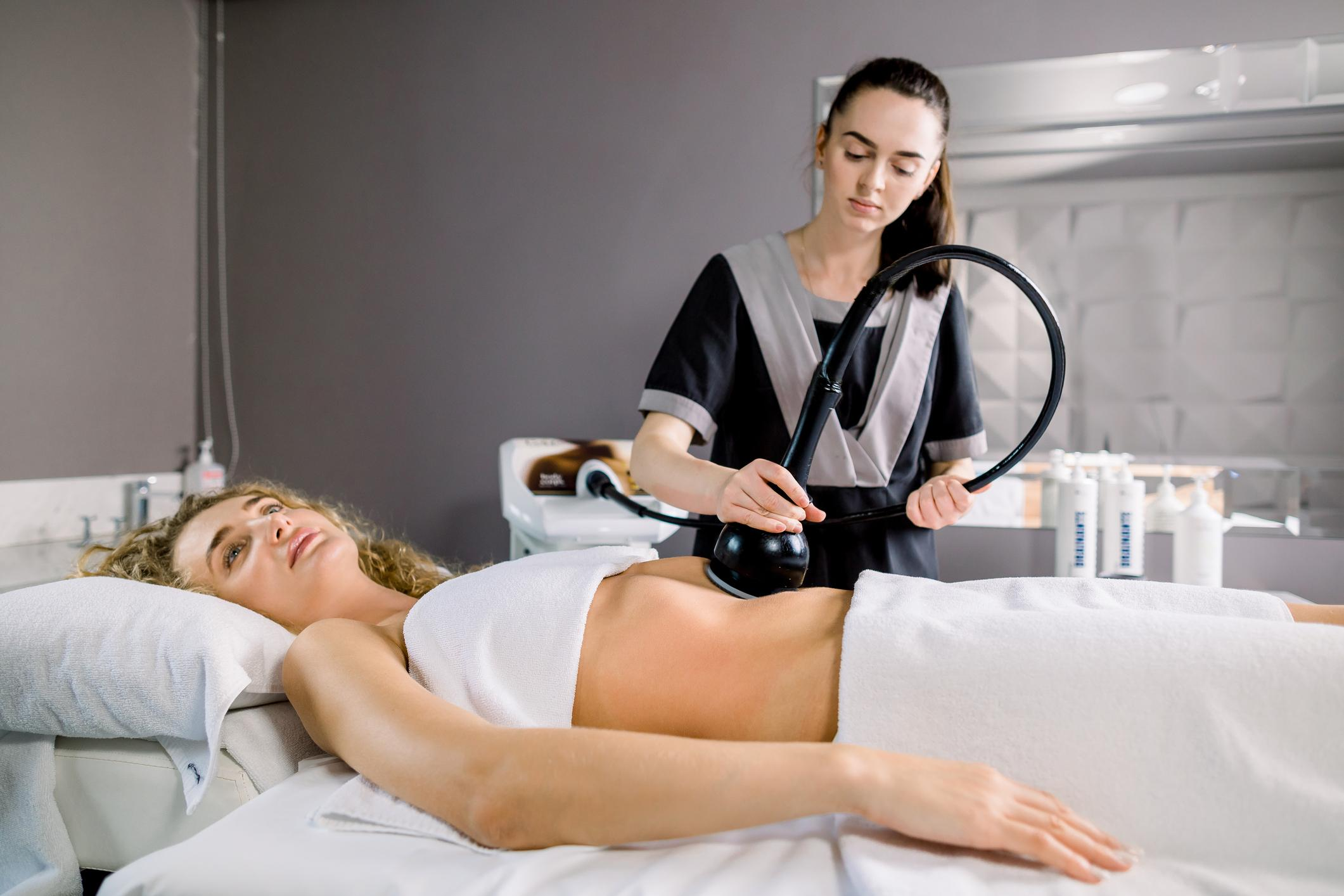
Cavitation focuses primarily on localized body contouring. Vacuum, on the other hand, introduces a mechanical component through controlled suction. The negative pressure gently lifts the skin and underlying soft tissue into the handpiece, allowing the operator to manipulate the treatment area while supporting a massage-like treatment experience.
The result is a complementary relationship:
Cavitation provides energy-based action, while vacuum provides controlled mechanical manipulation.
Rather than asking which technology is better, professional operators can consider how the two technologies can work together within an appropriate treatment protocol.
Technology & Mechanism: How Cavitation Works
Ultrasonic cavitation uses low-frequency ultrasound delivered through a specialized body handpiece.
When the handpiece is moved across an appropriate treatment area, ultrasound energy is transmitted through the coupling medium and into the targeted tissue. In aesthetic body contouring applications, cavitation is generally positioned as a non-invasive technology for localized fat and contour concerns rather than a treatment for overall weight loss.
This distinction is important.
Professional body contouring is about improving the appearance and proportions of specific areas. Common treatment zones may include the abdomen, waist, thighs, hips, back, and buttocks, depending on the equipment design and manufacturer-approved applications.
The cavitation stage is therefore typically used when the primary objective is to focus on localized adipose areas.
For professional operators, the value of cavitation also comes from its repeatable workflow. A dedicated handpiece, adjustable parameters, and a controlled treatment path can make the procedure easier to standardize across different clients.
However, cavitation should not be viewed as a “one treatment fits all” technology. Proper client assessment, correct parameter selection, appropriate coupling, and adherence to the manufacturer's instructions remain essential.
Technology & Mechanism: How Vacuum Works
Vacuum technology operates through controlled negative pressure.
Instead of simply delivering energy into the skin, a vacuum handpiece mechanically lifts and mobilizes a fold of tissue. This creates a distinctive treatment sensation and allows the operator to work with the tissue through controlled suction and movement.
Vacuum massage has been studied as a mechanical technique that lifts the skin and mobilizes soft tissue. In professional aesthetic systems, vacuum may also be combined with rollers or other mechanical structures to provide a more dynamic treatment experience.
From a treatment perspective, vacuum can play several supporting roles.
First, it can help manipulate the treatment area before or after an energy-based procedure. Second, it can provide a massage-like mechanical action that is useful when addressing the appearance of uneven or dimpled skin. Third, controlled suction can help practitioners work systematically across larger body areas.
This makes vacuum particularly interesting when it is paired with another body contouring technology.
Instead of treating the tissue through energy alone, the practitioner can introduce a mechanical component into the overall treatment sequence.
Why Combining Vacuum with Cavitation Can Be Valuable
The key advantage of combining vacuum and cavitation is complementary functionality.
Cavitation and vacuum do not perform exactly the same job. Their mechanisms are different, which allows professional equipment manufacturers to integrate them into a single treatment platform.
A typical treatment concept may look like this:
Step 1: Prepare the area
The practitioner assesses the treatment zone, cleans the skin, applies suitable coupling medium where required, and selects appropriate device parameters.
Step 2: Apply cavitation
The cavitation handpiece is used on the selected localized area according to the device's operating instructions and treatment protocol.
Step 3: Introduce vacuum treatment
Controlled negative pressure is then used to mobilize the tissue and provide a mechanical massage effect.
Step 4: Finish the treatment
The practitioner may complete the protocol with manual massage, additional compatible technology, or post-treatment care according to the clinic's established procedure.
This approach allows the practitioner to think beyond a single machine function.
The objective is not necessarily to make every technology operate at the same time. In many professional environments, the greater value comes from sequencing technologies intelligently.
Vacuum + Cavitation vs. Cavitation Alone
A cavitation-only device can be an effective choice for clinics that want a focused solution for localized body contouring.
However, adding vacuum expands the treatment possibilities.
With cavitation alone, the treatment workflow primarily revolves around ultrasound energy. When vacuum is added, the practitioner gains a mechanical treatment component that can be incorporated before, after, or alongside other compatible technologies depending on the device design.
This can be particularly useful for clients whose concerns extend beyond localized fat.
For example, consider a client who wants to improve the appearance of the abdomen. The practitioner may focus on localized contouring with cavitation while incorporating vacuum massage into the broader body treatment plan.
For the thighs, vacuum may be especially useful when the client is concerned about the appearance of cellulite or uneven skin texture.
For the waist and hips, the combination can support a more comprehensive contour-focused treatment workflow.
The important point is that the combination does not automatically guarantee better results for every client. Instead, it gives trained professionals more treatment options and greater protocol flexibility.
The Professional Equipment Advantage
The difference between a professional aesthetic device and a basic home-use product is not simply power.
Professional equipment is designed around repeatable treatment workflows, operator control, ergonomic handpieces, parameter adjustment, and long-term commercial use.
For salons and clinics, these details matter.
A professional vacuum and cavitation system can provide:
- Dedicated handpieces for different body areas
- Adjustable treatment parameters
- More consistent suction control
- Ergonomic operation for professional users
- Larger treatment-area coverage
- Integrated displays and treatment controls
- Structured treatment protocols
- Easier incorporation into premium service packages
For a busy clinic, usability can be just as important as the technology itself.
If a device is difficult to operate, uncomfortable for the practitioner, or inefficient between appointments, its commercial value decreases. A well-designed system should therefore support the entire treatment workflow—from preparation to operation, cleaning, storage, and repeat use.
This is also where multifunctional equipment can provide an advantage.
A system that combines cavitation with vacuum, and potentially other technologies such as RF or mechanical rollers, can allow clinics to develop several treatment packages from one equipment platform.
Applications in Professional Beauty Clinics
1. Abdomen Contouring
The abdomen is one of the most common areas for non-invasive body contouring.
Clients may be concerned about localized fat, uneven contours, or the overall appearance of the waistline. Cavitation can be incorporated into a localized contouring protocol, while vacuum can add mechanical manipulation to the treatment workflow.
The practitioner can adjust the approach according to tissue characteristics, treatment goals, and the device's recommended parameters.
2. Waist and Flanks
The waist and flank areas often require careful movement and positioning because of their natural curves.
A vacuum handpiece can help the practitioner work systematically across these contours, while cavitation can be incorporated into areas where localized contouring is the primary objective.
This combination is especially suitable for clinics that want to create dedicated “waist shaping” or “body contouring” treatment packages.
3. Thighs and Cellulite Appearance
Cellulite is not simply a fat issue. Skin texture, connective tissue structure, fluid retention, and other factors can influence its appearance.
That is why a purely fat-focused treatment may not address every client concern.
Vacuum-based mechanical manipulation can provide an additional approach for clients concerned about uneven-looking skin, while cavitation can be incorporated when localized adipose tissue is also part of the treatment objective.
4. Hips and Buttocks
For the hips and buttocks, treatment goals may focus on smoother-looking contours and improved overall body proportions.
A combination system gives practitioners the ability to adapt the treatment sequence instead of relying on one fixed procedure.
As with all professional body contouring treatments, the treatment area, intensity, duration, and frequency should be determined according to the specific device, client assessment, and professional protocol.
Building a Better Treatment Experience
Technology is only one part of a successful professional treatment.
The practitioner also plays a critical role.
A well-designed treatment begins with consultation. The operator should understand the client's concerns, identify the target area, review relevant contraindications, and establish realistic expectations.
During treatment, consistent handpiece movement and appropriate contact are important. Excessive suction or inappropriate operating parameters should not be used simply to create a stronger sensation.
In professional aesthetics, “stronger” does not automatically mean “better.”
The goal is controlled, repeatable treatment.
After the procedure, the practitioner can provide suitable aftercare guidance and schedule follow-up sessions where appropriate. Tracking measurements, photographs, and client feedback can also help clinics evaluate treatment progress and refine their protocols.
This professional approach can make a significant difference in the perceived value of the service.
A Smarter Choice for Modern Clinics
For clinics evaluating new body contouring equipment, the question should not simply be:
“Does this machine have cavitation?”
A better question is:
“What complete treatment workflow can this machine help us build?”
A cavitation-only platform may be suitable for a clinic that wants a specialized service.
A vacuum-and-cavitation system, however, can provide greater flexibility for operators who want to address multiple aspects of body contouring within a broader treatment program.
When combined with carefully designed handpieces, adjustable parameters, ergonomic operation, and reliable construction, the technology becomes more than a collection of functions.
It becomes a professional treatment platform.
Conclusion
Combining vacuum with cavitation offers beauty salons and aesthetic clinics a practical way to create more comprehensive body contouring protocols.
Cavitation provides an energy-based approach for localized contouring, while vacuum introduces controlled mechanical manipulation and a massage-oriented treatment component. Their complementary mechanisms allow professional operators to design treatment sequences according to different body areas and client concerns.
The real value of this combination is not simply the number of technologies inside the machine.
It is the flexibility, control, and treatment possibilities that the system can provide to professionals.
For modern beauty businesses, investing in versatile professional equipment can also support the development of differentiated service packages, repeat-treatment programs, and a more structured client experience.
As body contouring continues to evolve, the most valuable equipment will not necessarily be the machine with the longest list of functions. It will be the system that helps professionals use those functions intelligently, consistently, and safely within a well-designed treatment workflow
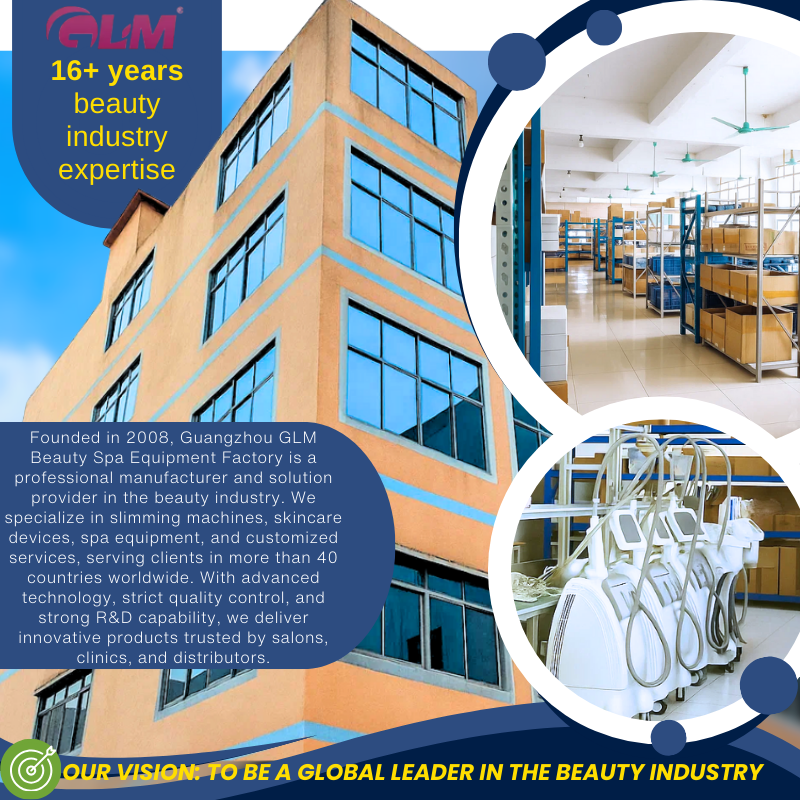
Founded in 2008, Guangzhou GLM Beauty Spa Equipment Factory specializes in research, development, manufacture and selling of beauty and slimming machines. Our production base is located in Guangzhou City, Guangdong Province, China. Since our foundation, we have introduced advanced technologies and equipment, to assure high quality and high performance of our products. With professional marketing guide and excellent after-sales service, our products have been exported to over 20 countries and regions, including Southeast Asia, the Middle East, Europe and the United States, won worldwide praises and gained a good reputation