Introduction
The demand for non-invasive fat reduction treatments is at an all-time high. Clients are increasingly looking for safe, effective ways to sculpt their bodies without surgery or downtime. Among the most popular solutions are Cryolipolysis (fat freezing) and Ultrasonic Cavitation (fat melting)—two technologies that promise body contouring results without needles or recovery time.
But while both can help eliminate stubborn fat, their mechanisms, speed, and results differ significantly. Understanding how they work helps professionals recommend the right solution—and helps clients choose the treatment that best suits their goals.
Cryolipolysis: Freezing Fat to Shape the Body

Cryolipolysis, often known by its commercial name CoolSculpting, uses controlled cooling to target and destroy fat cells beneath the skin. The device applies suction to the treatment area, cooling it to around -10°C to -15°C, which triggers apoptosis—the natural death of fat cells.
Once frozen, these fat cells gradually break down and are eliminated by the body’s lymphatic system over several weeks.
Key Advantages of Cryolipolysis
-
Permanent fat reduction: Destroyed fat cells do not regenerate.
-
Precise contouring: Ideal for localized areas like abdomen, thighs, arms, and back.
-
Non-invasive with minimal discomfort: Only mild numbness or redness after treatment.
Limitations
-
Slower results: Visible changes appear after 4–6 weeks as the body metabolizes fat.
-
Not suitable for large areas: Best for moderate fat deposits.
-
Requires few sessions: Usually 1–3 sessions per area for noticeable improvement.
Cryolipolysis is often chosen for clients who want gradual, natural-looking fat loss and long-lasting outcomes.
Cavitation: Melting Fat with Sound Waves
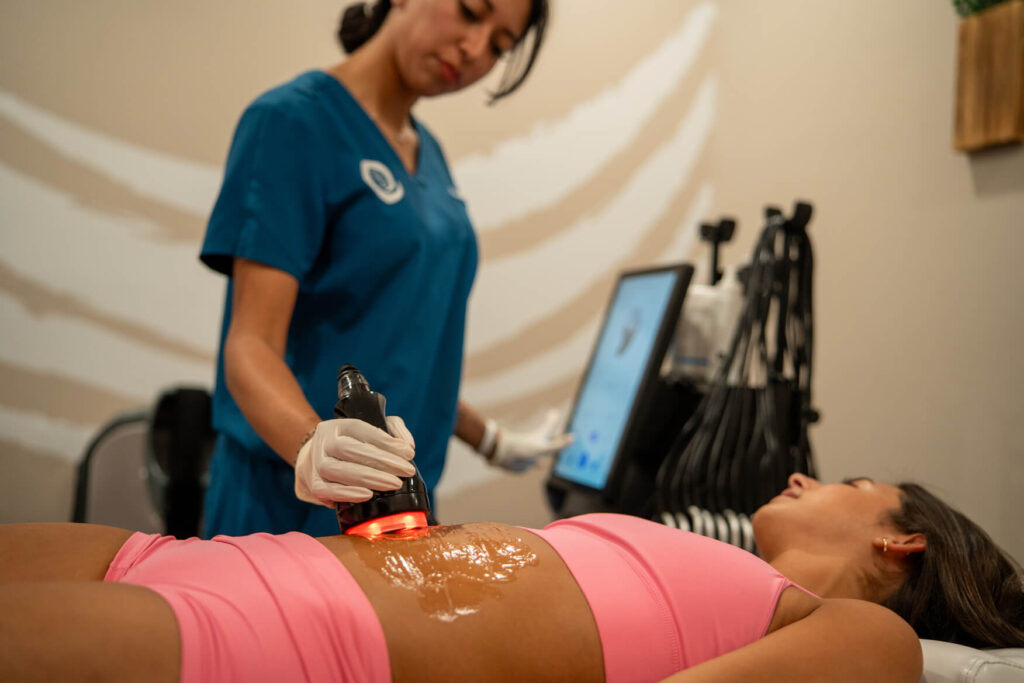
Ultrasonic Cavitation, on the other hand, uses low-frequency ultrasound waves to target fat cells. These sound waves create micro-bubbles in the interstitial fluid surrounding fat tissue. When these bubbles collapse, they cause the fat cell membranes to rupture—a process called lipolysis.
The released fat is then metabolized and flushed out through the body’s natural detox pathways.
Key Advantages of Cavitation
-
Fast results: Visible reduction after the first few sessions.
-
No downtime: Clients can resume normal activities immediately.
-
Improves skin texture: Often combined with RF (radio frequency) for tightening.
-
Suitable for larger areas: Can cover abdomen, legs, buttocks, or arms efficiently.
Limitations
-
Temporary swelling: Mild bloating due to lymphatic activity.
-
Requires multiple sessions: Usually 6–10 treatments for best results.
-
Results vary by metabolism: Consistency and hydration affect outcomes.
Cavitation treatments are preferred by clients seeking quick contouring results and visible slimming effects in a shorter time frame.
Which Works Faster?
In terms of speed of visible results, Cavitation generally takes the lead.
-
Clients may notice inch loss and tighter contours after 1–3 sessions.
-
Cryolipolysis requires patience, as the body eliminates dead fat cells gradually.
However, Cryolipolysis delivers more permanent fat reduction, while Cavitation provides faster aesthetic improvement—making them complementary rather than competitive.
Professionals often combine both technologies: using Cryolipolysis for deep fat pockets and Cavitation + RF for refining body shape and tightening skin.
Why Clinics Invest in Both Devices
Modern beauty centers often equip themselves with multi-functional body sculpting machines that integrate Cryolipolysis, Cavitation, and RF in one platform.
These devices—like GLM’s advanced Cryo-Cavi systems—offer:
-
Adjustable cooling and ultrasound settings
-
Simultaneous fat freezing and tightening
-
Efficient, comfortable operation
-
Greater client satisfaction and repeat visits
By combining both technologies, professionals can personalize fat-loss programs, target different tissue depths, and achieve faster, more comprehensive results.
The Science Behind the Results
| Technology | Mechanism | Result Timeline | Fat Cell Elimination | Ideal Use |
|---|---|---|---|---|
| Cryolipolysis | Freezes fat cells (apoptosis) | 4–6 weeks | Permanent | Localized fat |
| Cavitation | Breaks fat cells via sound waves | 1–2 weeks | Temporary metabolic flush | Larger areas & fast contouring |
Together, they form a powerful dual-approach system: Cryolipolysis for durable fat cell destruction and Cavitation for surface-level contouring and tone improvement.
Conclusion
When it comes to fat-loss speed, Cavitation offers visible changes faster. But for long-term, stable results, Cryolipolysis remains unmatched.
The best results often come from a combined treatment plan—Cavitation for immediate slimming and Cryolipolysis for permanent fat reduction.
For clinics aiming to stand out in the competitive body-sculpting market, investing in dual-function Cryo-Cavi equipment provides a technological edge and delivers the most effective, client-pleasing results.
Founded in 2008, Guangzhou GLM Beauty Spa Equipment Factory specializes in research, development, manufacture and selling of beauty and slimming machines. Our production base is located in Guangzhou City, Guangdong Province, China. Since our foundation, we have introduced advanced technologies and equipment, to assure high quality and high performance of our products. With professional marketing guide and excellent after-sales service, our products have been exported to over 20 countries and regions, including Southeast Asia, the Middle East, Europe and the United States, won worldwide praises and gained a good reputation.