
Introduction
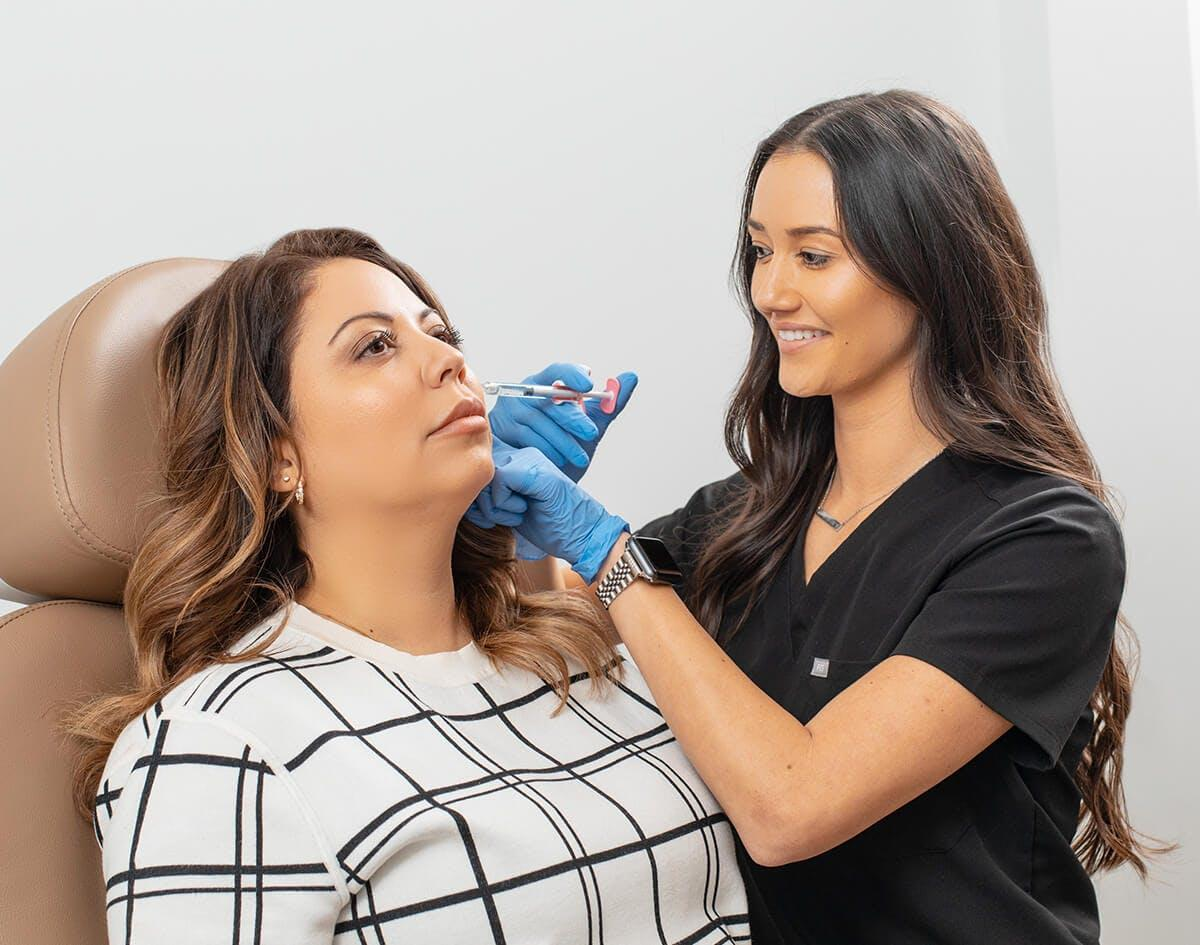
Dermal fillers have become an important part of modern aesthetic medicine, helping address facial volume loss, wrinkles, contour irregularities, and age-related changes without surgery. Yet one of the most common questions from clients is simple: How long do dermal fillers last?
The answer is not a single number.
Dermal filler longevity depends on the material, product formulation, treatment area, injection depth, amount used, individual metabolism, facial movement, and the clinical treatment plan. The U.S. Food and Drug Administration (FDA) notes that most approved fillers are temporary because the body gradually breaks down and absorbs their materials. The duration of effect varies by filler and injection site.
For professional aesthetic clinics, understanding longevity is more than a way to answer patient questions. It can influence treatment planning, follow-up schedules, product selection, and the way practitioners monitor changes over time.
Modern clinics are also increasingly combining injectable treatments with professional diagnostic and skin-analysis technologies. In particular, high-frequency ultrasound can help practitioners visualize filler deposits, surrounding tissues, and vascular structures—providing information that cannot be obtained from a simple visual examination. Recent expert consensus supports the use of ultrasound in selected aesthetic injection scenarios and for the assessment of complications.
Background / Problem
The phrase “filler lasts 6 months” or “filler lasts 18 months” can be misleading.
Different fillers behave differently in tissue. Even the same type of filler may show different longevity depending on its formulation and the anatomical area being treated. For example, FDA materials explain that approved hyaluronic acid products have reported durations ranging from approximately 6 months to 24 months, depending on the specific product and its properties.
The treatment area also matters.
Areas with frequent movement, such as the lips, may show changes sooner than relatively stable areas of the face. The American Society of Plastic Surgeons notes that some HA filler results may last as little as six months in the lips while certain cheek treatments can last considerably longer, depending on the product and treatment area.
This creates a practical challenge for aesthetic clinics. A patient may return months after treatment with concerns such as:
- “Has the filler completely disappeared?”
- “Why does one side look different?”
- “Do I need another treatment?”
- “Is there still filler under my skin?”
- “Is this swelling or residual filler?”
Visual examination and patient history remain important, but they do not always provide enough information.
This is where professional diagnostic technology can become valuable.
For clinics offering advanced aesthetic services, treatment should not be viewed as a single injection appointment. It can be managed as a longer-term process involving consultation, treatment planning, follow-up, documentation, and—when appropriate—imaging.
Technology / Mechanism
1. Hyaluronic Acid Fillers
Hyaluronic acid (HA) is one of the most widely used materials in dermal fillers. It is a naturally occurring substance in the body and can be formulated into injectable gels with different physical properties.
Crosslinking, molecular characteristics, gel structure, and product formulation can influence how long an HA filler remains clinically effective. FDA documentation notes that HA products can have different durations of effect, with approved products reporting durations from around six months to two years.
HA fillers are commonly selected for areas such as the lips, cheeks, nasolabial folds, chin, and other facial regions according to the specific product's approved indications.
2. Calcium Hydroxylapatite
Calcium hydroxylapatite (CaHA) is another absorbable filler material. According to the FDA, the effects of CaHA fillers used for approved indications last approximately 18 months, although actual treatment duration can vary by product and patient.
Its physical characteristics make it different from HA, so practitioners consider the desired degree of structural support, treatment area, and clinical objective when selecting an appropriate product.
3. Poly-L-Lactic Acid
Poly-L-lactic acid (PLLA) works differently from a traditional gel filler. Rather than simply providing immediate volume, it is a biodegradable material associated with gradual collagen stimulation.
FDA materials describe PLLA as a long-lasting absorbable filler that is administered through a series of treatments, with results in clinical studies lasting up to approximately two years in many patients.
This means that “filler longevity” should not always be understood as the period during which a visible gel remains unchanged. Different technologies can produce their aesthetic effect through different biological and structural mechanisms.
4. Why Professional Imaging Matters
One of the most interesting developments in aesthetic medicine is the growing role of ultrasound imaging.
High-frequency ultrasound can visualize soft-tissue structures and, when combined with Doppler techniques, provide information about blood flow. Research and expert consensus describe its applications in identifying previous filler, mapping vascular structures, guiding selected injections, and investigating complications.
A 2026 literature review also reported that different filler materials can have characteristic ultrasound patterns, allowing experienced practitioners to identify filler deposits and investigate issues such as migration, nodules, overfilling, inflammation, and vascular complications.
For a professional clinic, this creates an additional layer of information between the patient's appearance and the treatment decision.
Advantages / Comparison
Longevity Is More Than a Product Number
A product label may provide an expected duration, but a professional practitioner should not treat that number as a guarantee.
Several factors influence the visible longevity of dermal filler:
Filler material: HA, CaHA, PLLA, and other materials have different mechanisms and degradation profiles.
Treatment area: High-movement areas may behave differently from relatively stable facial regions.
Injection depth: Placement within different tissue planes can influence the appearance and clinical behavior of the treatment.
Product characteristics: Crosslinking, particle structure, concentration, viscosity, and formulation can affect performance.
Individual factors: Metabolism, tissue characteristics, facial movement, lifestyle, and previous treatments may all contribute to variation.
Treatment strategy: Initial volume, correction level, treatment spacing, and maintenance planning can influence the overall aesthetic result.
This is why professional clinics increasingly focus on individualized assessment rather than promising a fixed number of months.
Professional Equipment vs. Basic Visual Assessment
A conventional consultation relies heavily on visual examination, palpation, patient history, photography, and clinical experience.
These remain fundamental.
However, imaging technology can add another dimension.
High-frequency ultrasound can help visualize structures beneath the skin that cannot be directly observed. A 2025 international Delphi consensus recommended a minimum 15 MHz linear transducer for learning and regular diagnostics in aesthetic ultrasound and identified B-mode and Doppler capabilities as important components of the equipment setup.
For clinics, professional equipment can therefore support:
- More detailed pre-treatment assessment
- Identification of previous filler
- Vascular mapping in selected cases
- Treatment documentation
- Investigation of unexpected changes
- Follow-up assessment
- More informed treatment planning
This is particularly relevant when patients have received treatments from multiple providers or cannot accurately recall the type, location, or timing of previous filler.
Why Home Devices Are Not a Direct Replacement
Consumer beauty devices can be useful for general skincare routines, but they should not be confused with professional diagnostic ultrasound systems.
Clinical ultrasound equipment is designed for trained operators who understand anatomy, imaging parameters, probe positioning, interpretation, and clinical decision-making.
Aesthetic ultrasound is increasingly being discussed as a professional tool because it can provide real-time anatomical information and assist with filler assessment and complication management. Recent literature describes ultrasound as useful before, during, and after injectable procedures.
For a professional clinic, the value therefore comes not simply from owning a device, but from combining appropriate equipment with trained operators and standardized clinical workflows.
Applications / Client Needs
1. Pre-Treatment Assessment
Before a new filler treatment, a practitioner may need to understand the patient's existing facial anatomy and treatment history.
This becomes particularly useful for returning patients who have previously received fillers elsewhere.
Ultrasound can help identify existing filler deposits and provide information about their location. Expert consensus has recommended identifying previous filler before certain subsequent injections, particularly when the treatment history is uncertain.
2. Treatment Planning
A professional clinic can combine facial assessment, photography, patient goals, and—where appropriate—ultrasound imaging to create a more individualized treatment strategy.
For example, a patient asking for more cheek volume may not simply need “more filler.” The practitioner may first assess existing filler, tissue structure, asymmetry, and the desired contour before deciding whether additional treatment is appropriate.
This approach supports a more controlled treatment process and can help avoid unnecessary repeat injections.
3. Follow-Up and Longevity Management
Follow-up is an important part of managing dermal filler longevity.
Instead of asking only whether the filler “is still there,” a clinic can evaluate changes in volume, contour, symmetry, tissue condition, and patient satisfaction.
Where ultrasound is available and clinically appropriate, imaging may provide additional information about residual filler deposits and surrounding tissues.
This can be particularly useful for patients considering maintenance treatments.
4. Managing Unexpected Results
Not every change after filler treatment means that the filler has simply “worn off.”
Patients may experience swelling, nodules, migration, overcorrection, inflammatory reactions, or other complications. High-resolution ultrasound with Doppler has been increasingly used to investigate such findings.
A 2025 study reported that preprocedural ultrasound scanning was associated with a lower incidence of visible bruising in the studied setting, although the authors noted limitations including the single-center design and immediate post-treatment assessment.
This illustrates a broader trend: professional aesthetic medicine is moving toward greater visualization, documentation, and data-supported decision-making.
5. Building a More Professional Clinic Experience
For an aesthetic clinic, advanced equipment can also influence the consultation experience.
A professional skin or ultrasound assessment allows practitioners to explain facial structures and treatment considerations visually rather than relying entirely on verbal descriptions.
This can help patients understand why a practitioner may recommend observation, maintenance, adjustment, or further assessment instead of automatically repeating the previous treatment.
For equipment manufacturers and aesthetic clinics alike, the opportunity is not simply to promote another device. It is to support a more complete workflow—from assessment to treatment planning and follow-up.
Conclusion
Dermal filler longevity is not determined by a single number.
HA fillers may provide effects ranging from several months to two years depending on the specific product and treatment area, while CaHA and PLLA have their own characteristic duration profiles. The FDA emphasizes that the duration of effect depends on the filler material and injection site, while professional plastic surgery resources also highlight the importance of product and anatomical location.
For modern aesthetic clinics, the more important question is therefore not simply “How long does filler last?” but “How can we accurately understand the patient's tissue, previous filler, treatment response, and maintenance needs?”
Professional diagnostic technologies such as high-frequency ultrasound can provide an additional layer of anatomical information. Current literature and expert consensus support its role in selected aesthetic injection procedures, filler identification, vascular assessment, follow-up, and complication management.
As aesthetic medicine becomes increasingly precise, clinics that combine skilled practitioners with appropriate professional equipment can build a more systematic approach to treatment planning and long-term patient care.
Ultimately, filler longevity should be viewed as part of a broader treatment journey—not simply a countdown on a calendar
Founded in 2008, Guangzhou GLM Beauty Spa Equipment Factory specializes in research, development, manufacture and selling of beauty and slimming machines. Our production base is located in Guangzhou City, Guangdong Province, China. Since our foundation, we have introduced advanced technologies and equipment, to assure high quality and high performance of our products. With professional marketing guide and excellent after-sales service, our products have been exported to over 20 countries and regions, including Southeast Asia, the Middle East, Europe and the United States, won worldwide praises and gained a good reputation