Introduction
Light has been used in medicine and skincare for decades, from laser therapy in hospitals to phototherapy for seasonal depression. In the field of aesthetics, LED (Light-Emitting Diode) therapy has emerged as a safe, non-invasive option for improving skin health. But while the concept of “shining light on the skin” sounds simple, its effectiveness depends heavily on one factor: wavelength.
Each LED wavelength interacts differently with the skin. The choice of wavelength determines whether the light will fight acne, reduce pigmentation, stimulate collagen, or simply calm inflammation. Many clients, however, remain unaware of this science and often ask, “Which LED light color is best for me?” This article aims to explain the science behind wavelengths and help clients and clinics make informed decisions.
The Problem: One Treatment Doesn’t Fit All
Skin concerns vary widely. A teenager struggling with breakouts, a woman in her 40s noticing fine lines, and a man with sunspots all need different solutions. Yet many beauty advertisements promote LED therapy in a generalized way, simply saying it is “good for skin.”
This lack of specificity often leaves clients confused or disappointed with results. For example:
-
Someone using blue light may not see improvement in wrinkles.
-
Someone relying only on red light may not see pigment fading.
-
Someone with sensitive skin may need gentler exposure times.
The challenge for modern aesthetic clinics is personalization—matching the correct wavelength with the individual’s unique skin concern.
The Science of Wavelengths: How Light Interacts with Skin

LED therapy works on the principle of photobiomodulation. When skin cells absorb light of certain wavelengths, energy is transferred, triggering biological processes. The unit of measurement here is nanometer (nm), which defines how deep the light penetrates.
-
Shorter wavelengths (400–500 nm) penetrate superficially, targeting the epidermis.
-
Medium wavelengths (500–700 nm) reach the dermis, where collagen and pigmentation are found.
-
Longer wavelengths (700–900 nm) penetrate the deepest, influencing circulation and inflammation.
This explains why different colors have different effects: the depth of penetration aligns with specific skin structures.
Common Wavelengths and Their Clinical Applications
1. Blue Light (≈415 nm) – The Acne Fighter
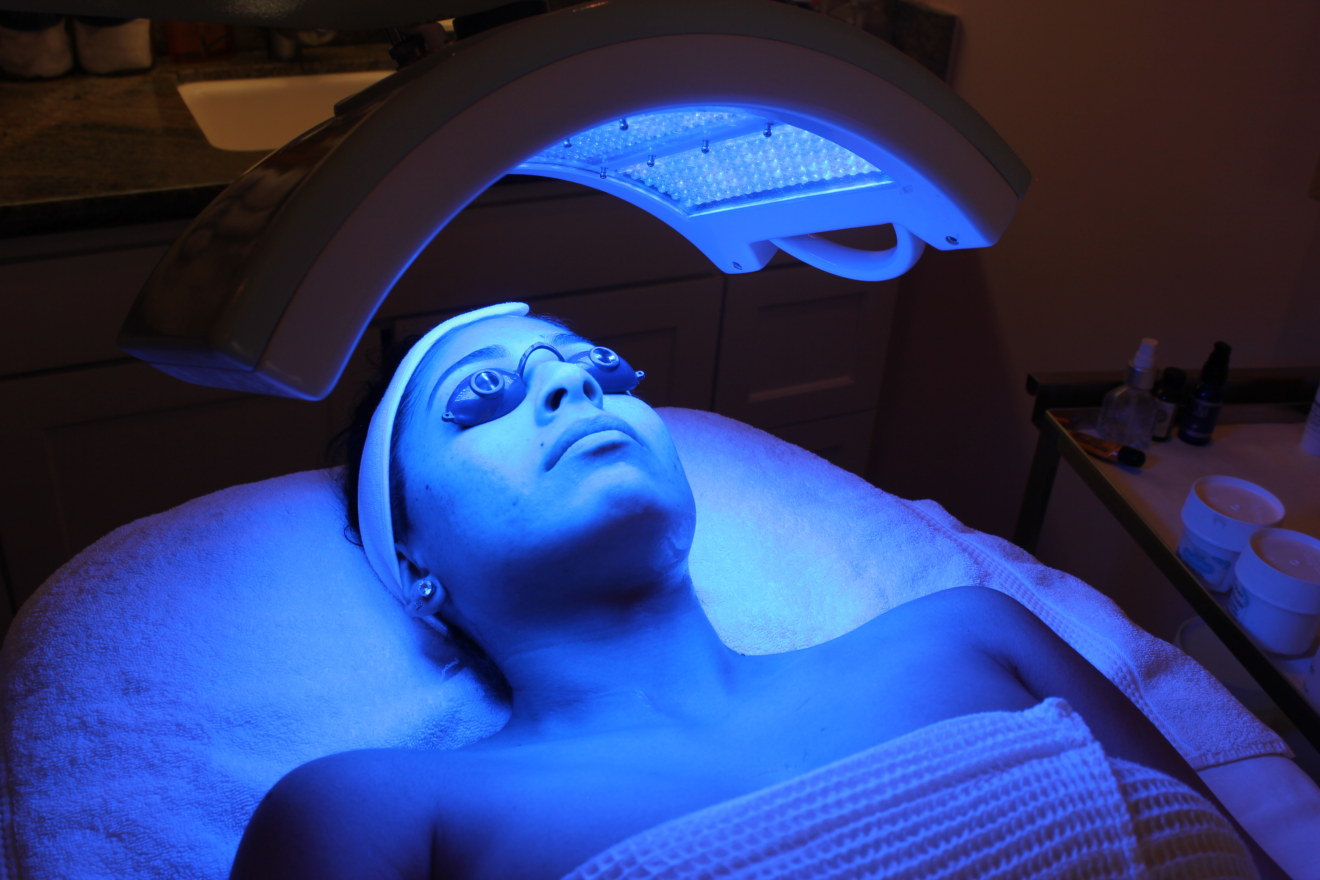
Blue light is well-documented for its antibacterial properties. It specifically targets Propionibacterium acnes, the bacteria responsible for acne. When exposed to blue light, the bacteria produce reactive oxygen species that damage their cell membranes, leading to reduced acne outbreaks.
-
Best for: Teenage acne, oily skin, prevention of breakouts.
-
Limitations: Does not improve wrinkles or pigmentation.
2. Green Light (≈520 nm) – The Pigment Corrector
Green light penetrates slightly deeper and has a calming effect on the skin. Clinically, it is used to address melanin clusters, helping reduce hyperpigmentation, freckles, and uneven skin tone.
-
Best for: Sunspots, melasma, post-inflammatory pigmentation.
-
Limitations: Works gradually and requires consistent sessions.
3. Red Light (≈630–660 nm) – The Collagen Stimulator
Red light penetrates into the dermis and stimulates fibroblasts, the cells responsible for collagen and elastin production. This makes it one of the most popular anti-aging tools. It also improves wound healing and reduces inflammation.
-
Best for: Fine lines, wrinkles, dull or aging skin.
-
Limitations: Alone, it won’t treat acne-causing bacteria or pigmentation.
4. Near-Infrared Light (≈800–900 nm) – The Deep Healer
Near-infrared light goes beyond visible skin layers, influencing blood circulation and reducing deep inflammation. It’s often used in combination therapies to support recovery after invasive treatments.
-
Best for: Post-treatment recovery, deep tissue repair, chronic redness.
-
Limitations: Invisible to the eye, so clients may feel uncertain without proper explanation.
Advantages of Tailored LED Therapy vs. “One-Size-Fits-All”
Many home-use LED masks simply include one or two preset colors. Clinics, however, can offer customized LED therapy, combining multiple wavelengths in one session.
Benefits of Customized Approach:
-
Targeted results: Each concern is addressed scientifically.
-
Improved client satisfaction: Higher chances of visible results.
-
Safe repetition: LED therapy is non-invasive and can be done regularly.
-
Combination treatments: Works well after facials, peels, or microneedling.
For example, a client with acne scars and active breakouts may need blue + red light in alternating cycles, while someone with rosacea and wrinkles may need green + infrared light for both soothing and collagen stimulation.
Market Trends and Client Demand
The global LED skincare device market is projected to grow steadily, driven by demand for non-invasive treatments. According to industry reports:
-
Younger clients seek LED therapy for acne management.
-
Middle-aged clients focus on anti-aging benefits.
-
Sensitive skin clients prefer LED because it has minimal downtime compared to lasers or chemical peels.
Clinics offering multi-wavelength LED therapy also report higher retention rates, since the treatment is safe enough for monthly maintenance.
Another key trend is the rise of at-home LED masks. While convenient, these devices usually have lower intensity and fewer wavelength options. This creates an opportunity for clinics to position professional LED treatments as stronger, customizable, and scientifically guided alternatives.
Application Scenarios
-
Teen Acne Control: Blue light sessions twice a week to reduce bacterial growth.
-
Hyperpigmentation Management: Green light combined with brightening serums.
-
Anti-Aging Maintenance: Red light to stimulate collagen and improve skin texture.
-
Post-Procedure Recovery: Near-infrared light to reduce swelling and speed healing.
-
Combination Programs: Multi-wavelength therapy paired with facials or microneedling for holistic results.
Conclusion
LED therapy is more than just a trendy beauty treatment—it is a scientifically grounded method of addressing skin concerns. The key lies in understanding and selecting the right wavelength. Blue light is ideal for acne, green for pigmentation, red for collagen, and infrared for deep repair.
For clients, this knowledge helps set realistic expectations. For clinics, it ensures better results and stronger trust. In modern aesthetics, personalized LED wavelength therapy is not just beneficial—it’s essential.
Founded in 2008, Guangzhou GLM Beauty Spa Equipment Factory specializes in research, development, manufacture and selling of beauty and slimming machines. Our production base is located in Guangzhou City, Guangdong Province, China. Since our foundation, we have introduced advanced technologies and equipment, to assure high quality and high performance of our products. With professional marketing guide and excellent after-sales service, our products have been exported to over 20 countries and regions, including Southeast Asia, the Middle East, Europe and the United States, won worldwide praises and gained a good reputation.