1. Introduction
The aesthetic industry continues to evolve as clients seek more effective solutions for skin rejuvenation, scar improvement, wrinkle reduction, and overall skin texture enhancement. In 2026, fractional CO2 laser technology remains an important treatment option for professional dermatology clinics, medical spas, and aesthetic centers looking to provide advanced skin resurfacing services.
Among energy-based aesthetic technologies, fractional carbon dioxide (CO2) lasers are widely recognized for their ability to deliver controlled ablative energy into targeted skin areas. By combining precise laser scanning with fractional treatment patterns, these systems create microscopic treatment zones while preserving surrounding untreated tissue. This approach supports the natural wound-healing process and stimulates collagen remodeling.
Modern fractional CO2 laser systems have continued to improve in areas such as scanning accuracy, energy delivery, pulse control, treatment consistency, and operational flexibility. These developments allow professional practitioners to customize treatment approaches according to different skin conditions and treatment objectives.
For aesthetic businesses, investing in professional CO2 laser equipment is not simply about adding another machine. It is about expanding treatment capabilities, offering more comprehensive skin resurfacing services, and meeting the growing demand for technology-driven aesthetic solutions.
Understanding how fractional CO2 laser technology works, what makes precision scanning important, and how collagen remodeling contributes to skin improvement can help clinics make better equipment and treatment decisions.
2. Background and Skin Treatment Challenges
Skin aging is influenced by several factors, including natural collagen loss, ultraviolet exposure, environmental stress, and changes in the skin's structural integrity. Over time, these factors may contribute to fine lines, deeper wrinkles, uneven skin texture, enlarged pores, and reduced skin firmness.
Acne scarring and other forms of textural irregularity create additional challenges. Atrophic acne scars, for example, involve changes in the underlying dermal structure. Surface-level skincare products may improve skin appearance, but they generally cannot produce the same controlled tissue remodeling response as professional ablative laser treatments.
Traditional fully ablative CO2 resurfacing can produce significant skin renewal effects, but treating the entire surface area may involve more extensive tissue injury and longer recovery periods.
Non-ablative technologies offer alternative approaches with less disruption to the epidermis, although treatment intensity and expected outcomes differ.
Fractional ablative laser technology was developed to provide a more controlled balance between treatment effectiveness and tissue recovery. Instead of removing the entire epidermal surface, fractional CO2 lasers deliver energy in numerous microscopic columns. Untreated tissue remains between these treatment zones, helping support the repair process.
This technology has become particularly relevant for clinics that need flexible treatment solutions for different skin concerns.
However, successful treatment depends on more than the laser wavelength itself. Energy stability, scanning accuracy, pulse duration, treatment density, and operator experience all influence treatment performance.
For professional aesthetic centers, selecting a reliable laser platform is therefore an important part of maintaining consistent treatment standards.
3. Fractional CO2 Laser Technology and Its Working Mechanism
3.1 The 10,600 nm CO2 Laser Wavelength
Fractional CO2 lasers typically operate at a wavelength of 10,600 nm. This wavelength is strongly absorbed by water within biological tissue, making it suitable for controlled tissue ablation and thermal stimulation.
When laser energy reaches the skin, intracellular and extracellular water absorbs the energy and converts it into heat. Depending on the delivered energy and pulse characteristics, this process produces microscopic columns of tissue vaporization accompanied by surrounding zones of thermal coagulation.
These controlled treatment zones initiate a wound-healing response involving cellular activity, tissue repair, and collagen remodeling.
Unlike superficial cosmetic treatments, fractional CO2 laser resurfacing works at both the epidermal and dermal levels. This makes it relevant to skin texture concerns that involve deeper structural changes.
3.2 Fractional Photothermolysis
The defining feature of fractional CO2 laser technology is fractional photothermolysis.
Rather than exposing the entire treatment area to continuous laser energy, the system divides the laser output into multiple microscopic beams or treatment points.
Each point creates a microscopic treatment zone (MTZ), consisting of a controlled area of tissue ablation and thermal injury.
The surrounding untreated tissue acts as a source of cells that participate in the repair process. This helps the skin regenerate more efficiently than when the entire surface is subjected to ablative treatment.
The density and depth of these treatment zones can be adjusted according to the device design, selected parameters, treatment area, and clinical objectives.
This flexibility makes fractional CO2 laser technology suitable for different professional resurfacing protocols.
3.3 Collagen Remodeling and Skin Renewal
Collagen is an essential structural protein responsible for maintaining skin firmness, elasticity, and overall dermal support.
As collagen production and organization change with age, the skin may develop wrinkles, laxity, and uneven texture.
Fractional CO2 laser treatment creates controlled thermal injury that activates the body's natural repair mechanisms. During the healing process, fibroblast activity and extracellular matrix remodeling contribute to the formation and reorganization of collagen.
This process may gradually improve skin texture, the appearance of certain scars, and the overall quality of the treated area.
Importantly, collagen remodeling is not an immediate event. Improvements develop over time as the skin progresses through its healing and remodeling phases.
For clinics, explaining this biological process helps establish realistic client expectations and supports appropriate treatment planning.
4. Precision Scanning: Improving Treatment Accuracy and Consistency
Precision scanning is one of the important performance considerations when evaluating modern fractional CO2 laser equipment.
A professional laser system must deliver energy across the selected treatment area in a controlled and consistent pattern. Inconsistent scanning may result in uneven treatment distribution, overlapping exposure, or areas receiving insufficient energy.
4.1 Advanced Scanning Patterns
Modern fractional CO2 laser platforms may offer different scanning patterns, depending on the system configuration.
Common scanning options include:
-
Square scanning: Suitable for treating defined rectangular or square areas.
-
Circular scanning: Useful for localized treatment zones and smaller areas.
-
Random scanning: Distributes treatment points in a non-linear pattern.
-
Fractional dot scanning: Creates individual microscopic treatment points across a selected area.
-
Customized scanning: Allows practitioners to select treatment shapes or coverage according to specific applications.
These options improve operational flexibility and allow practitioners to adapt treatment coverage to different facial contours and body areas.
4.2 Why Scanning Accuracy Matters
The quality of a fractional CO2 laser treatment depends partly on how consistently energy is distributed.
A well-designed scanning system helps practitioners manage treatment coverage, reduce unnecessary overlap, and maintain more predictable energy distribution.
Important equipment considerations include:
-
Accurate positioning of laser treatment points.
-
Stable scanning speed and movement.
-
Consistent energy delivery.
-
Adjustable treatment density.
-
Reliable control of the scanning area.
-
Clear parameter displays and intuitive operation.
These features can improve workflow efficiency and help professional operators follow standardized treatment protocols.
For clinics performing multiple treatments each day, operational consistency is particularly valuable.
4.3 Treatment Parameter Customization
Different skin concerns require different treatment strategies.
Laser energy, pulse duration, spot spacing, density, and scanning mode influence the extent of tissue ablation and thermal stimulation.
For example, a practitioner may choose a more conservative approach for selected superficial textural concerns and a different protocol for certain deeper scars.
However, higher energy or greater treatment density does not automatically mean better results. Excessive thermal exposure can increase the risk of prolonged inflammation, post-inflammatory hyperpigmentation, infection, and scarring.
Professional systems should therefore support controlled parameter adjustment rather than simply maximizing output.
5. Advantages of Fractional CO2 Laser Technology
Fractional CO2 laser equipment offers several advantages for professional aesthetic practices.
5.1 Multi-Purpose Skin Resurfacing Applications
One of the main benefits is its versatility.
Depending on patient selection and the treatment protocol, fractional CO2 lasers may be used to address:
-
Atrophic acne scars.
-
Fine lines and wrinkles.
-
Uneven skin texture.
-
Enlarged pores.
-
Selected surgical or traumatic scars.
-
Photoaging-related skin changes.
-
Certain textural irregularities.
This range of applications allows clinics to develop different treatment programs using a single professional laser platform.
5.2 Controlled Ablative Treatment
Fractional delivery treats only selected microscopic areas rather than removing the entire skin surface.
This approach preserves surrounding untreated tissue and generally supports a more manageable recovery process compared with traditional fully ablative resurfacing.
Nevertheless, fractional CO2 remains an ablative procedure. It still involves controlled skin injury and requires appropriate preparation, treatment protocols, and aftercare.
5.3 Support for Long-Term Collagen Remodeling
The thermal stimulation produced by fractional CO2 laser treatment initiates a biological repair response.
As new collagen is synthesized and existing dermal structures are reorganized, treated skin may gradually show improvements in texture and firmness.
This makes fractional CO2 technology relevant to clinics offering structured skin rejuvenation programs rather than relying exclusively on temporary surface-level treatments.
5.4 Greater Treatment Flexibility
Adjustable parameters and scanning modes allow practitioners to develop treatment strategies for different indications.
A professional system with flexible settings can support localized treatments, broader resurfacing procedures, and customized treatment coverage.
The ability to adjust treatment parameters is especially important for experienced operators who need to balance clinical objectives with individual skin characteristics.
6. Fractional CO2 Laser vs. Other Skin Resurfacing Technologies
The aesthetic equipment market includes several technologies designed to improve skin quality. Each works through a different mechanism and offers different treatment characteristics.
| Technology | Main Mechanism | Typical Applications |
|---|---|---|
| Fractional CO2 Laser | Ablative laser energy and thermal remodeling | Acne scars, wrinkles, texture irregularities |
| Er:YAG Laser | Water-targeted ablative resurfacing | Surface resurfacing and selected scars |
| Non-Ablative Fractional Laser | Thermal stimulation without full epidermal ablation | Mild to moderate texture and photoaging concerns |
| Radio Frequency (RF) | Electrical energy converted into tissue heat | Skin tightening and collagen stimulation |
| Microneedling | Mechanical micro-injury | Texture improvement and collagen stimulation |
Fractional CO2 laser technology is particularly valuable when a treatment plan requires ablative resurfacing and deeper thermal remodeling.
Er:YAG lasers generally provide more superficial ablation with less residual thermal coagulation under comparable clinical conditions.
Non-ablative fractional lasers offer a different balance between treatment intensity and downtime. RF devices primarily focus on thermal stimulation and tightening rather than laser-based tissue vaporization.
These technologies should not be viewed as direct replacements for one another. Professional clinics can select different platforms according to their service positioning, client needs, and practitioner expertise.
7. Professional Applications and Client Needs
7.1 Dermatology Clinics
Dermatology clinics may use fractional CO2 laser technology as part of comprehensive scar management and skin resurfacing programs.
Atrophic acne scars are a common indication, although scar morphology, skin type, scar depth, and previous treatment history must be considered before treatment.
Professional assessment helps determine whether fractional CO2 is appropriate as a standalone treatment or as part of a combination approach.
7.2 Medical Spas and Aesthetic Centers
Medical spas and aesthetic centers often seek equipment that can support multiple treatment categories.
A professional fractional CO2 laser can expand service offerings beyond basic facials and non-invasive skin treatments.
For example, clinics may develop customized programs focusing on:
-
Skin texture refinement.
-
Photoaging-related concerns.
-
Fine-line improvement.
-
Selected scar treatments.
-
Professional skin resurfacing.
These services can create additional opportunities for treatment packages and long-term client relationships.
7.3 Experienced Aesthetic Practitioners
Professional laser treatments require more than operating a machine.
Practitioners must understand skin anatomy, laser-tissue interactions, contraindications, treatment parameters, and wound-healing processes.
They also need to recognize different skin phototypes and understand the increased risk of post-inflammatory hyperpigmentation in darker skin types.
A reliable professional device should provide clear parameter controls, stable output, practical scanning functions, and appropriate safety features.
7.4 Meeting Different Client Expectations
Not every client has the same treatment objectives.
Some are primarily concerned with acne scars, while others want to improve fine lines, rough texture, or visible signs of photoaging.
A professional consultation should consider:
-
Skin type and pigmentation characteristics.
-
The location and depth of the treatment concern.
-
Previous aesthetic procedures.
-
Medical and dermatological history.
-
Recovery time availability.
-
Realistic expectations and treatment goals.
Personalized assessment is essential for selecting suitable treatment intensity and determining whether alternative technologies may be more appropriate.
8. Safety, Recovery, and Professional Treatment Considerations
Although fractional CO2 laser technology offers significant treatment potential, it should not be considered a risk-free cosmetic procedure.
Because it is an ablative laser treatment, temporary redness, swelling, discomfort, pinpoint bleeding, crusting, and skin sensitivity may occur.
Potential complications include infection, prolonged erythema, post-inflammatory hyperpigmentation, hypopigmentation, and scarring.
Patient selection and treatment preparation are therefore essential.
Before treatment, practitioners should assess active skin infections, inflammatory conditions, recent sun exposure, pigmentation risks, healing history, and relevant medical factors.
Active infections in the treatment area generally require postponement. Patients with a history of abnormal scarring, certain skin conditions, or other relevant contraindications may require additional assessment.
During treatment, appropriate eye protection, laser safety procedures, plume management, and controlled operating protocols are necessary.
After treatment, clients should follow professional instructions regarding gentle cleansing, wound care, moisturization, sun protection, and activity restrictions.
Recovery time varies according to treatment intensity, density, anatomical location, and individual healing characteristics.
Clinics should avoid promising immediate results or identical recovery timelines for every client. Clear communication and appropriate follow-up are essential components of professional service.
9. How to Choose a Professional Fractional CO2 Laser Machine in 2026
For distributors, aesthetic equipment manufacturers, and clinic owners, selecting a fractional CO2 laser machine requires evaluating more than its advertised energy output.
Several technical and operational factors deserve attention.
Laser performance and output stability: Consistent energy delivery is fundamental to predictable treatment execution.
Scanning system: Multiple scanning patterns and reliable positioning can improve treatment flexibility.
Parameter adjustment: Adjustable energy, pulse duration, density, and scanning settings allow professional operators to adapt protocols.
User interface: A clear touchscreen and intuitive operating system can simplify parameter management and daily workflow.
Cooling and system design: Appropriate thermal management and reliable internal components contribute to equipment stability.
Safety functions: Emergency stop systems, protective interlocks, warning indicators, and suitable laser safety accessories should be evaluated.
Training and technical support: Installation guidance, operator training, maintenance, spare parts availability, and after-sales service are important considerations for long-term operation.
For manufacturers and suppliers, providing detailed technical specifications, clear application guidance, operator training, and dependable service can help establish stronger relationships with professional buyers.
The value of a professional CO2 laser platform is ultimately determined by its ability to combine technical reliability, practical operation, and consistent treatment delivery.
10. Conclusion
Fractional CO2 laser technology continues to play an important role in professional skin resurfacing in 2026.
By combining 10,600 nm laser energy, fractional photothermolysis, precision scanning, and controlled thermal stimulation, modern systems provide a versatile approach to addressing selected scars, wrinkles, uneven texture, and other skin quality concerns.
The development of more flexible scanning patterns, adjustable treatment parameters, and improved equipment interfaces has also strengthened the practical value of professional laser platforms.
For dermatology clinics, medical spas, and aesthetic centers, investing in reliable fractional CO2 laser equipment means expanding treatment capabilities while supporting more structured and personalized skin resurfacing services.
As the aesthetic industry continues to prioritize treatment precision, equipment reliability, and professional service quality, fractional CO2 laser technology will remain an important consideration for clinics seeking advanced skin rejuvenation solutions.
Choosing the right equipment, combined with qualified operators, careful patient assessment, and appropriate aftercare, is essential to achieving safe and consistent treatment outcomes.
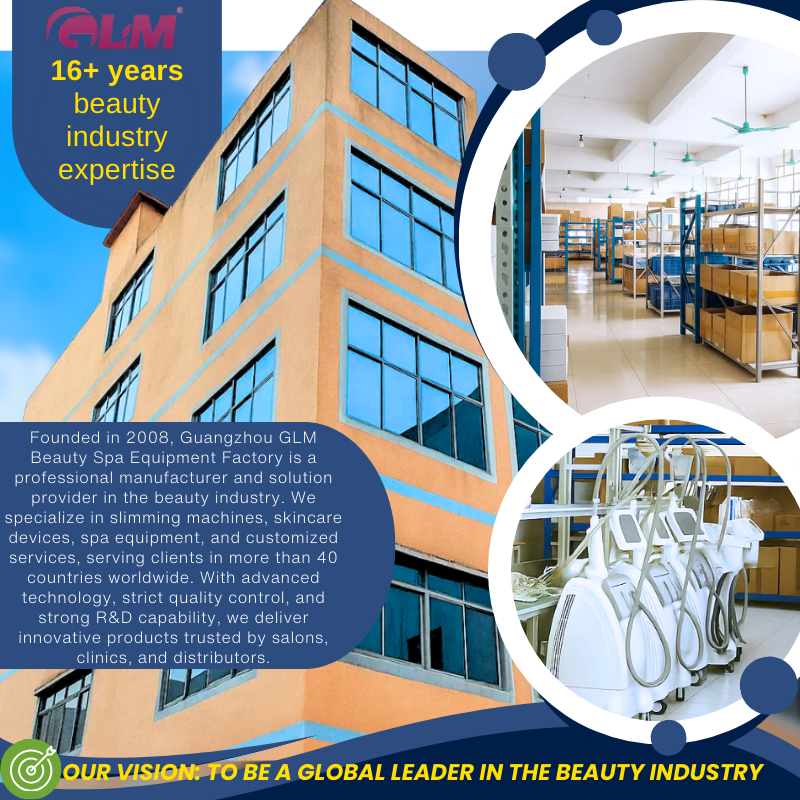
Founded in 2008, Guangzhou GLM Beauty Spa Equipment Factory specializes in research, development, manufacture and selling of beauty and slimming machines. Our production base is located in Guangzhou City, Guangdong Province, China. Since our foundation, we have introduced advanced technologies and equipment, to assure high quality and high performance of our products. With professional marketing guide and excellent after-sales service, our products have been exported to over 20 countries and regions, including Southeast Asia, the Middle East, Europe and the United States, won worldwide praises and gained a good reputation