Introduction
Light-based technologies have transformed modern aesthetic and therapeutic medicine. From hair removal to deep tissue lifting, each wavelength of light interacts differently with biological tissue.
Among these, green laser therapy has carved out a specific and powerful role—particularly in treating vascular and superficial pigment conditions.
But what makes green laser energy unique?
Why do advanced clinics choose it for certain indications over other wavelengths?
The answer lies in how light interacts with chromophores in the skin.
Understanding Laser Wavelengths
Laser therapy works through selective photothermolysis—a principle where light energy targets specific chromophores (color-absorbing structures) in tissue.
Different wavelengths are absorbed differently:
-
Melanin absorbs certain wavelengths
-
Hemoglobin absorbs others
-
Water absorbs at deeper infrared ranges
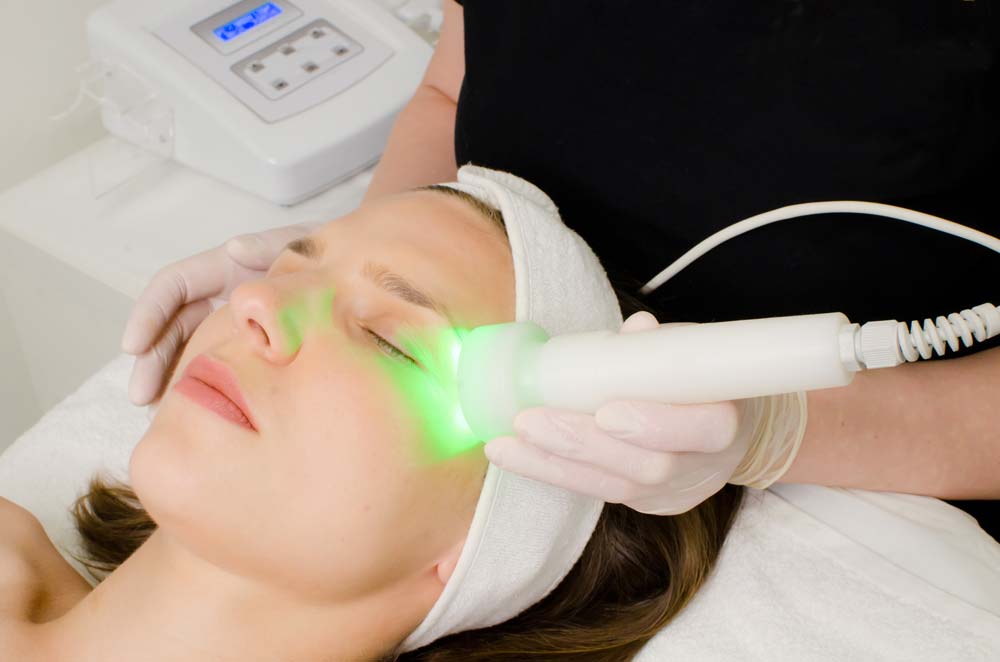
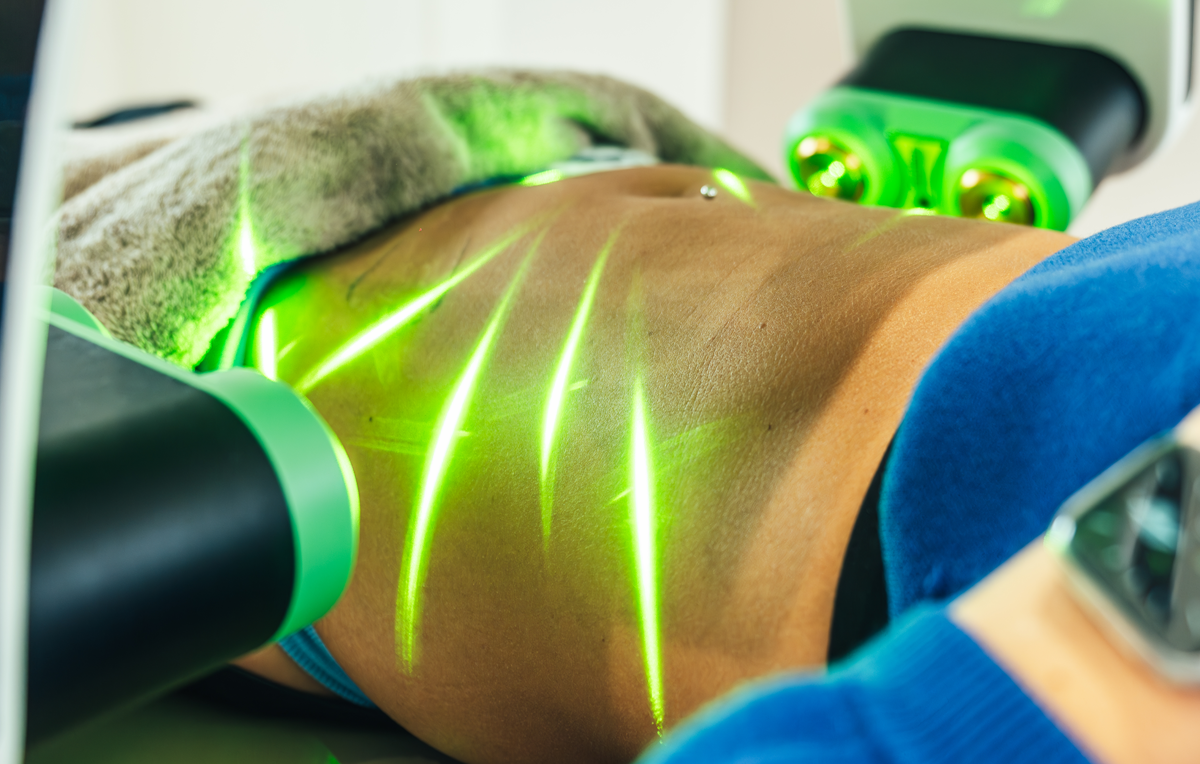
Green lasers typically operate around 532 nm, a wavelength strongly absorbed by hemoglobin and melanin in superficial layers.
This absorption profile defines its clinical applications.
Why 532 nm (Green) Matters
The 532 nm wavelength:
-
Has strong affinity for oxyhemoglobin
-
Is highly absorbed in superficial vessels
-
Penetrates shallow tissue depths
-
Produces precise thermal coagulation
Because it is absorbed quickly, it is ideal for surface-level concerns rather than deep structural treatments.
Clinically, this means high precision with controlled penetration.
Mechanism of Action
Green laser therapy works through three main mechanisms:
1. Vascular Targeting
Hemoglobin strongly absorbs 532 nm energy.
When the laser is applied:
-
Blood vessels absorb light
-
Heat is generated inside the vessel
-
Coagulation occurs
-
The vessel collapses and is gradually reabsorbed
This makes green lasers highly effective for superficial vascular lesions.
2. Pigment Interaction
Melanin also absorbs green wavelength energy.
This allows treatment of:
-
Sunspots
-
Freckles
-
Superficial hyperpigmentation
The energy fragments pigment particles, which are then cleared by the body’s immune system.
3. Controlled Thermal Effect
Because penetration depth is limited compared to longer wavelengths, tissue damage is localized.
This reduces risk when used properly and allows for targeted spot treatments.
Clinical Applications
Green laser therapy is commonly used in professional clinics for:
-
Spider veins (facial telangiectasia)
-
Rosacea-related redness
-
Cherry angiomas
-
Sunspots
-
Freckles
-
Superficial pigmented lesions
It is less suitable for:
-
Deep vascular malformations
-
Thick dermal pigmentation
-
Deep structural lifting
Advanced practitioners select wavelength based on tissue depth and chromophore type.
Green Laser vs Other Wavelengths
vs 1064 nm (Nd:YAG)
-
1064 nm penetrates deeper
-
Less absorbed by melanin
-
Better for deeper vessels
Green laser (532 nm):
-
More superficial
-
Stronger hemoglobin absorption
-
Better for small facial vessels
vs IPL
IPL emits broad-spectrum light.
Green laser:
-
Emits single precise wavelength
-
Offers more targeted energy
-
Produces predictable chromophore interaction
Precision is the key difference.
Safety Considerations
Because green lasers are highly absorbed in superficial tissue:
-
Epidermal protection is critical
-
Skin cooling systems improve comfort
-
Correct fluence selection prevents burns
Improper parameter selection can cause:
-
Hyperpigmentation
-
Hypopigmentation
-
Surface burns
Professional training and device quality significantly affect outcomes.
Treatment Experience
Patients may feel:
-
Mild snapping sensation
-
Warmth in treated areas
-
Temporary redness
Most superficial treatments require minimal downtime.
Pigment may darken temporarily before flaking.
Vessels may blanch immediately before fading over weeks.
Results depend on lesion type and skin characteristics.
Business Perspective for Clinics
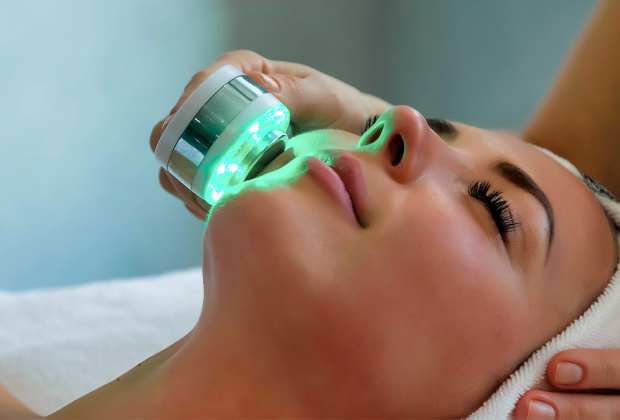
Green laser systems are often included in multi-wavelength platforms.
They expand service offerings into:
-
Vascular treatments
-
Pigmentation correction
-
Redness management
As demand for rosacea and redness solutions increases, vascular-focused devices become more commercially valuable.
Clients increasingly seek treatments for:
-
Visible facial capillaries
-
Persistent redness
-
Sun damage
Clinics that can address these safely gain competitive advantage.
Strategic Positioning in Modern Aesthetics
Modern aesthetic clinics typically combine multiple wavelengths:
-
Green (532 nm) for superficial vessels and pigment
-
1064 nm for deeper vascular concerns
-
Other modalities for tightening and lifting
No single wavelength solves every problem.
The strength of green laser therapy lies in precision surface targeting.
It is not a replacement for deeper laser systems—but it is essential for complete vascular treatment capability.
Conclusion
Green laser therapy harnesses the power of 532 nm light to selectively target superficial blood vessels and pigmented lesions with precision.
Its strong hemoglobin absorption and controlled penetration depth make it ideal for treating facial redness, spider veins, and surface pigmentation.
For modern aesthetic clinics, green laser technology represents a focused, high-precision solution within a comprehensive light-based treatment portfolio.
When used correctly, it demonstrates how wavelength specificity defines therapeutic success.
Founded in 2008, Guangzhou GLM Beauty Spa Equipment Factory specializes in research, development, manufacture and selling of beauty and slimming machines. Our production base is located in Guangzhou City, Guangdong Province, China. Since our foundation, we have introduced advanced technologies and equipment, to assure high quality and high performance of our products. With professional marketing guide and excellent after-sales service, our products have been exported to over 20 countries and regions, including Southeast Asia, the Middle East, Europe and the United States, won worldwide praises and gained a good reputation.