
Introduction
Personalized skincare has become one of the most important trends in the professional beauty and aesthetic industry. Clients no longer want a generic facial or a standard treatment package. They want to understand their skin, identify their most important concerns, and receive a treatment plan designed around their individual condition.
For beauty salons, aesthetic clinics, medical spas, and professional skincare centers, this creates both an opportunity and a challenge. Traditional skin consultations often depend heavily on visual observation, professional experience, client descriptions, and basic skin measurements. While these methods remain valuable, they may not provide enough objective information to distinguish subtle or developing skin concerns.
This is where AI-powered skin diagnostics are changing the consultation process.
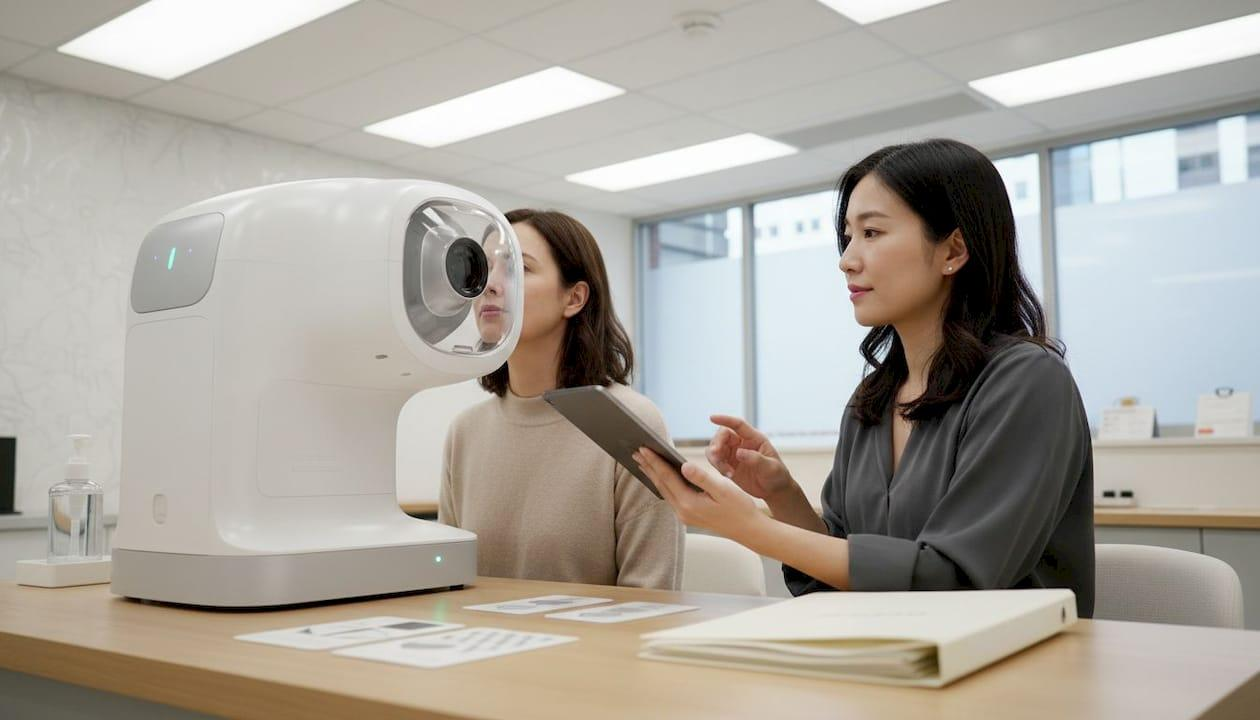
By combining high-resolution imaging, controlled lighting, facial mapping, skin measurement, and artificial intelligence, modern skin analysis systems can transform a simple consultation into a data-supported assessment. Instead of relying entirely on what the practitioner can see, the professional can use measurable information to better understand pigmentation, pores, wrinkles, texture, redness, and other skin characteristics.
Research published in the Journal of Cosmetic Dermatology highlights the potential of AI-based skin evaluation to improve objectivity, reproducibility, and personalization compared with traditional subjective assessment.
For professional clinics, the real value is not simply “using AI.” The greater value is connecting diagnosis, treatment selection, professional beauty equipment, and long-term progress tracking into one more structured workflow.
Background: Why Traditional Skin Assessment Can Be Limited
A skilled aesthetic professional can learn a great deal by looking closely at a client's skin. Skin tone, texture, oiliness, dryness, visible pigmentation, pore size, redness, and fine lines can often be identified during a consultation.
However, visual assessment has natural limitations.
Lighting conditions can change how pigmentation or redness appears. Camera settings can affect photographs. Different practitioners may interpret the same skin concern differently. Even when the same professional performs the assessment, small changes may be difficult to quantify from one appointment to the next.
More importantly, some skin characteristics are not obvious under normal lighting.
Professional skin analysis systems address this limitation by using controlled imaging conditions and, depending on the system, multiple light sources or spectral imaging technologies. These approaches can make certain patterns of pigmentation, redness, texture, and other characteristics easier to visualize and measure.
Modern AI skin analysis platforms can then process these images and convert complex visual information into structured data. Some systems analyze multiple facial zones and skin parameters, while advanced platforms combine 3D imaging with AI-based analysis.
This does not mean that AI replaces an aesthetic professional.
Instead, AI can serve as a diagnostic support tool that helps professionals collect more consistent information before deciding how to approach a client's treatment.
Technology and Mechanism: How AI Skin Diagnostics Work
An AI skin analysis system usually combines several technologies rather than relying on artificial intelligence alone.
1. High-Resolution Facial Imaging
The first step is image capture.
Professional skin analyzers use cameras and controlled illumination to capture standardized facial images. Depending on the device, images may be taken from multiple angles to provide a more complete view of the face.
Compared with an ordinary smartphone photograph, professional imaging systems can provide more consistent positioning, lighting, magnification, and image quality.
This consistency becomes particularly important when the client returns for follow-up treatment.
2. Multi-Spectral or Specialized Lighting
Some advanced skin analysis devices use different lighting modes to highlight different characteristics of the skin.
Standard visible-light imaging can show surface conditions such as texture, pores, wrinkles, and visible pigmentation. Other lighting techniques can make certain pigmentation or vascular patterns more apparent.
For professional operators, this means that the consultation can move beyond simply asking, “What can I see?”
Instead, the practitioner can ask:
“What does the imaging data indicate, and how does that information influence the treatment strategy?”
3. Facial Mapping and Skin-Zone Analysis
AI systems can divide the face into different areas and evaluate them separately.
For example, the forehead, cheeks, nose, chin, and eye area may show different characteristics. A client may have relatively balanced skin on the forehead but increased oiliness around the nose, pigmentation on the cheeks, or visible fine lines around the eyes.
A zone-based approach allows professionals to avoid treating the entire face as if every area had identical needs.
This is particularly useful when designing multi-step professional treatment programs.
4. AI-Based Pattern Recognition
The role of AI begins after image capture.
Machine-learning models can be trained to recognize patterns associated with different skin characteristics. Depending on the system, analysis may include concerns such as wrinkles, pores, acne, pigmentation, redness, texture, or overall skin condition.
Some commercial AI imaging platforms now report multiple skin parameters and use image-based algorithms to generate structured skin reports.
The objective is not simply to produce a “skin score.”
The more useful application is converting complex information into something that a professional can use during consultation and treatment planning.
5. Data-Based Treatment Planning
Once the skin condition has been analyzed, the practitioner can combine the results with professional judgment, treatment history, client goals, and contraindication considerations.
This creates a more complete decision-making process.
For example, a client primarily concerned about dullness may not need the same treatment strategy as someone whose main concerns are pigmentation, uneven texture, or signs of skin aging.
AI diagnostics can help the professional identify which concerns deserve priority and then select appropriate professional technologies accordingly.
Advantages: From Standardized Treatments to Personalized Protocols
The biggest advantage of AI diagnostics is not that they make treatments “more technological.” It is that they can make the treatment process more structured, measurable, and personalized.
More Objective Consultations
Traditional consultations often rely on professional experience and visual judgment. AI-assisted imaging adds another layer of measurable information.
This can help practitioners explain why a particular treatment may be recommended rather than simply telling the client what treatment to choose.
A data-supported consultation can also improve communication between the practitioner and client.
Better Treatment Customization
Not every client needs the same combination of professional beauty technologies.
For example, a clinic may offer:
- RF skin tightening
- HIFU treatments
- Hydrafacial-style cleansing and infusion
- LED light therapy
- Oxygen facial treatments
- Ultrasound-based treatments
- Microneedling
- Professional skin rejuvenation programs
AI skin analysis can help practitioners determine which skin concerns should receive greater attention before selecting a treatment protocol.
The diagnostic stage therefore becomes the bridge between what the client needs and which professional device should be used.
Easier Before-and-After Comparison
One of the most valuable applications for clinics is treatment tracking.
Instead of relying exclusively on the client's memory or subjective impressions, the clinic can capture standardized images before and after a treatment program.
Some professional systems specifically support repeat scanning and before-and-after comparisons, allowing changes to be visualized over time.
This can be especially useful for long-term programs involving multiple appointments.
Stronger Client Communication
A client may understand “your skin has pigmentation” but have difficulty understanding exactly where the concern is located or how significant it is.
Visual reports can make the consultation easier to understand.
When clients can see their skin condition displayed through images, facial maps, or comparative reports, the conversation becomes more tangible. The professional can explain the treatment logic step by step rather than relying entirely on verbal descriptions.
This creates a more educational consultation experience and can help build trust.
Professional Equipment Creates a More Complete Workflow
AI diagnostics become even more valuable when integrated into a professional beauty equipment workflow.
A skin analyzer can identify concerns.
The practitioner interprets the results.
A professional treatment device delivers the selected procedure.
The skin analyzer can then be used again to track progress.
This creates a continuous cycle:
Analyze → Plan → Treat → Monitor → Adjust
That workflow is fundamentally different from simply selling an individual beauty treatment.
AI Diagnostics vs. Traditional Assessment
Traditional assessment still has an important place in professional skincare.
Experienced practitioners can recognize skin characteristics that automated systems may not fully understand. Client lifestyle, treatment history, sensitivity, expectations, and personal goals also require professional communication.
Therefore, the strongest model is not AI versus professional expertise.
It is AI + professional expertise.
AI provides standardized imaging and data processing.
The professional provides interpretation, clinical judgment, communication, and treatment execution.
This distinction is important because an AI skin analyzer should generally be viewed as a decision-support technology rather than an independent replacement for qualified professional assessment.
For professional clinics, this combination can provide a more reliable workflow while preserving the human expertise that remains essential to aesthetic care.
Applications: How Clinics Can Use AI Skin Diagnostics
1. First-Time Client Consultations
AI diagnostics can be used as the starting point for a new client's consultation.
Instead of immediately recommending a facial or treatment package, the practitioner can first establish a measurable baseline.
This creates a more professional consultation process and helps identify the client's primary concerns.
2. Personalized Treatment Programs
For clients who require multiple sessions, AI analysis can help create a structured treatment roadmap.
For example, a clinic may begin with skin preparation and hydration, followed by targeted rejuvenation or skin-tightening treatments depending on the client's condition.
The exact combination should always be determined by a qualified professional based on the client's circumstances.
3. Treatment Progress Monitoring
Long-term treatment programs benefit from repeated measurements.
By scanning the client under comparable conditions at different stages, practitioners can evaluate changes in specific skin characteristics rather than relying only on visual impressions.
This makes the consultation more data-driven and can help professionals decide whether to continue, modify, or optimize a treatment protocol.
4. Professional Product and Treatment Recommendations
AI analysis can also support more targeted recommendations.
Rather than recommending the same skincare products or procedures to every client, professionals can connect recommendations with the client's measured skin characteristics.
This can make product consultations more relevant while creating opportunities for clinics to build personalized treatment packages.
5. Premium Consultation Services
AI skin analysis can become a service in its own right.
A clinic can offer a professional skin diagnostic consultation before treatment, creating a higher-value entry point for new clients.
For aesthetic businesses competing on service quality rather than price alone, this can help differentiate the clinic from standard facial salons.
Client Needs: Why Personalization Matters More Than Ever
Today's clients are increasingly informed.
They compare treatments online, research technologies before visiting clinics, and expect professionals to explain why one procedure may be more appropriate than another.
A generic recommendation may therefore feel less convincing.
AI diagnostics can help answer the questions clients naturally ask:
What is happening to my skin?
Which areas need the most attention?
Why is this treatment recommended for me?
How can I know whether the treatment is working?
What should we do next?
When the answers are supported by standardized imaging and measurable information, the consultation becomes more transparent.
For clinics, this also creates a stronger foundation for long-term client relationships. The objective is not simply to perform one treatment. It is to establish an ongoing skin management process in which the client's condition is assessed, treated, monitored, and reassessed.
That is where professional beauty equipment becomes particularly valuable.
An RF device, HIFU system, LED therapy machine, facial treatment platform, or other professional aesthetic technology becomes more meaningful when it is part of a personalized treatment strategy rather than a standalone product.
Conclusion
AI diagnostics are changing how professional skin treatments are planned and evaluated.
By combining high-resolution imaging, specialized lighting, facial mapping, AI-based analysis, and progress tracking, modern skin analysis systems can provide professionals with a clearer and more structured understanding of individual skin conditions.
The most important shift is from standardized treatment to data-supported personalization.
For beauty salons, aesthetic clinics, and professional skincare centers, AI diagnostics can improve consultations, support customized treatment plans, strengthen client communication, and make treatment progress easier to demonstrate.
However, the future of personalized skincare is unlikely to be about replacing professionals with artificial intelligence.
Instead, it will be about giving professionals better information.
The combination of AI diagnostics + professional expertise + advanced beauty equipment creates a more complete approach to modern aesthetic care.
As skin analysis technology continues to evolve, clinics that connect diagnosis with treatment and measurable results will be better positioned to deliver the personalized experiences that today's clients increasingly expect
Founded in 2008, Guangzhou GLM Beauty Spa Equipment Factory specializes in research, development, manufacture and selling of beauty and slimming machines. Our production base is located in Guangzhou City, Guangdong Province, China. Since our foundation, we have introduced advanced technologies and equipment, to assure high quality and high performance of our products. With professional marketing guide and excellent after-sales service, our products have been exported to over 20 countries and regions, including Southeast Asia, the Middle East, Europe and the United States, won worldwide praises and gained a good reputation