
Introduction
Sweating is an essential function of the human body. It helps regulate temperature and responds naturally to heat, exercise, and emotional stress. However, when sweating becomes excessive, unpredictable, or occurs without an obvious trigger, it can become much more than a minor inconvenience.
Hyperhidrosis, commonly known as excessive sweating, can affect areas such as the underarms, palms, feet, face, and other localized regions. For many clients, persistent sweating can interfere with clothing choices, professional activities, social interaction, and confidence.
Modern aesthetic and dermatology clinics have several options for managing excessive sweating. Among them, botulinum toxin injections—often associated with wrinkle reduction—have also become an established treatment option for certain forms of hyperhidrosis. The treatment works differently from conventional skincare or surface-level approaches because it targets the nerve signals involved in sweat production.
For professional clinics, understanding the mechanism behind this treatment is important. It also highlights a broader trend in modern aesthetic care: effective treatment increasingly combines medical expertise, precise techniques, professional treatment environments, and supportive technology.
Background: Why Does Excessive Sweating Happen?
Normal sweating is controlled primarily by the autonomic nervous system. When the body needs to cool down, nerve signals stimulate eccrine sweat glands, causing them to release sweat onto the skin surface.
Hyperhidrosis occurs when sweating exceeds what is necessary for normal temperature regulation. Primary hyperhidrosis often affects specific areas symmetrically, particularly the underarms, palms, and soles. Secondary hyperhidrosis can be associated with medications or underlying medical conditions, which means an appropriate professional assessment is important before treatment.
From a clinic perspective, excessive sweating should therefore not simply be viewed as a cosmetic concern. A consultation helps determine where the sweating occurs, how frequently it happens, how severely it affects daily life, and whether an underlying condition needs to be considered.
For aesthetic clinics and professional beauty centers that offer advanced treatments, this assessment stage is just as important as the treatment itself. A structured consultation allows practitioners to select an appropriate approach instead of applying the same procedure to every client.
Technology and Mechanism: How Can Anti-Wrinkle Injections Reduce Sweating?
Botulinum toxin is widely known for its use in aesthetic wrinkle treatments. When used for hyperhidrosis, however, its mechanism is related to nerve signaling rather than muscle relaxation.
Sweat glands receive signals from nerves that regulate sweating. Botulinum toxin temporarily interferes with the release of certain chemical signals from these nerve endings. As a result, the treated sweat glands receive fewer signals that stimulate sweat production.
This is why botulinum toxin can reduce sweating in a targeted treatment area without permanently damaging the sweat glands.
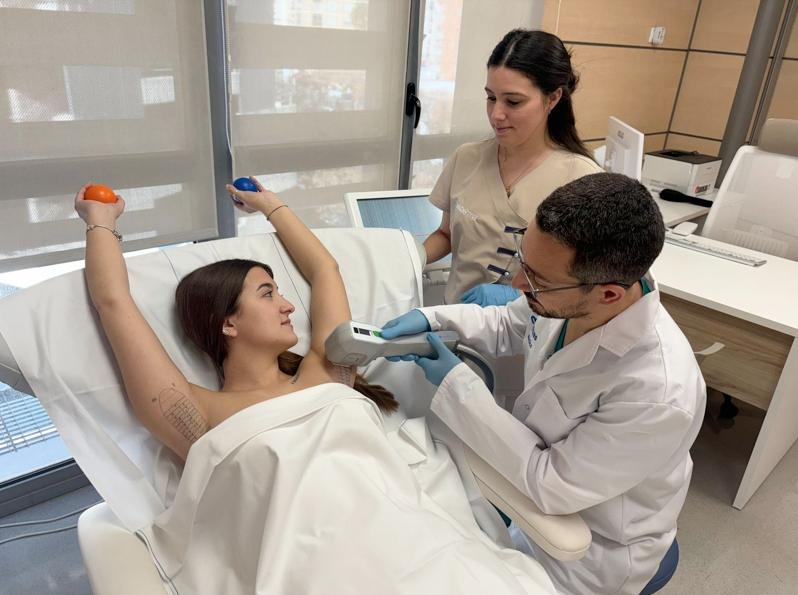
The procedure typically involves multiple small injections distributed across the treatment area. For underarm hyperhidrosis, for example, a qualified medical professional may map the area before treatment and use a systematic injection pattern to achieve appropriate coverage.
This precision is one reason professional treatment environments matter. The practitioner needs to understand skin anatomy, treatment depth, injection distribution, dosage considerations, contraindications, and potential side effects.
According to the American Academy of Dermatology, patients commonly begin to notice reduced sweating within approximately 7 to 10 days after treatment. The duration varies according to the treated area and individual response. Underarm or hand results may last several months, while results for other areas can differ.
The goal is not to eliminate the body's ability to regulate temperature. Instead, treatment is designed to temporarily reduce excessive sweating in the targeted area.
Where Can the Treatment Be Used?
Professional medical practitioners may use botulinum toxin for localized hyperhidrosis involving areas such as:
- Underarms
- Palms
- Soles of the feet
- Certain facial areas
The appropriate treatment depends on the client's symptoms, medical history, treatment area, and professional assessment.
Advantages and Comparison with Other Approaches
One important advantage of botulinum toxin treatment is its targeted nature. Instead of using a systemic treatment that affects the entire body, injections can focus on a specific area where excessive sweating is causing the greatest difficulty.
For example, a client whose primary concern is underarm sweating may benefit from a localized treatment approach. Another client with sweaty palms may require a completely different strategy.
However, botulinum toxin is not the only option. Depending on the individual situation, professionals may consider prescription antiperspirants, topical medications, iontophoresis, oral medications, energy-based treatments, or other approaches.
This makes treatment planning particularly important in a professional clinic.
Botulinum Toxin vs. Surface-Level Skincare
Traditional skincare products primarily work at or near the skin surface. They may improve hydration, texture, or other cosmetic concerns, but they do not directly address the nerve signaling involved in excessive sweating.
Botulinum toxin, by contrast, works through a biological mechanism beneath the surface of the skin. This makes it fundamentally different from ordinary cosmetic skincare.
Botulinum Toxin vs. Iontophoresis
Iontophoresis uses a mild electrical current delivered through water to help reduce sweating, particularly on the hands and feet. It is a non-injection approach and may require repeated sessions to maintain results.
Botulinum toxin uses injections and can provide a period of reduced sweating following treatment. These approaches therefore differ in treatment method, equipment requirements, treatment frequency, and suitability for different clients.
For clinics, having access to professional treatment equipment can also be valuable when building a broader hyperhidrosis management portfolio. For example, specialized iontophoresis systems can support non-injection treatment options, while professional skin-analysis and treatment-support equipment can help practitioners document skin condition and treatment progress.
The purpose of technology is not to replace professional judgment. Instead, the right equipment can help make assessment, treatment delivery, documentation, and follow-up more structured.
The Role of Professional Equipment in Hyperhidrosis Management
Although botulinum toxin itself is an injectable medical treatment rather than a beauty-machine procedure, professional equipment can still contribute to the overall clinical workflow.
A modern aesthetic clinic may use different technologies at different stages of client management.
1. Consultation and Assessment
Before treatment, practitioners need to understand the client's sweating pattern and identify the main treatment area.
Professional skin-analysis systems can be useful for documenting visible skin conditions, moisture-related concerns, and changes over time. They can provide visual information that complements the practitioner's consultation.
2. Treatment Preparation
Professional treatment rooms should provide controlled conditions, appropriate lighting, hygienic surfaces, organized treatment instruments, and suitable clinical equipment.
These details may appear simple, but they contribute to a more standardized treatment workflow.
3. Supportive Treatments
Not every client will be an appropriate candidate for injections. Some clients may prefer non-invasive options, while others may require a different treatment strategy.
This is where professional devices can expand the range of services offered by a clinic. Depending on local regulations and the intended indication, technologies such as iontophoresis or other clinically appropriate treatment systems may be considered as part of a broader service portfolio.
4. Follow-Up and Documentation
Hyperhidrosis management is not necessarily a one-time process. Symptoms can return as the effect of treatment decreases, and treatment plans may need to be adjusted.
Professional clinics can use standardized photography, skin-analysis systems, consultation records, and treatment documentation to compare the client's condition over time.
This creates a more professional experience and helps practitioners communicate treatment progress more clearly.
Applications and Client Needs
Hyperhidrosis management can be particularly relevant for several types of professional clinic clients.
Underarm Sweating
Underarm hyperhidrosis is one of the most recognizable applications. Excessive underarm sweating can cause visible clothing marks, discomfort, and concerns about odor or professional appearance.
For suitable clients, localized treatment may reduce sweating for a period of time and improve everyday comfort.
Excessive Sweating of the Hands
Sweaty palms can create practical problems. Clients may find it difficult to hold objects securely, use electronic devices, write comfortably, or shake hands in professional situations.
Because the palms are highly sensitive and contain important anatomical structures, treatment requires appropriate professional knowledge and careful technique.
Foot Sweating
Excessive sweating of the feet can contribute to persistent moisture and discomfort. Depending on the case, practitioners may discuss several treatment options rather than automatically choosing an injectable approach.
This is another area where a professional clinic's ability to offer different technologies and treatment pathways can become valuable.
Facial or Localized Sweating
Some clients experience excessive sweating around the face or scalp. These areas require particularly careful assessment because of their anatomy and the potential effects of treatment on nearby muscles.
For this reason, treatment should be performed by appropriately qualified medical professionals rather than being treated as a routine salon procedure.
Why Professional Treatment Matters
The popularity of aesthetic procedures has made advanced treatments more accessible, but accessibility should not be confused with simplicity.
Botulinum toxin injections require knowledge of anatomy, patient assessment, product handling, injection technique, and safety considerations. The American Academy of Dermatology specifically recommends that these treatments be performed by qualified dermatology professionals or appropriately supervised medical staff.
Professional equipment follows the same principle.
A professional-grade device is valuable not simply because it has more functions or a more sophisticated interface. Its real value comes from how it fits into a controlled treatment workflow.
For manufacturers and suppliers of professional beauty equipment, this creates an opportunity to develop products that support clinics beyond a single treatment. Skin analyzers, professional treatment systems, documentation tools, and other aesthetic technologies can become part of an integrated service environment.
The objective is not to make every treatment dependent on a machine. Instead, technology should help professionals assess clients, standardize procedures, monitor progress, and deliver a more organized experience.
Conclusion
Hyperhidrosis can have a significant effect on everyday comfort, professional activities, and social confidence. For suitable patients, botulinum toxin injections provide a targeted method of temporarily reducing excessive sweating by interfering with nerve signals that activate sweat glands.
However, effective hyperhidrosis management begins with proper assessment rather than simply selecting a treatment. Different clients may require different approaches, including topical products, iontophoresis, medication, energy-based treatments, or injectable therapy.
For modern aesthetic and dermatology clinics, technology can support this process at multiple stages—from consultation and skin analysis to treatment preparation, documentation, and follow-up.
As professional beauty technology continues to develop, the strongest clinic environments are not necessarily those with the largest number of machines. They are those that combine qualified practitioners, appropriate technologies, standardized workflows, and individualized client care.
For beauty-equipment manufacturers and professional clinics, this represents an important direction for the future: using technology not simply to add another treatment to a service menu, but to create a more complete, professional, and client-focused treatment experience
Founded in 2008, Guangzhou GLM Beauty Spa Equipment Factory specializes in research, development, manufacture and selling of beauty and slimming machines. Our production base is located in Guangzhou City, Guangdong Province, China. Since our foundation, we have introduced advanced technologies and equipment, to assure high quality and high performance of our products. With professional marketing guide and excellent after-sales service, our products have been exported to over 20 countries and regions, including Southeast Asia, the Middle East, Europe and the United States, won worldwide praises and gained a good reputation