1. Introduction
The aesthetic industry continues to evolve as clients seek effective, personalized, and minimally invasive treatments. For professional beauty clinics and aesthetic practices, investing in the right laser device is no longer simply a matter of purchasing the latest technology. It requires a careful evaluation of treatment capabilities, wavelength selection, skin type compatibility, operational safety, and long-term profitability.
In 2026, clinic owners face a broad range of options, including diode lasers for hair removal, alexandrite lasers, Nd systems, and specialized platforms for pigmentation, vascular concerns, tattoo removal, and skin rejuvenation. Although these technologies all use concentrated light energy, their wavelengths, tissue interactions, treatment indications, and operating requirements differ considerably.
A device that performs well for one clinic may not be the best investment for another. A high-volume hair removal center, for example, may prioritize treatment speed and reliable cooling, while a medical aesthetic clinic may require a broader range of applications and greater flexibility for different skin phototypes.
The best laser device is therefore not necessarily the most expensive or powerful model. It is the system that matches the clinic's target customers, professional capabilities, treatment demand, safety protocols, and financial objectives.
This guide explains the key factors clinics should evaluate before selecting a laser system in 2026.
2. Background and Problem: Why Laser Device Selection Matters
Laser technology has become an important part of professional aesthetic services because it allows practitioners to deliver targeted energy to specific structures in the skin. However, the growing number of devices on the market makes purchasing decisions increasingly complex.
One common mistake is choosing equipment based primarily on advertised power, promotional pricing, or the number of treatment modes. These specifications may look impressive, but they do not independently establish clinical effectiveness, treatment safety, or commercial value.
A laser with a high maximum output may still be unsuitable if its wavelength does not match the intended treatment, its cooling system is inadequate, or its operating parameters are difficult to control consistently.
Another challenge is the diversity of client skin types. Melanin in the epidermis can absorb laser energy intended for hair follicles or pigmented targets. When the wavelength and treatment parameters are poorly matched to the client, the risk of burns, blistering, and unwanted pigmentation changes may increase.
Clinics must also consider the difference between a device's technical capabilities and its authorized indications. A machine marketed for multiple applications should not automatically be assumed suitable for every skin concern or every skin phototype.
For business owners, the consequences extend beyond treatment outcomes. Inappropriate equipment can lead to higher maintenance costs, longer appointment times, customer dissatisfaction, and reduced repeat bookings.
A systematic selection process helps clinics invest in equipment that supports both professional standards and sustainable business growth.
3. Technology and Mechanism: Understanding Laser Wavelengths
Laser devices deliver light at a defined wavelength. Different wavelengths interact with biological targets in different ways, depending on factors such as absorption, penetration depth, pulse duration, and energy density.
In aesthetic treatments, important target structures include melanin, hemoglobin, and water. The intended target, rather than the device's marketing category alone, should guide the selection process.
3.1 Alexandrite Laser: 755 nm
Alexandrite lasers operate at approximately 755 nm and are strongly absorbed by melanin. This makes them an established option for hair reduction, particularly in appropriately selected clients with lighter skin and dark hair.
Their melanin absorption can support efficient targeting of hair follicles. However, epidermal melanin also absorbs this wavelength, so patient selection and parameter adjustment are essential, especially for darker or recently tanned skin.
Clinics considering an alexandrite system should evaluate its intended indications, cooling performance, pulse options, spot size, and suitability for their typical client population.
3.2 Diode Laser: Approximately 800–810 nm
Diode lasers around 800–810 nm are widely used in professional hair removal. Their balance of melanin absorption and penetration makes them a versatile option for many clinics.
Depending on the specific device and treatment protocol, diode systems can accommodate a range of skin phototypes. Nevertheless, no single wavelength or preset should be assumed appropriate for every client.
Cooling technology is especially important in high-volume practices. Effective contact or other validated cooling systems can improve treatment comfort and help protect the epidermis when used correctly.
For clinics offering regular hair removal appointments, a diode platform may be attractive because it can combine practical treatment speed, flexible operating parameters, and broad demand for hair reduction services.
3.3 Nd Laser: 1064 nm
The 1064 nm Nd laser has a longer wavelength and generally penetrates more deeply than shorter-wavelength hair removal lasers. Melanin absorbs it less strongly, which can make it a useful option for hair reduction in darker skin phototypes when appropriate protocols are followed.
For clients with Fitzpatrick skin types IV–VI, long-pulsed 1064 nm Nd technology is often an important consideration because it can reduce competing absorption by epidermal melanin. However, safety still depends on correct settings, cooling, practitioner expertise, and individual assessment.
Nd technology is also used in certain vascular and other dermatological applications, but the suitability of a particular system depends on its design, pulse characteristics, handpieces, and authorized indications.
Clinics should verify the exact applications supported by the model rather than assuming that all 1064 nm devices offer the same capabilities.
3.4 Multi-Wavelength Systems: Greater Treatment Flexibility
Some professional platforms combine multiple wavelengths, such as 755 nm, 810 nm, and 1064 nm, in one system.
The principal advantage is flexibility. Practitioners may have more options for tailoring treatment to different hair characteristics and skin phototypes without maintaining several separate devices.
However, a multi-wavelength label does not guarantee better results. Buyers should confirm whether the system delivers each wavelength independently or simultaneously, how energy is distributed, whether each mode has been properly validated, and which indications are supported.
A well-designed single-wavelength device may be a better investment than a poorly documented multi-wavelength system if its capabilities closely match the clinic's service portfolio.
3.5 Match the Laser to the Treatment Goal
Hair removal is only one category of aesthetic laser treatment. Other systems may be designed for tattoo removal, benign pigmented lesions, vascular targets, or fractional skin resurfacing.
These applications require different combinations of wavelength, pulse duration, energy delivery, and treatment technique. For example, tattoo removal often relies on specialized short-pulse technologies, while resurfacing systems may use fractional delivery to create controlled zones of thermal injury.
Clinics should therefore define their intended treatments before comparing equipment. A device optimized for hair reduction should not be evaluated as though it were automatically a complete solution for pigmentation, vascular lesions, and skin rejuvenation.
4. Advantages and Comparison: What Should Clinics Compare?
Selecting the right technology requires more than comparing headline specifications. A practical evaluation should include at least six areas.
4.1 Skin Type Compatibility
The Fitzpatrick scale classifies skin phototypes from I to VI according to how skin responds to ultraviolet exposure. It can support initial assessment, but it does not replace a full consultation or an individualized treatment plan.
Clinics should assess skin phototype, recent tanning, hair color and thickness, treatment area, medical history, and relevant contraindications. They should also verify whether the device's instructions and evidence support its intended use for the clinic's target population.
Darker skin requires particular attention because epidermal melanin may compete with the intended target for laser energy. A longer wavelength may be preferable for certain indications, but the final choice must be based on the complete clinical picture.
4.2 Cooling and Client Comfort
Cooling is a functional part of the treatment system, not merely an optional marketing feature. Depending on the technology, contact cooling, chilled air, or other validated approaches may help manage epidermal heat and improve comfort.
Buyers should examine cooling consistency during extended operation, maintenance requirements, and the relationship between cooling performance and the device's permitted treatment parameters.
Comfort can influence client satisfaction and repeat bookings, but claims of completely painless treatment should be treated cautiously. Sensation varies with the treatment area, energy settings, individual sensitivity, and device design.
4.3 Treatment Speed and Workflow
For busy clinics, the effective treatment time per client can directly influence daily capacity.
Factors include spot size, repetition rate, pulse duration, cooling recovery, interface usability, and the time needed to change treatment settings. A high repetition rate alone does not guarantee faster appointments if the operator must frequently pause or reposition the handpiece.
Request a demonstration under realistic operating conditions and evaluate how easily trained staff can complete common treatment protocols.
4.4 Build Quality and Service Support
Reliable equipment needs more than attractive exterior design. Buyers should examine handpiece durability, component availability, maintenance intervals, warranty terms, technical training, and after-sales response times.
For clinics purchasing from an overseas manufacturer, confirm whether remote troubleshooting, replacement parts, user training, and local service arrangements are available.
A low purchase price may be offset by downtime, shipping delays, and expensive repairs. The manufacturer's documentation and service capabilities should therefore be treated as part of the equipment's total value.
4.5 Compliance and Documentation
Before purchasing, verify the device's classification, applicable local regulatory requirements, labeling, operating instructions, and documented intended use.
For the US market, FDA establishment registration or device listing should not be confused with FDA clearance or approval. Claims should be checked against the exact model and indication. In the European market, buyers should verify applicable EU Medical Device Regulation requirements and the relevant conformity documentation rather than relying on a CE logo alone.
Clinics should also check laser classification, protective eyewear requirements, emergency procedures, room controls, and staff training obligations under the rules applicable to their location.
4.6 Professional Systems Versus Home-Use Devices
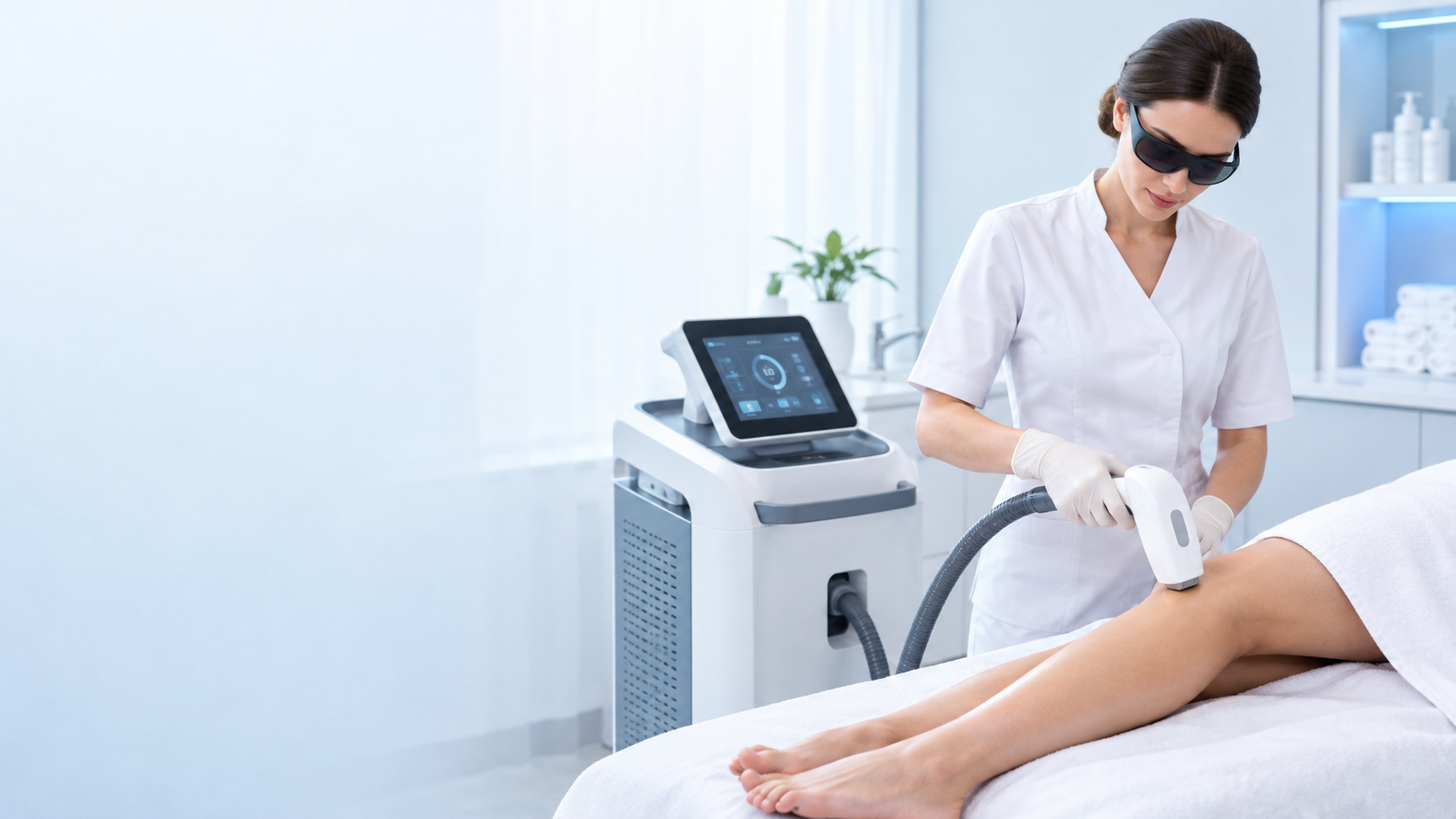
Home-use light-based devices are designed for a different operating environment and may have different output levels, safeguards, and intended uses. Professional laser systems are generally designed to support trained operators, structured consultations, controlled treatment protocols, and higher service throughput.
Professional equipment may offer more extensive parameter control, specialized handpieces, and service support. However, these benefits depend on the specific model and its documentation; they should not be assumed solely because a device is described as professional-grade.
For clinics, the relevant comparison is not simply professional versus home-use. It is whether the equipment is appropriate for the intended service, operator qualifications, customer volume, and local regulatory framework.
5. Safety: A Core Requirement, Not an Optional Feature
Laser safety must be built into device selection, staff training, and everyday clinic procedures.
Before treatment, practitioners should review medical history, medications, recent sun exposure, tanning, skin condition, and any relevant contraindications. Clients should receive a clear explanation of expected outcomes, limitations, possible adverse effects, and aftercare.
Protective eyewear suitable for the laser's wavelength and optical density must be available for everyone exposed to the treatment beam. The treatment room should have appropriate access controls, warning signs, and procedures for preventing accidental exposure.
Test spots may be appropriate in selected situations, particularly when skin response is uncertain or the risk of pigmentary complications is elevated. Treatment parameters should be selected according to the device instructions, professional training, and the client's assessment rather than copied from another patient.
Potential adverse effects include pain, redness, swelling, burns, blistering, scarring, and temporary or persistent changes in pigmentation. Risk varies by technology, settings, skin characteristics, and operator experience.
Clinics should also establish clear procedures for documenting treatments, monitoring reactions, managing complications, and arranging medical assessment when necessary.
A capable device can support safe practice, but it cannot replace qualified personnel, appropriate supervision, or sound clinical judgment.
6. Return on Investment: Evaluating the Business Case
The financial value of a laser device depends on more than its purchase price. Clinics should calculate the total cost of ownership and compare it with realistic service demand.
Key cost categories include:
-
Initial equipment and installation costs.
-
Training, licensing, and compliance expenses where applicable.
-
Maintenance, consumables, replacement handpieces, and repairs.
-
Staff time and room utilization.
-
Marketing, customer acquisition, and ongoing operating costs.
Revenue projections should be based on realistic appointment volume, pricing, repeat-treatment schedules, and the proportion of available time that can actually be booked.
A useful starting point is to calculate the contribution per treatment:
Contribution per treatment = Treatment price − Variable cost per treatment
Then estimate monthly contribution:
Monthly contribution = Contribution per treatment × Completed treatments per month
For a simplified payback estimate:
Payback period = Initial investment ÷ Monthly contribution after relevant fixed costs
This calculation should be adjusted for financing, taxes, downtime, seasonality, and other relevant expenses. It is a planning tool, not a guarantee of profitability.
For example, a relatively affordable machine may appear attractive but deliver a weak return if it cannot support the clinic's target treatments or requires frequent repairs. A higher-priced system may be commercially preferable if it offers reliable operation, appropriate indications, efficient workflow, and strong local service support.
Clinics should also consider differentiation. A platform that safely supports the needs of their existing customer base may be more valuable than a machine with numerous rarely used modes.
7. Applications and Client Needs: Building the Right Service Portfolio
The ideal laser device depends on the clinic's business model.
Hair removal studios should prioritize wavelength suitability, cooling, treatment speed, handpiece ergonomics, and demand across their local client population.
Medical aesthetic clinics may need a more specialized portfolio, with separate systems for hair reduction, pigmentation, vascular concerns, or resurfacing. Device selection should follow the clinic's permitted scope of practice and the indications supported by each model.
Multi-service beauty clinics should evaluate whether a versatile platform can meet their actual treatment demand without compromising suitability or safety. A broader feature list is only useful when the clinic has the training, client demand, and operational capacity to use those features.
Clinics serving diverse skin phototypes should pay particular attention to wavelength options, validated protocols, practitioner experience, and the manufacturer's guidance for different skin tones.
Before placing an order, clinic owners should ask suppliers for a technical specification sheet, operating manual, warranty details, training arrangements, service commitments, and applicable regulatory documentation. They should also request a live demonstration and verify claims against the exact model being purchased.
Manufacturers and suppliers can add value by providing clear technical information, responsive training, dependable after-sales support, and customization options that fit the clinic's operating needs. These factors help buyers assess not just the machine itself, but the long-term partnership behind it.
8. Conclusion
Choosing the best laser device in 2026 requires a balanced assessment of wavelength, skin type compatibility, treatment goals, safety, operational performance, and return on investment.
Alexandrite, diode, and Nd systems each offer different advantages. Multi-wavelength platforms may provide additional flexibility, but their value depends on validated performance, documented indications, and the clinic's actual customer needs.
The most effective purchasing decision begins with a clear service strategy, followed by a careful review of technical specifications, regulatory documentation, training, maintenance, and realistic financial projections.
For clinic owners, the objective is not to buy the machine with the longest feature list. It is to select dependable equipment that supports appropriate treatments, consistent workflows, professional standards, and sustainable growth.
In a competitive aesthetic market, a well-matched laser system—combined with qualified practitioners and responsible treatment protocols—can help a clinic build client trust, improve operational efficiency, and develop a more resilient service business
Founded in 2008, Guangzhou GLM Beauty Spa Equipment Factory specializes in research, development, manufacture and selling of beauty and slimming machines. Our production base is located in Guangzhou City, Guangdong Province, China. Since our foundation, we have introduced advanced technologies and equipment, to assure high quality and high performance of our products. With professional marketing guide and excellent after-sales service, our products have been exported to over 20 countries and regions, including Southeast Asia, the Middle East, Europe and the United States, won worldwide praises and gained a good reputation