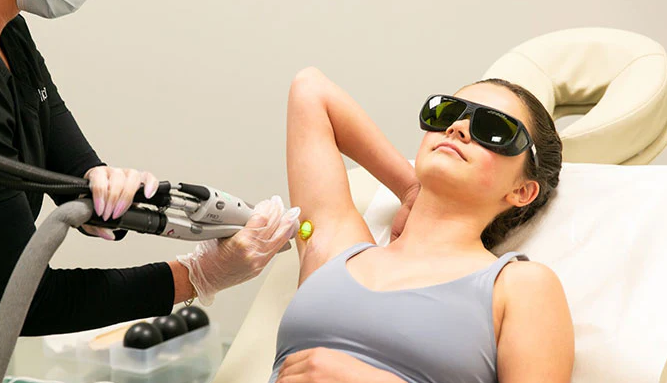
Laser hair removal: Precisely targeting hair follicles to safeguard skin safety
Laser hair removal, as a highly favored non-invasive cosmetic surgery worldwide, holds an important position in the field of beauty due to its high efficiency and safety. However, how exactly does this technology achieve precise targeting of hair follicles while avoiding damage to the surrounding skin? The core mystery lies in the scientific principle of "selective photothermal decomposition", which ingeniously utilizes the characteristics of light and heat to act on hair follicles with extremely high precision. Next, let's delve into the scientific principles behind this precise treatment and how advanced technologies comprehensively ensure the safety and effectiveness of the treatment.
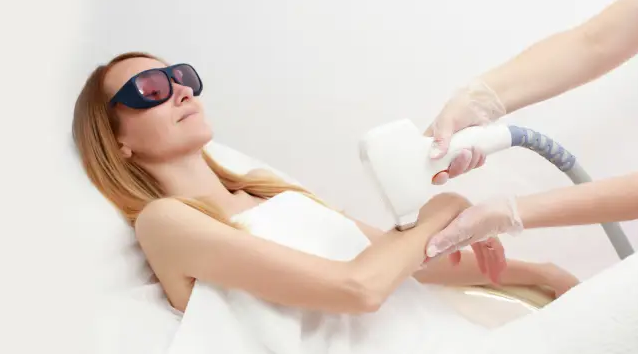
I. The basic principle of laser hair removal: Selective photothermal decomposition
Selective photothermal decomposition is the cornerstone of laser hair removal. The principle lies in that lasers of specific wavelengths can penetrate the skin surface, reach deep into the hair follicles, and be selectively absorbed by the melanin within the hair follicles. Melanin, as a "target" for light absorption, will rapidly convert laser energy into thermal energy after absorbing it. This kind of heat energy can damage the structure of hair follicles and interfere with the normal growth cycle of hair, thereby achieving the purpose of inhibiting future hair growth.
The melanin content in the surrounding skin is much lower than that in the hair follicles. This means that most of the laser energy is absorbed by the target hair, with only a very small portion of the energy acting on the surrounding tissues, thereby minimizing potential damage to the adjacent skin to the greatest extent. This precise energy distribution mechanism is the key for laser hair removal to achieve safe and effective hair removal.
Ii. Key Steps in the Laser Hair Removal Process
(1) Melanin absorption
The laser beam is like a precise navigation system, which can be specifically absorbed by the melanin within the hair follicles. Hair with a higher melanin concentration responds more significantly to laser treatment. This is because more laser energy can be absorbed and converted into heat energy, thereby more effectively destroying hair follicles. For instance, the hair follicles of dark-colored hair are rich in melanin, which can absorb more energy during laser treatment, and the treatment effect is often more ideal.
(2) Convert into thermal energy
When the melanin in the hair follicles absorbs light energy, it will quickly convert it into heat. This process is like "heating" the interior of the hair follicle. As the temperature rises, the normal function of the hair follicle is disrupted. The cellular structure in hair follicles undergoes degeneration and necrosis at high temperatures, thereby losing its ability to support hair growth.
(3) Selective hair follicle destruction
Lasers have a high degree of precision and can precisely target hair follicles like precision-guided weapons while skillfully protecting the surrounding skin. This mechanism of selective destruction benefits from the principle of selective photothermal decomposition. By rationally choosing the laser wavelength, pulse duration and energy level, it ensures that the heat is mainly concentrated within the hair follicles, while minimizing damage to the surrounding skin tissue. For instance, by using a laser of a specific wavelength, hair follicles can absorb a large amount of energy and warm up. Meanwhile, the surrounding skin, due to absorbing less of this wavelength of laser, undergoes a smaller temperature change, thereby effectively reducing the risk of skin damage.
(4) Disrupting the hair growth cycle
The growth of hair is not static but shows periodic changes, including the anagen phase, catagen phase and telogen phase. Laser treatment is most effective when hair is in the growth phase, as at this time the hair follicle metabolism is most active and the melanin content is the highest. Heating the hair follicles at this stage can more effectively disrupt their growth cycle and inhibit further hair growth. However, due to the complexity of the hair growth cycle, laser hair removal is not a one-time surgery. Hair in different parts of the body is in different growth cycles. Only hair follicles in the growth phase respond best to laser treatment. Therefore, multiple treatments are needed to cover all hair follicles in the growth phase, thereby achieving long-term or permanent results. Generally speaking, facial hair needs to be treated every 4 to 6 weeks, while other parts of the body may require treatment every 6 to 8 weeks. Only after 4 to 6 or even more treatments can a relatively ideal hair removal effect be achieved.
Iii. Structural Differences between hair follicles and surrounding skin tissues
The structural differences between hair follicles and the surrounding skin tissue are an important foundation for laser hair removal to achieve precise treatment and ensure safety. The following will elaborate on these differences in detail from multiple aspects:
(1) Composition of hair follicles
The hair follicle is a complex tiny organ composed of multiple substructures, including the outer root sheath and inner root sheath, hair bulb, medullary cells, cortical cells, keratinized layer cells and keratinized areas, etc. These components work together to support the formation, growth and maintenance of hair's specific shape. For instance, the hairball is the growth center of hair, containing actively dividing cells that can constantly generate new hair cells. The outer root sheath and the inner root sheath provide protection and support for hair growth.
(2) The morphology of hair follicles
Hair follicles are located deep in the skin and are usually conical or triangular in shape. This unique shape endows hair follicles with a certain degree of stability in the skin and also provides convenience for precise laser positioning. In contrast, the surrounding skin is composed of the epidermis and dermis. The epidermis is composed of multiple layers of keratinocytes and is the outermost layer of the skin. It plays a role in protecting the body, preventing water loss and resisting the invasion of external pathogens. The dermis is rich in collagen and elastic fibers, providing structural support and elasticity for the skin, enabling it to remain firm and smooth.
(3) Functions of hair follicles
In addition to hair growth, hair follicles are also closely related to sebaceous glands, sweat glands and nerve endings. Sebaceous glands can secrete sebum to moisturize the skin and hair and prevent the skin from drying out. Sweat glands regulate body temperature through sweating and maintain the body's thermal balance. Nerve endings can sense external stimuli such as touch and pain, endowing the skin with sensory functions. These structures work together to form a complex and orderly system that protects the skin, regulates body temperature, and maintains sensory function.
(4) The developmental stages of hair follicles
Hair follicles go through different stages during their growth and development, and each stage exhibits unique morphological characteristics. During the early growth phase, the structures around the hair follicles present as small clusters, and at this time, the hair follicles begin to form initially. During the middle and late growth phases, hair follicles gradually elongate and polarize, forming organized and slender structures, and hair also begins to grow rapidly. Hair follicles at different developmental stages respond differently to laser treatment. Hair follicles in the growth stage are the most sensitive to laser treatment and have the best therapeutic effect.
(V) Integration with skin tissue
The roots of hair follicles extend to the dermis and even subcutaneous tissue, closely connecting with the surrounding blood vessels and nerve endings, and forming a complex and dynamic interface with the skin. This tight integration enables hair follicles to obtain sufficient nutrients and oxygen from the surrounding tissues, supporting their normal growth and metabolism. At the same time, it also brings certain challenges to laser hair removal treatment. It is necessary to destroy the hair follicles while avoiding damage to the surrounding blood vessels and nerves.
Iv. Mechanism of Selective Photothermal Decomposition
Selective photothermal decomposition is a revolutionary therapeutic principle that uses laser energy of specific wavelengths to selectively heat and destroy target tissues while minimizing damage to surrounding healthy structures. The core of this mechanism lies in the fact that different organizations have varying degrees of absorption of light of different wavelengths. By carefully selecting the appropriate wavelength, pulse duration and energy level, heat can be precisely concentrated within the target chromophore, achieving precise and selective tissue destruction.
(1) Appropriate wavelength
The selection of wavelength is one of the key factors in selective photothermal decomposition. The wavelength must be specifically absorbed by the target chromophore (such as melanin, hemoglobin or water), while minimizing absorption by the surrounding tissues. For instance, in the treatment of vascular lesions, a wavelength of around 577nm is usually chosen. This is because both hemoglobin and oxygenated hemoglobin have a strong absorption capacity for this wavelength, which can rapidly heat up the blood within the blood vessels, causing them to coagulate and close, thereby achieving the purpose of treating vascular lesions. In laser hair removal, lasers of different wavelengths are suitable for people of different skin tones and hair colors. Laser with a wavelength of 755nm has a better therapeutic effect on light skin tone and dark hair because of its high melanin absorption rate. Laser with a wavelength of 810nm is suitable for most skin types and can balance the depth of penetration and melanin absorption. Laser with a wavelength of 1064nm is more suitable for darker skin tones (Fitzpatrick IV to VI), as it has a lower absorption rate of melanin in the epidermis and is safer.
(2) Appropriate pulse duration
The duration of the laser pulse should be equal to or shorter than the thermal relaxation time (TRT) of the target. TRT refers to the time required for a heated target to dissipate heat to the surrounding tissues. Keeping the pulse duration within this limit can ensure that thermal damage is strictly confined within the target, thereby effectively protecting adjacent structures. For instance, for smaller hair follicles, their thermal relaxation time is relatively short, and laser treatment with a shorter pulse duration is required to prevent heat from spreading to the surrounding skin. For larger vascular lesions, the thermal relaxation time is relatively long. The pulse duration can be appropriately extended to improve the therapeutic effect.
(3) Sufficient energy
The laser energy must be high enough to raise the temperature of the target tissue to a level sufficient to cause damage. However, excessive energy may cause collateral damage to non-target tissues, so a cautious balance must be maintained between efficacy and safety. In laser hair removal, the selection of energy density is of vital importance. The energy density must be high enough to thermally damage hair follicles (typically 10-100 J/cm²), but it still needs to be below the threshold for epidermal damage. Doctors will precisely adjust the laser energy density based on factors such as the patient's skin type, hair color and thickness to ensure the safety and effectiveness of the treatment.
The principle of selective photothermal decomposition is not only widely applied in dermatology for the treatment of pigmentary disorders, vascular diseases and tattoo removal, but also plays a significant role in other medical fields such as oncology and ophthalmic surgery. The proposal of this concept marks a major breakthrough in laser medicine, greatly enhancing the efficacy and safety of laser treatment and bringing good news to many patients.
V. Precise Control of Laser Parameters
(1) Wavelength selection
Lasers of different wavelengths have distinct application characteristics and advantages in laser hair removal, as detailed in the following table:
Recommended application advantages of wavelength (nm)
755 has a high melanin absorption rate for people with light skin tones and dark hair. It can more effectively absorb melanin from dark hair, thereby generating sufficient heat to damage hair follicles. It has a significant effect on hair removal for people with light skin tones and causes less damage to the surrounding skin.
Most skin types have a moderate wavelength, which can balance the depth of penetration and melanin absorption. It can not only penetrate deep into the skin to reach the hair follicles but also ensure sufficient melanin absorption. It is suitable for people of all skin tones and hair colors and is a relatively universal wavelength choice.
People with darker skin tones (Fitzpatrick IV to VI) have a lower absorption rate of melanin in the epidermis and are safer. For people with dark skin, using a 1064nm wavelength laser can reduce the absorption of laser by the epidermis, lower the risk of epidermal damage, and still effectively act on the melanin in the hair follicles to achieve the purpose of hair removal.
(II) Energy density and pulse design
Energy density: Energy density is a key parameter in laser hair removal. It must be high enough to thermally destroy hair follicles (typically 10-100 J/cm²), but still need to be below the threshold for epidermal damage. If the energy density is too low, it cannot generate sufficient heat to damage the hair follicles, resulting in poor hair removal results. However, if the energy density is too high, it may cause damage to the epidermis, leading to adverse reactions such as pain, redness, swelling and even scarring. Doctors will precisely adjust the energy density based on the specific conditions of the patient, such as skin type, hair color and thickness, and hair follicle depth, to ensure the safety and effectiveness of the treatment.
Pulse mode
Single pulse: This is the traditional pulse mode, suitable for coarse hair treatment. A single pulse can release a large amount of energy in a relatively short period of time, rapidly heating the hair follicles to a destructive temperature. For coarse and hard hair, the single-pulse mode can provide sufficient energy to destroy the structure of hair follicles and inhibit hair growth.
Dual-pulse (e.g., MedioStar) : The dual-pulse mode allows for sub-pulse cooling intervals, enhancing the safety of dark skin tones. In the dual-pulse mode, the laser energy is divided into two sub-pulses, with a brief cooling interval in between. This can reduce the accumulation of heat on the epidermis and lower the risk of epidermal damage, making it especially suitable for hair removal treatment in people with dark skin tones.
Vi. Cooling technology and safety Features of laser hair Removal Equipment
(1) Cooling technology
The cooling technology in the laser hair removal system plays a crucial role in protecting the skin, minimizing discomfort to the greatest extent and ensuring the stable performance of the equipment. Common cooling methods include:
Contact cooling: Direct contact with the skin through a sapphire or quartz crystal window provides a cooling effect. Cooling is usually carried out before, during and after laser emission. This cooling method can quickly dissipate the heat on the epidermis, effectively reducing the risk of burns and discomfort. For instance, GentleMax Pro® employs a sapphire/metal glass contact cooling system to keep the skin temperature below 0°C, providing patients with a comfortable treatment experience.
Dynamic cooling: Spray the cryogenic spray onto the skin surface before the laser pulse. This pre-cooling technology is highly suitable for short-pulse treatments such as laser hair removal. It can rapidly lower the surface temperature of the skin before the laser takes effect, reducing the damage caused by heat to the epidermis. GentleMax Pro® also combines dynamic non-contact skin cooling and freezing spray, further enhancing the epidermal protection effect.
Forced air cooling: Use fans or cold air convection systems to regulate the internal temperature of the equipment and prevent the laser components from overheating. During long-term operation, laser components generate a large amount of heat. If the heat is not dissipated in time, it will affect the performance and lifespan of the equipment. For instance, the TITANs2K laser hair removal device is equipped with a 600W compressor to keep the laser water temperature at 25°C and ensure that the water outlet temperature remains below 27°C, guaranteeing the stable operation of the equipment.
Water-cooling system: Circulating cooling water is used to regulate the temperature of the laser system and ensure operational stability. The water cooling system can effectively absorb the heat generated by the laser components and maintain the normal operating temperature of the equipment. For instance, the diode laser hair removal system requires regular inspection of the water tank and water quality, and regular water addition or replacement to ensure the normal operation of the water cooling system.
Thermal management technology: including conductive cooling, microchannel and large channel systems, can prevent chip burnout and extend equipment lifespan. These thermal management technologies can promptly conduct the heat generated by the chips away, preventing the chips from being damaged due to overheating. For instance, the TITANs2K laser system employs conductive cooling to enhance reliability and durability, providing a guarantee for the long-term stable operation of the equipment.
Cooling spray: Spray cooling spray before, during and after laser irradiation to minimize discomfort and prevent thermal damage to the greatest extent. The cooling spray can quickly lower the surface temperature of the skin and relieve the heat sensation caused by laser treatment. For instance, the LightSheer diode laser employs a sapphire contact cooling device to maintain the window temperature at approximately 5°C, and in combination with a cooling spray, it offers patients a more comfortable treatment process.
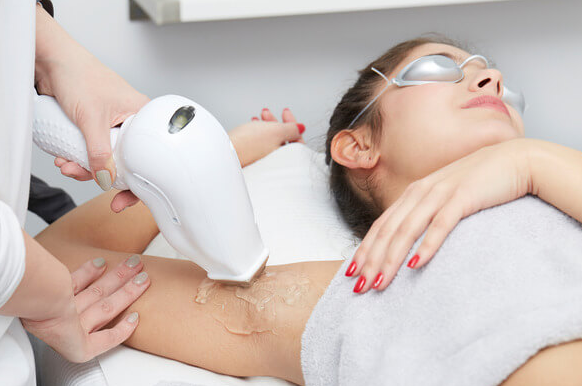
(2) Verification and monitoring of the cooling system
The equipment should be equipped with a temperature monitoring system to verify cooling efficiency and ensure safety. For instance, some systems (such as those on the Saimei365 platform) offer real-time skin temperature monitoring and automatically stop laser emission when the cooling fails. This real-time monitoring and automatic protection mechanism can promptly detect problems with the cooling system, preventing skin damage caused by insufficient cooling and providing a strong guarantee for the safety of patients.
(3) Safety functions
In addition to the cooling system, laser hair removal equipment should also adopt comprehensive safety mechanisms, such as laser radiation shields, emergency stop switches and power diagnosis, etc. The laser radiation shield can effectively prevent the leakage of laser and protect the eyes of operators and patients from laser damage. The emergency stop switch can quickly halt laser emission in case of unexpected situations, preventing accidents from happening. The power diagnosis system can monitor the power status of the equipment in real time, ensuring that the equipment operates in a stable power environment and preventing equipment failure or safety accidents caused by power issues.
Vii. Summary
The laser hair removal system integrates multiple advanced cooling technologies and comprehensive protection mechanisms. These technologies and mechanisms work together to play a significant role in protecting the skin, enhancing comfort, and maintaining system stability. Choosing the appropriate cooling method and safety features is crucial for achieving the best therapeutic effect and ensuring patient satisfaction. In practical applications, doctors should precisely adjust the laser parameters based on the patient's skin type, hair characteristics and treatment needs, select the appropriate cooling method, and strictly follow the operating procedures to ensure the safety and effectiveness of laser hair removal treatment. With the continuous advancement of technology, laser hair removal technology will be constantly improved and developed, providing more people who pursue beauty and health with better services.
GLM is a specialized beauty instrument factory that produces instruments for a variety of functions, including weight loss devices. We have vacuum negative press, radio frequency fat blasting equipment, frozen fat dissolving machine and EMS body shaping machine. GLM is a 14 year old supplier of beauty instruments with guaranteed quality.https://gdglmbeauty.com/