Introduction
In the professional beauty industry, client experience has become just as important as treatment results.
Modern clients do not simply want to receive a facial, skin-tightening treatment, body-contouring session, or hair-removal service. They want the entire experience to feel professional, comfortable, personalized, efficient, and trustworthy—from the first consultation to the final follow-up.
This is one reason equipment upgrades are becoming increasingly important for beauty salons, aesthetic clinics, and medspas.
Upgrading equipment does not necessarily mean replacing a perfectly functional machine simply because a newer model is available. Instead, a well-planned equipment upgrade should solve real problems in the treatment room: inconsistent energy delivery, limited treatment options, uncomfortable handpieces, complicated operation, long treatment times, or a lack of personalization.
Modern professional aesthetic equipment increasingly focuses on precision, versatility, usability, and workflow efficiency. Technologies such as Radio Frequency (RF), LED light therapy, ultrasound, HIFU, diode laser, vacuum, EMS, and multifunction platforms can help practitioners create more structured treatment experiences while responding to different client needs.
In other words, equipment is no longer simply a tool used to perform a treatment. It has become an important part of the client journey.
Background: Why Client Expectations Are Changing
The modern beauty client is more informed than ever.
Before booking an appointment, clients can research technologies, compare treatment options, watch treatment videos, read reviews, and evaluate different clinics online. They may already understand the difference between RF, ultrasound, LED, laser, and other energy-based technologies before they even enter the treatment room.
This changes the role of professional equipment.
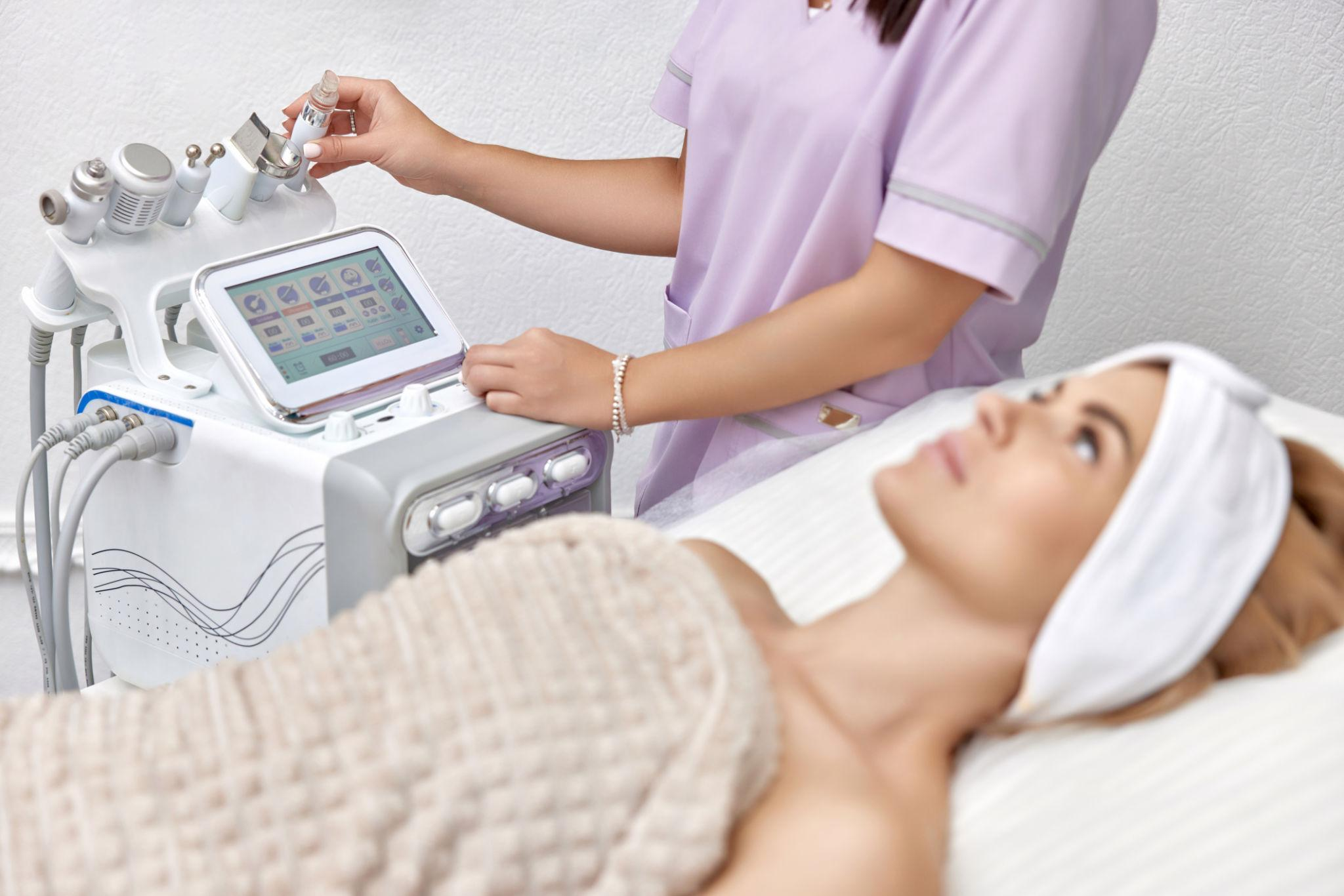
A machine that looks outdated, requires complicated manual operation, or provides limited treatment flexibility may create a different impression from a modern system with a clear touchscreen interface, ergonomic handpieces, adjustable parameters, and multiple treatment modes.
The difference is not only visual.
Older equipment may require more manual adjustments, separate devices for different procedures, or longer preparation times. Modern systems can integrate multiple technologies and treatment functions into a more streamlined workflow.
For example, a clinic may use RF for controlled thermal treatment, LED for light-based skin care, and ultrasound for mechanical stimulation or product-delivery support. Depending on the specific device and treatment protocol, these technologies can be used individually or incorporated into broader treatment programs.
This approach reflects a wider change in professional aesthetics: clients increasingly expect treatments to be personalized rather than standardized.
Professional clinics are therefore looking beyond the question of “Does this machine work?” and asking a more important question:
“Does this equipment help us deliver a better client experience?”
Technology and Mechanism: How Modern Equipment Changes the Treatment Experience
Equipment upgrades can influence client experience in several technical areas, from energy delivery to operator control.
1. More Precise Energy Delivery
Energy-based aesthetic treatments depend heavily on controlled energy delivery.
RF systems, for example, use electromagnetic energy to create controlled heating within targeted tissue. Ultrasound uses acoustic energy, while laser and light-based systems use specific wavelengths to interact with targeted structures.
The treatment effect is not determined simply by how powerful a machine is.
Consistency, control, treatment parameters, contact, movement, and operator technique all matter.
Modern professional systems may provide more adjustable parameters, improved monitoring, preset treatment modes, or more intuitive interfaces. These features can help practitioners deliver treatment according to the selected protocol rather than relying excessively on guesswork.
For clients, better control can translate into a more consistent and predictable treatment experience.
2. Improved Comfort
Comfort is a major component of client satisfaction.
A client who experiences unnecessary discomfort may be less likely to return, even if the treatment itself is technically effective.
Modern equipment can incorporate technologies designed to improve comfort, including improved cooling systems, controlled energy delivery, ergonomic handpieces, adjustable intensity, and more stable operating parameters.
For example, in an RF treatment, controlled heating can provide a warm sensation that many clients find comfortable. In laser-based treatments, cooling technology can help manage the thermal sensation associated with energy delivery.
The exact experience depends on the device, settings, treatment area, client characteristics, and operator technique. However, equipment design can play an important role in making professional treatments feel more controlled and comfortable.
3. Faster and More Efficient Treatments
Time is another important part of the client experience.
A treatment that requires unnecessary setup, frequent handpiece changes, or complicated parameter adjustments can make the appointment feel longer than necessary.
Modern equipment is increasingly designed around workflow efficiency.
Features such as larger treatment areas, faster repetition rates, quick-switch handpieces, touchscreen controls, and multifunction platforms can help practitioners move more smoothly between treatment steps.
This does not mean every treatment should simply become shorter.
Instead, better equipment can allow practitioners to spend less time dealing with the machine and more time focusing on the client.
That distinction is important.
The best technology does not replace professional interaction. It gives the practitioner more freedom to concentrate on consultation, treatment technique, communication, and aftercare.
4. Greater Treatment Customization
No two clients have exactly the same skin condition, treatment goals, or tolerance.
A client may be primarily concerned about skin laxity, while another may want improved texture or a more comprehensive rejuvenation program.
Modern equipment can provide different energy levels, treatment modes, handpieces, wavelengths, or operating parameters, depending on the technology.
For professional operators, this creates more room for customization.
Instead of offering one fixed treatment for everyone, clinics can create different protocols based on consultation results and treatment objectives.
This is particularly valuable for professional businesses because personalization can make a service feel more specialized.
5. Multifunction Platforms and Integrated Treatments
One of the most visible equipment trends in professional aesthetics is the development of multifunction platforms.
A single system may combine several technologies, such as RF, LED, ultrasound, vacuum, EMS, cavitation, or other facial and body treatment functions.
The value of a multifunction machine is not simply the number of handpieces it includes.
Its real value comes from whether those technologies can support a practical treatment menu.
For example, a clinic may use one technology for skin tightening, another for skin rejuvenation, and another as part of a body-contouring protocol. A well-designed platform can reduce the need for multiple independent machines and make treatment-room organization easier.
Research on real-world use of multi-modality aesthetic platforms has also highlighted the potential value of combining different energy-based technologies within customized treatment approaches.
For clients, this can create the perception of a more comprehensive service rather than a single isolated procedure.
Advantages: Why Equipment Upgrades Can Improve Client Experience
A More Professional First Impression
The client experience begins before the treatment starts.
When a client enters a modern treatment room equipped with well-maintained professional systems, digital controls, organized handpieces, and a clean treatment environment, the equipment contributes to the overall perception of professionalism.
This does not mean an expensive-looking machine automatically creates trust.
Rather, modern equipment can support a broader professional environment in which the practitioner can clearly explain the treatment, demonstrate the technology, and provide a structured treatment process.
The machine becomes part of the clinic's communication.
Better Practitioner-Client Interaction
It may seem that advanced technology makes treatments more machine-centered. In practice, well-designed equipment can have the opposite effect.
When controls are intuitive and treatment parameters are easy to manage, practitioners can spend less attention on complicated machine operation.
That gives them more opportunity to communicate with clients.
They can explain what the handpiece is doing, discuss the sensation the client may experience, check comfort levels, and adjust the treatment according to the protocol.
In a professional clinic, technology should support the practitioner—not replace the practitioner.
More Consistent Treatment Procedures
Consistency is particularly important for clinics that have multiple practitioners.
If equipment is difficult to operate or requires too many manual adjustments, treatment quality can vary between operators.
Modern systems with clearer interfaces, preset modes, adjustable parameters, and standardized protocols can help create a more consistent workflow.
This is valuable for both the business and the client.
Clients are more likely to feel confident when every appointment follows a professional and familiar process.
Greater Service Variety
Equipment upgrades can also expand what a clinic is able to offer.
A clinic that previously offered only basic facial services may be able to introduce professional RF skin-tightening treatments, LED programs, ultrasound-based services, or other technology-supported treatments after upgrading its equipment.
A body-focused business may similarly expand into RF body treatments, vacuum-assisted services, cavitation, or combination protocols where appropriate.
This gives clients more options without necessarily requiring a completely separate treatment room for every service.
Better Use of Treatment-Room Space
Space is a practical consideration for many salons and clinics.
Multiple single-function machines can occupy significant floor and storage space.
Multifunction equipment can consolidate several treatment functions into one platform, depending on the system design.
This can make the treatment room more organized and create a cleaner environment for both practitioners and clients.
A well-organized room contributes to the overall experience because clients can immediately see that the treatment process is structured and professional.
Professional Equipment vs. Home-Use Devices
The popularity of home beauty devices has increased significantly, but professional equipment continues to serve a different purpose.
Home devices are generally designed around convenience and accessibility. Professional systems are designed around trained operators, structured protocols, adjustable parameters, treatment efficiency, and a broader range of applications.
A professional RF system, for example, may provide more control over treatment parameters than a basic consumer device.
Similarly, professional multifunction platforms can offer several treatment technologies within one system, allowing practitioners to select different modalities according to the client's goals.
The distinction is therefore not simply about “stronger” equipment.
It is about the complete treatment ecosystem.
Professional equipment is used together with consultation, operator expertise, treatment protocols, hygiene procedures, client communication, and follow-up.
This combination is what creates a professional treatment experience.
Applications: Where Equipment Upgrades Make the Biggest Difference
Facial Rejuvenation and Skin Tightening
RF remains a popular technology for professional facial treatments because it can be incorporated into programs focused on skin firmness and rejuvenation.
Upgraded RF systems may offer improved handpiece ergonomics, adjustable parameters, touchscreen controls, and more refined energy management.
For clients, the benefit is a treatment that feels more personalized and professionally managed.
LED Skin Care Programs
LED systems are often used as standalone treatments or as part of broader facial programs.
Different wavelengths can be selected according to the intended treatment protocol. Red light, for example, is commonly incorporated into professional skin-rejuvenation programs, while blue light is often associated with acne-focused applications.
For clinics, LED can be attractive because treatments are generally comfortable and can complement other services.
Ultrasound-Based Treatments
Ultrasound technology uses acoustic energy and can be incorporated into facial and body treatment protocols depending on the equipment design.
Some ultrasound systems are used for mechanical stimulation or to support topical product application, while other systems are designed for specific aesthetic applications.
The major advantage for the client is that ultrasound-based procedures can often be integrated into comfortable, non-invasive treatment programs.
Body Contouring Services
Body-focused clinics may use combinations of technologies such as RF, vacuum, ultrasound, EMS, and cavitation.
Different technologies operate through different mechanisms, allowing practitioners to build treatment programs around specific aesthetic objectives.
A multifunction platform can be especially useful for businesses that want to expand their body-treatment menu without purchasing a completely separate machine for every service.
High-Volume Clinics and MedSpas
For busy clinics, workflow efficiency becomes increasingly important.
When several clients are scheduled throughout the day, equipment that is easy to operate, quick to configure, and flexible enough to support multiple services can have a direct impact on daily operations.
The goal is not simply to treat more clients.
It is to maintain a consistent level of service while reducing unnecessary operational complexity.
Modern aesthetic equipment is increasingly being positioned around this combination of treatment versatility and workflow efficiency.
What Should Clinics Consider Before Upgrading?
An equipment upgrade should be based on business and client needs rather than technology hype.
Before investing, clinic owners should consider:
Client demand: Which treatments are clients actually asking for?
Treatment gaps: Which services are missing from the current menu?
Operator training: Can the team learn and use the system correctly?
Workflow: Will the equipment make treatments easier or more complicated?
Versatility: Are the different functions genuinely useful for the clinic?
Maintenance: Is technical support available when needed?
Compliance: Does the equipment meet the applicable regulatory and safety requirements for the intended market and application?
Long-term value: Can the device support multiple treatment programs rather than only one short-term trend?
The best upgrade is not necessarily the newest machine.
It is the machine that solves the most relevant problems for the clinic.
Conclusion
Equipment upgrades can influence far more than treatment technology.
They can improve comfort, workflow, personalization, treatment consistency, service variety, and the overall perception of professionalism.
For beauty salons, aesthetic clinics, and medspas, modern equipment should be viewed as part of the complete client experience.
RF, LED, ultrasound, HIFU, laser, vacuum, EMS, and multifunction platforms each have different mechanisms and applications. When selected carefully and operated by trained professionals, these technologies can help clinics create more structured and personalized treatment programs.
Ultimately, clients may not remember every technical specification of a machine.
They remember whether the treatment felt comfortable.
They remember whether the practitioner appeared confident.
They remember whether the procedure felt personalized.
And they remember whether the clinic provided an experience worth returning for.
That is why the most valuable equipment upgrade is not simply an upgrade in technology. It is an upgrade in the entire treatment experience
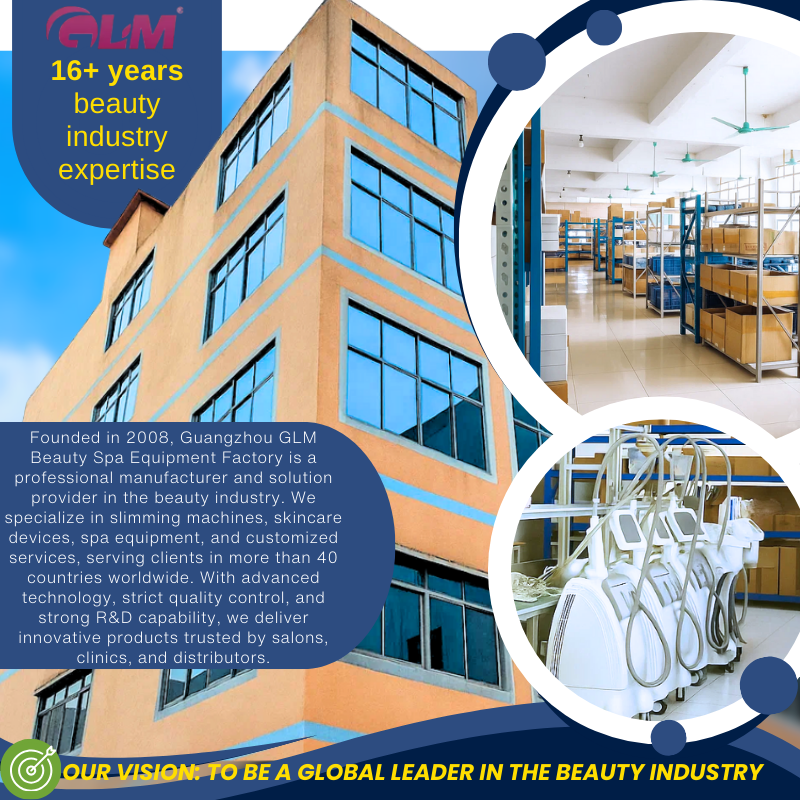
Founded in 2008, Guangzhou GLM Beauty Spa Equipment Factory specializes in research, development, manufacture and selling of beauty and slimming machines. Our production base is located in Guangzhou City, Guangdong Province, China. Since our foundation, we have introduced advanced technologies and equipment, to assure high quality and high performance of our products. With professional marketing guide and excellent after-sales service, our products have been exported to over 20 countries and regions, including Southeast Asia, the Middle East, Europe and the United States, won worldwide praises and gained a good reputation