Introduction
In 2026, professional beauty salons, body contouring studios, and aesthetic clinics face increasing pressure to deliver personalized treatments while controlling operating costs. Clients expect flexible service options, clear treatment plans, and convenient appointment schedules. At the same time, business owners must make careful decisions about equipment investment, staff productivity, and long-term profitability.
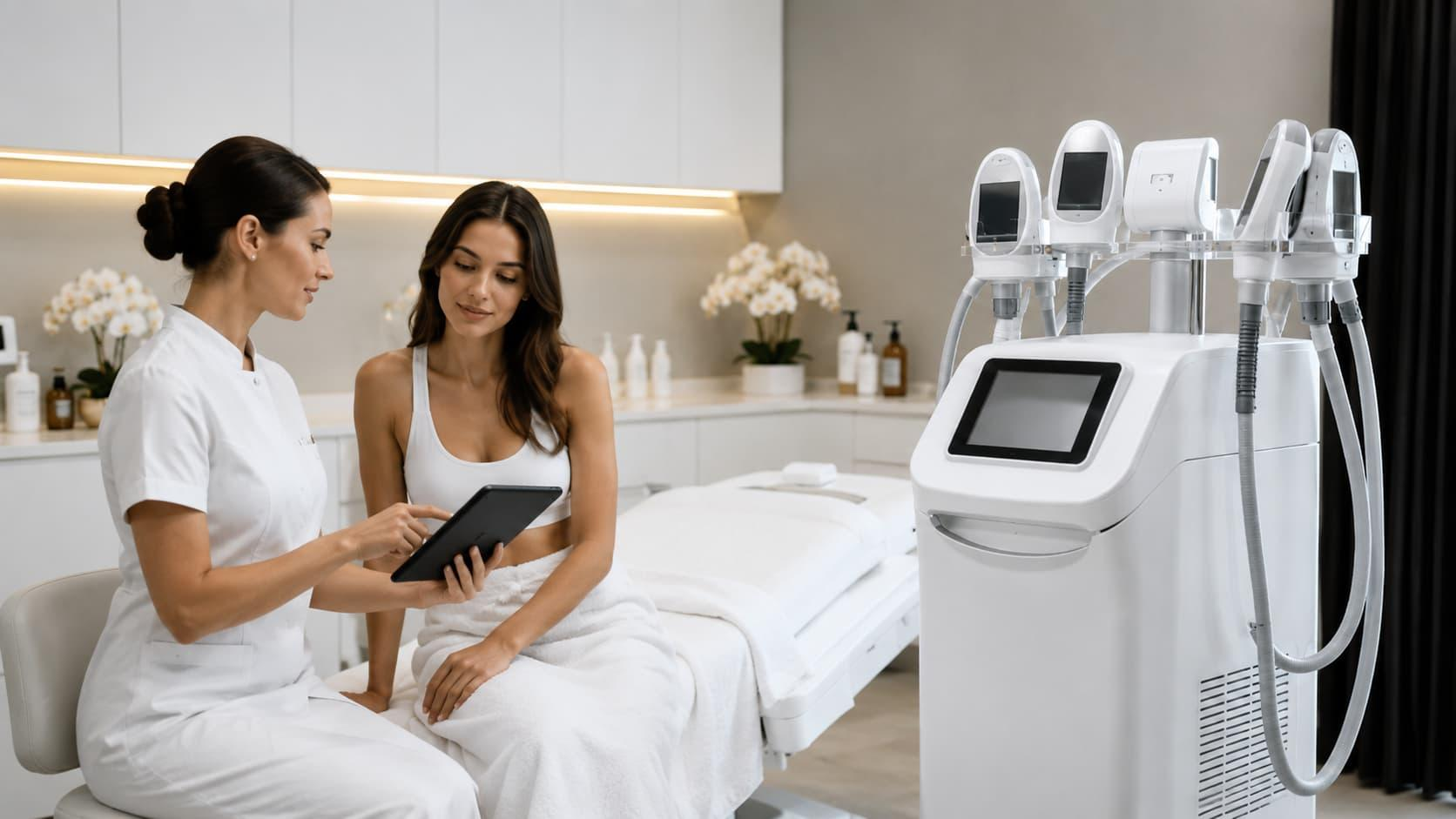
Multi-function slimming machines are becoming an important consideration for businesses seeking to balance these demands. By integrating several body contouring technologies into one professional platform, these systems can support a wider range of treatment protocols without requiring a separate device for every service.
However, the real value of a multi-function machine goes beyond the number of technologies it contains. Its commercial potential depends on how effectively the equipment fits the clinic's service menu, how easily practitioners can operate it, and whether the business can generate consistent demand for its treatments.
Understanding the relationship between technology, workflow, and financial performance helps salon owners and clinic managers make more informed equipment decisions.
Background and Business Challenges
The Limitations of Single-Function Equipment
Single-function slimming devices can be effective for specific applications, but they may limit service flexibility. A business that wants to offer different body contouring experiences may need to purchase multiple machines, allocate additional treatment space, and manage separate maintenance schedules.
These requirements can increase the initial investment and create operational complexity. If one device is used infrequently, the capital tied to that equipment may generate limited revenue.
Single-function equipment is not necessarily a poor investment. For a clinic specializing in one established treatment, a dedicated device may provide the most suitable performance and workflow. The challenge arises when customer needs expand beyond the services that the existing equipment can support.
Changing Client Expectations
Today's clients may seek different outcomes from body contouring services, including improved body appearance, temporary circumference changes, smoother-looking skin, or support for a broader wellness and body-care program. These goals are not identical, and no single technology is appropriate for every client.
For professional providers, this creates a need for more flexible consultation and treatment planning. A device platform that supports multiple modalities may help practitioners offer different services based on client goals, treatment areas, and individual suitability.
The Pressure to Improve ROI
Equipment profitability is influenced by more than the purchase price. Businesses must also consider staff training, consumables, maintenance, room utilization, treatment duration, marketing expenses, and customer retention.
A machine that offers numerous functions but attracts little demand may perform worse financially than a simpler device with a strong customer base. Therefore, the objective is not to purchase the machine with the longest feature list. It is to select equipment that supports a commercially viable treatment menu and a reliable service workflow.
Technology and Mechanisms
What Is a Multi-Function Slimming Machine?
A multi-function slimming machine is a professional aesthetic platform that combines two or more technologies or treatment modalities in one system. Depending on the model, available functions may include radiofrequency (RF), ultrasonic cavitation, vacuum-assisted massage, mechanical rollers, or other body-care technologies.
Not every machine includes every modality, and the exact mechanism depends on its configuration. Buyers should evaluate the actual handpieces, output specifications, intended applications, and operating protocols rather than relying on the product name alone.
Understanding the Main Technologies
1. Radiofrequency (RF)
RF devices deliver electrical energy into tissue to generate heat through tissue resistance. Depending on the device design, energy delivery, and treatment protocol, controlled heating may support temporary improvements in skin appearance and selected skin-tightening applications.
RF is not a substitute for weight management or surgical treatment. Appropriate settings, controlled contact, and operator training are important for managing discomfort and reducing the risk of burns or other adverse effects.
2. Ultrasonic Cavitation
Ultrasonic cavitation systems use acoustic energy delivered through a treatment applicator. Certain systems are marketed for localized body contouring, but their mechanisms, output parameters, and evidence vary.
Results should not be presented as guaranteed fat loss or a replacement for a healthy lifestyle. Practitioners should follow the manufacturer's instructions, assess client suitability, and explain the realistic scope of treatment before beginning a session.
3. Vacuum-Assisted Massage and Mechanical Rollers
Vacuum-assisted systems use suction to draw tissue into an applicator, while mechanical rollers apply physical manipulation. Depending on the device and protocol, these approaches may be used for massage, temporary changes in the appearance of skin texture, or body-care programs that emphasize tissue mobilization.
They should not be described as proven methods for permanently removing fat or eliminating cellulite. Pressure, intensity, and treatment duration must be adjusted to the individual, with particular care around fragile skin and relevant contraindications.
4. Combined Treatment Protocols
Some platforms allow practitioners to use different modalities during separate stages of a treatment plan. For example, a provider may select one function for a particular body-care objective and another for a different concern, provided the device instructions and client assessment support that approach.
Combining technologies does not automatically produce better results. The sequence, intensity, treatment interval, and compatibility of modalities must be established according to the manufacturer's protocol and the client's needs.
How Integration Can Improve Workflow
When multiple compatible functions are available on one platform, practitioners may spend less time switching between separate devices, reorganizing treatment rooms, and preparing different systems. Centralized controls and a consistent interface may also simplify routine operation.
These benefits depend on equipment design. A machine with poorly organized controls, complicated handpiece changes, or extensive setup requirements may create more work rather than less. Usability should therefore be evaluated during product demonstrations and staff training.
Advantages and Comparison: From Treatment Efficiency to ROI
1. More Flexible Service Menus
A multi-function platform can help a salon build a broader body-care menu around different client preferences and treatment goals. Instead of offering only one standardized service, the business may be able to develop several clearly differentiated programs using supported functions.
For example, a clinic might offer separate services focused on massage-based body care, selected skin-appearance concerns, or a combination of approved modalities. Each service should have its own consultation criteria, operating procedure, and realistic description of expected outcomes.
A broader menu can create additional opportunities for repeat visits and service packages, but only when those services address genuine customer demand.
2. Better Use of Treatment Rooms and Equipment
A single integrated system may occupy less space than several standalone devices. This can be valuable for small studios or clinics with limited treatment rooms.
Equipment consolidation can also reduce the need to move between machines during a suitable treatment workflow. If staff can prepare the system quickly and follow a consistent procedure, the clinic may be able to schedule appointments more efficiently.
Nevertheless, the actual capacity of a treatment room depends on session length, cleaning and disinfection requirements, consultation time, staff availability, and client turnover. Device integration alone does not guarantee more appointments per day.
3. Potentially Lower Total Cost of Ownership
Purchasing one integrated platform may reduce the need for multiple device purchases. It may also simplify equipment storage, training arrangements, and some maintenance activities.
However, a multi-function system can have higher upfront costs, expensive replacement handpieces, or more complex servicing requirements. Before purchasing, businesses should compare the total cost of ownership rather than focusing only on the initial price.
Important considerations include:
-
Equipment purchase price and financing costs.
-
Training, installation, and onboarding.
-
Consumables and replacement handpieces.
-
Routine maintenance and repair availability.
-
Warranty coverage and technical support.
-
Expected service demand and equipment utilization.
A transparent cost comparison helps buyers determine whether integration offers a genuine financial advantage.
4. A More Consistent Client Experience
A well-designed system can support standardized treatment workflows, making it easier for trained practitioners to follow the same documented procedures. Consistency can improve service delivery, staff onboarding, and communication between practitioners.
A professional consultation remains essential. Providers should record client goals, review relevant medical history, screen for contraindications, explain limitations, and document treatment settings. Standardization should never replace individual assessment.
Clear communication also reduces the risk of unrealistic expectations. Clients should understand that visible outcomes vary and that some changes may be temporary or require a series of sessions.
5. A Practical Framework for Calculating ROI
ROI should be evaluated using actual business data rather than assumptions about the machine's earning potential.
A simple starting point is:
Monthly treatment contribution = Monthly treatment revenue − Direct treatment costs
Direct costs may include consumables, treatment-specific labor, and other variable expenses. To estimate how much a machine contributes toward recovering its purchase price, the business should also account for fixed operating costs and any additional financing or service expenses.
A simplified payback calculation is:
Payback period = Initial equipment investment ÷ Monthly net contribution attributable to the equipment
For example, suppose a clinic invests $12,000 in a multi-function system and generates $2,000 per month in net contribution attributable to its treatments after relevant operating costs. The simple payback period would be approximately six months.
This is an illustrative calculation, not a performance forecast. Actual results depend on demand, pricing, appointment utilization, repeat bookings, operating costs, and the extent to which revenue is genuinely incremental. A clinic should also account for taxes, financing, depreciation, and unexpected repairs when preparing a full financial assessment.
Applications and Client Needs
Professional Beauty Salons
Beauty salons may use multi-function platforms to expand their body-care services without dedicating a separate room to every technology. A carefully structured menu can serve clients with different preferences while keeping consultation and treatment procedures organized.
The most suitable platform is one that matches the salon's target market, staff capabilities, and available appointment capacity. More functions are valuable only when the salon can explain, deliver, and sell the associated services responsibly.
Medical Aesthetic and Body Contouring Clinics
Professional clinics may prioritize equipment flexibility, documentation, output control, training, and technical support. Depending on local regulations and the intended use of the device, some technologies or claims may require additional professional qualifications or regulatory authorization.
Clinics should verify applicable requirements, manufacturer documentation, contraindications, and evidence supporting the intended application. Equipment selection should be based on clinical suitability and permitted use, not simply on marketing terminology.
Spas and Wellness Centers
Spas may incorporate suitable body-care technologies into broader massage or wellness programs. Here, comfort, treatment flow, ease of cleaning, and the ability to maintain a consistent client experience can be as important as the number of available functions.
Staff should describe the service accurately and avoid presenting cosmetic body-care procedures as medical weight-loss treatments.
Distributors and Equipment Buyers
For distributors, multi-function machines may offer a way to serve different professional customer segments through a more flexible product portfolio. Yet purchasing decisions should consider local market demand, after-sales service, spare-part availability, training resources, and the manufacturer's ability to support the product over time.
Useful supplier questions include:
-
Which technologies and handpieces are included in the quoted configuration?
-
What are the technical specifications and intended applications of each function?
-
What training, warranty, and maintenance services are provided?
-
Are replacement parts and technical assistance readily available?
-
Which product claims are supported by documentation and permitted in the target market?
These questions help distinguish a commercially practical platform from a product whose apparent value rests mainly on its feature count.
Professional Equipment Versus Home-Use Devices
Professional systems are generally designed around the requirements of trained operators, service workflows, and repeated commercial use. Depending on the model, they may provide more configurable settings, interchangeable applicators, operator training, and structured service support.
Home-use products are typically designed for different operating conditions and user capabilities. Neither category is automatically superior for every purpose, but the two should not be treated as interchangeable.
Professional buyers should assess output specifications, safety controls, intended-use documentation, maintenance arrangements, and staff competency. A higher-powered device is not inherently more effective or safer, and professional equipment still requires appropriate training and adherence to its instructions.
Conclusion
In 2026, multi-function slimming machines can offer professional beauty salons, aesthetic clinics, and wellness centers a practical way to broaden their service menus, organize treatment workflows, and make more efficient use of equipment investment.
Their strongest business advantage is not simply the ability to combine multiple technologies. It is the opportunity to align appropriate treatment options with real client demand while controlling operating costs and maintaining consistent service standards.
Before investing, businesses should assess the technology configuration, target market, training requirements, regulatory considerations, after-sales support, and realistic revenue potential. They should also calculate ROI using actual treatment costs and booking data rather than relying on advertised earning claims.
For manufacturers and suppliers, providing transparent specifications, reliable technical support, operator training, and practical application guidance can help professional buyers evaluate equipment with greater confidence. Ultimately, the most valuable multi-function slimming machine is the one that fits the business model, meets legitimate client needs, and supports sustainable long-term operations
Founded in 2008, Guangzhou GLM Beauty Spa Equipment Factory specializes in research, development, manufacture and selling of beauty and slimming machines. Our production base is located in Guangzhou City, Guangdong Province, China. Since our foundation, we have introduced advanced technologies and equipment, to assure high quality and high performance of our products. With professional marketing guide and excellent after-sales service, our products have been exported to over 20 countries and regions, including Southeast Asia, the Middle East, Europe and the United States, won worldwide praises and gained a good reputation