Introduction
A well-defined jawline has become an important part of modern facial aesthetics. Rather than simply focusing on weight loss or makeup techniques, many clients are looking for professional ways to improve the appearance of facial contours and create a cleaner transition between the cheeks, jaw, and neck.
But what actually makes a jawline look more defined?
Jawline appearance is influenced by several factors, including facial structure, skin firmness, the distribution of soft tissue, muscle condition, and the amount of visible fullness around the lower face and upper neck. Because these factors vary from person to person, there is no single treatment that works equally well for every client.
Professional beauty clinics and aesthetic salons increasingly use non-invasive aesthetic technologies as part of customized facial contouring programs. Depending on the equipment and treatment protocol, technologies such as radio frequency (RF), ultrasound, microcurrent, LED, and other energy-based systems can be incorporated into professional facial treatments to support skin tightening, temporary contour enhancement, and overall facial appearance.
The goal is not to change the natural facial structure completely. Instead, professional treatment focuses on improving the visible qualities that contribute to a more refined and balanced jawline.
Background: Why Does the Jawline Lose Definition?
A less-defined jawline can develop for different reasons. For some clients, genetics and natural facial anatomy are the primary factors. For others, changes in skin elasticity, age-related tissue changes, body-weight fluctuations, or localized fullness can make the lower face appear softer.
Skin elasticity is particularly important. As collagen and elastin production gradually changes with age, the skin may become less firm and lose some of its ability to maintain a tight contour. This can make the boundary between the jaw and neck appear less distinct.
Another factor is soft-tissue distribution. Even clients with relatively stable body weight can have different levels of fullness around the cheeks, lower face, or submental area. In these cases, general weight loss may not produce the specific contour effect the client wants.
Muscle condition can also influence facial appearance. The lower face contains several muscles that contribute to facial movement and expression. However, jawline definition should not be reduced to muscle training alone. A professional assessment needs to consider the complete facial contour, including skin quality, tissue volume, and individual anatomy.
For professional operators, this is why consultation should come before treatment. A device should be selected according to the client's actual concern rather than simply choosing the most powerful-looking technology.
Technology and Mechanism: How Professional Beauty Devices Can Support Jawline Definition
Modern aesthetic equipment provides several approaches for addressing the factors that affect the appearance of the jawline. The appropriate technology depends on the client's skin condition, treatment goals, and the operator's assessment.
1. Radio Frequency for Skin Firmness
Radio frequency is widely used in professional facial treatments because it delivers controlled electromagnetic energy into the treatment area. The resulting thermal effect can support the skin-firming process and stimulate biological responses associated with collagen remodeling.
For jawline-focused treatments, RF can be used around areas such as the lower cheeks, jawline, and upper neck, depending on the device design and manufacturer's instructions.
The purpose is generally not immediate structural transformation. Instead, a course of treatments may help improve the appearance of skin firmness and create a smoother-looking facial contour.
Professional RF systems can also provide operators with adjustable energy levels and treatment modes. This allows treatment parameters to be adapted to different facial areas rather than applying the same settings everywhere.
2. Ultrasound and Energy-Based Contouring
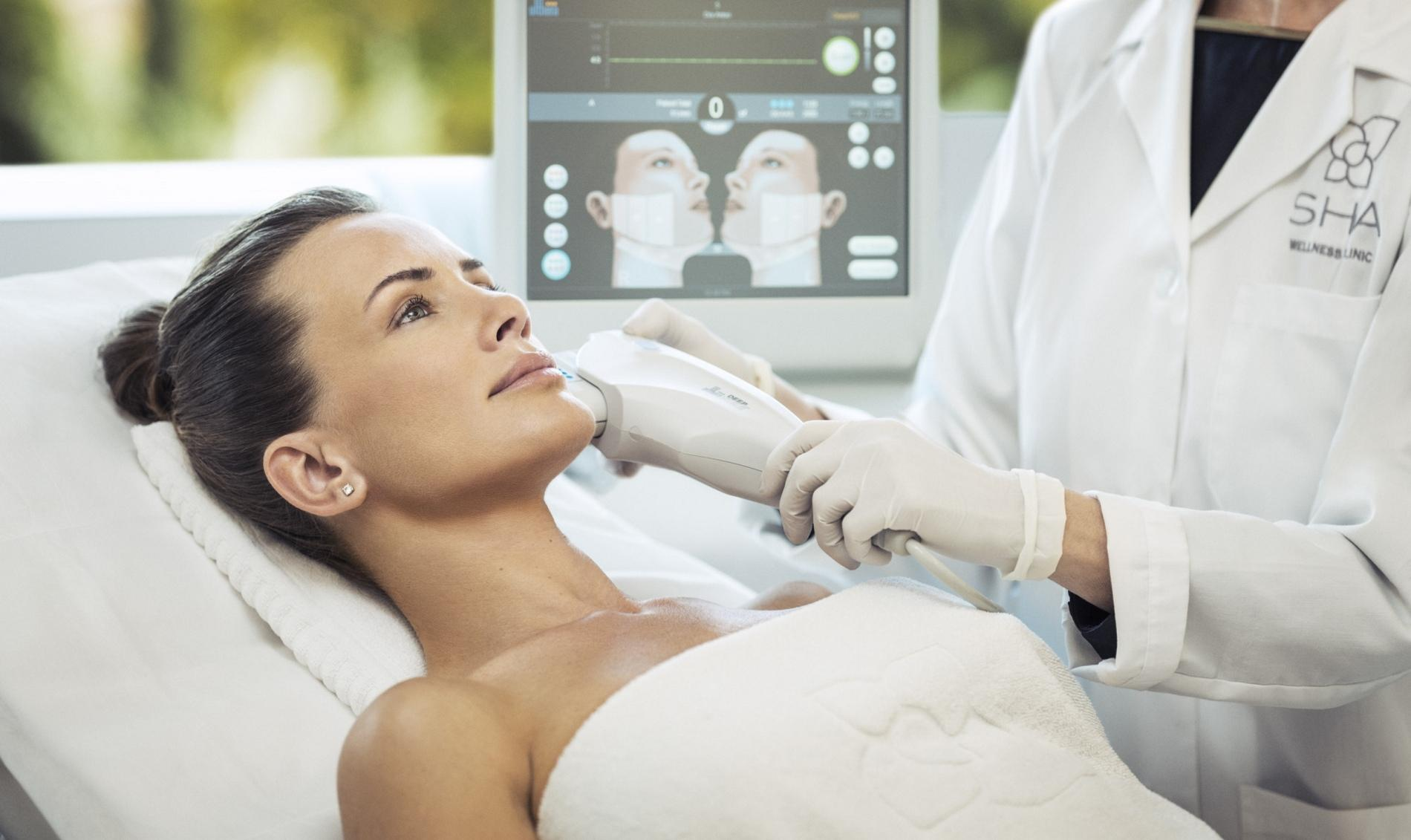
Ultrasound-based technologies are another category commonly found in professional aesthetic equipment. Depending on the specific technology, frequency, intensity, applicator design, and intended use, ultrasound may be used for facial treatment or contour-focused applications.
Some systems are designed to deliver energy into specific tissue depths, while others are intended for more superficial cosmetic treatments. Therefore, the term "ultrasound" alone does not describe one single treatment mechanism.
For professional clinics, understanding the specifications of each device is essential. Operators need to know the intended treatment depth, applicable facial areas, recommended parameters, and contraindications before incorporating the technology into a jawline protocol.
3. Microcurrent and Electrical Facial Stimulation
Microcurrent devices use low-level electrical currents as part of facial aesthetic treatments. Professional operators may incorporate microcurrent into facial contouring routines to support the appearance of facial tone and provide a refreshed, lifted-looking result.
Compared with thermal technologies, microcurrent treatments provide a different approach. They are often incorporated into multi-step facial protocols where the objective is not simply skin care but a more complete facial treatment experience.
For salons offering combination services, this can create opportunities to develop customized treatment packages according to individual client needs.
4. Cooling, Massage, and Complementary Techniques
Jawline treatments do not always depend on energy technology alone. Professional facial protocols may combine equipment with manual massage, cooling techniques, cleansing, serum application, or other cosmetic procedures.
Massage-based approaches can temporarily improve the appearance of facial puffiness, while skincare steps can improve surface hydration and skin texture. These methods may complement energy-based treatments without replacing them.
This combination is particularly useful in professional salons because operators can adjust the treatment sequence according to the client's immediate appearance and longer-term goals.
Advantages and Comparison: Professional Treatment vs. Home Devices
Consumers can now find many facial contouring tools marketed for home use. These products may be convenient, but professional equipment is designed for a different treatment environment.
The first difference is control. Professional aesthetic systems commonly provide more detailed parameter adjustment, applicator options, and treatment protocols. A trained operator can select the appropriate area and adjust the procedure according to the client's skin condition.
The second difference is assessment. A home user may focus only on the visible jawline, while a professional can evaluate the relationship between the cheeks, lower face, jaw, and neck. This broader assessment can help determine whether the client's concern is primarily related to skin laxity, localized fullness, facial puffiness, or overall contour.
The third difference is consistency. Professional treatments can be scheduled as part of a structured course rather than relying entirely on irregular home use.
This does not mean every home device is ineffective or unsuitable. Home products and professional systems simply serve different purposes. Professional equipment is particularly valuable when a salon or clinic wants to provide controlled, repeatable, and operator-led aesthetic services.
For equipment manufacturers, features such as ergonomic handpieces, adjustable parameters, intuitive interfaces, treatment presets, and multi-function configurations can therefore be important considerations when developing professional facial contouring systems.
Applications: Building a Professional Jawline Treatment Program
A professional jawline service can be designed around the individual client's needs rather than around one specific machine.
Skin-Firming Facial Programs
For clients primarily concerned with reduced skin firmness, an RF-based facial treatment may be incorporated into a broader skin-firming program. The operator can focus on the lower face and jawline while maintaining appropriate treatment coverage across surrounding areas.
The treatment may be combined with cleansing, serum infusion, cooling, or hydration steps to create a complete facial service.
Facial Contour Maintenance
Some clients are not looking for dramatic changes. Instead, they want their facial contours to appear more refined before events, photography, or important social occasions.
In these cases, salons may offer facial contour maintenance treatments that combine massage, skincare, and appropriate device-based procedures. The emphasis is often on creating a refreshed and polished appearance.
Clients With Lower-Face Fullness
When localized fullness is the primary concern, the operator should first determine whether the treatment technology is actually intended for that type of application. Different aesthetic devices have different mechanisms and approved or manufacturer-recommended uses.
This is an important distinction between professional treatment and trend-driven beauty advice. A professional operator should avoid promising that one device can address every type of jawline concern.
Combination Aesthetic Treatments
Combination beauty devices can be particularly useful for clinics that want to provide multiple treatment functions within one professional platform.
For example, a facial treatment system may combine cleansing, hydration, RF, microcurrent, LED, or other technologies, depending on the machine configuration. This allows operators to create treatment protocols that address several visible skin concerns during one appointment.
The commercial value is also practical. A multi-function system can support different service packages, allowing salons to serve clients with different needs without requiring a separate machine for every treatment step.
What Should Clients Consider Before a Jawline Treatment?
A professional consultation should establish realistic treatment objectives.
Clients should understand that jawline appearance is strongly influenced by natural anatomy. Non-invasive beauty treatments generally focus on improving the appearance of skin quality and facial contours rather than completely changing bone structure.
Operators should also consider the client's skin condition, treatment history, sensitivity, current skincare procedures, and any relevant contraindications listed by the equipment manufacturer.
Treatment parameters should always follow the device's intended use and operating guidelines. More energy does not automatically mean a better cosmetic result. Controlled application and appropriate technique are essential parts of professional treatment.
For clinics, explaining these points during consultation can improve client expectations and help build trust. Instead of selling a guaranteed "perfect jawline," professionals can position the service as a personalized facial contouring and skin-firming treatment.
Conclusion
Getting a more defined-looking jawline is not necessarily about one miracle treatment. Facial anatomy, skin firmness, soft-tissue distribution, and individual lifestyle factors all contribute to the final appearance.
For professional beauty salons and aesthetic clinics, modern beauty devices provide useful tools for creating customized jawline-focused services. RF can support skin-firming treatments, microcurrent can complement facial contour routines, ultrasound technologies may provide specific energy-based applications, and combination systems can bring several treatment functions together within one professional platform.
The most effective professional approach begins with assessment. By understanding what is actually causing a less-defined appearance, operators can select suitable technologies, establish appropriate treatment parameters, and combine device-based procedures with complementary facial techniques.
For beauty equipment manufacturers, this also creates an opportunity to develop practical systems that give professionals greater flexibility, control, and treatment versatility. Ultimately, a better jawline treatment is not simply about stronger equipment—it is about matching the right technology with the right client and the right professional protocol
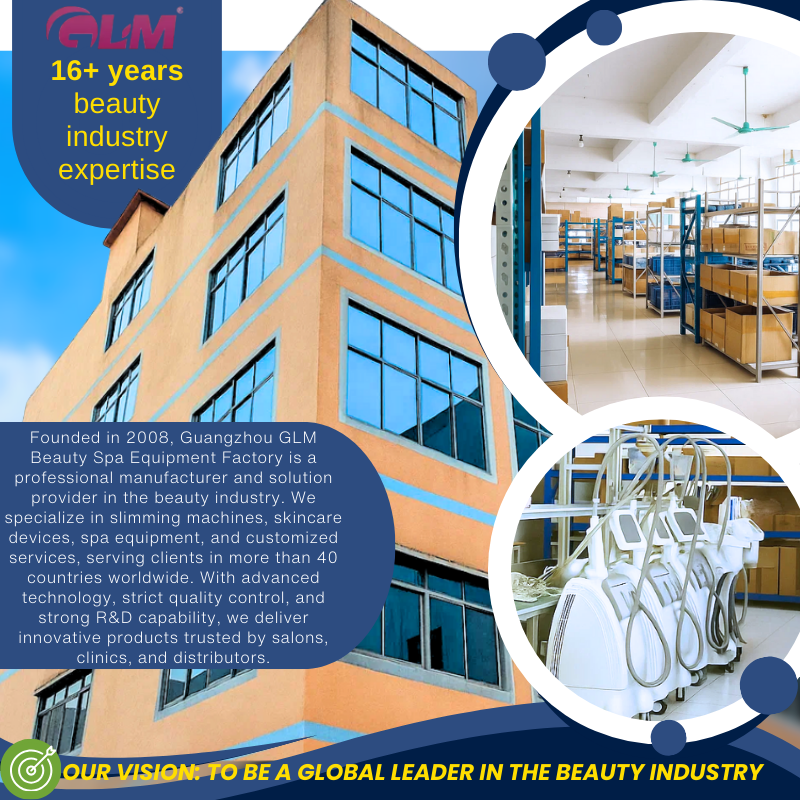
Founded in 2008, Guangzhou GLM Beauty Spa Equipment Factory specializes in research, development, manufacture and selling of beauty and slimming machines. Our production base is located in Guangzhou City, Guangdong Province, China. Since our foundation, we have introduced advanced technologies and equipment, to assure high quality and high performance of our products. With professional marketing guide and excellent after-sales service, our products have been exported to over 20 countries and regions, including Southeast Asia, the Middle East, Europe and the United States, won worldwide praises and gained a good reputation