1. Introduction
The professional aesthetic industry continues to evolve as clients increasingly seek non-invasive facial treatments that deliver visible skin improvements without needles, significant discomfort, or extended recovery periods. In 2026, treatment approaches that combine skin cleansing, hydration, exfoliation, and active ingredient delivery are becoming increasingly relevant to modern beauty salons, medical spas, and aesthetic clinics.
Among these technologies, Jet Peel has gained attention for its distinctive approach to professional skin rejuvenation. Instead of relying on needles or conventional contact-based application methods, Jet Peel systems use high-velocity streams of liquid and air to create a fine, controlled spray that interacts with the skin surface. Depending on the device design and treatment protocol, this technology can support superficial exfoliation, skin cleansing, and the application of selected cosmetic solutions.
For professional operators, Jet Peel technology offers more than another facial treatment option. It provides an opportunity to develop customized treatment programs that address common client concerns, including dryness, dullness, uneven skin texture, and the appearance of tired skin.
As demand for comfortable, multi-step facial treatments continues to grow, professional Jet Peel machines can help clinics expand their service portfolios while providing a more structured and technology-driven treatment experience.
2. Background and Problem: Why Professional Facials Need More Than Basic Hydration
Skin dehydration, accumulated dead skin cells, environmental exposure, and excessive oil production can all affect the appearance and feel of the skin. Clients may notice rough texture, a lack of radiance, visible dryness, or makeup that does not sit smoothly on the skin.
Traditional facial treatments often address these concerns through several separate steps, such as cleansing, exfoliation, manual product application, and moisturizing. Although these methods remain useful, they may require considerable operator time and can produce inconsistent experiences depending on the treatment technique and product application.
Another challenge is that some clients are reluctant to choose treatments involving needles, aggressive exfoliation, or noticeable post-treatment irritation. They may prefer a comfortable facial procedure that can be incorporated into a regular skincare maintenance schedule.
This creates an opportunity for non-invasive technologies that combine several complementary treatment functions.
Jet Peel addresses this demand through a controlled liquid-jet application process. Rather than depending on mechanical scrubbing or needle-based delivery, the system uses pressurized airflow and liquid to produce a fine jet that moves across the treatment area. This approach can support surface cleansing, gentle exfoliation, and topical application of compatible cosmetic formulations.
However, professional operators should understand that hydration and ingredient application are not equivalent to guaranteed delivery into deeper skin layers. Results depend on the device's engineering, solution formulation, operating parameters, and individual skin condition.
3. Technology and Mechanism: How Jet Peel Works
3.1 High-Velocity Liquid Jet Technology
The central principle of Jet Peel technology is the use of a high-speed stream of liquid, often combined with compressed air, to generate fine droplets that are directed toward the skin.
A professional Jet Peel machine typically includes a main control unit, a pressure or airflow system, treatment handpieces, liquid containers, and dedicated solution channels. The operator selects the appropriate treatment settings and guides the handpiece across the target area.
As the jet contacts the skin, the liquid flow helps loosen surface impurities and remove some accumulated dead skin cells. The treatment can also distribute compatible cosmetic solutions over the skin in a controlled manner.
Unlike conventional facial application, which relies mainly on the hands, cotton pads, or brushes, Jet Peel uses a device-controlled delivery method. This can help operators maintain a more consistent treatment process across different facial areas.
3.2 Needle-Free Infusion and Cosmetic Ingredient Application
One of the most recognizable features of Jet Peel is its needle-free approach.
Traditional injection-based procedures physically penetrate the skin, while Jet Peel applies liquid formulations externally through a high-speed spray. Depending on the system and its validated operating parameters, the jet may improve the distribution of cosmetic solutions and support their contact with the skin surface.
Commonly selected formulations for professional facial protocols may include:
-
Hyaluronic acid-based hydrating solutions
-
Moisturizing and skin-conditioning formulations
-
Antioxidant-containing cosmetic solutions
-
Selected botanical ingredients
-
Other compatible cosmetic products designed for professional topical application
Hyaluronic acid is frequently used in hydration-focused treatments because of its ability to bind water. When incorporated into an appropriate topical formulation, it can help improve the appearance of skin hydration and temporarily reduce the visibility of fine dehydration lines.
It is important to distinguish needle-free topical application from medical injections or proven transdermal drug delivery. Jet Peel should not automatically be described as delivering every ingredient into the dermis. The actual delivery depth and performance depend on the specific equipment, formulation, and supporting evidence.
For aesthetic businesses, this distinction supports more responsible treatment descriptions and more realistic client expectations.
3.3 Gentle Exfoliation and Surface Cleansing
Another important function of Jet Peel is its ability to support gentle surface exfoliation.
Dead skin cells naturally accumulate on the outermost layer of the skin. When they are not removed efficiently, the complexion may appear dull, and the surface may feel uneven. Excess oil and environmental impurities can further contribute to an undesirable skin appearance.
The liquid jet helps loosen and wash away superficial debris without depending on abrasive crystals or aggressive manual friction. This makes Jet Peel a potential option for clients who prefer a less mechanical exfoliation experience.
Nevertheless, gentle does not mean suitable for every skin condition. Excessive pressure, unsuitable solutions, or repeated treatment over irritated skin may cause discomfort. Operators should follow manufacturer instructions, assess skin sensitivity, and adjust treatment intensity accordingly.
3.4 Deep Hydration and Skin Conditioning
Hydration is a central part of many professional facial treatments. A dehydrated skin surface can look less radiant and may feel tight or uncomfortable.
Jet Peel systems can incorporate hydrating cosmetic solutions into a multi-step facial protocol. The fine liquid spray helps distribute the selected formulation across the treatment area, while the treatment itself can leave the skin feeling refreshed.
When combined with suitable post-treatment skincare, this process can support a smoother-looking and more hydrated complexion.
The term "deep hydration" is commonly used in aesthetic marketing, but it should be interpreted carefully. A professional topical treatment can improve skin surface hydration and appearance; it does not necessarily mean that water or active ingredients have been delivered into every deeper skin layer.
4. Advantages and Comparison: Why Choose a Professional Jet Peel Machine?
4.1 A Needle-Free Treatment Experience
One of the strongest commercial advantages of Jet Peel is its non-injection approach. Clients who are uncomfortable with needles may be more willing to consider a treatment based on controlled liquid application.
This makes Jet Peel suitable for facial service menus focused on comfort, skin refreshment, and routine maintenance, provided the client's skin condition is appropriate.
4.2 Multiple Functions in One Treatment Platform
Professional Jet Peel systems can combine several treatment steps within one platform:
-
Surface cleansing
-
Gentle exfoliation
-
Cosmetic solution application
-
Skin hydration
-
Facial refreshment
Instead of purchasing separate devices for every stage, salons may use an integrated system to organize a more efficient facial workflow.
The exact functions depend on the machine configuration, handpiece design, and supported treatment solutions. Buyers should review technical specifications rather than assume that every Jet Peel device offers identical capabilities.
4.3 More Controlled Professional Operation
Compared with ordinary facial sprays or handheld home skincare devices, professional Jet Peel machines are generally designed around more structured treatment workflows.
Depending on the model, they may provide adjustable operating parameters, specialized handpieces, dedicated solution channels, and professional treatment accessories.
These features allow trained operators to select appropriate settings, maintain consistent handpiece movement, and adapt the procedure to different facial areas.
Professional equipment does not automatically guarantee better results. Its value comes from suitable engineering, operator training, appropriate protocols, and consistent maintenance.
4.4 Comparison with Traditional Facial Treatments
Traditional facials remain valuable, particularly when manual extraction, massage, or customized topical application is required. However, Jet Peel introduces a different delivery method that may complement these established procedures.
Compared with manual cleansing and product application, Jet Peel offers device-controlled liquid delivery. Compared with needle-based procedures, it avoids injection and generally involves a different level of treatment intensity and expected outcome.
It should not be marketed as a direct replacement for medical procedures, nor should it be presented as equivalent to microneedling, injectable skin boosters, or other treatments that physically penetrate the skin.
For clinics, the strongest positioning is to present Jet Peel as a complementary non-invasive facial technology.
5. Applications and Client Needs: Where Jet Peel Fits into Professional Beauty Services
5.1 Hydration-Focused Facial Treatments
Clients with a dull or dehydrated-looking complexion may benefit from a facial protocol centered on gentle cleansing and topical hydration.
An operator can begin with skin assessment and cleansing, proceed with controlled Jet Peel application, and finish with a suitable moisturizing product and sunscreen when appropriate.
This type of service may be positioned as a refreshing facial treatment for clients seeking a more comfortable alternative to intensive exfoliation.
5.2 Dull Skin and Uneven Texture
Surface buildup can make the skin look less smooth and reduce its natural-looking radiance. Jet Peel's liquid-jet action can help remove superficial debris and support gentle exfoliation.
For clients with mild surface roughness, a carefully selected treatment protocol may help improve the appearance and feel of the skin.
However, deeper acne scars, pronounced pigmentation, and significant structural skin concerns generally require different assessment and treatment approaches.
5.3 Professional Skin Maintenance Programs
Jet Peel can also be incorporated into recurring facial maintenance programs.
Rather than treating every visit as an isolated procedure, clinics can design service packages based on individual skin assessments, seasonal conditions, and client preferences.
For example, a salon may offer a basic cleansing and hydration session, a more comprehensive facial combining exfoliation and topical conditioning, or a customized program using compatible cosmetic solutions.
Treatment frequency should be determined according to skin tolerance, device guidance, and the operator's professional assessment rather than a fixed schedule for all clients.
5.4 Medical Spas and Aesthetic Clinics
For medical spas and aesthetic clinics, Jet Peel can complement existing services such as LED facial treatments, selected superficial exfoliation procedures, and professional skincare programs.
It may serve as a standalone refreshing facial or as one stage within a broader treatment plan. The clinic can use consultation results to determine whether Jet Peel is appropriate before or after other procedures.
Operators should avoid combining treatments simply to increase the number of services in one session. Skin compatibility, recovery requirements, and manufacturer guidance should always determine the treatment sequence.
6. Choosing the Right Professional Jet Peel Equipment
For beauty salon owners, distributors, and aesthetic clinic buyers, selecting a Jet Peel machine requires more than comparing its appearance or advertised functions.
Several factors deserve attention:
Pressure and parameter control: Check whether the machine provides suitable operating adjustments and clearly documented technical specifications.
Handpiece design: A comfortable, well-designed handpiece can improve operator control and treatment consistency.
Solution compatibility: Confirm which cosmetic formulations can be used, how the liquid channels are maintained, and whether replacement components are readily available.
Cleaning and maintenance: Liquid-based equipment requires appropriate cleaning procedures to reduce contamination risks and maintain reliable operation.
Operator training: Clear instructions, treatment protocols, and technical support are important for safe and consistent use.
Manufacturer support: For distributors and overseas buyers, warranty terms, spare parts availability, OEM/ODM services, and after-sales assistance can influence the long-term value of the investment.
A professional device should be evaluated as part of a complete service solution rather than as an isolated machine.
7. Conclusion
Jet Peel technology represents a practical direction in the development of non-invasive professional facial treatments in 2026. By combining high-velocity liquid application with gentle surface cleansing, cosmetic solution distribution, and hydration-focused protocols, it offers beauty salons and aesthetic clinics a flexible way to expand their facial service portfolios.
Its main value lies in providing a needle-free treatment experience, supporting multiple facial steps, and allowing trained operators to create customized protocols based on individual client needs.
For equipment manufacturers and professional buyers, the growing interest in comfortable, multi-functional facial treatments creates opportunities for well-designed Jet Peel systems. Features such as adjustable parameters, reliable handpieces, compatible solution channels, easy maintenance, and dependable technical support can help distinguish professional equipment in a competitive market.
Ultimately, successful Jet Peel treatments depend on more than machine specifications. Appropriate skin assessment, realistic expectations, operator training, and consistent treatment protocols remain essential. When these elements work together, Jet Peel can become a valuable addition to modern professional facial services
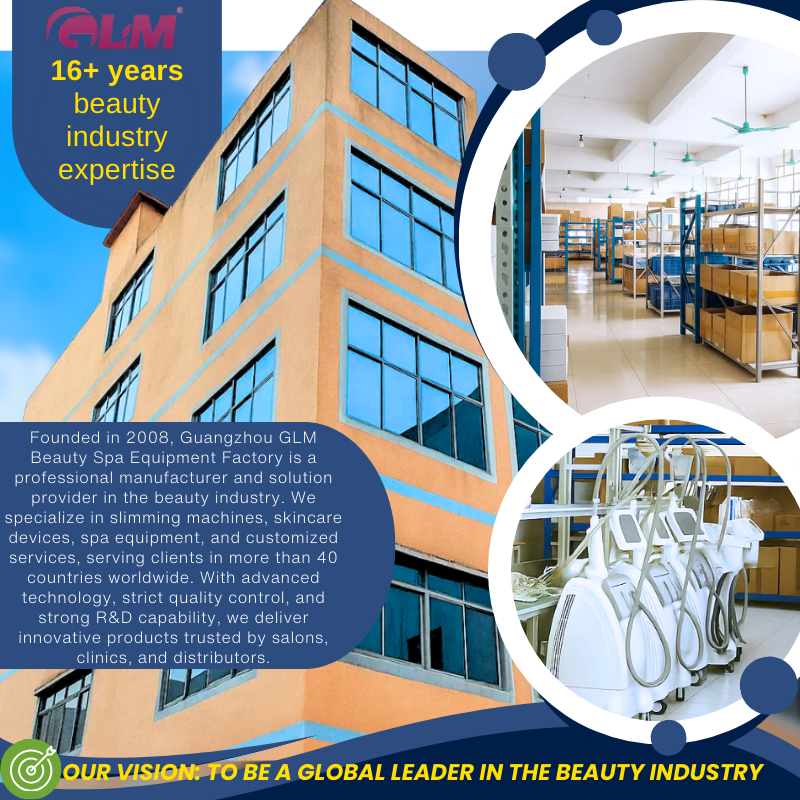
Founded in 2008, Guangzhou GLM Beauty Spa Equipment Factory specializes in research, development, manufacture and selling of beauty and slimming machines. Our production base is located in Guangzhou City, Guangdong Province, China. Since our foundation, we have introduced advanced technologies and equipment, to assure high quality and high performance of our products. With professional marketing guide and excellent after-sales service, our products have been exported to over 20 countries and regions, including Southeast Asia, the Middle East, Europe and the United States, won worldwide praises and gained a good reputation