
1. Introduction
Laser hair removal has become one of the most widely requested aesthetic treatments in professional beauty salons, dermatology clinics, and medical spas. As clients increasingly seek long-term hair reduction with minimal discomfort and downtime, treatment providers are paying closer attention not only to laser performance but also to the cooling technology integrated into hair removal systems.
Although laser energy is designed to target hair follicles, the surrounding epidermis is also exposed to thermal stress during treatment. Without appropriate skin cooling, excessive heat accumulation may lead to discomfort, redness, burns, or unwanted pigmentation changes. This makes cooling technology an essential part of modern professional laser hair removal equipment.
In 2026, three established cooling approaches remain particularly important: sapphire contact cooling, cold air cooling, and cryogen spray cooling. Each method uses a different mechanism to manage skin temperature, protect the epidermis, and improve the overall treatment experience.
For professional beauty salons and aesthetic clinics, understanding these technologies is important when selecting equipment, developing treatment protocols, and meeting different client needs. More importantly, an effective cooling system is not simply an additional feature. It is a key component that supports consistent energy delivery, treatment comfort, and professional service quality.
2. Background and the Importance of Skin Cooling in Laser Hair Removal
Laser hair removal works primarily through selective photothermolysis. During treatment, laser energy is absorbed by melanin in the hair shaft and follicle, converted into heat, and transferred to structures responsible for hair growth. When sufficient thermal energy reaches the appropriate target, the follicular structures can be damaged, helping reduce future hair growth.
However, melanin is also present in the epidermis. This means that the skin surface may absorb part of the delivered laser energy, particularly in individuals with higher epidermal pigmentation. If the epidermis becomes excessively heated, the risk of adverse reactions increases.
Common treatment-related reactions include temporary redness, mild swelling around hair follicles, and a sensation of warmth or stinging. These effects are often temporary, but inappropriate energy settings or insufficient cooling may contribute to more serious complications, including burns and post-inflammatory hyperpigmentation.
This is why professional laser hair removal equipment incorporates different cooling technologies to manage heat at the skin surface.
Cooling serves several important purposes:
-
Epidermal protection: Reduces excessive heat accumulation in the outer skin layer.
-
Treatment comfort: Helps minimize the sensation of burning, stinging, and discomfort.
-
Treatment consistency: Supports more stable thermal conditions during repeated laser pulses.
-
Protocol flexibility: Helps practitioners select appropriate treatment parameters within the device's validated operating range.
-
Client confidence: Makes professional treatments more comfortable and helps improve the overall service experience.
It is important to understand that cooling does not eliminate all treatment risks. Skin type, hair characteristics, treatment area, wavelength, pulse duration, fluence, and operator experience must all be considered when developing a suitable treatment protocol.
3. Three Major Laser Hair Removal Cooling Technologies in 2026
3.1 Sapphire Contact Cooling: Direct and Consistent Skin Surface Cooling
Sapphire contact cooling is one of the most established cooling approaches used in professional laser hair removal systems. It typically involves a sapphire crystal or cooling window integrated into the laser handpiece.
Before and during laser delivery, the cooled sapphire surface makes direct contact with the treatment area. Heat is transferred from the skin into the cooling component, helping maintain a lower epidermal temperature while the laser energy targets the hair follicles.
Sapphire is particularly suitable for this application because of its optical properties, thermal conductivity, and durability. Its transparent surface also allows the operator to maintain visual contact with the treatment area.
Key advantages of sapphire contact cooling include:
-
Direct cooling at the point of laser application.
-
Continuous epidermal temperature management when properly maintained.
-
Integration into the handpiece without necessarily requiring a separate cooling machine.
-
Reduced reliance on disposable cooling materials.
-
A relatively straightforward treatment workflow.
For professional clinics, integrated sapphire cooling can be especially useful when performing repeated treatments across large areas, such as the legs, arms, back, and abdomen.
However, the effectiveness of contact cooling depends on several factors, including the temperature stability of the sapphire window, contact pressure, treatment speed, and equipment maintenance. The handpiece must be positioned correctly to achieve consistent contact without applying excessive pressure.
Cleaning and disinfection are also essential because the cooling window comes into direct contact with the client's skin.
3.2 Cold Air Cooling: Non-Contact Cooling for Flexible Treatment
Cold air cooling uses a dedicated cooling unit to deliver a continuous stream of chilled air toward the treatment area.
Unlike sapphire contact cooling, this method does not require the cooling component to touch the skin. The airflow removes heat from the skin surface through convection, helping reduce thermal discomfort during laser application.
In professional aesthetic clinics, cold air systems are often used alongside laser hair removal equipment. A cooling hose or nozzle directs chilled air toward the treatment area before, during, or after laser pulses.
One of the main advantages of cold air cooling is its flexibility.
Its practical benefits include:
-
Non-contact cooling that reduces direct surface contact.
-
Adjustable airflow and cooling intensity on compatible systems.
-
Flexibility for different treatment areas.
-
No direct requirement for cryogenic refrigerant consumables.
-
Compatibility with various treatment workflows, depending on device configuration.
Cold air cooling can be particularly useful for larger treatment areas and clients who prefer non-contact cooling.
It may also provide additional workflow flexibility when treating areas where continuous contact between a cooling window and the skin is inconvenient.
Nevertheless, cold air systems require suitable positioning and airflow control. Excessively intense or prolonged cooling may cause discomfort or cold-related skin injury. Operators should follow the manufacturer's recommended temperature and distance settings rather than assuming that colder air always provides better protection.
3.3 Cryogen Spray Cooling: Rapid Cooling Before Laser Pulses
Cryogen spray cooling, commonly associated with dynamic cooling devices (DCD), uses a short burst of refrigerant directed onto the skin immediately before a laser pulse.
The refrigerant evaporates rapidly, extracting heat from the epidermal surface. The laser pulse is then delivered according to a carefully coordinated spray-and-pulse sequence.
Unlike continuous contact cooling or cold air systems, cryogen spray cooling is designed around precisely timed cooling intervals.
Its main advantages include:
-
Rapid reduction of skin surface temperature.
-
Precise synchronization with laser pulses.
-
Short cooling periods that can be incorporated into specific laser treatment protocols.
-
Non-contact application.
-
Potentially effective epidermal protection when correctly calibrated.
Cryogen spray technology is particularly relevant to certain dermatological laser platforms where precise timing between cooling and laser delivery is required.
However, this technology also has operational considerations. Refrigerant is a consumable, which creates ongoing operating costs. Spray duration, nozzle positioning, distance, and synchronization with laser pulses must be carefully controlled.
Incorrect application may lead to uneven cooling, excessive local cooling, or insufficient epidermal protection.
For clinics evaluating equipment, it is important to consider not only the cooling performance but also refrigerant availability, maintenance requirements, and long-term operating expenses.
3.4 Comparison of the Three Cooling Technologies
Each cooling approach has a different operating principle. There is no universal solution that is automatically best for every clinic or treatment scenario.
| Feature | Sapphire Contact Cooling | Cold Air Cooling | Cryogen Spray Cooling |
|---|---|---|---|
| Cooling method | Direct contact | Chilled airflow | Refrigerant evaporation |
| Skin contact | Yes | No | No |
| Cooling duration | Continuous during contact | Continuous or adjustable | Short timed bursts |
| Main advantage | Direct, integrated cooling | Flexible non-contact cooling | Rapid localized cooling |
| Consumables | Usually no refrigerant | Usually no refrigerant | Requires refrigerant |
| Main consideration | Contact and hygiene | Airflow and positioning | Timing and consumable costs |
| Typical application | Integrated laser handpieces | External cooling support | Specialized laser platforms |
The most appropriate cooling technology depends on the laser platform, treatment parameters, patient characteristics, and clinic workflow. Some professional systems may also combine cooling approaches to provide additional flexibility.
4. Advantages of Advanced Cooling in Professional Laser Hair Removal Equipment
4.1 Improving Treatment Comfort
Client comfort is an important factor in the success of professional hair removal services.
Laser treatments can produce a sensation of heat, snapping, or stinging, particularly in sensitive areas or when treating dense hair growth. An effective cooling system helps reduce the thermal sensation experienced at the skin surface.
When clients feel more comfortable, they may be more willing to complete the recommended treatment course and return for follow-up appointments.
For beauty salons and medical spas, this can contribute to improved client satisfaction and stronger long-term customer relationships.
4.2 Supporting Epidermal Protection
Cooling helps reduce unnecessary thermal exposure of the epidermis while the laser targets follicular melanin.
This is particularly important when treating clients with different skin pigmentation levels. However, cooling alone does not make every wavelength or energy setting suitable for every skin type.
Professional operators must still assess skin characteristics, select appropriate parameters, perform test spots when indicated, and monitor skin responses throughout treatment.
4.3 Supporting Consistent Treatment Performance
In professional clinics, equipment may operate continuously throughout a busy working day.
An effective cooling system helps maintain more predictable skin surface conditions across repeated pulses and multiple treatment sessions.
Stable cooling performance is especially valuable when treating large body areas or managing several appointments in succession.
For equipment manufacturers, this means cooling performance should be evaluated not only during initial operation but also under sustained working conditions.
4.4 Enhancing Professional Service Quality
Clients increasingly evaluate aesthetic services according to more than the final treatment outcome. Comfort, equipment appearance, treatment procedures, and the overall clinic experience also influence their decisions.
Modern cooling technology can help professional clinics provide a more controlled and comfortable treatment environment.
For equipment distributors and salon owners, these features can also become meaningful points of differentiation when comparing professional laser hair removal systems.
5. Professional Laser Hair Removal Equipment vs. Basic Home Devices
At-home hair removal devices have become increasingly popular because of their convenience and relatively accessible prices. However, they are not necessarily equivalent to professional laser hair removal systems used in aesthetic clinics.
Professional equipment is designed for trained operators and generally offers more extensive control over treatment parameters, depending on the platform.
Important considerations include:
Energy and parameter control
Professional systems may provide adjustable fluence, pulse duration, repetition rate, and other treatment settings. These adjustments allow trained practitioners to develop protocols based on individual skin and hair characteristics.
Cooling system integration
Professional laser platforms may incorporate sapphire contact cooling, external cold air systems, or cryogen spray technology. Their performance depends on the design and specifications of the complete system.
Treatment efficiency
Larger treatment spots, suitable repetition rates, and optimized handpiece designs can support more efficient treatment of large areas, provided the equipment is used within its intended operating range.
Operational durability
Professional equipment is generally developed for repeated commercial use. Cooling stability, handpiece durability, maintenance access, and after-sales technical support are therefore important purchasing considerations.
Home-use devices may be suitable for certain consumer applications, but they usually operate under different power, design, and safety constraints.
For clinics and professional beauty businesses, selecting equipment designed for commercial treatment environments is important for maintaining reliable workflows and appropriate treatment standards.
6. Applications and Client Needs in Professional Beauty Clinics
Different treatment areas and client characteristics create different cooling requirements. Professional operators should select suitable cooling methods according to the laser platform and individual treatment plan.
6.1 Large Body Areas
Legs, arms, backs, and other extensive areas require efficient treatment workflows.
Integrated sapphire contact cooling and external cold air systems can help manage skin temperature throughout repeated laser applications.
The cooling method should be suitable for the handpiece design and the size of the treatment area.
6.2 Sensitive Treatment Areas
Areas such as the underarms and bikini line may be more sensitive to thermal discomfort.
Effective cooling can help improve the treatment experience, but operators must also pay attention to skin thickness, pigmentation, hair density, and appropriate laser parameters.
6.3 Clients with Different Skin Types
Skin pigmentation is an important consideration in laser hair removal because epidermal melanin can compete with follicular melanin for laser energy.
Clients with darker skin tones may require more careful wavelength selection and parameter adjustment. Cooling is an important supporting measure, but it cannot replace appropriate laser selection, operator training, and individualized treatment planning.
6.4 High-Volume Professional Clinics
Clinics with a large number of daily appointments need equipment that can maintain stable performance over extended working periods.
For these businesses, cooling efficiency, handpiece temperature stability, maintenance requirements, and service support should all be included in equipment evaluations.
A cooling system that performs well during a short demonstration may not necessarily deliver the same performance during continuous commercial operation.
7. How to Choose a Professional Laser Hair Removal System with Effective Cooling
For beauty equipment distributors, clinic owners, and professional treatment providers, selecting a suitable laser hair removal system requires evaluating the complete device rather than focusing on a single cooling specification.
The following factors deserve attention:
1. Cooling technology and temperature stability
Identify whether the device uses sapphire contact cooling, cold air, cryogen spray, or a combination. Ask for documented operating temperatures and information about temperature stability under continuous use.
2. Compatibility between cooling and laser delivery
Cooling should be properly coordinated with the laser wavelength, pulse duration, energy output, and handpiece design.
3. Treatment area and handpiece design
Different spot sizes and handpiece configurations may be suitable for different body areas. Consider whether the equipment supports efficient operation without compromising treatment precision.
4. Safety monitoring and protection features
Temperature monitoring, system alarms, emergency stop functions, and appropriate operating safeguards are valuable features. Their availability and functionality should be verified in the technical documentation.
5. Maintenance and operating costs
Consider cooling system maintenance, replacement components, refrigerant expenses where applicable, and the availability of technical support.
6. Manufacturer experience and after-sales service
Reliable technical documentation, operator training, warranty terms, and responsive maintenance support are important for long-term commercial operation.
For manufacturers and OEM suppliers, these factors also represent opportunities to provide customized handpiece configurations, cooling solutions, branding, and equipment packages for different professional markets.
8. Conclusion
Cooling technology has become an essential part of modern professional laser hair removal equipment. As aesthetic clinics continue to prioritize client comfort, treatment consistency, and skin protection, the performance of a laser cooling system is increasingly important when evaluating professional devices.
Sapphire contact cooling provides direct and integrated skin surface cooling. Cold air systems offer flexible non-contact temperature management, while cryogen spray technology delivers rapid cooling through precisely timed refrigerant application.
Although these technologies work differently, they share a common objective: helping manage epidermal heat while supporting effective laser hair removal procedures.
In 2026, professional beauty salons and aesthetic clinics should evaluate cooling performance alongside wavelength selection, energy control, handpiece design, operational stability, and after-sales support.
A well-designed laser hair removal system is not defined by laser power alone. Its overall performance depends on how effectively energy delivery, cooling technology, and professional operating protocols work together.
For beauty equipment manufacturers and distributors, developing reliable cooling solutions is therefore an important part of creating professional hair removal systems that meet the evolving expectations of modern aesthetic clinics.
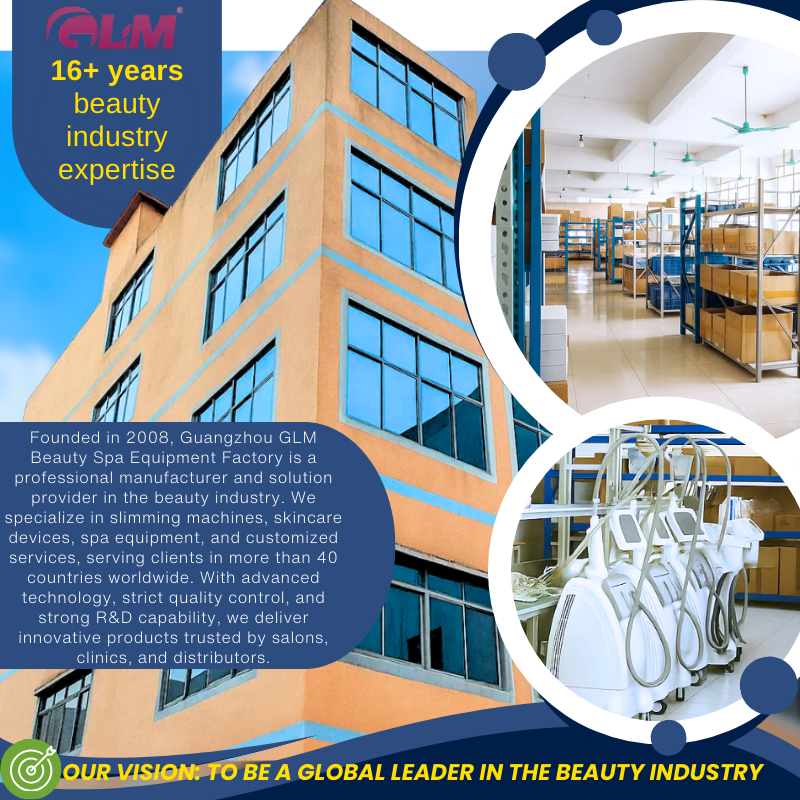
Founded in 2008, Guangzhou GLM Beauty Spa Equipment Factory specializes in research, development, manufacture and selling of beauty and slimming machines. Our production base is located in Guangzhou City, Guangdong Province, China. Since our foundation, we have introduced advanced technologies and equipment, to assure high quality and high performance of our products. With professional marketing guide and excellent after-sales service, our products have been exported to over 20 countries and regions, including Southeast Asia, the Middle East, Europe and the United States, won worldwide praises and gained a good reputation