Introduction
A professional laser hair removal machine is more than a treatment device. In a busy beauty salon, aesthetic clinic, or medical spa, it is part of the daily service workflow and a significant equipment investment. When the machine is used repeatedly throughout the day, maintenance becomes closely connected with treatment consistency, operator efficiency, client comfort, and equipment uptime.
Modern professional laser hair removal systems—particularly diode laser platforms—combine optical delivery, energy control, cooling technology, handpiece assemblies, electrical components, sensors, software, and safety systems. Each part needs appropriate attention. A machine that starts normally is not necessarily operating at its intended performance level; gradual changes in cooling, optical cleanliness, airflow, or energy delivery may develop before a major fault appears.
For professional operators, the objective of maintenance is therefore not simply to “keep the machine clean.” It is to create a repeatable maintenance routine that protects the equipment while supporting stable day-to-day treatments.
Background: Why Laser Hair Removal Machine Maintenance Matters
Laser hair removal works by delivering controlled light energy toward the hair follicle. Depending on the technology and wavelength, the laser energy is absorbed preferentially by melanin in the hair, producing heat that can affect the follicle and reduce future hair growth.
During a professional treatment, the handpiece may deliver a large number of pulses over relatively large areas of the body. This places continuous demands on the optical pathway, power system, cooling system, and handpiece.
For clinics with high treatment volumes, small maintenance problems can become operational problems. Dust can restrict airflow. Residue on a treatment window can interfere with optical transmission. Poor cooling performance can cause temperature warnings or force the operator to stop treatment. Damaged cables, connectors, or handpieces can also require technical inspection.
Professional maintenance guidance commonly emphasizes regular handpiece cleaning, cooling-system monitoring, filter inspection, output verification, and documented servicing. The exact interval, cleaning agent, coolant, and service procedure should always follow the specific manufacturer's instructions because laser systems differ in construction and maintenance requirements.
This is particularly important for professional equipment because salon and clinic workflows are different from occasional home use. A professional device may be expected to perform repeatedly throughout a working day, making preventive care part of normal equipment management rather than an occasional repair activity.
Technology and Mechanism: What Needs to Be Maintained?
1. The Laser Handpiece and Treatment Window
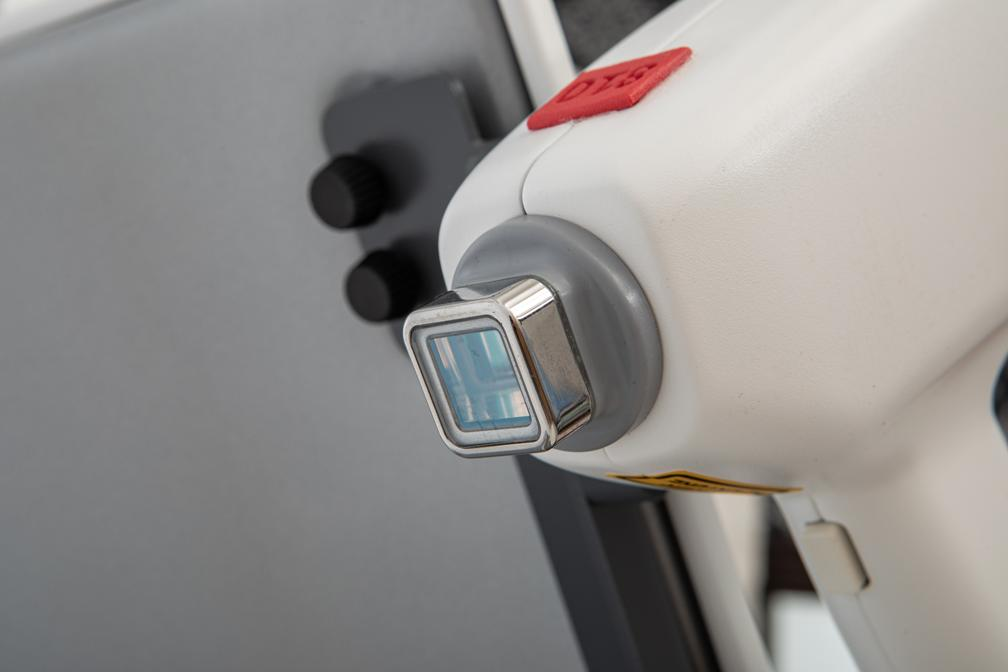
The handpiece is one of the most frequently handled components of a laser hair removal system. During treatment, the optical window may come into contact with cooling gel, hair fragments, skin oils, and other residues.
If these materials accumulate on the treatment window, they can affect the optical pathway and cooling surface. Professional maintenance sources therefore recommend inspecting and cleaning the treatment window regularly, including between clients when required by the device protocol.
A practical clinic routine should include:
- Inspecting the treatment window before use
- Removing visible gel or residue
- Using only manufacturer-approved cleaning materials
- Avoiding abrasive cloths or tools
- Checking for scratches, chips, cracks, or unusual discoloration
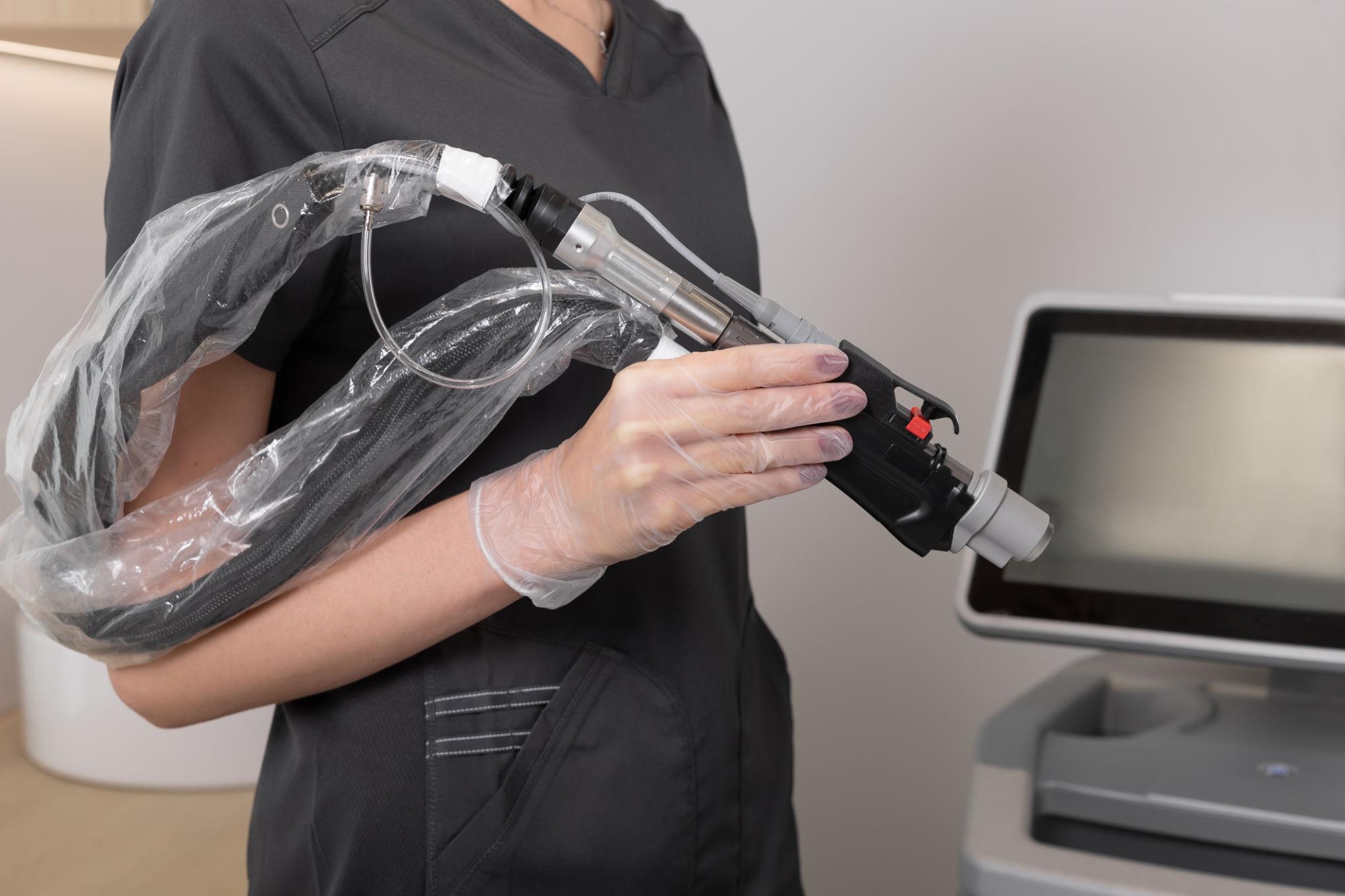
- Inspecting the handpiece body, cable, and connectors
- Storing the handpiece correctly after treatment
The important principle is simple: the optical surface should be clean, intact, and maintained according to the manufacturer's instructions
2. Cooling System Maintenance
Cooling is another critical part of a professional laser hair removal machine.
Many diode laser systems use water cooling, air cooling, contact cooling, or a combination of these technologies. Contact cooling can help manage heat at the treatment interface, while internal cooling systems help regulate the temperature of components during repeated operation.
For water-cooled systems, operators may need to monitor coolant level, temperature, circulation, and water quality according to the machine's manual. Some professional maintenance guides recommend scheduled coolant or deionized-water replacement, while the exact interval varies by system.
The cooling circuit should also be checked for:
- Unusual temperature readings
- Reduced water flow
- Leaks or loose connections
- Blocked tubing
- Unusual pump noise
- Air entering the cooling circuit
- Contaminated or discolored coolant
- Insufficient ventilation around the machine
If a cooling warning repeatedly appears under normal operating conditions, the machine should not simply be forced to continue working. The operator should follow the manufacturer's troubleshooting procedure and arrange qualified technical service when necessary.
3. Airflow, Filters, and Heat Dissipation
Laser systems generate heat during operation, so ventilation and heat dissipation are important for long-term stability.
Air filters and ventilation openings can collect dust, especially in busy treatment rooms. Restricted airflow can reduce cooling efficiency and contribute to thermal problems.
Some manufacturers recommend regular filter inspection and cleaning, while the exact schedule depends on the device design and working environment. Candela, for example, provides maintenance guidance covering air-filter cleaning, handpiece cleaning, and cooling-system checks.
For a professional clinic, keeping the machine away from excessive dust, moisture, direct heat sources, and obstructed ventilation openings is a simple but important part of equipment management.
Advantages and Comparison: Preventive Maintenance vs. Reactive Repair
A reactive approach means waiting until the machine produces an obvious error, stops working, or shows a noticeable performance problem.
A preventive approach is different. The operator regularly checks the equipment, records abnormalities, cleans the appropriate components, monitors cooling performance, and schedules professional servicing according to the manufacturer's requirements.
| Preventive Maintenance | Reactive Repair |
|---|---|
| Routine inspection before problems become serious | Action begins after a problem appears |
| Handpiece condition is monitored continuously | Damage may only be discovered during treatment |
| Cooling performance is checked regularly | Overheating may interrupt appointments |
| Maintenance records can reveal recurring issues | Fault history may be harder to reconstruct |
| Service can be planned around clinic schedules | Unexpected downtime can disrupt bookings |
| Consumables can be prepared in advance | Replacement may become urgent |
Preventive maintenance does not mean that equipment will never fail. Rather, it gives clinics a structured way to identify wear and abnormalities earlier.
It also highlights an important difference between professional equipment and many consumer-oriented devices. Professional laser systems are designed around repeated clinical or salon operation, and their maintenance requirements reflect the complexity and workload of the equipment. A professional system may incorporate stronger cooling architecture, replaceable components, diagnostic functions, treatment counters, safety interlocks, and technical-service procedures.
The value of professional equipment therefore extends beyond output specifications. Serviceability, cooling design, handpiece construction, technical support, and maintenance accessibility are also important when evaluating a laser platform for commercial use.
Applications and Client Needs: Building a Practical Maintenance Routine
A useful maintenance program can be divided into daily operator checks, periodic inspections, and professional technical servicing.
Daily Maintenance
At the beginning of the working day, the operator can check:
- Machine startup and display warnings
- Cooling temperature and water level, if applicable
- Handpiece condition
- Treatment-window cleanliness
- Cable and connector condition
- Ventilation openings
- Emergency-stop and safety functions according to the machine protocol
Before each new client, the handpiece should be checked and cleaned according to the device's hygiene procedure. After treatment, remove residue and return the handpiece to its designated holder.
At the end of the day, follow the machine's prescribed shutdown sequence rather than simply disconnecting power. Some systems require the cooling system or fan to complete a shutdown cycle.
Weekly or Periodic Maintenance
Depending on the manufacturer's recommendations and the clinic environment, periodic maintenance can include:
- Cleaning or inspecting air filters
- Checking coolant condition
- Inspecting tubing and connections
- Checking ventilation
- Reviewing error logs
- Inspecting handpiece seals and connectors
- Reviewing shot or pulse counts where supported
- Checking the machine exterior and control screen
- Recording unusual sounds, temperature changes, or performance issues
A maintenance log is particularly useful for busy clinics. Recording the date, operator, treatment volume, abnormal observations, cleaning activities, and service history can make equipment management more systematic.
Professional Technical Servicing
Not every maintenance task should be performed by the operator.
Internal optical alignment, laser output calibration, electrical testing, internal component replacement, and other safety-critical procedures may require a trained or authorized technician. Professional service may include output verification, cooling-system inspection, electrical safety testing, optical inspection, diagnostic review, and replacement of worn components.
Operators should not open the machine or attempt internal calibration simply because a treatment appears weaker or an error message occurs. The correct response is to follow the manufacturer's troubleshooting instructions and contact qualified technical support when the issue exceeds routine operator maintenance.
Maintenance and Clinic Business Continuity
For a salon or clinic, equipment downtime can affect more than one appointment. A treatment room may need to be rescheduled, staff time may be lost, and client schedules can be disrupted.
This is why maintenance should be considered part of operational planning.
When purchasing a professional laser hair removal machine, clinic owners can evaluate not only wavelength, power, spot size, pulse frequency, and cooling technology, but also:
- Handpiece design
- Cooling-system architecture
- Filter accessibility
- Error diagnostics
- Shot-counter functionality
- Replacement-part availability
- Warranty coverage
- Operator training
- Remote technical support
- Local service capability
- Recommended maintenance intervals
These factors become particularly relevant for clinics performing laser hair removal at high frequency.
A Simple Professional Maintenance Checklist
Before opening:
- Check the machine for visible damage.
- Confirm cooling-system status.
- Check water/coolant according to the manufacturer's requirements.
- Inspect the handpiece and treatment window.
- Confirm cables and connectors are secure.
- Check for warning messages.
- Verify the treatment room has suitable environmental conditions.
Between clients:
- Clean and disinfect applicable surfaces according to the device protocol.
- Inspect the treatment window.
- Remove gel, hair, and other residue.
- Check the handpiece for visible damage.
- Store the handpiece correctly.
After closing:
- Complete the manufacturer's shutdown procedure.
- Clean the machine exterior where appropriate.
- Inspect ventilation areas.
- Record unusual warnings or performance changes.
- Confirm the handpiece is safely stored.
Periodically:
- Inspect filters and cooling components.
- Review maintenance records.
- Check consumable replacement requirements.
- Arrange professional inspection and calibration according to manufacturer recommendations.
Conclusion
Laser hair removal machine maintenance is an essential part of professional aesthetic equipment management. The most important areas include handpiece care, treatment-window cleanliness, cooling-system monitoring, airflow, electrical connections, safety functions, documentation, and professional servicing.
The exact maintenance schedule should never be copied blindly from another laser system. Different diode, Alexandrite, Nd:YAG, IPL, and multifunctional platforms can have different cooling structures, optical components, consumables, and service requirements. The manufacturer's manual should remain the primary reference for cleaning agents, coolant specifications, inspection intervals, calibration, and servicing.
For professional beauty salons and aesthetic clinics, a well-maintained laser hair removal machine can support a more predictable treatment workflow and help protect a valuable equipment investment. Ultimately, the quality of a professional laser platform is not determined only by its headline specifications. Its cooling design, handpiece construction, usability, serviceability, and long-term maintenance support are also part of its practical value
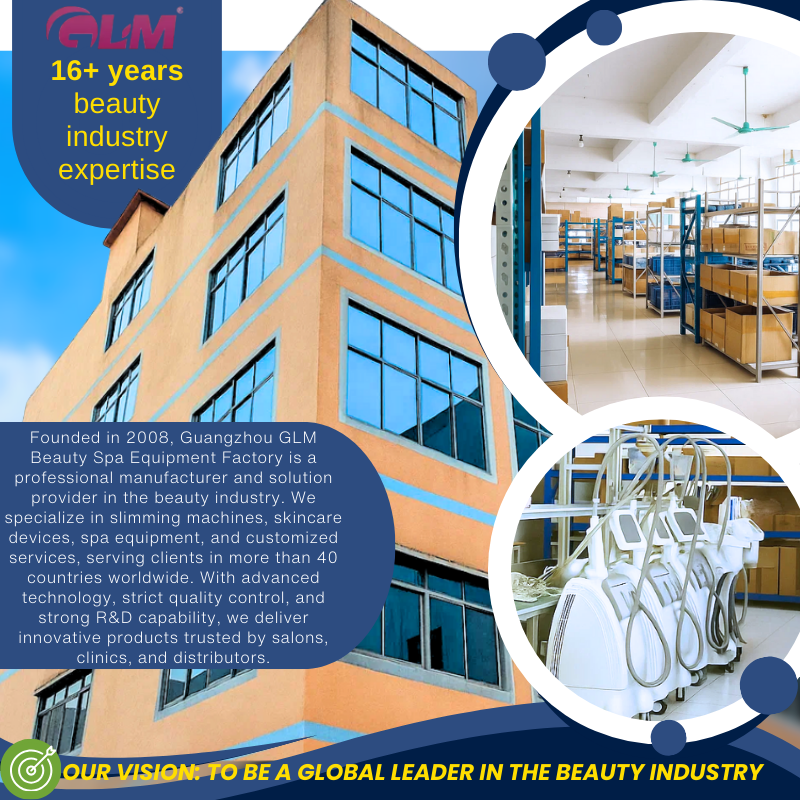
Founded in 2008, Guangzhou GLM Beauty Spa Equipment Factory specializes in research, development, manufacture and selling of beauty and slimming machines. Our production base is located in Guangzhou City, Guangdong Province, China. Since our foundation, we have introduced advanced technologies and equipment, to assure high quality and high performance of our products. With professional marketing guide and excellent after-sales service, our products have been exported to over 20 countries and regions, including Southeast Asia, the Middle East, Europe and the United States, won worldwide praises and gained a good reputation