Introduction
In 2026, the global aesthetic industry has reached a decisive turning point in perioral aesthetics. For nearly a decade, lip enhancement was largely synonymous with high-volume dermal fillers and dramatic projection. Today, both discerning patients and experienced practitioners are moving decisively away from the overfilled look toward regenerative, proportionate, and undetectable enhancement. Modern clients no longer ask simply for bigger lips; they ask for healthier mucosal texture, crisp anatomical borders, balanced symmetry, and soft, natural movement that harmonizes with the rest of the face.
For beauty clinics, medical spas, and aesthetic practitioners, this shift presents both a clinical challenge and a major commercial opportunity. Achieving genuinely natural-looking results requires far more than adding volume—it demands an accurate diagnosis of underlying tissue changes, muscular dynamics, and past treatment complications. At the same time, rapid advancements in non-invasive aesthetic equipment have transformed how clinics approach the delicate perioral zone. By combining anatomical precision with multi-modal energy-based and needle-free transdermal technologies, professionals can now restore youthful lip architecture safely, comfortably, and without the risks associated with traditional over-volumization.
Background / Problem
Before selecting any treatment protocol, practitioners must distinguish between four interrelated clinical presentations in the perioral region: intrinsic and extrinsic lip aging, structural volume loss, dynamic or static asymmetry, and hyaluronic acid filler migration. Misdiagnosing any one of these issues often leads to suboptimal outcomes or compounded aesthetic distortion.
1. Recognizing Early and Advanced Lip Aging Signs
Unlike facial skin, the vermilion of the lips lacks sebaceous glands, sweat glands, and hair follicles, and its stratum corneum is roughly one-third as thick as that of the surrounding cheek. Because it relies almost entirely on microvascular perfusion and deep dermal hydration to maintain suppleness, the lip mucosa displays aging signs earlier than many other facial zones:
-
Surface Dehydration and Mucosal Dullness: Declining endogenous hyaluronic acid and compromised lipid barrier function cause chronic micro-fissures, flaking, and a loss of natural rosy luminosity.
-
Perioral Rhytids ("Barcode Lines"): Progressive degradation of Type I and Type III collagen, compounded by repetitive puckering of the orbicularis oris muscle and UV exposure, creates fine vertical creases radiating outward from the vermilion border.
-
Blurring of the Vermilion Border: In youth, a distinct white roll separates the pigmented mucosa from cutaneous skin. Collagen fragmentation flattens this ridge, causing lipstick bleed and an ill-defined lip contour.
2. Structural Volume Loss and Upper Lip Elongation
True volume loss is rarely confined to the soft tissue of the lip alone. Around age thirty, gradual resorption of the maxilla and alveolar bone reduces posterior skeletal support, while subcutaneous fat pads thin and descend. Clinically, this manifests as:
-
Inward Inversion of the Vermilion: As structural support weakens, the red lip rolls slightly inward, making the upper lip appear thinner even when total tissue mass has changed modestly.
-
Flattening of the Cupid's Bow and Philtral Columns: Loss of dermal density softens the central peaks of the upper lip and lengthens the cutaneous distance between the nasal base and the vermilion border.
-
Downturned Oral Commissures: Attenuation of support at the corners of the mouth creates marionette shadowing and an unintended expression of fatigue or severity.
3. Anatomical and Dynamic Asymmetry
Perfect facial symmetry does not exist, yet noticeable imbalance in the lower third of the face immediately draws the eye. Practitioners regularly encounter two forms of lip asymmetry:
-
Static Structural Asymmetry: Congenital differences in left-to-right vermilion height, unilateral volume deficits, or dental arch variations that alter soft-tissue projection.
-
Dynamic Muscular Asymmetry: Habitual unilateral chewing, asymmetric smiling patterns, or hypertonicity in specific fibers of the depressor anguli oris or levator labii superioris. Simply injecting equal amounts of filler into asymmetric lips often amplifies the imbalance rather than correcting it.
4. Filler Migration and "Overfilled" Fatigue
Perhaps the most prominent clinical issue confronting aesthetic practitioners in 2026 is filler migration. When high-viscosity or overly cross-linked hyaluronic acid fillers are injected repeatedly, placed too superficially, or subjected to relentless mechanical shear from speaking and eating, the gel can displace beyond the anatomical vermilion border into the cutaneous upper lip. The telltale signs include:
-
The "Filler Mustache": A shelf-like ridge of fullness above the upper lip that casts a shadow under overhead lighting.
-
Loss of the Cupid's Bow: Obliteration of natural central contours into a uniform, sausage-like cylinder.
-
Chronic Edema and Tyndall Effect: Bluish-gray discoloration or persistent puffiness caused by hydrophilic gel sitting in superficial planes.
As awareness of filler migration grows on social media and in clinical consultations, a rapidly expanding segment of clients is actively seeking non-migratory, tissue-regenerative alternatives—or restorative treatments after dissolving older fillers with hyaluronidase.
Technology / Mechanism
To solve these structural and mucosal challenges without creating artificial bulk, modern professional aesthetic devices target the biological foundations of lip youthfulness: extracellular matrix density, microcirculation, neuromuscular tone, and deep transdermal hydration. Next-generation clinical lip rejuvenation platforms typically integrate several synergistic mechanisms into specialized, small-aperture handpieces engineered specifically for perioral anatomy.
1. Needle-Free Transdermal Delivery (Electroporation and Pneumatic Micro-Jet Infusion)
Traditional topical lip serums fail because high-molecular-weight active ingredients cannot cross the tightly packed epithelial barrier. Professional needle-free infusion devices overcome this barrier using two primary physical mechanisms:
-
Controlled Electroporation: Short, high-voltage microsecond electrical pulses temporarily reorganize the lipid bilayers of mucosal cells, creating transient aqueous microchannels. This allows low-molecular-weight hyaluronic acid, biomimetic peptides, amino acids, and polydeoxyribonucleotide (PDRN) to penetrate evenly into the lamina propria without needles, trauma, or localized bolus clumping.
-
Pneumatic Micro-Jet Atomization: High-velocity, sub-dermal micro-droplet delivery disperses hydrating and collagen-stimulating actives uniformly across the vermilion surface. Because the active solution is distributed diffusely rather than deposited as a heavy gel pocket, there is zero risk of mechanical migration or vascular occlusion.
2. Precision Bipolar and Fractional Radiofrequency (RF)
Radiofrequency remains the gold standard for non-invasive dermal remodeling, and 2026 device engineering has refined RF delivery for delicate mucosal and perioral skin. Using miniature, ergonomically angled bipolar electrodes, practitioners deliver controlled alternating current that gently elevates tissue temperature to a therapeutic window of 40°C to 43°C.
-
Immediate Collagen Contraction: Controlled thermal stress causes existing triple-helix collagen fibers to tighten, subtly refining the vermilion border and smoothing fine vertical lip lines after a single session.
-
Long-Term Neocollagenesis and Elastogenesis: Thermal stimulation activates dermal fibroblasts to synthesize fresh Type I and Type III collagen alongside new elastin networks over the subsequent four to eight weeks, restoring natural pillowy thickness from within.
3. Targeted Microcurrent and Neuromuscular Toning (EMS)
To address early asymmetry and downturned oral commissures, advanced perioral handpieces incorporate low-intensity bio-mimetic microcurrent and gentle electrical muscle stimulation (EMS). By delivering calibrated sub-sensory or lightly perceptible waveforms along the orbicularis oris and zygomaticus pathways, the device re-educates underactive muscle fibers, improves local adenosine triphosphate (ATP) production, and provides a subtle, natural lift at the corners of the mouth without paralyzing natural expression.
4. Dual-Wavelength Photobiomodulation (633 nm Red and 830 nm Near-Infrared LED)
Integrated red (633 nm) and near-infrared (830 nm) light-emitting diodes complement energy-based and transdermal treatments by stimulating cytochrome c oxidase within cellular mitochondria. This photobiomodulation cascade accelerates microvascular blood flow—reviving the natural pink-red hue of youthful lips—while reducing post-procedure erythema and strengthening barrier resilience.
Advantages / Comparison
When evaluating lip enhancement options in 2026, clinic owners and practitioners must weigh clinical efficacy, safety profiles, patient comfort, and treatment longevity across three distinct categories: traditional injectable dermal fillers, professional multi-modal clinic devices, and consumer at-home lip gadgets.
| Evaluation Dimension | Traditional Injectable HA Fillers | Professional Clinic Lip Devices (RF / Electroporation / EMS) | At-Home Consumer Lip Gadgets (Suction / Retail LED Wands) |
| Core Mechanism | Space-occupying cross-linked gel implantation | Endogenous collagen remodeling, needle-free transdermal infusion, and muscle toning | Temporary vacuum vasodilation, topical irritants, or low-output LED |
| Energy & Penetration Control | Manual syringe depth; operator-dependent placement | Closed-loop impedance feedback, real-time thermal sensors, and calibrated pulse depth | Unregulated or strictly capped low-power consumer output |
| Risk of Migration & Asymmetry | Moderate to high over repeated sessions; risk of "filler mustache" or vascular events | Virtually zero migration risk; supports symmetrical tissue remodeling | High risk of bruising, broken capillaries (petechiae), and uneven swelling from suction |
| Downtime & Patient Comfort | Topical anesthesia required; 2–7 days of swelling, bruising, or tenderness | Painless warming and gentle tingling; zero downtime ("lunchtime procedure") | Mild irritation or transient suction marks; requires daily self-application |
| Result Profile & Longevity | Immediate dramatic volume; lasts 6–12 months before touch-up or dissolution | Progressive natural plumping, border definition, and hydration lasting 3–6+ months per course | Fleeting 1–3 hour plumping effect with negligible structural anti-aging benefit |
Why Professional Clinic Equipment Outperforms At-Home Devices
As home beauty gadgets proliferate, clients occasionally ask whether a retail LED lip mask or suction plumper can replace in-clinic care. From an engineering and physiological standpoint, the gap between consumer gadgets and professional salon or clinic systems is substantial:
-
Calibrated Energy Density and Depth: Consumer devices are strictly limited in wattage and electrical output for unsupervised home safety, meaning thermal energy rarely reaches the reticular dermis where fibroblasts reside. Professional systems deliver clinically validated energy densities capable of triggering genuine collagen remodeling.
-
Closed-Loop Real-Time Safety Sensors: The lip mucosa is thin and highly vascular. Professional clinical handpieces incorporate continuous skin-impedance monitoring and millisecond thermal cutoff sensors, maintaining optimal therapeutic heat without risking mucosal burns.
-
Ergonomic Precision for Perioral Contours: Retail devices rely on one-size-fits-all mouthpieces that miss the Cupid's bow, philtral columns, and oral commissures. Clinic-grade applicators feature compact, contoured treatment tips designed to trace anatomical landmarks and selectively address left-right asymmetry.
-
Synergy with Pharmaceutical-Grade Actives: Professional electroporation and pneumatic infusion systems are calibrated to pair with sterile, preservative-free clinical ampoules (such as cross-linked-free biomimetic HA and peptide complexes), achieving bioavailability that topical consumer balms simply cannot match.
Applications / Client Needs
Integrating a dedicated non-invasive lip and perioral rejuvenation platform enables beauty salons, medical spas, and aesthetic clinics to serve diverse client demographics while building predictable, high-margin treatment protocols.
1. The "Prejuvenation" and Needle-Hesitant Client (Ages 22–38)
Many younger clients want hydrated, smooth, naturally plush lips for daily confidence, photography, or upcoming events such as weddings, yet refuse needles due to fear of pain, bruising, or unnatural stiffness. A single 25-minute needle-free electroporation and red-LED infusion session delivers immediate glassy hydration, enhanced natural lip color, and soft micro-plumping with zero recovery time.
2. Perioral Anti-Aging and Structural Restoration (Ages 38–65+)
For mature clients experiencing vertical lip lines, thinning vermilion borders, and downturned mouth corners, a structured series of four to six weekly bipolar RF and microcurrent sessions rebuilds perioral collagen scaffolding. Practitioners can customize energy distribution—focusing RF along barcode lines and applying targeted EMS toning to lift drooping commissures—to restore a rested, harmonious lower-face profile.
3. Post-Dissolution Recovery and Hybrid Filler Maintenance
Clinics offering injectable fillers gain substantial value by pairing energy-based lip devices with their injectable menu:
-
Post-Hyaluronidase Rehabilitation: After dissolving migrated filler, lip tissue often feels lax, dehydrated, or deflated. A course of RF collagen tightening and peptide infusion restores mucosal elasticity and smoothness before any conservative re-treatment is considered.
-
Extending Injectable Longevity: Instead of layering additional filler every six months—which accelerates migration risk—practitioners can schedule quarterly non-invasive device maintenance sessions to keep mucosal tissue hydrated, firm, and naturally voluminous.
Operational and Commercial Value for Clinics
From a business perspective, non-invasive lip enhancement platforms require minimal consumable overhead, eliminate sharps and vascular complication liabilities, and feature intuitive preset protocols that trained aestheticians can perform consistently. Packaged as a standalone "Perioral Renewal Course" or added as a high-value 15-minute upgrade to facial treatments, professional lip technology boosts treatment room utilization and drives strong repeat client retention.
Conclusion
In 2026, natural-looking lip enhancement is defined by anatomical intelligence rather than excess volume. By accurately identifying early mucosal aging, skeletal volume loss, muscular asymmetry, and the subtle warning signs of filler migration, aesthetic professionals can guide clients away from over-treated distortion toward sustainable, authentic beauty.
Modern non-invasive aesthetic devices—combining needle-free transdermal infusion, precision radiofrequency, targeted microcurrent, and photobiomodulation—provide salons and clinics with the exact tools needed to meet this demand. Delivering measurable structural rejuvenation with high comfort and zero downtime, professional lip enhancement technology empowers practitioners to achieve soft, balanced, and unmistakably natural results that earn long-term patient trust.
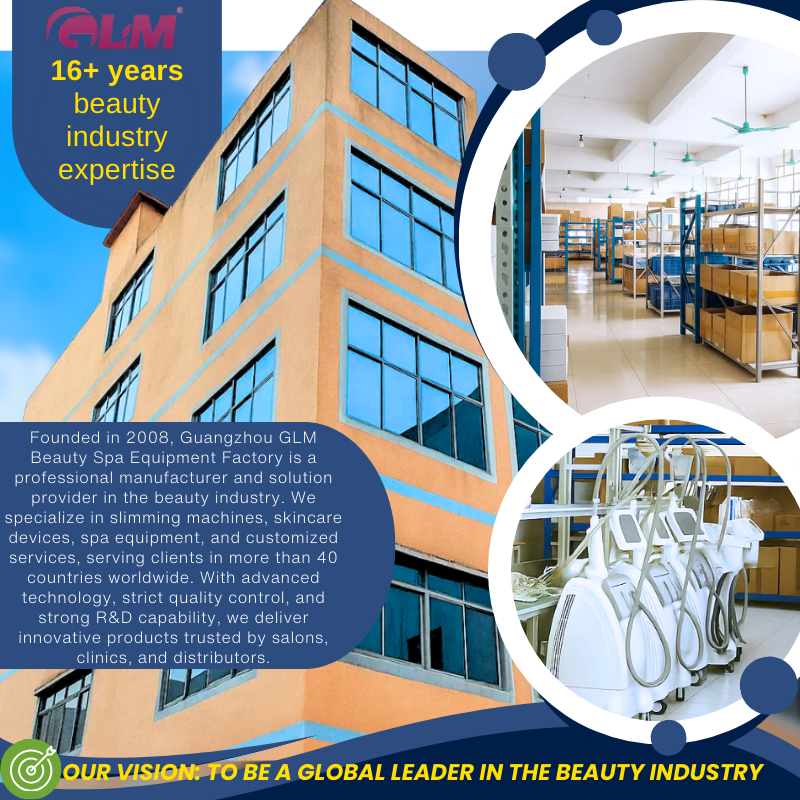
Founded in 2008, Guangzhou GLM Beauty Spa Equipment Factory specializes in research, development, manufacture and selling of beauty and slimming machines. Our production base is located in Guangzhou City, Guangdong Province, China. Since our foundation, we have introduced advanced technologies and equipment, to assure high quality and high performance of our products. With professional marketing guide and excellent after-sales service, our products have been exported to over 20 countries and regions, including Southeast Asia, the Middle East, Europe and the United States, won worldwide praises and gained a good reputation