1. Introduction
The professional aesthetics industry continues to evolve as clients seek personalized treatments, visible improvements, and convenient service experiences. For Medical Spas (Med Spas), meeting these expectations requires more than offering a long list of treatments. It requires the right combination of technology, skilled operators, efficient workflows, and sustainable business planning.
In 2026, multi-platform aesthetic devices are becoming an important consideration for clinics that want to expand their treatment portfolios without filling every treatment room with separate machines. By integrating multiple technologies into one system, these devices can support different treatment protocols, address a broader range of aesthetic concerns, and help businesses make more strategic use of their space and equipment budgets.
However, purchasing a multi-platform system is not simply a matter of choosing the machine with the most handpieces or functions. Clinics must evaluate the technologies included, the quality of treatment delivery, operator training requirements, maintenance costs, and the demand for each service.
For Med Spa owners, the real value of a professional aesthetic device lies in how effectively it connects treatment capabilities with client needs and business objectives. A well-selected system can help clinics diversify services, improve scheduling flexibility, and build a more sustainable equipment investment strategy.
2. Background and Problem: Why Med Spas Need More Flexible Equipment
Rising Client Expectations and Diverse Treatment Needs
Today's aesthetic clients may seek skin rejuvenation, improved skin texture, facial cleansing, body contouring, skin tightening, or complementary maintenance treatments. Their needs also vary according to age, skin condition, treatment history, budget, and personal preferences.
A clinic that relies on only one type of device may struggle to accommodate this diversity. Conversely, purchasing a separate machine for every treatment category can create a different set of challenges, including high upfront investment, limited floor space, additional staff training, and more complicated maintenance schedules.
This is particularly important for growing Med Spas. New businesses need to control startup costs, while established clinics need to increase service capacity without allowing equipment expenses to grow faster than revenue.
The Hidden Cost of Single-Purpose Equipment
Single-purpose devices can be effective when a clinic has consistent demand for a specific treatment. They may also offer specialized configurations suited to particular clinical applications. However, their financial performance depends heavily on utilization.
A machine that is used only a few times each week may occupy valuable treatment-room space while contributing relatively little revenue. The clinic must still account for its purchase price, maintenance, training, consumables where applicable, and eventual replacement.
Multi-platform equipment offers another approach. Instead of investing immediately in multiple standalone systems, a clinic can select a platform that combines compatible technologies relevant to its target market.
The objective is not to eliminate specialized equipment. It is to build an equipment portfolio in which each purchase has a clear purpose, sufficient client demand, and a realistic path to profitability
Operational Efficiency Matters as Much as Technology
Equipment efficiency is not determined by the number of functions listed in a product brochure. It also depends on setup time, treatment duration, operator familiarity, cleaning procedures, consumable requirements, and the ease of switching between treatment protocols.
A multi-platform system that is difficult to configure or requires extensive downtime between clients may not deliver the expected operational advantages. Med Spas should therefore assess the complete treatment workflow rather than focusing exclusively on the number of technologies available.
3. Technology and Mechanism: How Multi-Platform Aesthetic Devices Work
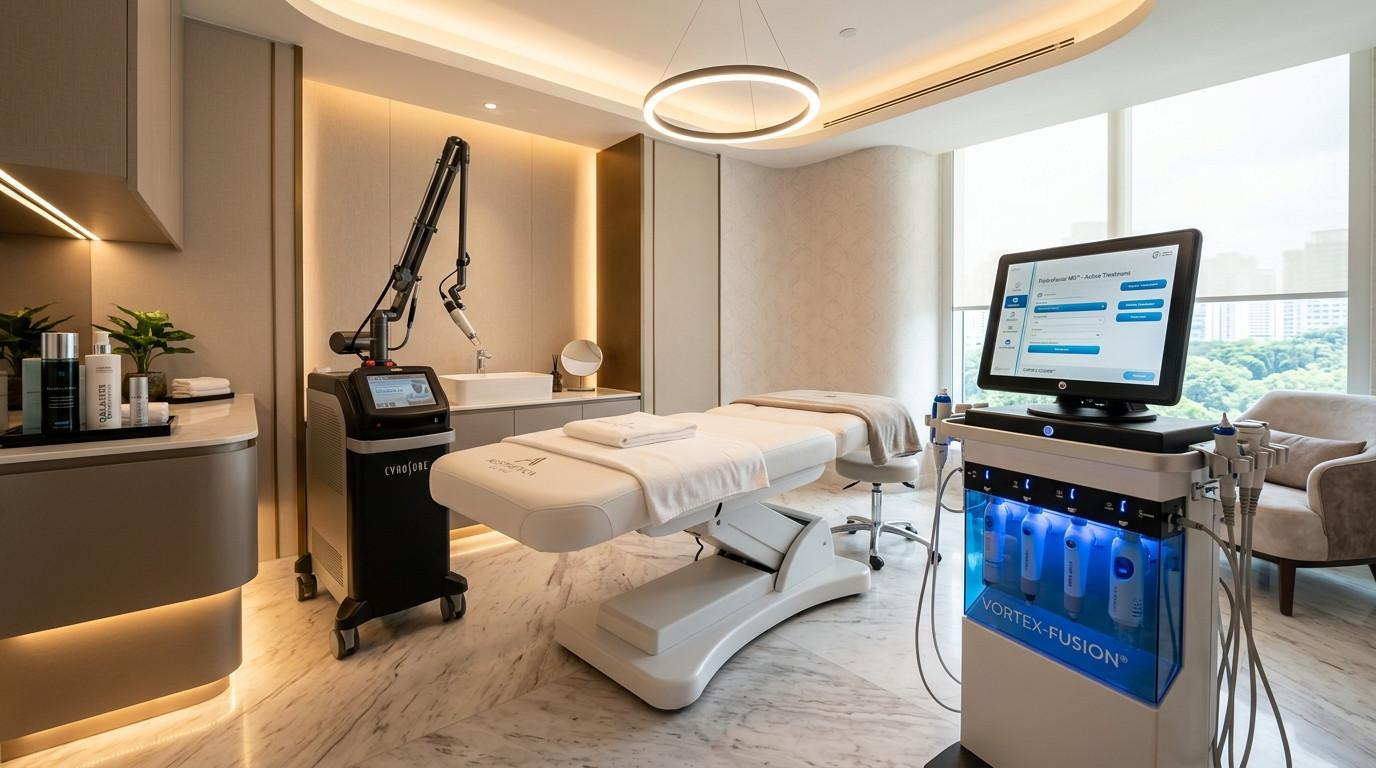
A multi-platform aesthetic device integrates two or more treatment technologies into a shared system. Depending on its configuration, it may combine facial cleansing, exfoliation, hydration delivery, radiofrequency, ultrasound, LED light, vacuum-assisted massage, or other aesthetic modalities.
Not every system includes all these technologies, and their effects are not interchangeable. The appropriate combination depends on the device design, intended application, client suitability, and the manufacturer's operating instructions.
Radiofrequency: Supporting Skin-Tightening Treatments
Radiofrequency (RF) devices deliver electrical energy that produces heat within targeted tissue. In appropriately designed systems, controlled heating is used to support cosmetic treatments aimed at improving the appearance of skin firmness and texture.
Professional RF platforms may offer adjustable energy settings, different applicators, and treatment parameters suited to specific areas. Safe use requires appropriate client assessment, correct technique, and adherence to the manufacturer's guidance.
For Med Spas, RF can form part of a broader skin-rejuvenation service menu. However, results vary according to the device, treatment protocol, individual characteristics, and the number of sessions. Clinics should avoid promising identical outcomes for every client.
Ultrasound and Other Energy-Based Technologies
Ultrasound-based aesthetic devices use acoustic energy for specific applications, depending on their frequency, intensity, and delivery method. Different ultrasound systems may be designed for cleansing, cosmetic skin treatments, or other defined uses.
Other energy-based technologies, including selected laser and light systems, have different mechanisms and indications. They should not be treated as interchangeable simply because they appear within the same product category.
When evaluating a multi-platform device, clinic owners should identify the exact technology included, its intended purpose, the evidence supporting its claimed applications, and any relevant regulatory requirements in the markets where the clinic operates.
Hydrodermabrasion and Facial Treatment Systems
Hydrodermabrasion systems combine fluid delivery with mechanical exfoliation or suction-based techniques, depending on the model. They are commonly positioned for professional facial treatments involving cleansing, exfoliation, and the application of compatible solutions.
Some platforms add functions designed to support hydration-focused facial services. These systems can help clinics create structured treatment packages, but results depend on technique, solution compatibility, client skin condition, and the manufacturer's instructions.
For operators, the practical advantage is workflow integration: several steps of a facial service may be delivered using one coordinated system rather than multiple independent devices.
LED Light Therapy and Complementary Modalities
LED systems use selected wavelengths of light for defined cosmetic applications. Different wavelengths interact with tissue differently, so clinics should evaluate the specific wavelengths, output characteristics, treatment protocols, and supporting evidence rather than relying on broad marketing labels.
Complementary modalities can make a treatment menu more flexible. Nevertheless, combining technologies does not automatically make a treatment more effective or suitable for every client. Compatibility, contraindications, treatment sequencing, and the risk of excessive exposure must be considered.
Why Integration and Control Systems Matter
Beyond the individual technologies, a professional platform should provide a practical way to manage treatment settings, applicator selection, operating procedures, and maintenance.
Clear interfaces, consistent controls, accessible handpieces, and well-documented protocols can reduce avoidable operator errors and support staff training. Modular designs may also allow clinics to select configurations that better match their service priorities.
The strongest multi-platform solution is therefore not necessarily the one with the longest feature list. It is the one that delivers appropriate technologies reliably, with clear operating requirements and a manageable cost of ownership.
4. Advantages and Comparison: Multi-Platform Devices vs. Separate Machines
A Broader Service Menu with Fewer Equipment Units
A well-configured multi-platform device can support several treatment categories within a single equipment footprint. This can be particularly useful for clinics with limited space or businesses seeking to introduce new services gradually.
For example, a clinic might use a facial platform for cleansing and exfoliation services while selecting a separate RF system for skin-tightening applications. Another clinic with established demand for body treatments may prioritize a platform designed around its body-contouring service portfolio.
The right configuration depends on the business model. Multi-platform equipment should be selected according to service demand, not simply because more functions appear to offer better value.
Better Space and Workflow Utilization
Using fewer standalone machines can simplify room organization, reduce equipment movement, and make storage easier. Integrated systems may also help operators follow more consistent service sequences when the relevant functions are designed to work together.
However, workflow gains are not guaranteed. Clinics should compare setup time, cleaning requirements, treatment duration, changeover procedures, and the availability of handpieces before making a purchase.
A More Strategic Equipment Budget
A multi-platform system may reduce the need to purchase several separate machines at the outset. It may also allow a clinic to test demand for additional services before expanding into a larger equipment portfolio.
Nevertheless, a bundled device is not automatically cheaper over its entire lifecycle. Replacement handpieces, proprietary consumables, software or service fees where applicable, repairs, warranties, and downtime can influence total ownership costs.
Buyers should compare the full cost of ownership rather than the initial quotation alone.
Professional Devices vs. Home-Use Equipment
Home-use beauty devices and professional aesthetic systems serve different purposes. Consumer devices are generally designed around home operation, convenience, and accessible user interfaces. Professional systems may offer different performance specifications, adjustable treatment parameters, specialized applicators, and workflows intended for trained operators.
These differences vary considerably by product. A professional label alone does not prove that a device is more effective, and a greater output specification does not automatically mean a better treatment.
Professional clinics should prioritize verified technical specifications, relevant evidence, training, service support, and compliance with applicable regulations. Treatments involving significant energy delivery or specific contraindications should be performed only within the appropriate scope of practice and in accordance with local requirements.
A Practical Comparison
| Evaluation factor | Multi-platform device | Separate specialized machines |
|---|---|---|
| Initial investment | May consolidate several functions into one purchase | Requires separate purchases for each system |
| Space requirements | May reduce the number of equipment units | May require more room and storage |
| Treatment flexibility | Supports multiple services if compatible functions are included | Each machine is optimized for its intended applications |
| Maintenance | Fewer main units, but integrated systems may create shared downtime risks | More individual systems to maintain |
| Upgrades | Depends on modularity and manufacturer support | Individual machines can be upgraded independently |
| Best suited for | Clinics needing a versatile service portfolio | Clinics with high demand for specialized treatments |
The comparison is directional rather than universal. Actual performance depends on configuration, pricing, service demand, product quality, and operating conditions.
5. Applications and Client Needs: Building a Profitable Med Spa Service Menu
Facial Rejuvenation and Maintenance Programs
Facial services remain an important component of many Med Spa business models. Depending on the selected equipment, clinics can organize services around cleansing, exfoliation, hydration-focused treatments, LED applications, or other suitable modalities.
A structured facial menu can accommodate different client preferences, from routine maintenance to more targeted cosmetic concerns. Operators should explain what each treatment is designed to do, what outcomes are realistic, and how many sessions may be appropriate.
Multi-platform systems can make it easier to organize treatment packages, provided that each included function is suitable for the client's condition and the manufacturer's instructions permit the proposed sequence.
Skin Firmness and Texture-Focused Services
Clients interested in improving the appearance of skin firmness or texture may be suitable candidates for selected RF or other aesthetic technologies following appropriate assessment.
Clinics can create service pathways based on individual needs rather than offering the same combination to every client. This approach helps practitioners explain the role of each technology and avoid unnecessary add-ons.
It also supports more transparent consultations. Clear discussions of expected outcomes, limitations, potential risks, and maintenance requirements can improve the client experience without relying on exaggerated promises.
Body Contouring and Complementary Treatments
Some multi-platform systems are designed for body-focused services, potentially combining technologies such as vacuum-assisted massage, selected RF applications, or ultrasound-based modalities.
These functions must be evaluated individually because they differ in mechanism, intended use, suitability, and risk profile. Clinics should not assume that all technologies reduce fat, improve cellulite, or tighten skin to the same degree.
A commercially sound body-treatment program begins with client assessment, realistic treatment planning, appropriate equipment selection, and consistent documentation. Where a device is intended only for temporary cosmetic appearance changes, marketing should not imply that it produces permanent fat loss or medical outcomes.
Matching Equipment to the Target Market
Different Med Spas have different priorities. A boutique facial studio may benefit most from a compact facial platform, while a clinic focused on body treatments may need a system with suitable body applicators and relevant operating parameters.
A clinic serving a broad client base may value modularity, provided that the additional functions have a credible commercial purpose. Before purchasing, managers should review their most requested services, average appointment values, client retention patterns, local competition, and the amount of treatment-room time available.
Equipment selection becomes more effective when it follows a clear business plan rather than a trend-driven purchasing decision.
Staff Training and Client Experience
Even a technically advanced device depends on competent operation. Staff should understand the device's intended applications, contraindications, cleaning procedures, treatment parameters, and emergency or escalation protocols where relevant.
Manufacturers and suppliers can contribute through structured onboarding, operating manuals, demonstrations, maintenance guidance, and responsive technical support.
Consistent training helps clinics standardize treatment delivery and reduce avoidable mistakes. It also allows staff to explain the equipment in understandable terms, helping clients make informed decisions rather than relying on product names alone.
6. Improving Operational Efficiency and Treatment Capacity
Operational efficiency is one of the most important potential benefits of multi-platform equipment, but it should be measured rather than assumed.
Clinics can evaluate efficiency through several practical indicators:
-
Room utilization: How many productive treatment hours does each room generate?
-
Setup and changeover time: How long does it take to prepare the device for the next service?
-
Staff utilization: Can trained operators move efficiently between compatible treatments?
-
Maintenance downtime: How often is the system unavailable, and how quickly can support resolve issues?
-
Consumable costs: What recurring expenses are associated with each treatment?
-
Client throughput: How many appointments can be delivered without compromising treatment quality or safety?
Consider a clinic that currently uses several devices for different facial services. If a compatible integrated platform reduces equipment setup and simplifies the treatment sequence, the clinic may be able to organize appointments more efficiently. The benefit should be confirmed through actual workflow measurements rather than assumed from the product specification sheet.
Efficiency also depends on booking strategy. Grouping compatible services, allocating sufficient preparation time, and matching staff competencies to treatment types can improve the value obtained from the equipment.
Importantly, higher appointment volume is not the only objective. A sustainable operation must maintain appropriate consultation time, treatment standards, cleaning procedures, and client safety.
7. Calculating ROI: What Med Spa Owners Should Measure
Return on investment should be assessed using actual operating data rather than general claims about the profitability of aesthetic equipment.
A useful starting point is to estimate the total investment, including the purchase price, delivery and installation, training, financing costs where applicable, consumables, maintenance, and expected downtime.
Next, estimate the contribution generated by treatments performed with the device.
Monthly treatment contribution = treatment revenue − variable treatment costs
Variable costs may include consumables, disposable accessories, payment processing fees, and other expenses that increase with each appointment. Staff costs should also be included where they vary with treatment volume.
A simplified payback estimate is:
Payback period = initial investment ÷ monthly net cash contribution
For a more complete ROI assessment, clinics should also account for fixed operating costs, taxes, financing, depreciation, utilization rates, and the opportunity cost of room space. The simplified calculation is useful for initial planning, but it is not a substitute for a full financial forecast.
For example, suppose a clinic invests $12,000 in a professional aesthetic platform. After accounting for treatment-related variable costs, the platform generates an average monthly contribution of $2,000 before additional fixed costs and taxes. The simple payback estimate would be six months.
This is an illustrative calculation, not a profitability benchmark. Actual results depend on treatment pricing, booking volume, local demand, operating costs, and the device's reliability.
Med Spa owners should model conservative, expected, and optimistic scenarios before purchasing. A machine with many functions may still deliver a poor return if demand is weak, while a simpler device can perform well when it supports a consistently booked service.
8. Conclusion: Choosing the Right Multi-Platform Device for 2026
In 2026, successful Med Spa equipment planning is less about owning the largest number of machines and more about selecting technologies that support a coherent treatment strategy.
Multi-platform aesthetic devices can help clinics broaden their service menus, organize workflows, make better use of treatment space, and manage initial equipment investment. Their real value, however, depends on the relevance of the included technologies, the quality of treatment delivery, operator competency, maintenance support, and verified client demand.
Before investing, Med Spa owners should assess their target market, identify the services most likely to generate repeat bookings, compare total ownership costs, and verify the device's technical documentation and applicable regulatory status. They should also confirm warranty terms, replacement-part availability, staff training, and after-sales support with the manufacturer or supplier.
For aesthetic equipment manufacturers, this creates an opportunity to support professional buyers with more than a product catalogue. Clear specifications, suitable configuration options, practical training, dependable service, and transparent commercial information can help clinics make better purchasing decisions.
Ultimately, the best Med Spa must-have is not necessarily the machine with the most features. It is the system that fits the clinic's treatment priorities, serves clients responsibly, supports efficient daily operations, and offers a realistic path toward long-term business value
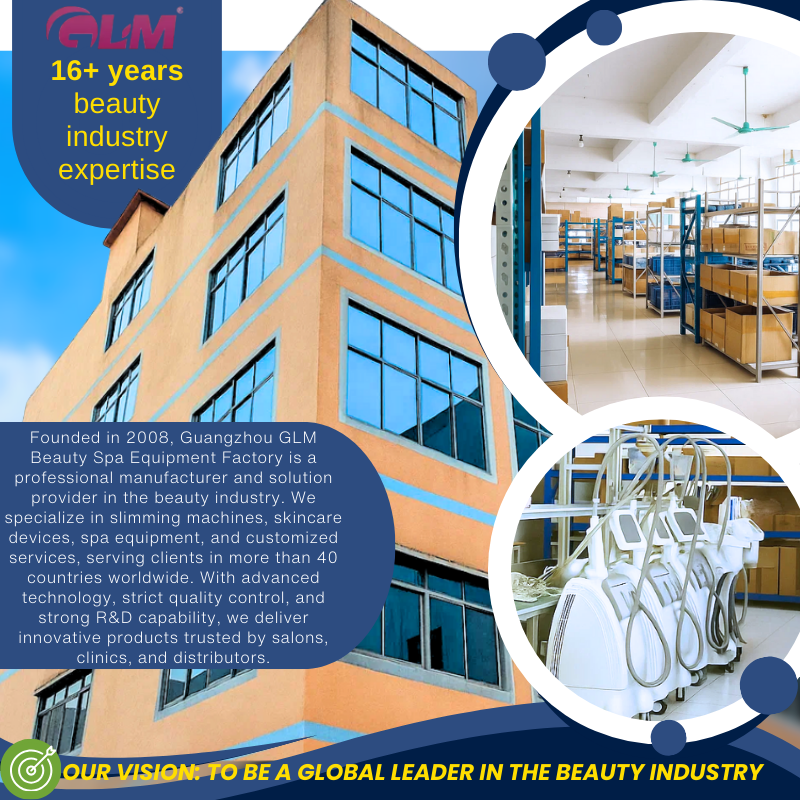
Founded in 2008, Guangzhou GLM Beauty Spa Equipment Factory specializes in research, development, manufacture and selling of beauty and slimming machines. Our production base is located in Guangzhou City, Guangdong Province, China. Since our foundation, we have introduced advanced technologies and equipment, to assure high quality and high performance of our products. With professional marketing guide and excellent after-sales service, our products have been exported to over 20 countries and regions, including Southeast Asia, the Middle East, Europe and the United States, won worldwide praises and gained a good reputation