Introduction
Sourcing professional beauty devices overseas can give salons, aesthetic clinics, spas, distributors, and beauty entrepreneurs access to advanced technologies, competitive pricing, OEM/ODM customization, and a wider range of treatment solutions. From RF skin tightening and HIFU to cavitation, EMS body sculpting, diode laser hair removal, hydrafacial systems, and LED therapy, international sourcing has become an important part of building a modern professional treatment menu.
However, purchasing a beauty machine internationally involves more than comparing product prices.
Customs clearance, shipping methods, product classification, compliance documentation, packaging, warranty coverage, spare parts, and technical support can all affect the true cost and long-term value of an equipment investment.
For a professional salon or clinic, a machine is not simply a piece of equipment. It is part of the treatment workflow and revenue-generating infrastructure. A delayed shipment can postpone treatment launches. Transit damage can create unexpected repair costs. Missing compliance documents can prevent a machine from entering a target market. An unclear warranty can turn a relatively small technical issue into a major business interruption.
The best overseas sourcing strategy therefore looks beyond the initial quotation and evaluates the entire journey—from factory to treatment room.
Background: Why Overseas Beauty Device Sourcing Requires More Planning
Professional beauty devices often combine electronic components, energy-delivery systems, touchscreens, cooling systems, pumps, handpieces, sensors, and specialized accessories. Depending on the technology and intended use, the regulatory classification can also vary significantly between markets.
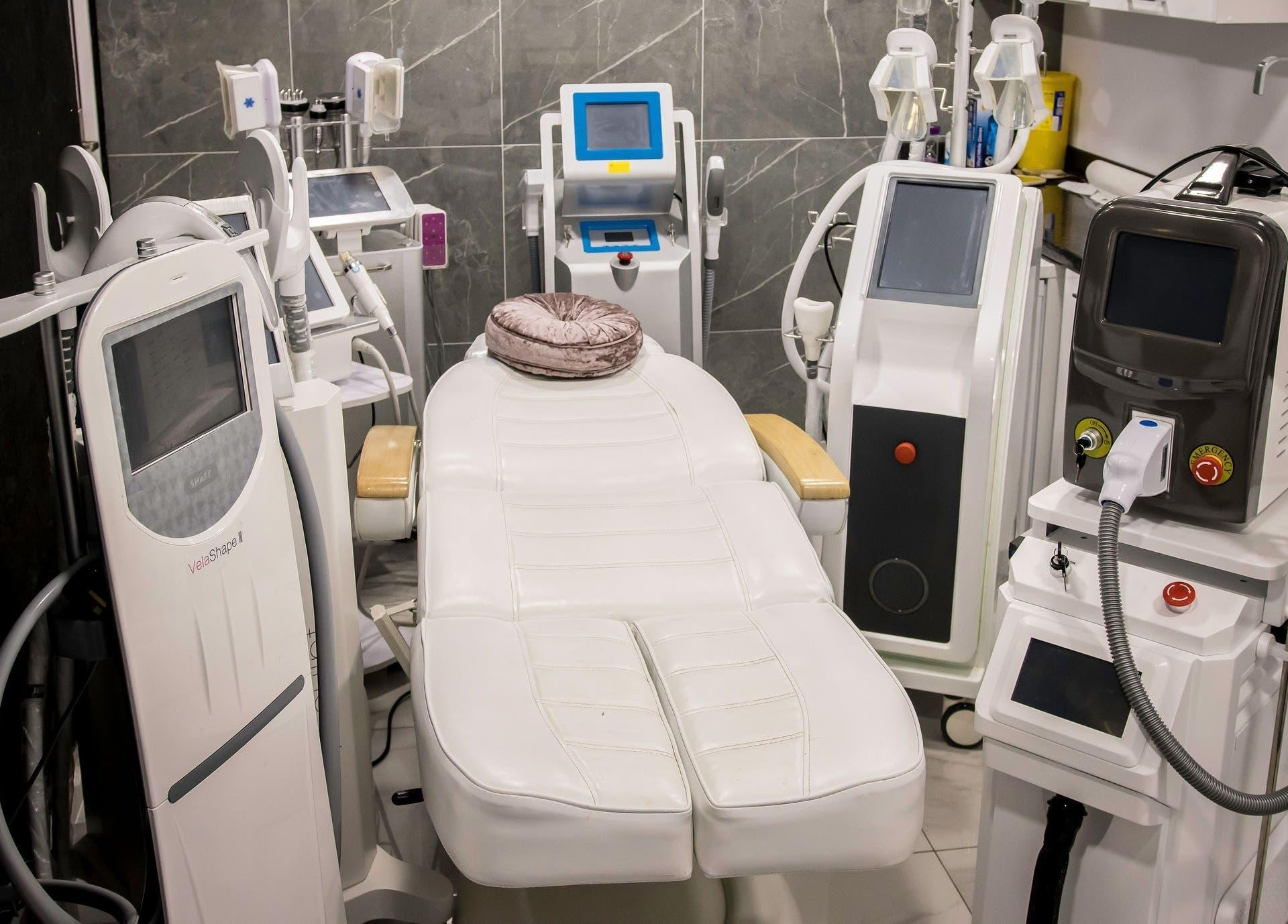
For example, an RF device uses controlled radio-frequency energy to generate heat within targeted tissue, while an ultrasonic cavitation system uses acoustic energy for aesthetic body-contouring applications. Diode laser systems deliver specific wavelengths of optical energy for hair-reduction applications. HIFU systems use focused ultrasound energy at selected depths.
These technologies may require different technical documentation, labeling, safety information, and market-access requirements.
This is why professional buyers should determine where and how the machine will be used before placing the order.
A device intended for general aesthetic services may have different requirements from a product marketed with specific medical claims. In the European Union, for example, CE marking applies only to product categories covered by applicable EU harmonization legislation, and some products may be subject to multiple requirements simultaneously.
The key principle is simple:
Do not start with shipping. Start with product classification and destination-market requirements.
Technology & Mechanism: What Should Be Checked Before Shipping?
A professional beauty machine should be evaluated as both a treatment technology and an international commercial product.
1. Confirm the Exact Technology
Before purchasing, identify the machine's core technology, intended use, treatment area, operating parameters, included handpieces, and accessories.
For example:
- RF systems deliver controlled electromagnetic energy to generate thermal effects used in aesthetic skin-tightening treatments.
- Ultrasound systems use acoustic energy for applications such as body contouring or focused treatment.
- EMS systems use electrical stimulation to activate targeted muscles for aesthetic body-sculpting applications.
- Diode laser systems use specific laser wavelengths for professional hair-reduction treatments.
- LED systems deliver selected wavelengths of light for cosmetic skin-care applications.
- Hydrodermabrasion and multifunction facial systems combine cleansing, exfoliation, infusion, suction, or other cosmetic procedures.
Understanding the technology helps buyers determine what documentation, training, accessories, and maintenance support they may need.
2. Verify Voltage and Electrical Configuration
Voltage compatibility is one of the easiest details to overlook.
A machine manufactured for one electrical market may not be configured for another. Buyers should confirm:
- Input voltage
- Frequency
- Plug type
- Power consumption
- Fuse specifications
- Electrical protection
- Whether voltage conversion is required
For professional clinics, it is generally better to order the correct electrical configuration from the manufacturer rather than depend on external converters or improvised adapters.
3. Review Compliance Documentation Before Payment
Documentation should be reviewed before the machine leaves the factory.
Depending on the destination and product category, buyers may need documentation such as:
- Commercial invoice
- Packing list
- Product specifications
- User manual
- Declaration of Conformity where applicable
- Test reports
- Certification documents where applicable
- Serial-number information
- Warranty terms
- Certificate of origin when required
- Battery-related transportation documentation when applicable
For EU-bound electrical equipment subject to relevant legislation, importers have specific responsibilities, including checking conformity assessment, CE marking, required documentation, manufacturer identification, and safety information.
A useful rule for professional buyers is:
Ask for product-specific documents, not generic certificates.
The model number, manufacturer information, scope, and applicable product requirements should make sense for the actual equipment being purchased.
Advantages & Comparison: Shipping Options for Professional Beauty Devices
Shipping is not simply a question of choosing the cheapest freight quotation. The correct method depends on machine size, order quantity, urgency, destination, and risk tolerance.
Air Freight
Air freight is suitable when speed matters.
It can be useful for:
- Product samples
- Urgent replacement machines
- Small-volume orders
- Time-sensitive clinic projects
- High-value equipment where shorter transit reduces exposure to handling risks
The disadvantage is higher transportation cost, especially for large machines with significant volumetric weight.
Sea Freight
Sea freight is often more economical for larger machines or multiple-unit orders.
It can work well for:
- Salon equipment
- Multiple-machine purchases
- Distributor orders
- Larger OEM/ODM shipments
- Regular inventory replenishment
The trade-off is longer transit time and greater planning requirements.
Express Courier
Courier services can be convenient for smaller accessories, samples, spare parts, or compact equipment.
However, a professional buyer should not automatically assume that courier shipping is the best option simply because it offers door-to-door delivery. Large professional machines may be more efficiently handled through specialized freight forwarding.
Compare Total Landed Cost, Not Machine Price
A $2,000 machine does not necessarily cost $2,000 to acquire.
The real landed cost can include:
Product Price + Packaging + Freight + Insurance + Customs Duties + Import Taxes + Brokerage + Local Delivery + Installation + Training + Spare Parts
This calculation gives buyers a much more realistic picture of the investment.
A lower factory price can become less attractive if packaging is weak, freight is expensive, documentation is incomplete, or after-sales support is limited.
Customs: How to Reduce Clearance Problems
Customs clearance is one of the most important stages of international equipment sourcing.
Before shipment, the buyer and supplier should confirm the product description, quantity, declared value, country of origin, package information, and applicable HS classification with the relevant customs professional.
Do not simply copy an HS code from another machine. Similar-looking beauty devices can have different functions, technical characteristics, or regulatory classifications.
The commercial invoice should clearly describe the equipment rather than using vague terms such as “beauty product” or “machine.”
For example, a description such as:
“Professional RF skin-tightening aesthetic equipment with handpieces”
is generally more informative than simply:
“Beauty machine.”
The exact description and classification should, however, be determined according to the actual product and destination customs requirements.
Use a Pre-Shipment Document Check
Before the machine leaves the factory, verify that:
- Product model matches the purchase order.
- Quantity matches the commercial invoice.
- Serial numbers are recorded where applicable.
- Package dimensions and weights are confirmed.
- Product descriptions are consistent across documents.
- Country of origin information is accurate.
- Required compliance documents are available.
- Voltage and plug configuration are correct.
- Accessories and handpieces are listed.
- Shipping terms and responsibilities are clearly agreed.
This small verification step can prevent significant problems later.
Packaging: Protect the Machine Before the Carrier Ever Touches It
Professional beauty machines can contain sensitive electronics, touchscreens, optical components, pumps, cooling systems, and precision handpieces.
A good packaging strategy should protect against:
- Shock
- Vibration
- Moisture
- Dust
- Scratches
- Compression
- Improper handling
For larger professional machines, reinforced cartons, foam inserts, wooden cases, pallets, or hard transport cases may be appropriate depending on the product and shipping route.
Packaging is not merely a logistics expense. It is part of product quality.
A machine that arrives damaged can delay installation, create warranty disputes, and reduce the clinic's confidence in the supplier.
For this reason, buyers should request photographs or videos of the final packed machine before shipment, particularly for high-value equipment.
Warranty: Look Beyond the Warranty Period
Warranty is one of the most important factors when purchasing professional equipment overseas.
A statement such as “One-year warranty” is not enough.
Buyers should clarify:
- When the warranty starts
- What components are covered
- Whether labor is included
- Whether spare parts are free
- Who pays international shipping
- Who pays return shipping
- Whether consumables are excluded
- What happens if the machine arrives damaged
- Whether remote technical support is available
- Whether local technicians can perform repairs
- How warranty claims are documented
- Average response time for technical problems
For a professional clinic, downtime can be more expensive than the replacement part itself.
Suppose an RF, HIFU, EMS, or laser device is unavailable during a busy treatment period. The business may lose treatment appointments, customer confidence, and staff productivity.
A strong supplier therefore provides more than a warranty document. The supplier should ideally have a practical after-sales system covering troubleshooting, spare parts, technical guidance, and replacement procedures.
Applications & Client Needs: What Professional Buyers Should Prioritize
Different buyers have different priorities.
For Beauty Salons
Salon owners may prioritize:
- Easy operation
- Treatment versatility
- Compact design
- Staff training
- Reliable handpieces
- Affordable maintenance
- Fast spare-part availability
A multifunction platform can be attractive when the goal is to expand the treatment menu without purchasing multiple independent systems.
For Aesthetic Clinics
Clinics may place greater emphasis on:
- Technical specifications
- Compliance documentation
- Treatment protocols
- Safety features
- Operator training
- Serviceability
- Traceability
- Long-term technical support
For clinics handling higher treatment volumes, reliability and consistency can be more valuable than a low initial purchase price.
For Distributors
Distributors need to evaluate the machine from both product and business perspectives.
Important considerations include:
- OEM/ODM capability
- Private-label support
- Packaging customization
- Documentation
- Spare-parts supply
- Lead time
- Minimum order quantity
- Product training
- Warranty handling
- Regional market requirements
A manufacturer that can provide stable production, consistent specifications, documentation support, and after-sales cooperation can be more valuable than a supplier offering only the lowest quotation.
Professional Equipment vs. Home Devices
Professional beauty equipment is generally designed around a different operating environment from consumer home-use devices.
Professional machines may provide:
- More treatment modes
- Larger treatment areas
- Higher operational capacity
- Specialized handpieces
- More detailed parameter control
- Professional training
- Service and maintenance support
- OEM/ODM customization options
This does not mean every professional device is suitable for every clinic or every client. Operator training, correct treatment protocols, contraindications, local regulations, and manufacturer instructions remain important.
The key difference is that professional equipment is typically purchased as part of a service business, where treatment consistency, uptime, workflow efficiency, and technical support all contribute to the machine's commercial value.
Build a Better Overseas Sourcing Strategy
The most reliable sourcing process is not:
Find a cheap machine → Pay → Ship → Hope everything works.
A stronger process is:
Define the treatment → Confirm destination requirements → Verify supplier → Review specifications → Check documentation → Calculate landed cost → Confirm shipping → Inspect before dispatch → Receive and test → Activate warranty and after-sales support.
This approach turns international sourcing from a simple purchasing transaction into a structured equipment investment.
Before placing an order, buyers should also consider whether the supplier can support future growth. A salon may begin with one RF or multifunction facial machine and later add body-contouring, EMS, HIFU, laser hair-removal, or other technologies.
Working with a manufacturer that understands professional treatment applications and can provide consistent product specifications, OEM/ODM services, spare parts, training, and technical support can make future expansion considerably easier.
Conclusion
Sourcing beauty devices overseas can provide professional salons, aesthetic clinics, and distributors with access to advanced technologies and competitive equipment solutions. But the success of an international purchase depends on much more than the machine itself.
Customs documentation helps the equipment move across borders. Appropriate shipping and packaging protect the investment in transit. Compliance documentation supports market access. A clearly defined warranty reduces uncertainty. Technical training and after-sales service help keep the machine productive after installation.
The most important principle is to evaluate the complete ownership journey, not just the factory quotation.
When buyers carefully verify the technology, destination requirements, documentation, shipping method, landed cost, packaging, warranty, spare parts, and technical support, overseas sourcing becomes far more predictable.
For professional beauty businesses, the right equipment is not simply the machine with the lowest purchase price. It is the machine that can arrive safely, operate reliably, fit the intended treatment menu, and continue to receive practical support throughout its working life.
That is the real value of a professional beauty device investment
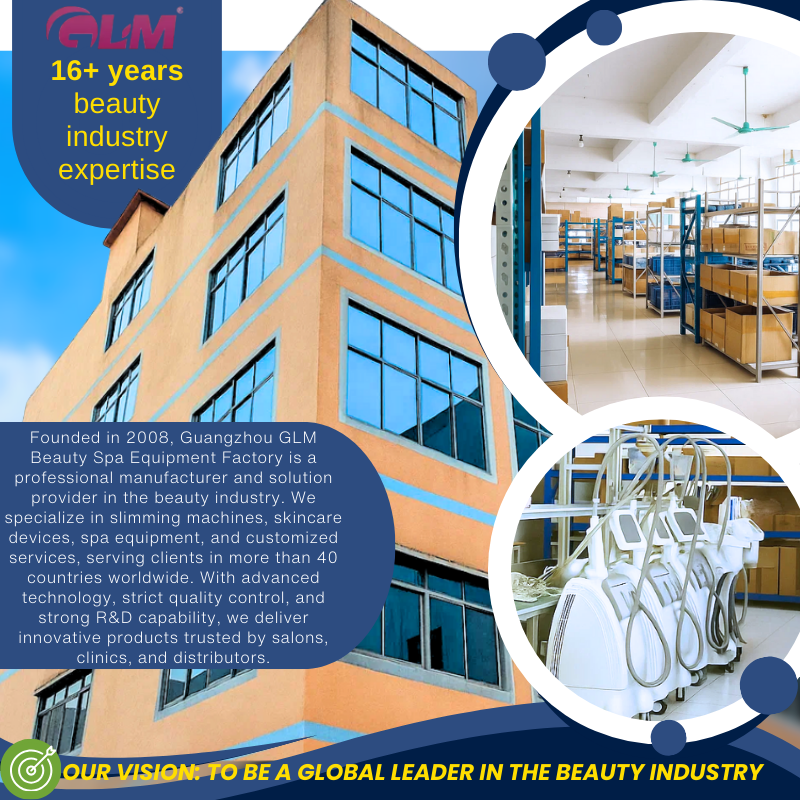
Founded in 2008, Guangzhou GLM Beauty Spa Equipment Factory specializes in research, development, manufacture and selling of beauty and slimming machines. Our production base is located in Guangzhou City, Guangdong Province, China. Since our foundation, we have introduced advanced technologies and equipment, to assure high quality and high performance of our products. With professional marketing guide and excellent after-sales service, our products have been exported to over 20 countries and regions, including Southeast Asia, the Middle East, Europe and the United States, won worldwide praises and gained a good reputation