
Introduction
Tattoo removal has evolved dramatically over the past two decades. Early removal methods relied on abrasive techniques, surgical excision, or aggressive chemical treatments that often caused scarring and permanent skin damage. Today, laser-based tattoo removal has become the global standard—and among all laser technologies, the ND YAG laser is widely recognized as the most reliable and versatile option.
In professional aesthetic clinics, ND YAG tattoo removal is no longer viewed as an experimental procedure. It is a structured, repeatable, and predictable treatment supported by dermatological research and advanced device engineering. Understanding why ND YAG lasers work so effectively helps both practitioners and clients make informed decisions about treatment safety, expectations, and outcomes.
Background: Why Tattoo Ink Is Difficult to Remove
How Tattoo Ink Behaves in the Skin
Tattoo ink is deposited deep into the dermis, where pigment particles are intentionally too large for the body’s immune system to eliminate on its own. Once healed, these pigments become trapped inside dermal cells, creating long-lasting coloration.
Key challenges include:
-
Ink particles vary in size and chemical composition
-
Different colors absorb light differently
-
Pigment sits beneath the skin barrier, protected from surface treatments
This complexity explains why topical creams and exfoliation methods fail to remove tattoos effectively.
Why Traditional Methods Are No Longer Preferred
Older tattoo removal techniques often resulted in:
-
Scarring
-
Uneven skin texture
-
High infection risk
-
Permanent hypopigmentation
Modern clinics have shifted almost entirely toward laser-based removal because it offers controlled, selective pigment targeting without destroying healthy tissue.
How ND YAG Laser Tattoo Removal Works
Selective Photothermolysis
The ND YAG laser operates on the principle of selective photothermolysis—a process where specific wavelengths of light target pigment particles without harming surrounding skin.
When the laser energy reaches the tattoo ink:
-
Pigment absorbs the laser light
-
Ink particles shatter into smaller fragments
-
The immune system gradually clears the fragments through lymphatic drainage
This biological clearance process is what makes laser tattoo removal gradual rather than immediate.
Dual Wavelength Advantage
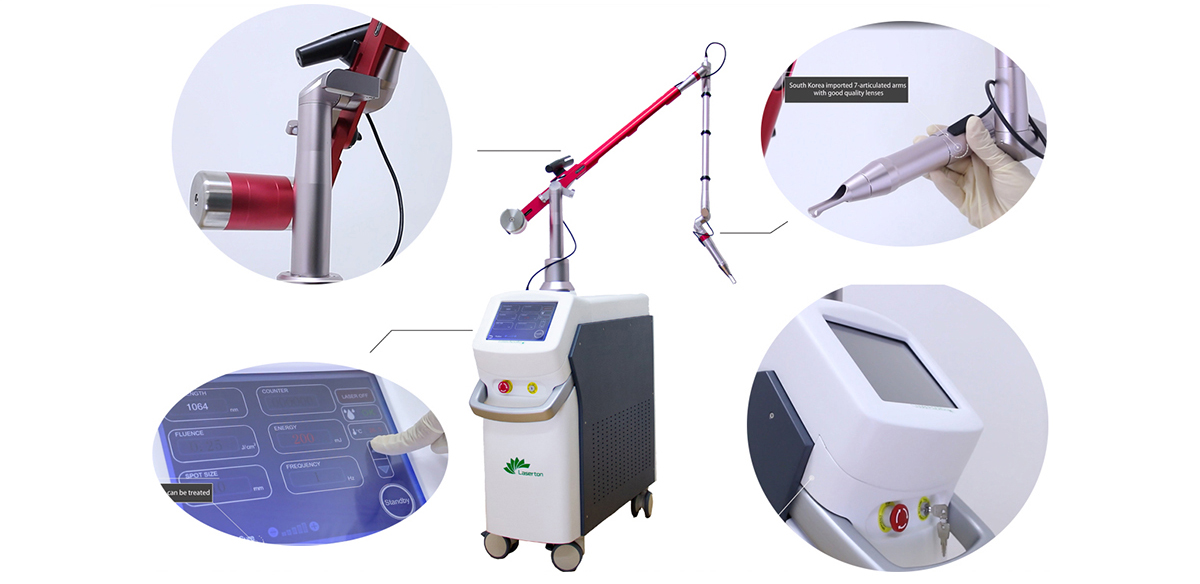
Professional ND YAG systems typically operate at:
-
1064 nm – ideal for black, blue, and dark pigments
-
532 nm – effective for red, orange, and lighter colors
This dual-wavelength capability allows one device to treat a wide range of tattoo colors safely across different skin types.
Why ND YAG Is Safer Than Other Laser Types
Minimal Epidermal Absorption
Unlike some laser technologies, ND YAG wavelengths penetrate deeply while bypassing much of the epidermis. This reduces:
-
Surface burns
-
Blistering
-
Post-inflammatory pigmentation
This makes ND YAG especially suitable for darker skin tones.
Non-Ablative Energy Delivery
ND YAG lasers are non-ablative, meaning they do not remove or vaporize skin tissue. The skin barrier remains intact, significantly lowering downtime and infection risk.
This safety profile allows clinics to offer repeat sessions with controlled intervals.
Why Some Tattoos Fade Faster Than Others
Ink Color Matters
-
Black and dark blue inks respond fastest
-
Red responds well with 532 nm
-
Green and yellow require more sessions
Professional ND YAG devices allow parameter adjustment to match pigment response.
Tattoo Depth and Density
Professional tattoos typically require more sessions due to:
-
Deeper ink placement
-
Higher pigment concentration
Amateur tattoos often fade faster because ink sits closer to the surface.
Advantages of ND YAG Laser Tattoo Removal
High Precision
ND YAG lasers target pigment particles with minimal thermal spread, preserving surrounding skin integrity.
Low Downtime
Most clients experience:
-
Mild redness
-
Temporary swelling
Normal activities can resume quickly, making treatments compatible with busy lifestyles.
Scalability for Clinics
From a business perspective, ND YAG laser systems:
-
Serve multiple treatment purposes
-
Support tattoo removal, pigmentation treatment, and skin rejuvenation
-
Offer high return on investment
This versatility makes ND YAG devices a cornerstone technology in modern aesthetic clinics.
Treatment Planning and Session Expectations
Tattoo removal is a process, not a one-time procedure.
Typical protocols involve:
-
6–10 sessions
-
6–8 week intervals
-
Progressive fading rather than instant removal
High-quality ND YAG machines provide stable pulse output, ensuring consistent results across sessions.
Combining ND YAG with Other Treatments
Clinics often enhance outcomes by pairing tattoo removal with:
-
Post-laser LED therapy
-
Skin calming treatments
-
Pigmentation-balancing protocols
These combinations improve comfort, recovery speed, and overall satisfaction.
Market Trends Driving ND YAG Demand
The global tattoo removal market continues to grow due to:
-
Increased tattoo regret
-
Changing lifestyle and career needs
-
Advances in laser safety
Clinics equipped with professional ND YAG systems are well-positioned to meet this demand.
Conclusion
ND YAG laser technology has transformed tattoo removal into a safe, predictable, and clinically trusted procedure. By targeting pigment selectively while preserving surrounding tissue, ND YAG devices offer superior outcomes across a wide range of tattoo colors and skin types.
For clinics, ND YAG lasers represent a long-term investment in versatility and reliability. For clients, they provide a science-backed path to clearer skin without the risks associated with outdated removal methods.
Founded in 2008, Guangzhou GLM Beauty Spa Equipment Factory specializes in research, development, manufacture and selling of beauty and slimming machines. Our production base is located in Guangzhou City, Guangdong Province, China. Since our foundation, we have introduced advanced technologies and equipment, to assure high quality and high performance of our products. With professional marketing guide and excellent after-sales service, our products have been exported to over 20 countries and regions, including Southeast Asia, the Middle East, Europe and the United States, won worldwide praises and gained a good reputation.