Introduction
Body shape has become an increasingly important part of modern aesthetic care. While traditional weight management remains essential for overall health, many clients continue to notice localized concerns such as stubborn fat deposits, loose-looking skin, uneven contours, or visible cellulite.
This is where non-surgical body contouring has become an important category in professional beauty clinics and aesthetic centers.
Unlike surgical body contouring, non-surgical treatments work externally and are designed to improve the appearance of selected body areas without incisions. Depending on the technology, professional equipment can use controlled heat, cooling, ultrasound, light energy, electromagnetic stimulation, or mechanical massage to address specific aesthetic concerns.
For clinics, the value of these technologies is not simply the ability to offer a "slimming treatment." A well-designed body contouring system allows professionals to create targeted treatment plans based on body area, tissue condition, skin firmness, and the client's expectations.
The goal is controlled shaping—not promising dramatic weight loss.
Background / Problem
Many clients who visit professional beauty salons or aesthetic clinics are not necessarily looking for major changes in their overall body weight. Instead, they may have localized areas that are difficult to improve through exercise and general lifestyle management.
Common concerns include the abdomen, waist, flanks, thighs, hips, buttocks, and upper arms. Some clients may also be more concerned about skin laxity or the appearance of cellulite than the amount of fat itself.
This creates a challenge for professional operators.
One technology may be appropriate for localized fat reduction, while another may be more suitable for skin tightening or improving the appearance of cellulite. Treating every client with the same device or protocol can therefore limit the quality of the service.
Modern non-surgical body contouring is better understood as a technology-based treatment category with multiple mechanisms.
The U.S. FDA describes non-invasive body contouring as procedures that can change the circumference or silhouette of a body area, reduce small areas of visible fat, improve the appearance of cellulite, or improve the tone and firmness of certain muscles. Importantly, these procedures are not intended to treat obesity or replace weight-loss programs.
For this reason, professional consultation and correct client selection remain essential.
Technology / Mechanism
Different body contouring machines work through different physical mechanisms. Understanding these mechanisms helps operators select the appropriate technology for each treatment objective.
1. Radiofrequency for Body Contouring and Skin Tightening
Radiofrequency, commonly known as RF, uses electromagnetic energy to generate controlled heating within targeted tissue.
In professional body treatments, RF can be used to heat the skin and underlying tissue. Depending on the device design and treatment parameters, this controlled thermal effect may support improvements in skin firmness and the appearance of cellulite while also contributing to localized contouring.
The key advantage of RF is its versatility.
For a client who has both localized body concerns and loose-looking skin, an RF-based system may allow the operator to address more than one aesthetic objective within a treatment plan.
Professional RF systems may also provide adjustable energy levels, treatment modes, temperature monitoring, applicator options, and treatment timers. These controls allow trained operators to manage treatment parameters more consistently than basic consumer devices.
2. Cryolipolysis and Controlled Cooling
Cryolipolysis uses controlled cooling to target fat cells in selected areas.
Because adipose tissue has different sensitivity to cold compared with surrounding tissues, specialized applicators can deliver controlled cooling to a targeted area. The FDA describes cryolipolysis as a technology intended to reduce visible fat bulges by cooling a pinchable area of fat.
This approach is particularly relevant when the main concern is a localized fat bulge rather than generalized weight reduction.
Professional systems may incorporate applicator shapes, cooling controls, treatment monitoring, and safety features designed for specific treatment areas.
3. Ultrasound-Based Body Contouring
Ultrasound uses acoustic energy rather than electromagnetic energy.
Certain therapeutic ultrasound systems are designed to deliver energy into tissue beneath the skin. Depending on the technology and intended use, the energy can interact with the subcutaneous fat layer and contribute to changes in localized body contour.
Professional operation is important because ultrasound requires appropriate contact with the skin and controlled energy delivery. The FDA notes that therapeutic ultrasound can cause tissue injury if improperly used, which makes correct application, treatment parameters, and operator training particularly important.
This illustrates an important difference between professional and casual home use: effective equipment is only one part of the treatment. The operator's ability to control the treatment is equally important.
4. Low-Level Light and Laser-Based Technologies
Light-based technologies have also been incorporated into non-invasive body contouring.
Certain low-level laser systems are specifically classified for non-invasive reduction of the fat layer for body contouring.
The objective is not to perform surgical liposuction. Instead, the technology is designed to deliver controlled optical energy to the targeted area.
For professional clinics, light-based systems can provide another treatment option for clients whose primary concern is localized contouring.
5. Mechanical Massage, Vacuum and Combined Technologies
Mechanical technologies use controlled suction, massage, vibration, or combinations of these approaches.
They are often used when the treatment objective includes improving the appearance of cellulite, supporting tissue manipulation, or complementing energy-based body treatments.
Combination systems can be particularly useful in professional environments because they allow clinics to create treatment programs rather than relying on one isolated technology.
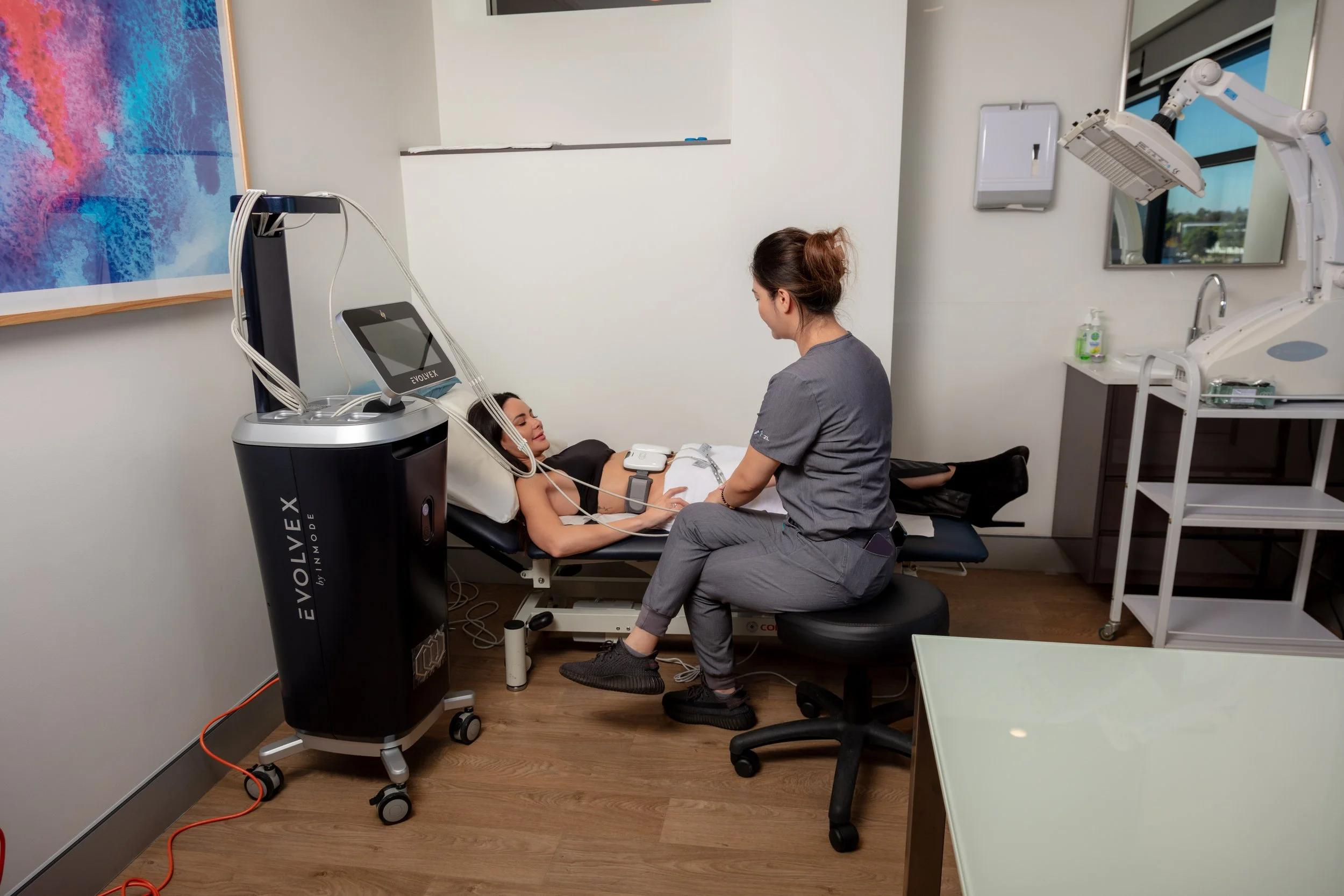
For example, a professional body contouring platform may combine RF heating with vacuum massage. The operator can then adjust the treatment according to the client's skin condition, body area, and desired aesthetic objective.
However, combination does not automatically mean better. The value comes from having appropriate technologies, controllable parameters, and a clear treatment protocol.
Advantages / Comparison
Professional Equipment vs. Home Devices
The biggest difference between professional and home body contouring equipment is not simply power.
Professional systems are generally designed around repeatable treatment protocols, operator control, treatment monitoring, applicator design, and service consistency.
A consumer device may focus on convenience and simple operation. A professional system, by contrast, is typically integrated into a consultation-based service.
For a clinic, this means the treatment can be structured around:
- Body-area assessment
- Client consultation
- Appropriate technology selection
- Adjustable treatment parameters
- Controlled treatment duration
- Operator monitoring
- Treatment documentation
- Follow-up sessions
This workflow is especially valuable when clients have different body compositions and different aesthetic priorities.
One Technology Does Not Solve Every Body Contouring Concern
Scientific and clinical reviews have examined several non-invasive modalities, including cryolipolysis, RF, ultrasound, laser-based technologies, and electromagnetic approaches. Evidence indicates that these modalities can produce measurable changes in selected treatment outcomes, but the technologies work through different mechanisms and should not be treated as interchangeable.
For example:
| Client Concern | Technology Category | Typical Professional Focus |
|---|---|---|
| Localized fat bulge | Cryolipolysis | Controlled cooling |
| Skin laxity | RF | Controlled thermal energy |
| Cellulite appearance | RF / Mechanical | Heating and tissue manipulation |
| Localized contouring | Ultrasound / Light | Targeted energy delivery |
| Muscle appearance | Electromagnetic stimulation | Muscle stimulation |
| Multiple concerns | Combination systems | Multi-technology treatment plans |
The table should not be interpreted as a universal treatment recommendation. Device indications, treatment areas, parameters, contraindications, and regulatory status vary by specific equipment.
This is why professional operators need to understand both the technology and the device's intended use.
Applications / Client Needs
Non-surgical body contouring can be integrated into several professional clinic services.
Abdomen and Waist
The abdomen and waist are among the most frequently discussed areas in body contouring.
Clients may present with localized fat, reduced skin firmness, or an uneven silhouette. Depending on the assessment, an operator may select thermal, cooling, ultrasound, light-based, or combination technology.
The important point is to match the device mechanism to the actual concern instead of simply selling a generic "slimming treatment."
Thighs and Hips
Thighs and hips can present multiple aesthetic concerns, including localized fat deposits and visible cellulite.
For these clients, treatment planning may focus on contour refinement and the appearance of the skin surface. Mechanical and energy-based technologies can be incorporated into professional treatment programs depending on the device's intended use.
Arms
Upper-arm contouring can involve both localized adipose tissue and skin laxity.
A professional consultation helps determine whether the primary objective should be contouring, skin tightening, or a combination of both.
Post-Weight-Loss Body Refinement
Some clients seek aesthetic body contouring after losing weight.
In these cases, the remaining concern may not simply be fat. Skin firmness, tissue texture, and overall body silhouette can become more important.
This is another situation in which professional equipment offers value because different technologies can be incorporated according to the client's changing needs.
Creating a Professional Treatment Program
For beauty clinics and aesthetic centers, the commercial value of body contouring equipment extends beyond a single session.
A professional operator can build a structured treatment journey:
Consultation → Body Assessment → Technology Selection → Parameter Setting → Treatment → Documentation → Follow-Up
This approach creates a more professional service experience while allowing the clinic to manage different client profiles.
It also provides opportunities for equipment manufacturers to offer systems with multiple applicators, adjustable parameters, intuitive interfaces, treatment presets, and OEM customization.
For international beauty-equipment suppliers, these features can be particularly valuable because clinics in different markets may require different configurations and treatment combinations.
Safety and Professional Operation
Non-surgical does not mean risk-free.
The FDA notes that aesthetic devices can have risks and that results may be temporary or different from the client's expectations. It also recommends considering the provider's training and experience when evaluating aesthetic procedures.
Potential risks vary significantly according to the technology. For example, RF and ultrasound involve energy delivery and controlled heating, while cryolipolysis involves controlled cooling. Certain devices may also have specific restrictions related to implants, metal, skin conditions, or other factors.
Therefore, professional operators should always follow the manufacturer's instructions, intended treatment areas, contraindications, and local regulatory requirements.
For equipment manufacturers, clear user manuals, parameter guidance, safety systems, training support, and after-sales service are not secondary features. They are part of the overall value of a professional body contouring platform.
Conclusion
Non-surgical body contouring has developed into a diverse category of professional aesthetic technology.
Rather than relying on a single "fat reduction machine," modern clinics can select from different technologies—including RF, cryolipolysis, ultrasound, light-based systems, mechanical technologies, and combination platforms—to address different aesthetic concerns.
The most important factor is not simply how many functions a machine has. It is whether the technology, applicator, energy delivery system, treatment parameters, and workflow are appropriate for the intended professional application.
For beauty salons, med spas, and aesthetic clinics, professional body contouring equipment can support a more structured approach to localized contouring, skin firmness, cellulite appearance, and body-shape refinement.
When technology is combined with proper consultation, trained operation, realistic expectations, and appropriate treatment protocols, non-surgical body contouring becomes more than a single beauty service. It becomes a flexible professional platform for delivering customized body-aesthetic solutions
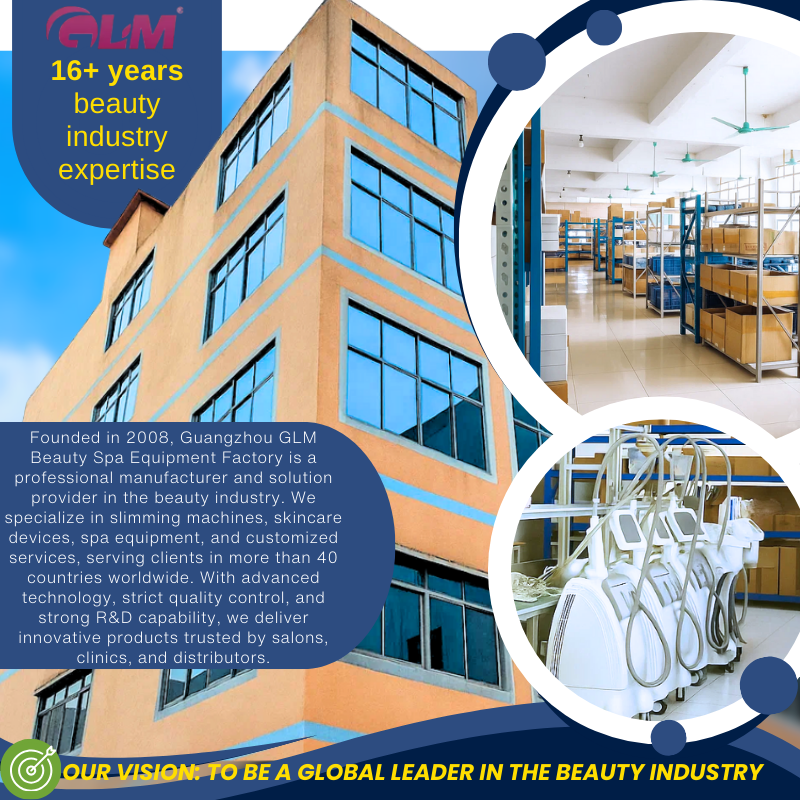
Founded in 2008, Guangzhou GLM Beauty Spa Equipment Factory specializes in research, development, manufacture and selling of beauty and slimming machines. Our production base is located in Guangzhou City, Guangdong Province, China. Since our foundation, we have introduced advanced technologies and equipment, to assure high quality and high performance of our products. With professional marketing guide and excellent after-sales service, our products have been exported to over 20 countries and regions, including Southeast Asia, the Middle East, Europe and the United States, won worldwide praises and gained a good reputation