1. Introduction
In 2026, non-surgical body contouring continues to attract attention from clients seeking improved body proportions, firmer skin, and more defined curves without undergoing invasive procedures. Among the growing number of aesthetic treatments, non-surgical butt enhancement has become an increasingly interesting service for professional beauty salons, medical spas, and aesthetic clinics.
Unlike traditional surgical butt augmentation, non-invasive and minimally invasive aesthetic technologies focus on improving the appearance of the gluteal area through different approaches. Radiofrequency (RF) technology helps improve skin firmness by delivering controlled thermal energy. High-Intensity Focused Electromagnetic (HIFEM) technology stimulates muscle contractions to support gluteal muscle conditioning. Meanwhile, collagen stimulation techniques aim to improve skin texture, elasticity, and overall tissue quality.
These technologies address different aspects of buttock appearance. Rather than simply focusing on increasing volume, professional treatments can target muscle definition, skin laxity, and uneven body contours.
For aesthetic professionals, understanding how these technologies work is essential when selecting equipment, developing treatment protocols, and providing realistic recommendations. With the right professional equipment and individualized treatment planning, clinics can expand their body contouring services while addressing a wider range of client concerns.
2. Background and Common Concerns About Gluteal Appearance
The appearance of the buttocks is influenced by several factors, including muscle development, fat distribution, skin elasticity, connective tissue structure, genetics, and age. Changes in these factors can affect the overall shape and firmness of the gluteal area.
One common concern is reduced skin firmness. As collagen and elastin levels change with age, the skin may gradually lose some of its elasticity. Weight fluctuations and pregnancy can also contribute to changes in skin appearance, sometimes resulting in mild laxity or an uneven surface.
Another concern is insufficient muscle definition. The gluteal muscles, particularly the gluteus maximus, medius, and minimus, play important roles in hip movement, stability, and lower-body shape. Limited physical activity or changes in muscle mass may affect the visual definition of this area.
Some clients also notice localized fat accumulation or cellulite-like skin texture. These concerns can influence the appearance of the buttocks and surrounding thighs, even when overall body weight remains relatively stable.
Traditional approaches, such as strength training and lifestyle adjustments, can help improve muscle development and body composition. However, some clients prefer additional professional aesthetic treatments to address skin firmness or muscle conditioning.
This creates an opportunity for professional beauty equipment. Different technologies can address different tissue targets, allowing practitioners to develop treatment plans based on individual needs rather than relying on a single universal solution.
It is important to distinguish between buttock enhancement and surgical augmentation. Non-surgical treatments generally aim to improve firmness, muscle conditioning, and visible contour. They should not be presented as equivalent to surgical fat transfer or implants, which produce different types of structural changes.
3. Core Technologies Behind Non-Surgical Butt Enhancement
3.1 Radiofrequency (RF): Supporting Skin Firmness and Collagen Remodeling
Radiofrequency is widely used in professional aesthetic treatments because it delivers controlled electromagnetic energy into targeted tissue, generating heat through tissue resistance.
In skin-focused applications, controlled heating can stimulate biological processes associated with collagen remodeling. Existing collagen fibers may undergo thermal contraction, while subsequent tissue remodeling can contribute to improvements in skin firmness and texture over time.
For the gluteal area, RF treatments are primarily relevant to clients concerned about mild skin laxity, uneven texture, and reduced firmness. Depending on the device design, treatment may involve monopolar, bipolar, or multipolar RF configurations.
Professional RF equipment offers practitioners adjustable treatment parameters, including energy output, treatment duration, and temperature monitoring, depending on the platform. These controls help operators adapt treatments to different body areas and individual skin conditions.
Some advanced systems combine RF with vacuum or mechanical massage functions. These combinations may support tissue manipulation and improve the overall treatment experience, although the additional functions should not automatically be interpreted as producing greater fat reduction or lifting.
For clinics, RF equipment provides a versatile option for professional skin-tightening and body-contouring services. It can also complement other treatments when the treatment objectives and safety requirements are clearly defined.
3.2 HIFEM: Activating Gluteal Muscles Through Electromagnetic Stimulation
High-Intensity Focused Electromagnetic technology, commonly known as HIFEM, uses electromagnetic fields to induce muscle contractions.
Unlike conventional exercise, where muscles contract in response to voluntary movement, HIFEM devices generate electromagnetic stimulation that triggers repeated involuntary muscle contractions within the treatment area.
When applied to the gluteal region, the technology is intended to stimulate muscles such as the gluteus maximus. Repeated contractions create a muscular conditioning stimulus, which may support improvements in muscle strength and definition when delivered through an appropriate treatment protocol.
This makes HIFEM particularly relevant for clients who want a firmer-looking and more defined gluteal appearance without relying exclusively on conventional exercise.
Professional HIFEM equipment is designed to deliver controlled electromagnetic stimulation through dedicated applicators. Treatment intensity and duration should be adjusted according to device specifications, client tolerance, contraindications, and the manufacturer's instructions.
It is also important to understand what HIFEM does not do. Muscle stimulation is not equivalent to directly increasing buttock fat volume. Its primary target is muscular activity, not the injection or transfer of additional tissue.
For professional clinics, HIFEM technology can create an additional service category focused on non-invasive muscle conditioning and body shaping.
3.3 Collagen Stimulation: Improving Skin Quality and Tissue Support
Collagen is an important structural protein responsible for maintaining skin strength, elasticity, and firmness. As natural collagen production changes with age, the skin may become thinner, less resilient, and more prone to visible laxity.
Collagen stimulation treatments aim to support the skin's natural remodeling processes. Depending on the technology, this may involve controlled thermal energy, mechanical stimulation, or carefully selected minimally invasive procedures.
In professional aesthetic settings, RF-based treatments are particularly relevant because controlled heating can stimulate collagen remodeling in the dermis. Certain other professional technologies, such as microneedling-based systems, may also influence collagen production through a controlled wound-healing response.
However, these technologies are not interchangeable. Their treatment depths, mechanisms, recovery requirements, and risk profiles differ.
For gluteal treatments, collagen-focused approaches are most relevant when clients are concerned about skin texture, mild laxity, or overall tissue quality rather than significant volume loss.
Professional operators should carefully evaluate skin condition and treatment suitability before selecting a collagen-stimulating approach. Device settings, treatment intervals, and expected results must remain consistent with the specific technology and its approved intended use.
4. Advantages and Comparison of Different Technologies
Although RF, HIFEM, and collagen stimulation all contribute to non-surgical aesthetic services, they address different concerns.
RF: Skin Firmness and Thermal Remodeling
RF is most suitable for treatments focused on skin firmness and texture. Its thermal mechanism makes it a useful option for clients with mild skin laxity who want a smoother and firmer appearance.
HIFEM: Muscle Conditioning and Definition
HIFEM focuses on muscle activation. It is more relevant to clients who want to improve the appearance and conditioning of the gluteal muscles. It does not directly replace resistance training or produce the same structural changes as surgical augmentation.
Collagen Stimulation: Skin Quality and Elasticity
Collagen-focused treatments address the structural quality of the skin. They may be incorporated into treatment plans for clients concerned about reduced elasticity and mild skin laxity.
The main advantage of combining these approaches is that practitioners can address multiple aspects of buttock appearance. For example, a client may have relatively good muscle development but reduced skin firmness. Another client may have firm skin but limited muscle definition.
A technology-based treatment plan can therefore be more individualized than a one-dimensional approach.
| Technology | Primary Target | Main Aesthetic Focus |
|---|---|---|
| RF | Dermal and superficial tissue | Skin firmness and texture |
| HIFEM | Skeletal muscles | Muscle conditioning and definition |
| Collagen stimulation | Skin structural proteins and remodeling processes | Elasticity and skin quality |
It is important to avoid assuming that more technologies automatically produce better results. Treatment combinations should be selected according to clinical suitability, device compatibility, safety requirements, and the client's objectives.
5. Applications in Professional Beauty Salons and Aesthetic Clinics
Non-surgical butt enhancement offers professional beauty businesses an opportunity to expand their body contouring treatment portfolios.
5.1 Customized Treatments for Different Client Needs
Not every client has the same aesthetic goals. Some are primarily concerned about skin laxity, while others want improved muscle definition or smoother-looking skin.
A professional consultation should assess the client's concerns, medical history, skin condition, treatment expectations, and relevant contraindications.
Based on this assessment, practitioners can determine whether RF, HIFEM, collagen-focused treatments, or a combination of appropriate technologies is suitable.
For example, a client concerned about mild skin laxity may benefit from an RF-focused approach. Someone primarily interested in muscle conditioning may be more suitable for an electromagnetic muscle stimulation treatment, provided there are no contraindications.
This individualized approach helps clinics provide more targeted services instead of offering identical treatments to every client.
5.2 Expanding Professional Body Contouring Services
For beauty salons and Med Spas, adding gluteal-focused treatments can complement existing services such as abdominal contouring, thigh treatments, skin tightening, and cellulite-focused procedures.
Multi-functional professional equipment may also provide operational advantages. Depending on the platform, a device may support several treatment areas or offer different applicators for separate aesthetic objectives.
However, equipment selection should prioritize actual technical capabilities, treatment indications, operator training requirements, and safety features rather than simply counting the number of functions.
5.3 The Importance of Professional Equipment
Professional aesthetic equipment is designed for structured treatment environments. Compared with basic consumer devices, professional systems may offer more comprehensive controls, dedicated applicators, adjustable operating parameters, and manufacturer-supported training.
These features are particularly important when treating larger anatomical areas such as the buttocks.
Professional operators need to understand energy delivery, tissue response, treatment positioning, contraindications, and appropriate parameter selection. They should also monitor client comfort and follow the manufacturer's operating protocols.
Home-use beauty devices may offer convenience for personal care, but their intended uses, energy outputs, and operating controls can differ significantly from professional platforms. They should not be assumed to provide equivalent treatment performance.
For equipment manufacturers and distributors, providing clear technical documentation, operator training, maintenance support, and reliable after-sales service is an important part of delivering professional value.
6. Client Expectations, Treatment Safety, and Practical Considerations
One of the most important aspects of non-surgical butt enhancement is setting realistic expectations.
RF and collagen-focused treatments generally aim to improve skin firmness and quality over time. HIFEM-based treatments focus on muscle stimulation and conditioning. None of these approaches should be marketed as a guaranteed replacement for surgery or as a method of producing dramatic increases in buttock volume.
Results vary according to individual anatomy, baseline muscle condition, skin quality, lifestyle, treatment parameters, and adherence to the recommended protocol.
Safety is equally important. RF treatments require appropriate temperature and energy management to reduce the risk of burns and unwanted tissue injury. Electromagnetic muscle stimulation requires screening for relevant contraindications, including certain implanted electronic devices and other conditions specified by the manufacturer.
Collagen-stimulating procedures may have additional requirements depending on whether they are non-invasive or minimally invasive. Skin assessment, infection-control measures, appropriate operator qualifications, and post-treatment instructions are essential.
Clinics should also maintain accurate treatment records and communicate expected outcomes, possible side effects, and recovery considerations before treatment begins.
A professional treatment experience is not defined by equipment alone. It also depends on practitioner expertise, consultation quality, treatment consistency, and appropriate follow-up.
7. Conclusion
Non-surgical butt enhancement in 2026 is increasingly centered on a more comprehensive understanding of body contouring. Rather than treating gluteal appearance as a single concern, modern aesthetic approaches consider muscle conditioning, skin firmness, collagen remodeling, and overall body proportions.
RF technology offers a thermal approach to skin tightening and collagen remodeling. HIFEM focuses on electromagnetic muscle stimulation and gluteal conditioning. Collagen-focused treatments address skin elasticity and tissue quality.
For professional beauty salons, Med Spas, and aesthetic clinics, these technologies provide opportunities to develop more customized body contouring services and respond to different client expectations.
For equipment manufacturers, the growing interest in non-surgical body shaping highlights the importance of reliable energy delivery, practical treatment design, operator-friendly controls, and comprehensive technical support.
Ultimately, successful non-surgical butt enhancement is not about promising unrealistic transformations. It is about matching the right technology to the right treatment objective, maintaining professional safety standards, and helping clients achieve more refined and natural-looking body contours through evidence-informed aesthetic care
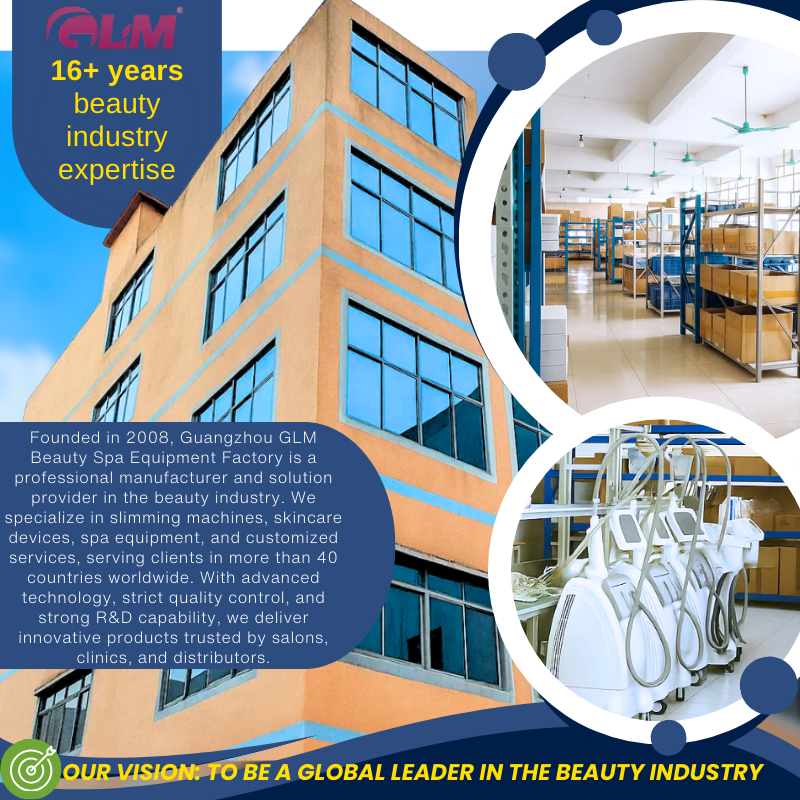
Founded in 2008, Guangzhou GLM Beauty Spa Equipment Factory specializes in research, development, manufacture and selling of beauty and slimming machines. Our production base is located in Guangzhou City, Guangdong Province, China. Since our foundation, we have introduced advanced technologies and equipment, to assure high quality and high performance of our products. With professional marketing guide and excellent after-sales service, our products have been exported to over 20 countries and regions, including Southeast Asia, the Middle East, Europe and the United States, won worldwide praises and gained a good reputation