

Laser liposuction: Principle, Postoperative Changes and Comprehensive Analysis
I. Introduction
In today's society, pursuing a perfect figure has become the goal of many people, and laser liposuction (also known as laser lipolysis) has quickly become a popular choice due to its unique advantages. Compared with traditional liposuction, laser liposuction, as a non-invasive therapy, can not only break down fat cells but also significantly shorten the recovery period, making the pursuit of beauty more convenient and effortless for those seeking it. However, for many people who are preparing to undergo laser lipolysis, what changes will occur in the body during the first week after the operation is one of the questions they are most concerned about. This article will delve deeply into the principle of laser lipolysis, the immediate postoperative experience, the visible changes in the first week, and the subsequent trends of physical changes, providing comprehensive and professional information for those seeking beauty.
Ii. Detailed Explanation of the Laser Lipolysis Process
(1) Basic Principles
Laser Lipo (also known as laser fat decomposition) is an advanced non-invasive body shaping surgery. The core principle is to utilize directional laser energy to precisely act on subcutaneous adipocytes. Unlike traditional liposuction that requires surgical incisions and general anesthesia, laser lipolysis has significant advantages such as less pain and shorter recovery time.
When laser is applied to fat cells, a series of chemical signals are produced. These signals can prompt the breakdown of triglycerides stored in fat cells into free fatty acids and glycerol. Subsequently, these decomposition products are released through specific channels on the cell membrane and enter the human metabolic system. The human body itself has the ability to transport fatty acids and glycerol to tissues for energy metabolism. When the body needs to utilize the stored energy, this process of releasing fatty acids is a common physiological response. Therefore, laser lipolysis does not cause any abnormal reactions in the body, nor does it cause damage to surrounding structures such as the skin, blood vessels or nerves, and has a relatively high level of safety.
(II) Specific operation process
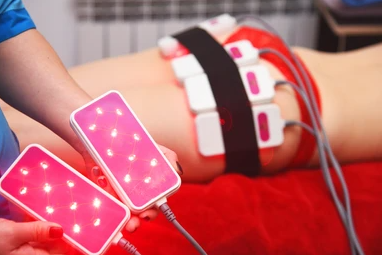
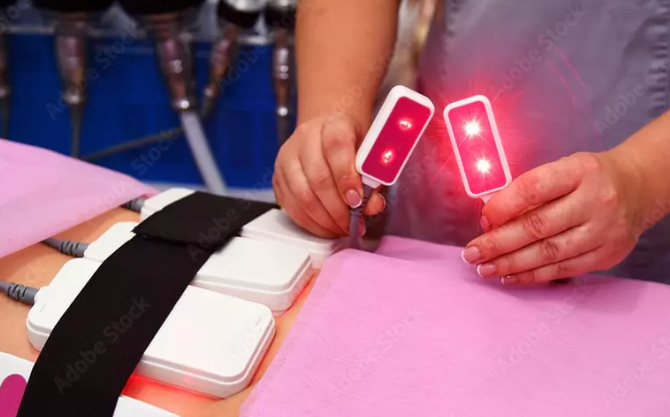
In actual operation, this treatment course uses a applicator similar to a paddle to evenly apply it to the treatment area. The applicator releases an appropriate amount of heat, which can penetrate the skin and directly act on the fat cell membranes, destroying their structure. This process causes fat cells to break down into fatty acids and glycerol, which are naturally excreted from the body through the body's metabolism.
Patients usually feel certain effects after one course of treatment, but the best effect usually takes about six weeks to fully manifest. This is because the breakdown and metabolism of fat cells is a gradual process that requires a certain amount of time to complete.
Iii. Postoperative Expectations and Changes in the First Week
(1) Overall expectations
Some patients may notice a slight reduction in fat in the treated area within the first week after laser lipolysis. However, as the body needs to continuously eliminate fat cells through the lymphatic system, it may take a longer time to show obvious effects. Generally speaking, as the swelling gradually subsides and the body adapt to the treatment, it may take up to three months for the full effect of laser lipolysis to be fully manifested.
(2) Obvious changes in the first week
Reducing swelling: After laser lipolysis, the treated area usually experiences a certain degree of swelling. Although some swelling may persist for a period of time, a significant reduction is usually observed within the first week compared to the first few days after treatment. This is because the body's self-repair mechanism begins to function, promoting local blood circulation and accelerating the reduction of swelling.
Initial shaping: Many patients report within the first week that their abdomen has become flatter or the contour of their thighs has become clearer, indicating a significant improvement in the treated area. This initial shaping effect is mainly due to the decomposition of fat cells and the rearrangement of local tissues.
Improving skin texture: Laser lipolysis also has a certain firming effect on the skin. Within the first week, this firming effect may gradually become more obvious and help make the overall appearance smoother. Laser energy stimulates the production of collagen in the skin, enhancing its elasticity and firmness.
It should be noted that although some effects can be seen within a week, the best results usually require multiple courses of treatment (typically 6 to 8 sessions) to achieve. Laser lipolysis is considered safe, with minimal side effects and no recovery period required. However, it must be emphasized that this surgery is not a weight loss program but a way to shape the body. To maintain the surgical outcome, it is crucial to keep a healthy lifestyle.
Iv. Trends of Changes in the Second Week and Beyond
(1) Continuous improvement
Although obvious changes can be seen in the first week, the effect of laser lipolysis will be more significant in the second week and beyond. As the swelling gradually subsides, the body's natural processes will excrete more liquefied fat. Most patients will see significant improvement within the next 4 to 6 weeks, and the complete effect usually appears within 3 to 6 months.
(II) The Importance of Lifestyle
During this period, the lifestyle choices of patients play a crucial role in maximizing the effect of weight loss. Maintaining adequate hydration helps promote metabolism and accelerate the excretion of fat. A balanced diet can provide the body with necessary nutrients and support its repair and recovery. Regular exercise can enhance the body's metabolic capacity, help consume more calories and prevent the re-accumulation of fat.
(3) Scientific research support
Recent studies have further emphasized the effectiveness of laser lipolysis in reducing fat thickness and volume. A study measured fat thickness at 2, 3 and 6 months after treatment. The results showed that fat thickness decreased by 14% at 2 months after treatment, and by 18% at both 3 and 6 months. In addition, magnetic resonance imaging assessment showed that the average fat volume decreased by 24% at 3 months after treatment and by 21% at 6 months. These research results indicate that the effect of laser lipolysis is not only immediate but also can last for several months, providing a solid scientific basis for its body-shaping efficacy.
V. Post-Maintenance and Upkeep Skills
(1) Key points of postoperative care
Postoperative care is crucial for achieving the best effect of laser lipolysis therapy. Patients should strictly follow the postoperative care instructions of the doctor to ensure a smooth recovery. After the treatment is completed, it is necessary to allow the body to have sufficient rest and avoid overwork. At the same time, it is necessary to ensure adequate water intake. Drinking plenty of water not only helps eliminate toxins but also promotes physical recovery.
(2) Cultivating a healthy lifestyle
To maintain and enhance the therapeutic effect, patients should consider developing a healthy lifestyle. Eating nutrient-rich foods, such as vegetables, fruits, whole grains, lean meats and fish, can provide the body with necessary nutrients and support normal metabolism. Staying active and engaging in moderate exercise regularly, such as walking, running, swimming, yoga, etc., can help enhance the body's metabolic capacity and burn more calories. In addition, it is necessary to avoid weight gain and prevent the accumulation of new fat in untreated areas. In the first few weeks after the treatment, strenuous exercise should be avoided to help the body recover as soon as possible.
(3) Non-invasive skin tightening treatment
After recovery, patients can consider non-invasive skin tightening treatments, such as radiofrequency skin tightening and laser skin tightening. These treatments can further improve skin elasticity, making the skin tighter and smoother, and giving you more confidence.
Six. Enhance the therapeutic effect through additional treatment
(1) Treatment frequency and course
For the best results, it is usually recommended to undergo laser treatment twice a week for four consecutive weeks. Some people may see results with just one treatment, but most people need multiple treatments to significantly reduce fat. As the body continuously processes and eliminates the treated fat cells, the final effect is usually visible within 3 to 6 months.
(2) Combination with other therapies
Some patients may choose to combine laser lipolysis with other non-invasive therapies to achieve better results. For instance, firming skin therapy can further improve the appearance of the treated area by stimulating the production of collagen, making the skin tighter and more elastic. Lymphatic massage can promote the circulation of lymph fluid, accelerate the metabolism and excretion of fat, and facilitate the body's natural fat elimination process.
(3) Subsequent modifications and additional treatments
If necessary, subsequent modifications or additional treatments (such as cryolipolysis, microneedling or skin recovery therapy) can complement the effect of your laser lipolysis. Cryolipolysis can freeze fat cells, causing them to naturally undergo apoptosis and be metabolized and excreted by the body. Microneedles can stimulate the skin's self-repair mechanism, promote the production of collagen, and improve the texture and elasticity of the skin. Skin restoration therapy can target various skin problems, such as pigmentation and wrinkles, for targeted treatment, making the skin healthier and more beautiful.
Vii. Common Questions and Answers Regarding the One-week Course of Laser Lipolysis
(1) The amount of fat loss within a week
Some patients can see a significant reduction in fat just one week later, but as the body consumes more fat, the effect will continue to improve in the following weeks. The amount of fat reduction varies from person to person, depending on factors such as an individual's physical condition, fat distribution, treatment area, and the number of treatments.
(2) The influence of swelling on the therapeutic effect
The initial swelling may affect the observation of the final effect to a certain extent, but as the swelling gradually subsides, the treated area will become clearer and the effect will be more obvious. Swelling is a normal response of the body to treatment and usually subsides on its own within a few days to a few weeks.
Viii. Advantages and Value of Laser Lipolysis
Laser lipolysis offers a convenient and effective solution for those seeking to enhance their figure and shorten the recovery period. In just one week, patients usually see significant improvement. This rapid feedback can inspire them to continue pursuing a healthier and more confident self. Compared with traditional liposuction, laser lipolysis can achieve remarkable results without the long recovery time required by traditional liposuction, making it a wise choice for those seeking rapid body shaping.
Ix. Comparison of Different Lipolysis Technologies
(1) Methodological differences
Laser lipolysis: It uses laser energy to break down fat cells, and through chemical signals, it promotes the breakdown of triglycerides within fat cells into free fatty acids and glycerol, which are then excreted from the body through metabolism.
Cryolipolysis: Based on the principle of cryolipolysis, fat cells are frozen at low temperatures, causing them to naturally undergo apoptosis and be metabolized and excreted by the body.
Ultrasonic cavitation liposolysis: By taking advantage of the cavitation effect of ultrasonic waves, the cell membranes of fat cells are destroyed, causing the fat inside the fat cells to be released and then excreted from the body through the lymphatic system.
(2) Invasiveness
These three lipolysis techniques are all non-invasive, do not require anesthesia, and have high safety and comfort.
(3) Duration of treatment
Laser lipolysis: It takes approximately one hour for each area.
Cryolipolysis: Each treatment lasts from 30 minutes to 1 hour.
Ultrasonic cavitation lipolysis: Usually, each course lasts less than one hour.
(4) Recovery Time
Laser lipolysis: The recovery time is extremely short, and most people can resume normal activities immediately.
Cryolipolysis: The recovery time is extremely short, and most people can resume normal activities immediately.
Ultrasonic cavitation lipid dissolution: Minimal recovery, no need to stop the machine.
(V) Result Schedule
Laser lipolysis: Initial results can be seen within one week, and final results can be observed within a maximum of six months.
Cryolipolysis: Results can be seen as early as 3 weeks, and the final results will take 3 to 4 months.
Ultrasonic cavitation lipolysis: The results may take 6 to 12 weeks to fully manifest.
(VI) Effectiveness
Laser lipolysis: It can reduce 18-24% of fat in the treatment area and has been approved by the FDA.
Cryolipolysis: It can reduce fat by approximately 20-25% and has been approved by the FDA.
Ultrasonic cavitation lipolysis: The effectiveness varies and there is a lack of extensive clinical trials compared with other products.
(VII) Cost
Laser lipolysis: The cost for each area ranges from $2,500 to $5,500.
Cryolipolysis: The cost for multiple areas ranges from $2,000 to $4,000.
Ultrasonic cavitation lipolysis: Usually, the cost is relatively low, but it varies by provider.
(8) Ideal Candidate
Laser lipolysis: Suitable for individuals at different stages of weight loss.
Cryolipolysis: Most suitable for those approaching their ideal weight and seeking to shape their body.
Ultrasonic cavitation lipolysis: It is highly suitable for those whose weight is close to their target but still wish to shape their figure through surgery.
(IX) Side Effects
Laser lipolysis: There may be mild discomfort during the treatment, but the side effects are extremely small.
Cryolipolysis: There may be mild discomfort during the treatment, but the side effects are extremely small.
Ultrasonic cavitation lipolysis: There may be temporary discomfort or sensitivity, but it is usually painless.
(10) Number of treatments
Laser lipolysis: It usually requires multiple courses of treatment to achieve the best effect (typically 6 to 8 sessions).
Cryolipolysis: Usually, one or more treatments are required, depending on the treated area.
Ultrasonic cavitation lipolysis: It usually requires multiple courses of treatment to achieve the best effect (typically 6 to 12 sessions).
(11) Treatment Area
Laser lipolysis: It is usually targeted at areas such as the abdomen, thighs, arms and chin.
Cryolipolysis: Effective for the abdomen, sides of the abdomen (excess fat around the waist), thighs and under the chin.
Ultrasonic cavitation lipolysis: It can be used to treat areas such as the abdomen, thighs, arms, buttocks and back.
GLM is a specialized beauty instrument factory that produces instruments for a variety of functions, including weight loss devices. We have vacuum negative press, radio frequency fat blasting equipment, frozen fat dissolving machine and EMS body shaping machine. GLM is a 14 year old supplier of beauty instruments with guaranteed quality.https://gdglmbeauty.com/