Introduction
Headache is one of the most common reasons people seek professional care, yet effective management is often more complicated than simply treating pain after it appears. Migraine, tension-type headache, and neck-related headache can involve different mechanisms, triggers, and levels of sensitivity. For professional clinics and advanced aesthetic centers, this has increased interest in complementary technologies that can be incorporated into a broader, non-invasive treatment strategy.
Photobiomodulation (PBM) is one such technology. Also known as low-level light therapy, PBM uses controlled, non-ionizing red or near-infrared (NIR) light to stimulate biological responses without intentionally ablating or damaging tissue. Current research suggests that PBM may influence mitochondrial activity, cellular energy production, oxidative signaling, inflammation, and pain-related pathways.
For headache-related applications, however, it is important to distinguish scientific potential from established clinical treatment. A systematic review of randomized trials found promising effects on pain, but concluded that the evidence for primary headache remains limited because of small studies, methodological concerns, and inconsistent treatment protocols. More recent reviews continue to describe migraine-specific PBM as promising but still in need of better-controlled clinical research.
This makes PBM particularly interesting as a professional, complementary wellness and pain-management technology, rather than a replacement for medical diagnosis or conventional headache treatment.
Background / Problem: Why Headache Management Needs More Than Pain Relief
Headache is not a single condition. Migraine may involve neurovascular changes, altered cortical excitability, trigeminal activation, inflammation, and sensory hypersensitivity. Tension-type headaches may be associated with muscular tension, stress, posture, and other factors. Cervicogenic headaches can originate from structures in the neck and may produce pain that extends toward the head.
Because these mechanisms differ, a one-size-fits-all approach is rarely ideal.
Clients visiting a professional clinic may also have concerns beyond immediate pain. Some want non-drug options. Others may be interested in relaxation, muscle recovery, or complementary approaches that can fit into a broader wellness program.
This creates an opportunity for professional light-based equipment. Instead of focusing exclusively on “headache treatment,” a clinic can position PBM within a carefully designed protocol that considers the client's symptoms, treatment history, comfort level, and overall wellness objectives.
The distinction between professional and consumer equipment is important. PBM outcomes depend not simply on whether a device emits red light, but on factors including wavelength, irradiance, energy density, treatment duration, treatment area, distance, and delivery method. A 2025 international expert consensus emphasized that these parameters can substantially influence clinical application and that inconsistent protocols remain an important limitation in PBM research.
For professional operators, this means that device quality and treatment control matter as much as the light itself.
Technology / Mechanism: How Red and Near-Infrared Light Works
Photobiomodulation uses specific wavelengths of visible red and near-infrared light to produce non-thermal biological effects.
Red light is commonly used within approximately the 620–700 nm range, while near-infrared PBM may extend into wavelengths above 700 nm. Professional systems may combine different wavelengths depending on their intended application and treatment design.
One of the best-characterized mechanisms involves cytochrome c oxidase, an enzyme within the mitochondrial electron transport chain. When appropriate wavelengths interact with cellular chromophores, mitochondrial activity may be modulated, potentially supporting electron transport and ATP production. PBM can also influence nitric oxide signaling, reactive oxygen species, calcium-related signaling, and downstream inflammatory pathways.
1. Supporting Cellular Energy
Mitochondria are responsible for producing much of the ATP required by cells. Because nervous tissue has a high energy demand, researchers have investigated whether improving mitochondrial efficiency could influence neurological and pain-related processes.
Recent reviews of PBM and migraine propose that improved mitochondrial respiration and ATP production may contribute to better cellular energy availability and neural homeostasis. However, these mechanisms should not be interpreted as proof that every headache will respond to light therapy.
2. Modulating Inflammatory Signaling
Inflammatory signaling is another area of interest. Research suggests that PBM may influence oxidative stress and inflammatory pathways, potentially helping regulate rather than simply suppressing biological activity.
This is particularly relevant to professional pain-management concepts because the goal of PBM is not to numb tissue or create a destructive thermal response. Instead, properly dosed light is intended to stimulate biological signaling.
3. Supporting Microcirculation and Nitric Oxide Signaling
PBM has also been associated with nitric oxide-related pathways. Nitric oxide plays an important role in vascular regulation, although the relationship between vascular signaling and different types of headache is complex.
For this reason, professional operators should avoid oversimplified claims such as “red light opens blood vessels and cures migraine.” The more accurate description is that PBM can influence cellular and vascular signaling, while its clinical relevance to headache remains under investigation.
4. Red Light vs. Near-Infrared Light
Red and NIR light are related but should not be treated as interchangeable.
Red wavelengths are generally more strongly absorbed within superficial tissues, while NIR wavelengths can travel farther through biological tissue. Certain PBM systems therefore use red light for surface-level applications and NIR wavelengths for applications where deeper tissue interaction is desired.
Importantly, wavelength alone does not determine the outcome. Exposure route, dose, irradiance, treatment duration, target tissue, and baseline condition can all affect the biological response. Recent pain research specifically emphasizes this point.
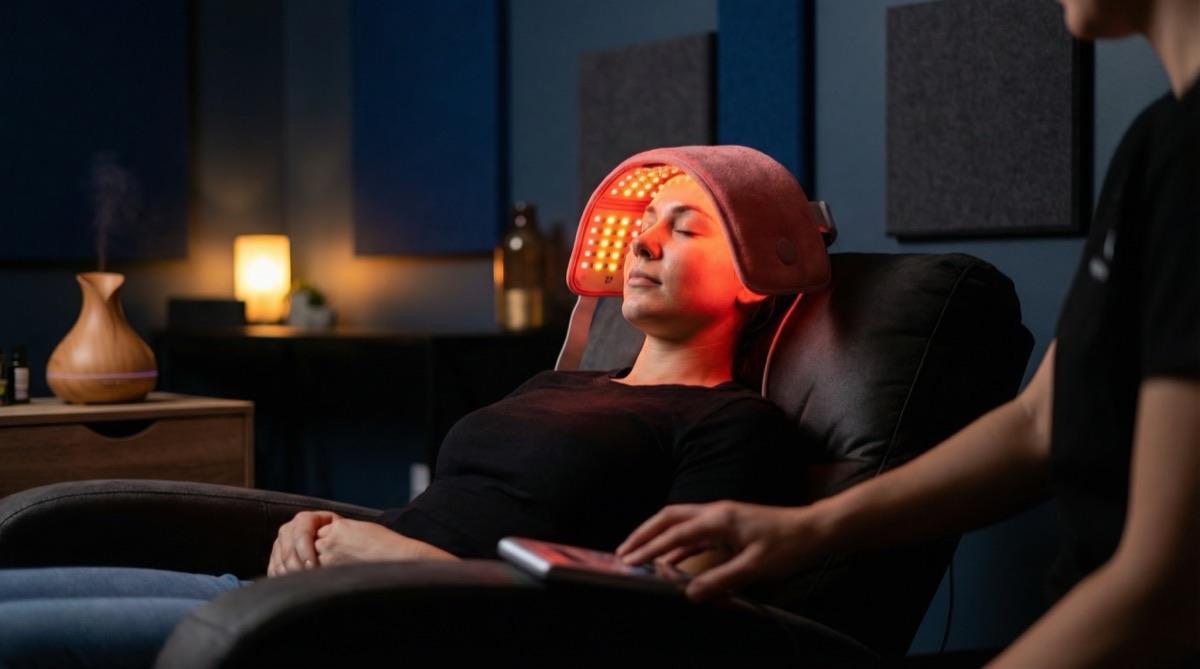
[In-Article Image Recommendation: A professional clinic scene showing a client reclining comfortably while a controlled red/NIR LED panel is positioned around the head and upper neck. Add a clean technical overlay showing “Red Light → Cellular Signaling” and “Near-Infrared → Deeper Tissue Interaction.” Avoid medical claims such as “cures migraine.”]
Advantages / Comparison: Why Professional PBM Equipment Matters
For clinics, one of the biggest advantages of professional PBM equipment is control.
A professional system can be designed around controlled wavelength output, adjustable intensity, defined treatment duration, ergonomic positioning, and repeatable treatment parameters. This allows an operator to establish a more consistent protocol instead of simply exposing a client to an unspecified amount of red light.
Non-Invasive Treatment Experience
Unlike ablative lasers, PBM is not designed to remove tissue. Properly applied PBM is generally described as a non-invasive, non-thermal or minimally warming approach. A 2025 evidence-based consensus concluded that PBM is a safe modality for adults when appropriately applied, while also emphasizing the importance of evidence-based clinical parameters.
This can make light-based sessions attractive to clients who prefer treatments with little or no downtime.
More Consistent Than Basic Home Devices
Consumer red-light products vary considerably in wavelength, irradiance, coverage area, optical design, and treatment instructions. Some provide limited information about actual energy delivery.
Professional equipment can provide greater control over these variables. For an operator, this means treatments can be documented and repeated more consistently.
The distinction is especially relevant when a clinic wants to build a structured treatment program rather than offer an occasional wellness session.
Integrating PBM With Professional Services
PBM can also complement existing professional services. A clinic might incorporate a light session into a relaxation program, post-treatment recovery routine, muscle-comfort protocol, or broader wellness service.
This expands the role of LED technology beyond conventional skincare.
At the same time, operators should avoid presenting an aesthetic or wellness PBM device as a medical headache treatment unless the device, intended use, claims, and local regulatory framework support that positioning.
Applications / Client Needs
1. Clients Seeking Non-Drug Options
Some clients are interested in non-pharmacological approaches for occasional discomfort or wellness support. PBM provides a drug-free technology platform that can be incorporated into a professionally supervised service.
The operator can focus on comfort, standardized light delivery, session consistency, and appropriate client screening rather than promising a guaranteed reduction in headache symptoms.
2. Relaxation and Neck-Related Comfort
For clients whose discomfort is associated with neck or upper-shoulder tension, a broader protocol may combine PBM with relaxation-focused services or other professionally appropriate techniques.
Some clinical practices already use PBM as part of approaches addressing musculoskeletal and neck-related pain, although the suitability of such applications depends on diagnosis and individual circumstances.
3. Premium Wellness and Recovery Programs
PBM can also become part of a premium wellness menu. A professional clinic may create structured sessions combining controlled red/NIR light exposure with relaxation, recovery, or aesthetic services.
This is particularly relevant for beauty-equipment manufacturers because the same professional platform can potentially support multiple service categories instead of being restricted to one cosmetic application.
4. Personalized Treatment Programs
Professional PBM is moving toward more individualized treatment design.
Instead of assuming that one wavelength and one exposure time are suitable for everyone, operators can consider the intended treatment area, device specifications, client sensitivity, session frequency, and treatment objectives.
This is also where professional equipment has a commercial advantage: adjustable parameters and modular designs give clinics greater flexibility when developing different service protocols.
Safety and Professional Considerations
Headache should never automatically be treated as a cosmetic or wellness issue.
Sudden severe headache, headache following significant head trauma, new neurological symptoms, confusion, fainting, seizures, fever with neck stiffness, or other concerning symptoms require appropriate medical assessment rather than a light-based session.
For routine wellness applications, operators should follow the equipment manufacturer's instructions and applicable local regulations. Eye protection, photosensitivity considerations, medications, existing medical conditions, and other contraindications should be reviewed according to the intended use of the device.
Most importantly, professional marketing should distinguish between “supports pain management” and “treats or cures migraine.” The former may accurately describe a complementary technology when supported by the device's intended use; the latter requires much stronger clinical and regulatory support.
Current research supports continued investigation of PBM, but headache-specific evidence remains less mature than evidence for several other PBM applications. The 2022 systematic review of primary headache trials considered the available evidence insufficient to establish PBM as a definitive headache treatment, while newer 2026 reviews continue to call for standardized, well-controlled clinical trials.
Conclusion
Photobiomodulation represents an important development in the evolution of non-invasive light-based technology. By using controlled red and near-infrared wavelengths, professional PBM systems can interact with biological tissues through cellular and mitochondrial signaling rather than relying on aggressive thermal or ablative effects.
For headache-related applications, the most responsible opportunity is not to position PBM as a universal cure. Instead, it can be presented as a complementary, non-invasive technology for professional pain-management and wellness protocols, subject to appropriate screening, device specifications, and regulatory requirements.
The science is particularly interesting because PBM may influence several interconnected processes, including mitochondrial energy production, oxidative signaling, nitric oxide pathways, inflammation, and neural homeostasis. At the same time, clinical evidence for headache and migraine remains developing, and treatment parameters are not yet standardized across studies.
For beauty clinics, aesthetic centers, and professional equipment manufacturers, this creates a broader opportunity. The next generation of LED and PBM platforms does not have to be limited to skincare. With appropriate technology design, controlled wavelengths, professional operating protocols, and responsible positioning, light-based equipment can become part of a wider ecosystem covering skin health, recovery, relaxation, and complementary pain-management services.
The future of professional light therapy is not simply brighter light—it is more precise light, better-controlled delivery, and more evidence-informed applications
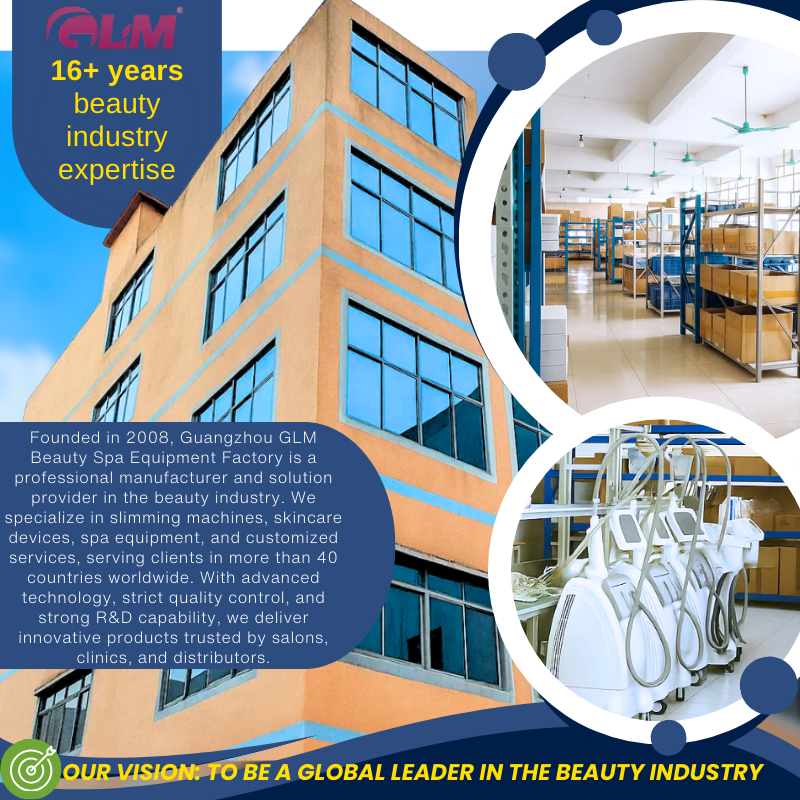
Founded in 2008, Guangzhou GLM Beauty Spa Equipment Factory specializes in research, development, manufacture and selling of beauty and slimming machines. Our production base is located in Guangzhou City, Guangdong Province, China. Since our foundation, we have introduced advanced technologies and equipment, to assure high quality and high performance of our products. With professional marketing guide and excellent after-sales service, our products have been exported to over 20 countries and regions, including Southeast Asia, the Middle East, Europe and the United States, won worldwide praises and gained a good reputation