Introduction
Non-surgical aesthetic treatments are no longer optional add-ons in advanced clinics—they are core revenue drivers. Clients want lifting, tightening, and rejuvenation results, but they are increasingly resistant to surgical procedures, long recovery times, and visible trauma.
Plasma-based treatments have gained attention in professional aesthetic clinics because they offer controlled tissue stimulation and tightening without cutting the skin.
But what exactly is “plasma” in aesthetic technology?
And how can it tighten skin without surgery?
Let’s break it down clearly and practically.
Background / The Clinical Problem
Most visible aging concerns share structural causes:
-
Collagen degradation
-
Elastin loss
-
Reduced skin elasticity
-
Mild to moderate laxity
-
Fine lines and surface irregularities
Surgical lifting physically removes excess skin and tightens tissue. It works—but involves anesthesia, downtime, cost, and risk.
Modern aesthetic clients often prefer:
-
No incisions
-
Minimal downtime
-
Gradual, natural-looking results
-
Lower risk profiles
Clinics therefore need technologies that stimulate the body’s own repair mechanisms rather than physically removing tissue.
This is where plasma energy enters the conversation.
What Is Plasma in Aesthetic Technology?
In medical aesthetics, plasma refers to ionized gas created when electrical energy interacts with the air between a device tip and the skin.
It is not injectable plasma (like PRP).
It is not laser energy.
It is not radiofrequency.
Plasma energy is generated when a high-voltage discharge ionizes atmospheric gases, creating a small, controlled arc of energy that interacts with the skin surface.
This micro-arc creates:
-
Controlled superficial thermal effects
-
Micro-injury zones
-
Stimulation of tissue contraction
-
Activation of fibroblast activity
The energy is precise and localized.
Mechanism: How Plasma Tightens Skin Without Surgery
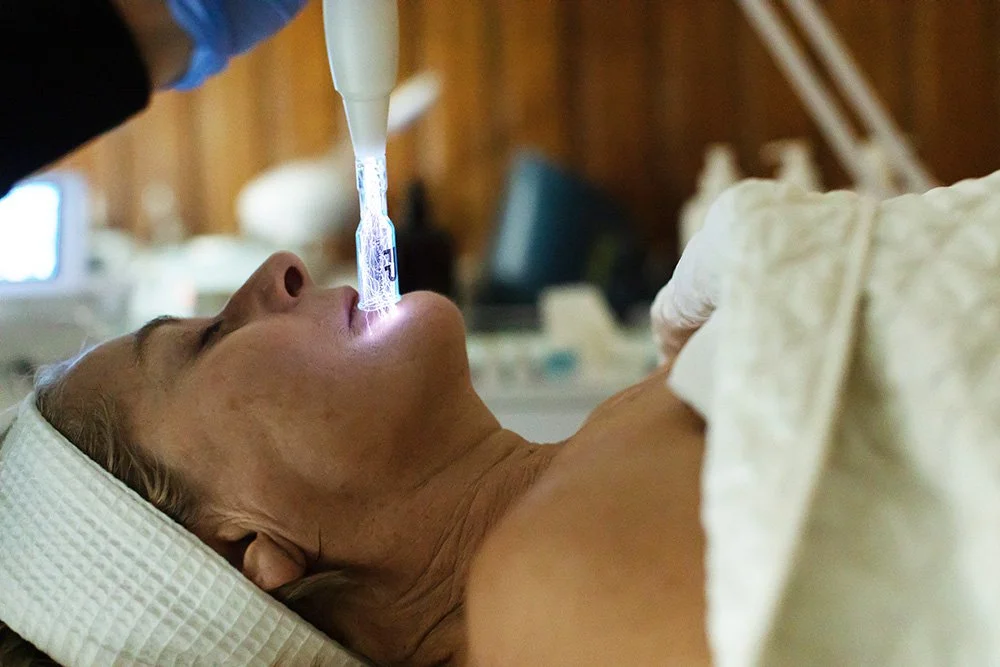
Plasma-based treatments work through three primary mechanisms:
1. Controlled Surface Micro-Ablation
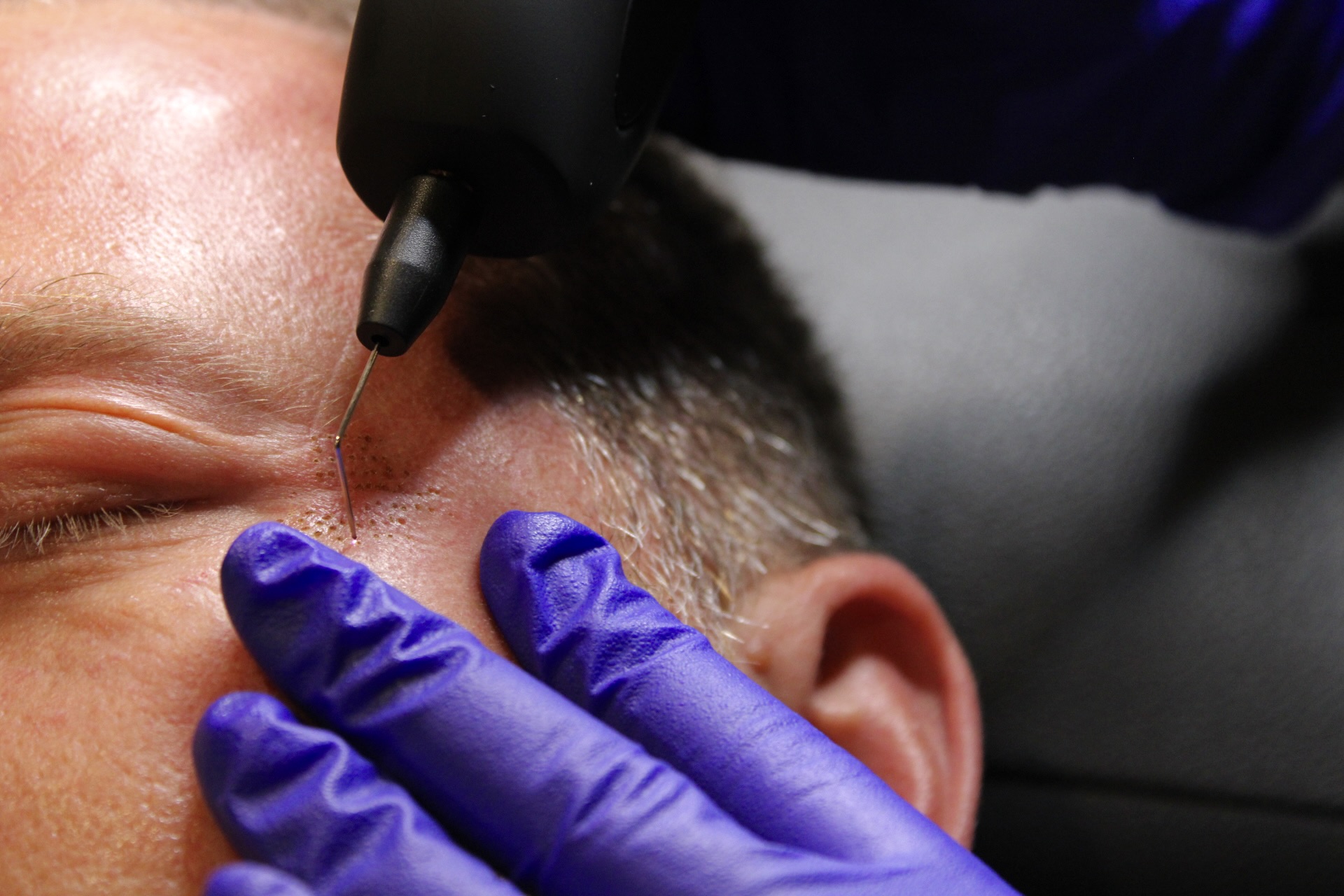
The plasma arc creates tiny, controlled thermal dots on the epidermis. These micro-injuries trigger:
-
Immediate tissue contraction
-
Controlled inflammatory response
-
Stimulation of wound healing cascade
This contraction can produce a visible tightening effect.
2. Dermal Fibroblast Activation
Below the surface, heat diffusion stimulates fibroblasts to:
-
Increase collagen production
-
Promote elastin remodeling
-
Improve dermal density
This leads to progressive skin firmness over weeks following treatment.
3. Skin Shrinkage Through Thermal Coagulation
Plasma energy induces localized thermal coagulation, which causes:
-
Tissue contraction
-
Gradual tightening
-
Reduced appearance of fine lines
Unlike surgical excision, this is a biological tightening process, not mechanical removal.
Why Advanced Clinics Use Plasma-Based Devices
1. Non-Surgical Blepharoplasty Alternative
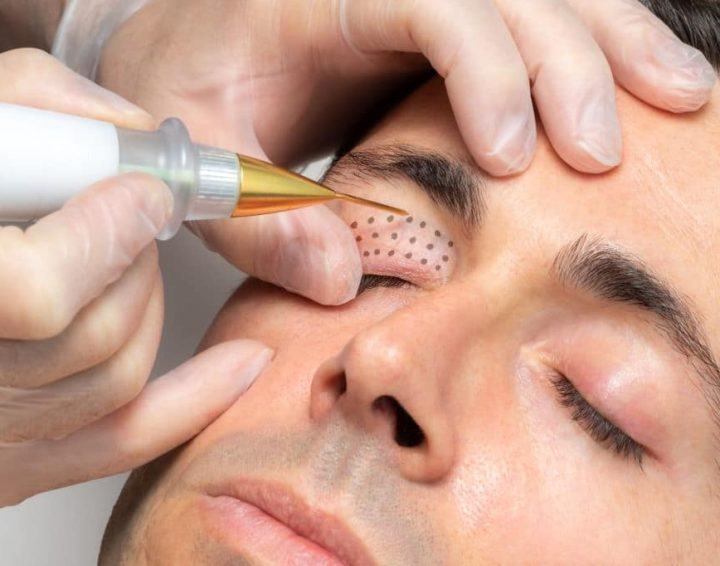
Plasma devices are frequently used around:
-
Upper eyelids
-
Lower eyelids
-
Crow’s feet
Mild eyelid laxity can be improved without incisions, making it attractive for patients not ready for surgical blepharoplasty.
2. Precision in Small Areas
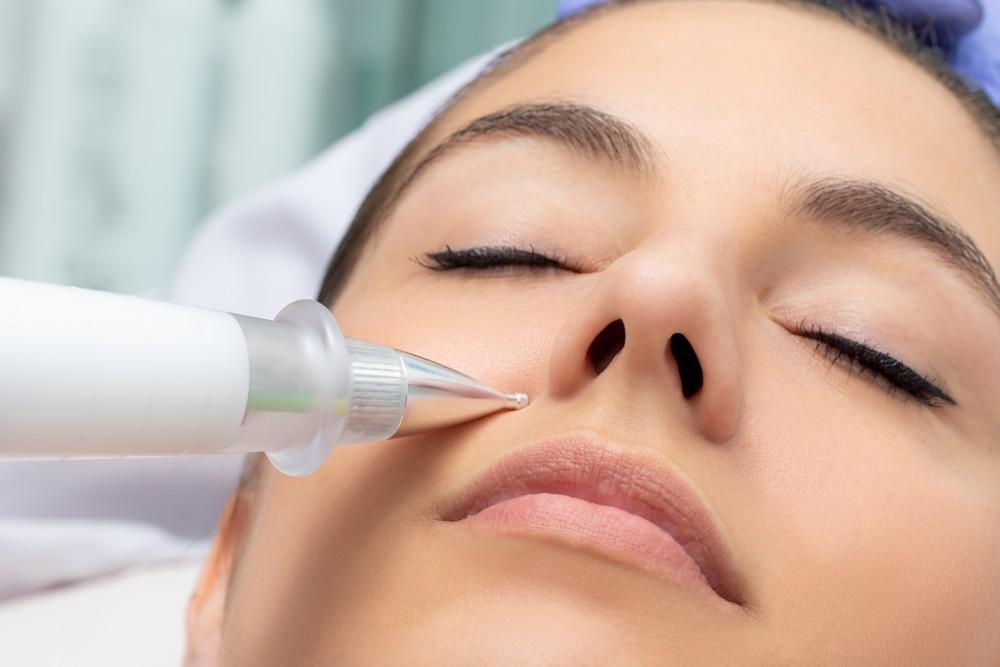
Plasma pens allow precise spot treatment.
They are particularly effective for:
-
Fine perioral wrinkles
-
Upper lip lines
-
Small laxity zones
-
Skin irregularities
Clinics value this level of control.
3. Gradual Natural Results
Plasma-based tightening does not produce sudden, artificial changes. Instead, results develop progressively as collagen remodeling occurs.
Clients who prefer subtle enhancement rather than dramatic transformation often choose this route.
4. Strong Profit-to-Cost Ratio for Clinics
From a business standpoint, plasma systems:
-
Require relatively low consumable costs
-
Offer repeat-session potential
-
Target high-demand facial zones
For clinics building a non-surgical lifting portfolio, plasma becomes a strategic complement to RF and HIFU systems.
Plasma vs Other Non-Surgical Technologies
Plasma vs Radiofrequency
-
RF delivers bulk dermal heating
-
Plasma focuses on surface micro-thermal impact
RF is often better for deeper tightening; plasma excels in precision surface contraction.
Plasma vs HIFU
-
HIFU targets SMAS and deep dermis
-
Plasma primarily affects superficial and mid-dermal layers
They are not direct competitors; they address different tissue depths.
Plasma vs Laser Resurfacing
Laser systems depend on chromophores like water or pigment.
Plasma relies on ionized gas energy interaction.
Plasma can offer controlled superficial tightening without full-field resurfacing.
Ideal Indications
Plasma-based treatments are commonly used for:
-
Mild eyelid laxity
-
Fine lines
-
Crow’s feet
-
Perioral wrinkles
-
Localized skin tightening
-
Skin tag and minor lesion treatment (depending on regulatory approval)
They are generally not ideal for:
-
Severe sagging
-
Heavy jowls
-
Advanced volume loss
Advanced clinics assess candidacy carefully to maintain realistic expectations.
Recovery and Downtime
After plasma treatment, patients typically experience:
-
Small carbon crust dots
-
Mild swelling
-
Temporary redness
Downtime usually ranges from several days to about one week, depending on treatment intensity.
Compared to surgical lifting, recovery is significantly shorter.
However, it is not a “zero-downtime” procedure—this is important for proper consultation.
Safety and Professional Standards
Plasma treatments must be performed by trained professionals because:
-
Energy intensity must be controlled
-
Overtreatment can cause scarring
-
Proper spacing between dots is essential
-
Post-care guidance affects healing outcomes
High-quality professional plasma systems offer:
-
Stable voltage output
-
Adjustable intensity
-
Consistent arc generation
Clinic-level devices differ significantly from low-cost consumer pens in energy stability and safety.
Business Perspective for Advanced Clinics
Plasma devices fit well into treatment menus positioned between:
-
RF microneedling
-
HIFU lifting
-
Laser resurfacing
They allow clinics to offer:
-
Non-surgical eyelid tightening
-
Precision wrinkle correction
-
Targeted skin contraction
When integrated correctly, plasma expands the clinic’s ability to customize treatment plans rather than replacing existing technologies.
For clinics upgrading toward advanced non-surgical solutions, plasma becomes a complementary tool—not a standalone miracle device.
Conclusion
Plasma-based treatments offer controlled, non-surgical skin tightening by using ionized gas energy to stimulate surface contraction and dermal remodeling.
They do not replace surgical lifting, but they provide a viable option for mild to moderate laxity and fine-line correction with manageable downtime.
For advanced aesthetic clinics, plasma technology fills a valuable niche: precision tightening without incisions, combined with gradual collagen stimulation.
In a market increasingly focused on non-invasive enhancement, plasma-based systems represent a strategic addition to a professional aesthetic portfolio.
Founded in 2008, Guangzhou GLM Beauty Spa Equipment Factory specializes in research, development, manufacture and selling of beauty and slimming machines. Our production base is located in Guangzhou City, Guangdong Province, China. Since our foundation, we have introduced advanced technologies and equipment, to assure high quality and high performance of our products. With professional marketing guide and excellent after-sales service, our products have been exported to over 20 countries and regions, including Southeast Asia, the Middle East, Europe and the United States, won worldwide praises and gained a good reputation.