
1. Introduction
As the professional beauty and wellness industry continues to evolve in 2026, clients are increasingly interested in treatments that combine relaxation, body wellness, recovery, and non-invasive care. Beyond traditional massage and skincare services, beauty salons, medical spas, and wellness centers are expanding their treatment menus with advanced technologies designed to support circulation, fluid movement, and overall body comfort.
One technology attracting growing attention is Pressotherapy, also known as pneumatic compression therapy. By using controlled air pressure and specially designed compression garments, pressotherapy devices deliver rhythmic compression to different areas of the body. This technology is commonly used in professional wellness settings to complement lymphatic drainage services, promote a feeling of lighter legs, and provide relaxing post-exercise recovery experiences.
Modern pressotherapy equipment has developed significantly beyond basic air compression. Advanced systems may feature multiple air chambers, sequential inflation programs, adjustable pressure levels, and customized treatment modes. These functions allow professional operators to tailor sessions according to individual comfort levels and treatment objectives.
For beauty businesses, investing in professional pressotherapy equipment can create opportunities to offer more comprehensive body wellness services. Understanding how the technology works, what benefits it may support, and how to select the right equipment is essential for delivering consistent and professional treatments.
2. Background: Why Is Pressotherapy Becoming Popular?
Growing Demand for Non-Invasive Wellness Treatments
Today's beauty and wellness consumers are looking beyond traditional appearance-focused treatments. Many clients want services that help them relax, reduce the sensation of heaviness in their legs, and support their general wellness routines without invasive procedures.
Long periods of sitting, standing, traveling, or engaging in intensive physical activity can contribute to temporary discomfort, fatigue, and a feeling of heaviness in the lower limbs. For some clients, these concerns create demand for professional body treatments that incorporate controlled compression and relaxation.
Pressotherapy offers a convenient way to introduce mechanical compression into a wellness session. Instead of relying entirely on manual massage techniques, an automated system delivers repeated pressure through air-filled chambers. This makes the treatment relatively standardized and allows operators to provide consistent sessions.
The Importance of Lymphatic and Circulatory Wellness
The lymphatic system plays an important role in maintaining fluid balance and supporting immune function. Unlike the cardiovascular system, which has the heart as its central pumping organ, lymphatic fluid movement depends on several mechanisms, including muscle contractions, breathing, and the movement of surrounding tissues.
When fluid movement becomes less efficient, some individuals may experience swelling or a sensation of heaviness. In appropriate clinical settings, compression therapy can be used as part of a broader approach to managing certain types of swelling.
However, it is important to distinguish professional wellness pressotherapy from medical treatment for diagnosed lymphedema or vascular conditions. Clients with persistent or unexplained swelling should receive medical assessment rather than relying on cosmetic compression treatments.
Why Professional Treatment Equipment Matters
For beauty salons and wellness centers, treatment consistency is an important part of service quality.
Manual massage depends heavily on operator technique, physical effort, and treatment duration. Professional pressotherapy equipment provides programmable pressure sequences and repeatable treatment cycles, helping businesses establish standardized service protocols.
This combination of technology, convenience, and treatment customization explains why pressotherapy is increasingly considered a valuable addition to professional body wellness equipment.
3. Technology and Mechanism: How Does Pressotherapy Work?
3.1 Intermittent Pneumatic Compression
The basic principle behind pressotherapy is intermittent pneumatic compression (IPC).
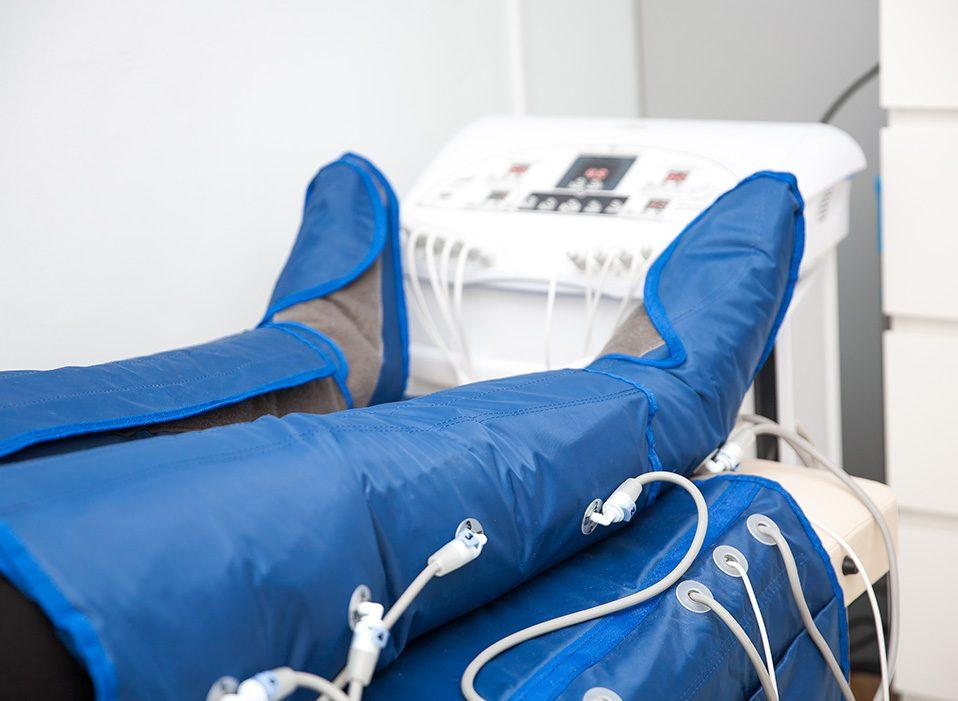
A professional device typically consists of an air pump, a control unit, connecting air tubes, and specially designed compression garments. Depending on the equipment configuration, these garments may cover the legs, waist, abdomen, arms, or other treatment areas.
During a session, the air pump delivers air into individual chambers within the garment. These chambers inflate and deflate according to a programmed sequence, applying controlled external pressure to the surrounding tissues.
Unlike static compression garments that maintain relatively constant pressure, pneumatic systems can create dynamic compression cycles. This repeated mechanical action is designed to support fluid movement and provide a rhythmic massage-like sensation.
3.2 Sequential Compression Technology
One of the most important features of advanced pressotherapy equipment is sequential compression.
In a typical leg treatment, multiple air chambers are arranged along the limb. The device inflates these chambers in a controlled sequence, generally progressing from the distal areas toward the proximal areas.
For example, a leg sleeve may contain separate chambers around the foot, ankle, calf, and thigh.
The system can inflate and release each chamber according to a programmed pattern. This creates a wave-like compression effect rather than applying uniform pressure across the entire limb at once.
Sequential compression is particularly relevant to professional treatments because it provides greater control over the treatment pattern and allows operators to select programs according to equipment specifications and client needs.
3.3 Multi-Chamber Airbag Design
Modern pressotherapy machines often use multi-chamber compression garments to improve treatment flexibility.
Depending on the model, equipment may include:
-
Multi-chamber leg sleeves for full-leg compression.
-
Waist and abdominal garments for additional body-area coverage.
-
Arm sleeves for upper-limb applications.
-
Independently controlled air chambers.
-
Adjustable pressure and treatment duration.
-
Multiple automatic treatment programs.
The number of air chambers, garment design, and pressure-control system can influence how compression is distributed throughout a session.
For professional buyers, it is important to evaluate not only the number of chambers but also the actual inflation sequence, pressure stability, garment fit, and control flexibility.
3.4 Adjustable Pressure and Intelligent Programs
Not every client requires the same compression intensity. Advanced equipment may offer adjustable pressure settings and multiple treatment programs to accommodate different comfort preferences and service objectives.
Some systems allow operators to adjust:
-
Compression intensity.
-
Treatment duration.
-
Inflation and deflation intervals.
-
Sequential or alternative compression modes.
-
Selected treatment areas.
These functions make professional equipment more adaptable to different wellness services.
Nevertheless, stronger pressure does not automatically mean better results. Appropriate pressure settings should always follow the equipment manufacturer's instructions, client screening requirements, and applicable professional protocols.
4. Advantages and Comparison: Why Choose Professional Pressotherapy Equipment?
4.1 Supports Lymphatic Drainage and Fluid Management
One of the best-known applications of pneumatic compression is supporting lymphatic and fluid movement.
Through repeated external pressure, pressotherapy equipment provides a mechanical stimulus to the tissues. In appropriate circumstances, this can complement other approaches to fluid management and lymphatic care.
Clinical research on intermittent pneumatic compression has reported benefits in selected patients with lymphedema, particularly when the technology is used as part of a broader management program. However, clinical protocols and cosmetic wellness treatments are not interchangeable.
For professional beauty businesses, pressotherapy is best positioned as a supportive body wellness service rather than a replacement for medical lymphatic treatment.
4.2 Promotes Relaxation and a Feeling of Lighter Legs
Many clients experience leg fatigue after long working hours, extended travel, or physically demanding activities.
The rhythmic inflation and deflation of compression garments can provide a relaxing, massage-like experience. Clients may find this particularly appealing as part of a Spa wellness package or post-activity recovery routine.
Although individual experiences vary, the combination of controlled pressure and a comfortable treatment environment can help create a distinctive service experience.
4.3 Complements Muscle Recovery Programs
Muscle recovery is another area where pressotherapy has attracted attention.
After exercise, individuals may experience temporary muscle soreness, fatigue, and discomfort. Pneumatic compression is sometimes incorporated into recovery routines to provide external compression and relaxation.
Research into recovery outcomes remains variable, and pressotherapy should not be presented as a guaranteed method of accelerating muscle repair or improving athletic performance.
For fitness-oriented wellness centers, however, it can complement stretching, hydration, rest, and other recovery services.
4.4 Automated Treatment and Consistent Performance
Compared with purely manual massage, professional pressotherapy equipment offers several operational advantages:
| Feature | Manual Massage | Professional Pressotherapy |
|---|---|---|
| Pressure delivery | Operator-dependent | Mechanically controlled |
| Treatment sequence | Depends on technique | Programmable |
| Treatment consistency | Varies by operator | More standardized |
| Physical workload | Requires continuous manual effort | Automated compression |
| Customization | Based on operator skill | Adjustable programs and settings |
| Service integration | Manual treatment sessions | Can complement Spa and wellness packages |
Professional equipment does not eliminate the value of skilled therapists. Instead, it provides an additional technology-based service that can be integrated into a broader treatment program.
4.5 More Flexible Than Basic Compression Products
Ordinary compression garments are designed primarily to provide sustained external pressure. They do not necessarily offer the same programmable inflation sequences as an electronic pressotherapy machine.
Professional pneumatic compression systems provide greater control over treatment cycles, pressure settings, and body-area coverage.
For businesses serving different client groups, this flexibility can support more structured service packages and a wider range of wellness applications.
5. Applications and Client Needs: Where Can Pressotherapy Be Used?
5.1 Beauty Salons and Professional Body Care Centers
Beauty salons can integrate pressotherapy into body wellness programs alongside body massage, body contouring services, and other non-invasive treatments.
For example, a salon may create a comprehensive body care package combining manual massage, pneumatic compression, and relaxation services.
This approach allows businesses to expand beyond individual treatments and offer a more complete client experience.
5.2 Medical Spas and Lymphatic Wellness Services
Medical spas may incorporate pneumatic compression equipment into professionally supervised wellness or supportive care programs, depending on local regulations, device classification, and practitioner qualifications.
For clients receiving appropriate lymphatic care, compression equipment may complement other techniques under qualified clinical supervision.
Businesses should clearly distinguish cosmetic wellness services from the medical management of lymphedema, venous disorders, or post-surgical complications.
5.3 Fitness Centers and Sports Recovery Studios
Fitness centers and sports recovery studios are another potential market for pressotherapy equipment.
After training sessions, clients may want additional relaxation services as part of their recovery routine. Pressotherapy can be offered alongside stretching areas, massage services, and other wellness facilities.
Its automated operation also makes it relatively easy to integrate into structured recovery packages, provided that client screening and equipment instructions are followed.
5.4 Spa Hotels and Wellness Resorts
In Spa hotels and wellness resorts, treatment experience and service variety are important factors in customer satisfaction.
Pressotherapy offers a technology-based addition to traditional relaxation services. Its comfortable, non-invasive treatment format may appeal to guests looking for a dedicated wellness session during their stay.
For operators, the ability to offer programmable sessions can help create standardized service packages across different treatment rooms.
5.5 Home Use vs. Professional-Grade Equipment
Home-use compression products and professional pressotherapy machines serve different markets.
Home devices are generally designed around convenience, portability, and simplified operation. Professional equipment is more likely to emphasize treatment customization, garment configuration, control functions, durability, and repeated daily use in commercial environments.
| Comparison | Home-Use Devices | Professional Equipment |
|---|---|---|
| Main purpose | Personal wellness | Commercial wellness services |
| Operation | Simplified | More configurable |
| Treatment programs | Usually limited | May offer multiple modes |
| Garment options | Often basic | Model-dependent, potentially more extensive |
| Usage frequency | Individual use | Repeated commercial use |
| Service integration | Personal routines | Salon, Spa, and wellness packages |
For businesses, professional-grade equipment can offer greater operational flexibility and a more structured service experience. The right choice depends on the target market, treatment menu, budget, and expected usage frequency.
6. How to Choose the Right Pressotherapy Machine in 2026
Selecting professional pressotherapy equipment requires more than comparing prices or counting air chambers.
Beauty salons, clinics, and distributors should consider several important factors.
1. Compression System Design
Evaluate whether the equipment uses sequential compression, how many chambers are included, and whether the inflation pattern can be adjusted. A well-designed system should provide stable and controlled compression.
2. Pressure Adjustment
Adjustable pressure is important for accommodating different comfort levels. Buyers should check the available pressure range, adjustment increments, and control accuracy.
3. Treatment Programs
Multiple operating modes can help professional businesses design different service experiences. Check whether the device supports independent area selection, automatic sequences, and adjustable session duration.
4. Garment Quality and Fit
Compression garments should be comfortable, durable, and suitable for the intended treatment areas. Check material quality, stitching, air-tube connections, sizing options, and ease of cleaning.
5. Safety and Operating Controls
Professional equipment should include appropriate pressure-control mechanisms and clear operating instructions. Operators should be trained to identify unsuitable clients and respond to discomfort during treatment.
6. Manufacturer Support and OEM Services
For distributors and beauty equipment businesses, manufacturer reliability is also important. Consider product quality control, technical support, spare parts availability, warranty terms, certifications, and OEM/ODM customization options.
A reliable manufacturer should be able to provide detailed specifications, operation guidance, and after-sales support rather than simply offering a machine with attractive exterior design.
7. Safety Considerations and Professional Treatment Guidelines
Although pressotherapy is non-invasive, it is not suitable for everyone.
Clients should be screened before treatment, especially when there is a history of cardiovascular disease, vascular conditions, or unexplained swelling.
Potential contraindications or situations requiring medical clearance include:
-
Suspected or confirmed acute deep vein thrombosis.
-
Acute infection or cellulitis in the treatment area.
-
Severe or uncontrolled heart failure.
-
Significant arterial circulation disorders.
-
Pulmonary edema.
-
Certain active medical conditions or recent surgical complications.
This list is not exhaustive. Suitability depends on the client's medical history, device instructions, and professional assessment.
For commercial beauty and wellness settings, operators should:
-
Review client health information before treatment.
-
Select appropriate garment sizes.
-
Follow the manufacturer's recommended pressure settings.
-
Avoid excessive compression.
-
Monitor client comfort throughout the session.
-
Stop treatment if unexpected pain, numbness, breathing difficulties, or other concerning symptoms occur.
For diagnosed lymphedema or vascular disease, treatment should follow an appropriate medical care plan rather than a general salon protocol.
8. Conclusion: The Future of Professional Pressotherapy
In 2026, pressotherapy continues to represent an interesting intersection of beauty technology, body wellness, and recovery-oriented services.
By combining intermittent pneumatic compression, sequential airbag inflation, and adjustable treatment programs, modern pressotherapy equipment provides professional businesses with a practical way to expand their body wellness offerings.
Its applications range from Spa relaxation and body care services to selected clinical compression programs under qualified supervision. For beauty salons, medical spas, fitness recovery studios, and wellness resorts, the technology can complement existing services and create additional opportunities for client engagement.
As the industry places greater emphasis on personalized treatments and professional service quality, choosing equipment with reliable compression control, durable garments, flexible programs, and dependable manufacturer support becomes increasingly important.
Ultimately, successful pressotherapy services depend on more than advanced equipment. They require appropriate client assessment, trained operators, suitable treatment protocols, and realistic communication about expected outcomes.
For professional beauty equipment businesses, investing in well-designed pressotherapy technology is not simply about adding another machine. It is about expanding treatment possibilities and delivering a more comprehensive wellness experience
Founded in 2008, Guangzhou GLM Beauty Spa Equipment Factory specializes in research, development, manufacture and selling of beauty and slimming machines. Our production base is located in Guangzhou City, Guangdong Province, China. Since our foundation, we have introduced advanced technologies and equipment, to assure high quality and high performance of our products. With professional marketing guide and excellent after-sales service, our products have been exported to over 20 countries and regions, including Southeast Asia, the Middle East, Europe and the United States, won worldwide praises and gained a good reputation
