Introduction
Foot and ankle discomfort can have a surprisingly broad impact on everyday life. Persistent heel pain, plantar fascia problems, tendon irritation, sports-related injuries, joint discomfort, and other lower-extremity conditions can make walking, standing, exercising, and working more difficult.
For podiatry clinics, the challenge is not simply identifying the source of discomfort. Modern patients increasingly expect treatment options that are comfortable, efficient, non-invasive, and compatible with an active lifestyle. This has encouraged professional clinics to explore technologies that can complement established approaches rather than relying exclusively on medication, injections, or surgery.
Cold laser therapy, also known as low-level laser therapy (LLLT) or photobiomodulation, has emerged as one of the technologies attracting growing attention in professional foot-care settings. Unlike surgical lasers designed to cut or ablate tissue, therapeutic low-level laser systems deliver controlled light energy without intentionally heating or damaging the treatment surface. The FDA recognizes a category of powered light-based, non-thermal laser instruments for adjunctive use in pain therapy.
The significance of cold laser therapy is therefore not simply that it uses a laser. Its value lies in how precisely professional equipment can deliver a controlled energy dose to a selected treatment area as part of a structured clinical protocol.
For podiatrists, rehabilitation professionals, and manufacturers of professional aesthetic and wellness equipment, this represents an important shift: light-based technology is becoming increasingly relevant to treatment environments where patient comfort, operational efficiency, and controlled energy delivery matter.
Background: Why Podiatry Needs More Non-Invasive Options
Traditional podiatric care remains essential. Depending on the condition, practitioners may recommend stretching, physical therapy, footwear modifications, orthotics, activity adjustments, medication, injections, or other interventions.
However, many foot and ankle problems develop gradually and may require a combination of approaches rather than a single treatment.
Plantar fasciitis is a useful example. It is one of the most common causes of heel pain, and patients may experience significant discomfort during weight-bearing activities. Because the condition can be associated with mechanical overload, altered biomechanics, prolonged standing, reduced ankle mobility, and other factors, treatment often requires a broader management strategy rather than simply addressing symptoms.
This is where adjunctive technologies can become valuable.
A systematic review and meta-analysis published in Musculoskeletal Science and Practice evaluated 14 studies involving 817 patients with plantar fasciitis. Compared with placebo, low-level laser therapy was associated with improved short-term pain outcomes, while the researchers did not find a significant short-term disability advantage. The review also concluded that LLLT could be considered as one component of care, rather than necessarily replacing other therapies.
Another systematic review published in BMJ Open examined randomized controlled trials involving lower-extremity tendinopathy and plantar fasciitis. It reported reductions in pain and disability in the short and medium term, particularly when recommended laser doses were used, while also noting uncertainty around effect size and a lack of long-term data.
These findings help explain why professional clinics are interested in laser-based treatment. The technology does not need to be positioned as a replacement for clinical assessment or rehabilitation. Instead, it can serve as an additional tool within a broader treatment pathway.
Technology and Mechanism: How Does Cold Laser Therapy Work?
Cold laser therapy is based on the concept of photobiomodulation. In simple terms, specific wavelengths of light are delivered to tissue and absorbed by biological structures within cells.
The objective is not to burn, cut, or intentionally thermally damage tissue. Instead, controlled light energy is used to influence cellular activity.
This distinction separates therapeutic cold laser systems from surgical or ablative laser equipment.
At the cellular level, photobiomodulation has been associated with changes in cellular energy metabolism and signaling processes. Research has proposed mechanisms involving mitochondrial activity, ATP production, inflammatory signaling, circulation, and tissue-repair processes. However, the exact biological mechanisms are complex and are still being investigated.
For practitioners, the more practical question is how the technology can be integrated into treatment.
A professional laser therapy system typically gives the operator control over parameters such as treatment mode, energy delivery, treatment duration, and application area. Depending on the device architecture and intended indication, systems may use different wavelengths, power levels, delivery modes, or applicators.
This level of control is particularly important in professional environments.
Rather than simply placing a consumer light device against the skin and hoping for a result, a trained operator can assess the treatment area, identify the relevant anatomical structures, select an appropriate protocol, and document treatment parameters.
That is one of the major differences between professional equipment and basic home-use light devices.
From Light Energy to Clinical Workflow
The effectiveness of a professional device is not determined by the laser source alone.
A well-designed clinical system needs to combine energy delivery with usability, treatment consistency, operator control, and patient experience.
For example, a professional laser platform may include a touchscreen interface, preset protocols, adjustable treatment parameters, ergonomic handpieces, treatment timers, and safety features. These elements may appear secondary compared with wavelength and power specifications, but they can have a significant effect on daily clinical workflow.
Consider a busy podiatry clinic.
A practitioner may see multiple patients with different conditions throughout the day. One patient may present with heel discomfort, another with an ankle-related soft-tissue problem, while another may be undergoing rehabilitation following an injury.
A flexible professional system allows the operator to adapt the treatment approach to the individual rather than relying on a single fixed setting.
This also creates opportunities for better treatment documentation. When treatment parameters can be controlled and recorded consistently, practitioners can more easily evaluate patient responses over a series of sessions.
For equipment manufacturers, this is an important product-development principle: professional value is created not only by the energy source, but by the entire treatment system surrounding it.
Advantages of Cold Laser Therapy in Professional Settings
1. Non-Invasive Treatment Experience
One of the strongest advantages of cold laser therapy is its non-invasive nature.
Unlike injections or surgical procedures, therapeutic laser treatment does not require needles or tissue incisions. Many patients experience little or no discomfort during treatment, although the sensation can vary depending on the system and treatment parameters.
This can make laser therapy attractive to patients who are looking for a gentler treatment experience.
Professional podiatry clinics can also integrate non-invasive technology into broader treatment plans without significantly changing the clinical environment.
2. Targeted Energy Delivery
Feet contain a complex combination of bones, joints, tendons, ligaments, fascia, muscles, and nerves.
A professional laser system can direct light energy toward a defined anatomical region instead of delivering an undifferentiated treatment across the entire body.
This targeted approach is particularly relevant for professional operators who need to treat specific areas according to clinical assessment.
3. Efficient Treatment Workflow
Modern clinics increasingly pay attention to treatment efficiency.
A technology that can be incorporated into relatively short sessions may help clinics organize treatment schedules and add technology-based services without requiring lengthy procedures.
Some podiatry clinics report sessions lasting only several minutes, although actual treatment time depends on the device, protocol, indication, and practitioner.
This makes treatment-room workflow an important consideration when selecting professional equipment.
4. Can Complement Existing Care
Cold laser therapy does not have to compete with every other treatment.
In many cases, the more realistic clinical role is as an adjunct.
For example, a practitioner may combine laser therapy with exercise-based rehabilitation, stretching, biomechanical assessment, footwear modification, or other appropriate interventions.
The evidence is particularly interesting here. The BMJ Open review found that recommended-dose LLLT used as an add-on to exercise therapy was associated with improved pain outcomes compared with exercise therapy alone in the analyzed trials.
This supports a broader concept of modern clinical technology: the best device does not necessarily replace the practitioner’s existing expertise. It can extend what the practitioner is able to offer.
5. Stronger Patient Experience
Technology can also influence how patients perceive a clinic.
A modern treatment room equipped with professional laser systems, digital controls, ergonomic applicators, and clear treatment protocols can communicate a sense of specialization and technological competence.
For clinics operating in competitive markets, this can contribute to differentiation.
The objective should not be to use technology merely as decoration. Instead, the technology should have a clear role in the patient journey, from assessment and treatment planning to treatment delivery and follow-up.
Cold Laser Therapy vs. Basic Home Light Devices
The growing popularity of red-light and light-based wellness products has created a large consumer market.
However, professional laser therapy should not simply be viewed as a larger version of a home LED device.
There are important differences.
Home-use products are often designed around convenience and general wellness applications. Professional therapeutic systems, by contrast, are designed around controlled energy delivery and operator-directed treatment.
Professional systems may offer more precise parameters, dedicated applicators, treatment presets, monitoring functions, and clinical workflow features.
More importantly, professional treatment involves a trained person making decisions about patient suitability and treatment parameters.
This distinction matters when developing or marketing professional equipment.
Manufacturers should avoid vague claims such as “works for everything” or “guaranteed pain relief.” Instead, professional positioning should emphasize controlled technology, protocol flexibility, operator training, device specifications, and appropriate clinical use.
The evidence itself also supports a measured approach. While systematic reviews suggest that LLLT can improve pain outcomes for certain lower-extremity conditions, results vary by condition, dosage, protocol, comparator, and outcome measure.
In other words, better technology does not eliminate the need for professional judgment.
Applications and Client Needs
Cold laser therapy can be considered in professional environments where practitioners manage selected musculoskeletal and soft-tissue concerns.
Plantar Fasciitis and Heel Discomfort
Plantar fascia-related pain is one of the most frequently discussed applications.
Research has reported short-term pain improvements with LLLT, although outcomes are not identical across studies and laser therapy should be viewed as one component of comprehensive care.
For clinics, this makes plantar fascia protocols a potential application for introducing light-based therapy into an established treatment menu.
Tendon and Soft-Tissue Conditions
Lower-extremity tendinopathy is another area in which LLLT has been investigated.
The BMJ Open review included trials involving Achilles and patellar tendinopathy as well as plantar fasciitis and found overall reductions in pain and disability over short and medium follow-up periods.
This broadens the potential role of professional laser equipment beyond a single foot condition.
Sports and Active-Lifestyle Clients
Runners, athletes, fitness enthusiasts, and physically active clients can place considerable mechanical demands on the lower extremities.
For these clients, treatment options that are non-invasive and can be incorporated into a broader rehabilitation plan may be particularly attractive.
Professional clinics can therefore position laser therapy as one component of a technology-supported recovery pathway, provided that the treatment is appropriate for the individual case.
Post-Treatment and Rehabilitation Support
Some professional clinics also incorporate laser therapy into rehabilitation programs following injuries or procedures.
The important principle is that laser therapy should be integrated according to the practitioner’s assessment rather than automatically applied to every patient.
This creates a valuable opportunity for professional equipment manufacturers: instead of selling a device as a standalone solution, equipment can be positioned as part of a complete clinical workflow.
What Should Clinics Look for in a Professional Cold Laser System?
When evaluating professional equipment, clinics should look beyond headline specifications.
Wavelength selection matters because different wavelengths interact with tissue differently and may be intended for different applications.
Power and energy control are also important because treatment outcomes depend not only on the presence of light but on how energy is delivered.
Treatment modes and protocols can improve consistency and help operators manage different clinical scenarios.
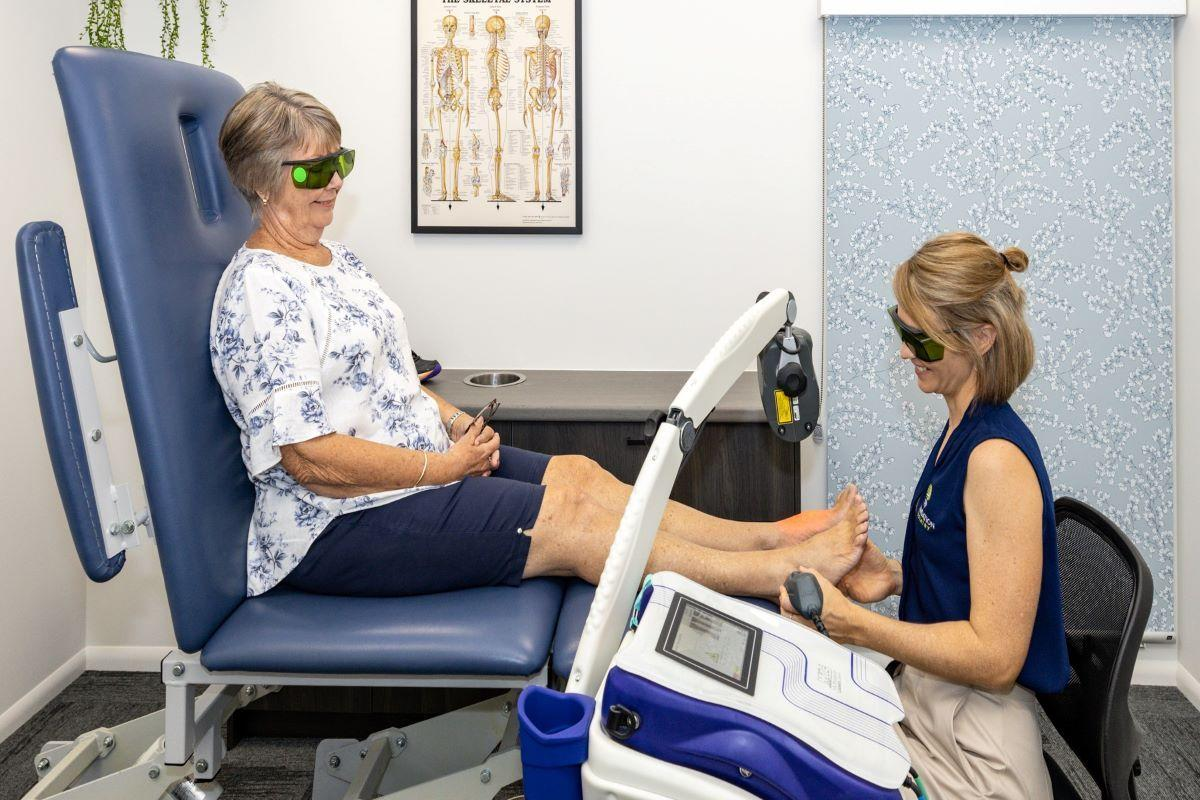
Handpiece design should support comfortable and precise positioning, particularly when treating curved or anatomically complex areas such as the heel, arch, ankle, and forefoot.
User interface should be intuitive enough to minimize unnecessary setup time while still providing meaningful control.
Safety systems are essential for professional laser equipment. Operators should follow the manufacturer's instructions, applicable regulations, protective eyewear requirements, and appropriate laser-safety procedures.
Finally, training and technical support should be considered part of the equipment package.
A professional device is only as useful as the operator's ability to use it correctly.
The Future of Podiatry Is More Technology-Integrated
Cold laser therapy represents a broader trend in professional healthcare and wellness: the movement toward technology-supported, non-invasive treatment experiences.
The most interesting development is not simply the increasing availability of laser devices. It is the integration of energy-based technology with professional assessment, digital controls, standardized protocols, and patient-centered treatment planning.
For equipment manufacturers, this creates opportunities to develop systems that are easier to operate, more precise, more ergonomic, and better integrated into professional workflows.
For clinics, the opportunity is equally practical.
A well-designed therapeutic laser system can become part of a diversified treatment menu, helping practitioners offer additional non-invasive options while maintaining professional control over treatment delivery.
The future is therefore unlikely to be about replacing traditional podiatry with technology.
It is more likely to be about combining clinical expertise with increasingly sophisticated tools.
Conclusion
Cold laser therapy is helping reshape how professional clinics think about non-invasive foot and ankle care.
Research suggests that low-level laser therapy can provide meaningful short-term improvements in pain for conditions such as plantar fasciitis and lower-extremity tendinopathy, while its precise role depends on the condition, protocol, dosage, and broader treatment plan.
For modern podiatry, the real breakthrough is not simply the laser itself. It is the ability to combine controlled light energy with professional assessment, targeted application, repeatable protocols, and a comfortable patient experience.
For manufacturers of professional beauty, wellness, rehabilitation, and aesthetic equipment, this evolution demonstrates an important market principle: advanced equipment creates the greatest value when sophisticated technology is translated into practical, controllable, and repeatable professional workflows.
As non-invasive technologies continue to evolve, cold laser therapy may become an increasingly relevant component of modern podiatric and multidisciplinary care
Founded in 2008, Guangzhou GLM Beauty Spa Equipment Factory specializes in research, development, manufacture and selling of beauty and slimming machines. Our production base is located in Guangzhou City, Guangdong Province, China. Since our foundation, we have introduced advanced technologies and equipment, to assure high quality and high performance of our products. With professional marketing guide and excellent after-sales service, our products have been exported to over 20 countries and regions, including Southeast Asia, the Middle East, Europe and the United States, won worldwide praises and gained a good reputation