Introduction
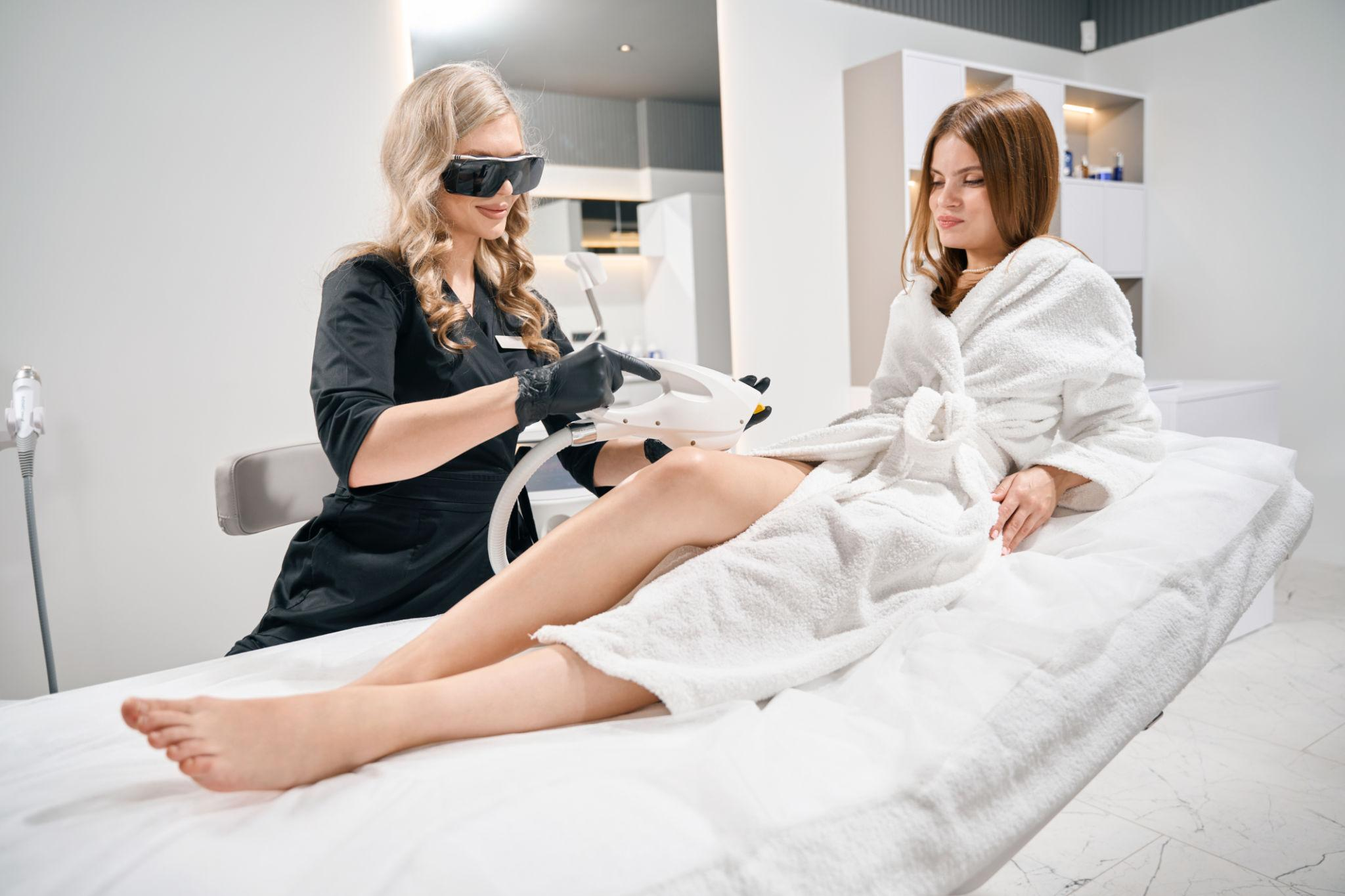
Hair removal has become a core service for many modern beauty salons, aesthetic clinics, med spas, and professional treatment centers. As demand grows, so does the number of technologies available to practitioners. Among the most frequently discussed options are SHR, IPL, and diode laser hair removal.
At first glance, these technologies can appear very similar. All use light energy to target hair follicles, and all can be integrated into professional hair-reduction services. However, they differ considerably in light source, wavelength, energy delivery, treatment technique, versatility, comfort, and equipment configuration.
One important point is often overlooked: SHR is not always a completely separate light source from IPL or diode laser. SHR, or Super Hair Removal, is commonly used to describe a low-fluence, high-repetition, in-motion treatment approach. Depending on the machine, SHR may be based on IPL or diode technology.
For salon and clinic owners, understanding this distinction is more than a technical exercise. Choosing the right professional hair-removal system can influence treatment efficiency, client experience, service variety, operator workflow, and the long-term value of an equipment investment
Background: Why Are SHR, IPL and Diode Laser Often Confused?
The terminology surrounding professional hair-removal equipment can be confusing.
A typical product search may show terms such as IPL hair removal, SHR hair removal, SHR IPL, diode laser, 808nm laser, 755nm diode, triple-wavelength diode, and even "SHR laser." These terms are sometimes used interchangeably in marketing, even though they do not always describe the same technical architecture.
The simplest way to understand the difference is to separate light source from delivery method.
- IPL refers to Intense Pulsed Light, a broad-spectrum light technology.
- Diode laser refers to a laser light source that operates at specific wavelengths.
- SHR generally describes a treatment approach using repeated, relatively low-fluence pulses, often while the handpiece moves continuously across the skin.
This means that an "SHR machine" should not automatically be assumed to be a specific type of laser. A professional buyer should always check what light source the machine actually uses and which wavelengths are available.
This distinction becomes particularly important when comparing equipment for a professional clinic, because the name on the machine does not tell the entire story.
Technology and Mechanism
1. What Is IPL Hair Removal?
IPL stands for Intense Pulsed Light.
Unlike a conventional laser, IPL does not normally produce one single wavelength. Instead, it produces a broad spectrum of light that can be controlled through filters and treatment parameters.
During hair-reduction treatments, light energy is absorbed by melanin in the hair. The absorbed energy is converted into heat, which can damage structures associated with hair growth. Because IPL covers a broader range of wavelengths, professional IPL platforms can also be configured for applications beyond hair reduction, depending on the specific device, filters, and regulatory indications.
This versatility is one of the major reasons IPL remains attractive to multi-service beauty businesses.
A clinic that offers hair reduction alongside selected photorejuvenation, pigmentation, or redness-related treatments may find an IPL platform particularly useful because one system can support multiple treatment categories.
However, broad-spectrum light also means that energy delivery is less wavelength-specific than with a dedicated diode laser. Consequently, operator training, filter selection, pulse settings, skin assessment, and cooling become important parts of professional IPL treatment.
2. What Is SHR?
SHR stands for Super Hair Removal.
The key difference is that SHR generally focuses on how light energy is delivered rather than representing one unique light source.
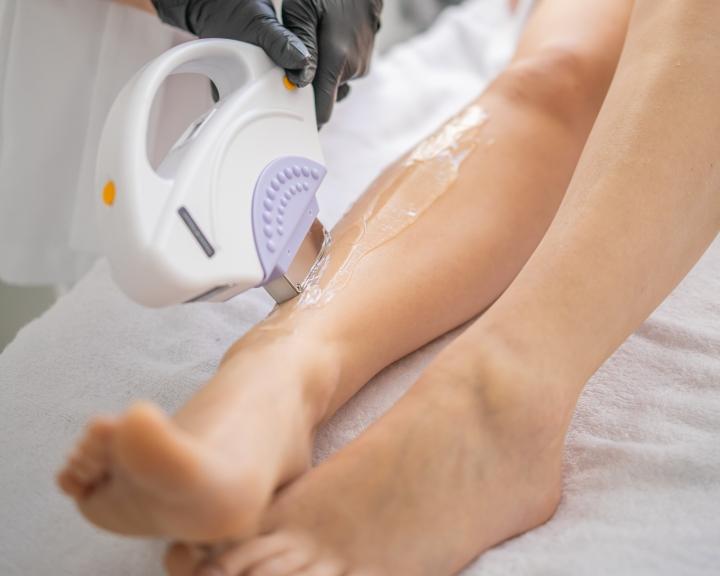
Traditional IPL hair removal may use individual pulses with relatively higher energy. SHR-style treatment typically uses repeated lower-fluence pulses at a higher repetition rate while the handpiece is moved continuously over the treatment area. The objective is to gradually build controlled heat rather than deliver the entire energy dose in one intense pulse.
This approach is commonly called In-Motion technology.
For professional operators, the workflow can be particularly convenient when treating larger areas such as:
- Legs
- Arms
- Back
- Chest
- Abdomen
- Shoulders
- Other large body areas
The continuous-motion approach can help create a smoother treatment workflow and is often positioned around client comfort and treatment efficiency.
However, the term SHR should always be examined carefully when purchasing equipment. Some systems use IPL-based SHR, while other professional platforms may offer an SHR-style mode using diode laser technology. Therefore, "SHR" by itself does not identify the underlying energy source
3. What Is Diode Laser Hair Removal?
Diode laser technology uses a specific laser wavelength to deliver concentrated optical energy toward the hair follicle.
Professional diode systems commonly use wavelengths such as 755nm, 808nm, 810nm, 940nm, or 1064nm, depending on the machine configuration. Some modern systems combine multiple wavelengths in a single handpiece to provide greater flexibility for different hair and skin characteristics.
The fundamental principle is selective absorption of light by pigment, followed by conversion of optical energy into heat.
For hair reduction, the objective is controlled thermal damage to structures involved in hair growth while managing heat exposure to the surrounding skin.
The advantage of a wavelength-specific laser is greater control over where and how the energy interacts with tissue compared with broad-spectrum IPL.
This makes diode laser systems particularly attractive to clinics that position hair reduction as a core professional service rather than simply one treatment among many.
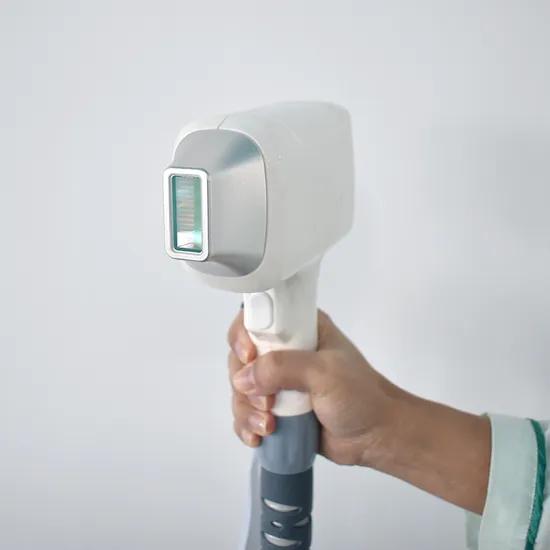
Modern diode systems may also incorporate:
- Large treatment spot sizes
- Adjustable pulse widths
- Multiple wavelengths
- High repetition rates
- Sapphire contact cooling
- TEC cooling systems
- Different operating modes
- Touchscreen parameter controls
- Replaceable or integrated handpieces
These equipment features are not simply technical specifications. They directly influence operator workflow and the client experience
Advantages and Comparison
SHR vs IPL vs Diode Laser: What Is the Real Difference?
The following comparison provides a practical overview for professional salons and clinics.
| Feature | SHR | IPL | Diode Laser |
|---|---|---|---|
| Basic concept | Treatment/delivery method | Broad-spectrum pulsed light | Wavelength-specific laser |
| Light source | Often IPL; may also be diode-based | Broad-spectrum light | Laser |
| Typical delivery | Low fluence, high repetition, in-motion | Pulsed | Focused laser pulses or continuous/in-motion modes |
| Wavelength | Depends on underlying system | Broad spectrum with filters | Specific wavelength(s) |
| Hair reduction | Yes | Yes | Yes |
| Large-area treatment | Excellent | Good | Excellent with suitable spot size |
| Treatment versatility | Depends on platform | High | Primarily hair reduction |
| Cooling importance | High | High | Very high |
| Operator control | Important | Very important | Very important |
| Best business fit | Fast, comfort-oriented hair services | Multi-treatment beauty clinics | Dedicated professional hair-reduction services |
The comparison shows why there is no universal winner.
Instead, the right choice depends on the clinic's treatment menu, client demographics, treatment volume, operator expertise, and investment strategy.
Treatment Speed and Workflow
For a busy salon, treatment speed matters.
Large-area treatments can consume significant appointment time, especially when a clinic performs multiple full-body services each day. SHR's in-motion approach is designed around rapid coverage of larger areas, while large-spot professional diode systems can also provide efficient coverage.
IPL can also treat relatively large areas, particularly when equipped with an appropriately sized treatment window.
However, speed should never be evaluated from repetition rate alone.
A more meaningful equipment assessment should consider:
spot size + repetition rate + cooling performance + operator workflow + treatment protocol.
A machine that fires rapidly but requires frequent pauses for cooling or has a small treatment window may not actually deliver the best clinic throughput.
Comfort and Cooling
Client comfort is increasingly important in professional beauty services.
Modern hair-removal machines therefore place considerable emphasis on cooling systems. Sapphire contact cooling, water cooling, air cooling, and TEC-based systems can help manage epidermal heat and improve the treatment experience.
SHR-style treatment is frequently marketed around comfort because energy is delivered gradually through repeated pulses rather than concentrated into individual high-energy shots.
Diode laser systems, meanwhile, can combine controlled laser energy with advanced contact cooling. This allows professional operators to balance treatment performance with client comfort.
For a clinic, this has a commercial benefit: a comfortable treatment experience can make clients more willing to complete a treatment course and return for future services.
Versatility: Where IPL Has an Advantage
One of IPL's strongest advantages is versatility.
A professional IPL platform may support hair reduction while also being configured for selected aesthetic skin treatments, depending on the available filters, device specifications, and applicable regulations.
This makes IPL particularly interesting for:
- Beauty salons with multiple service categories
- Med spas expanding their treatment menu
- Clinics that want one platform to support several aesthetic services
- Businesses looking for equipment flexibility
A diode laser is generally more specialized.
If a clinic's primary objective is professional hair reduction, specialization can actually be an advantage. The equipment is designed around wavelength-specific energy delivery, and the machine can be optimized for repeated hair-treatment workflows.
In other words:
IPL prioritizes versatility.
Diode laser prioritizes wavelength-specific hair treatment.
SHR prioritizes a particular style of energy delivery and treatment workflow.
Applications and Client Needs
Which Technology Is Better for a Professional Beauty Clinic?
There is no single answer because different clinics have different business models.
Choose IPL When Versatility Matters
IPL may be appropriate for a clinic that wants to combine hair reduction with other light-based aesthetic services.
For example, a multi-service beauty center may prefer a platform that allows practitioners to switch between different filters and treatment protocols according to the service being offered.
The value here is not simply hair reduction. It is one professional platform supporting a broader treatment menu.
Choose SHR When Speed and Comfort Are Priorities
SHR-style treatment can be attractive for salons that perform frequent large-area hair-reduction treatments.
The in-motion workflow can be especially useful for legs, arms, backs, and other large areas where efficient coverage is important.
For businesses competing on convenience and client comfort, SHR can be an effective part of the treatment portfolio.
However, buyers should confirm whether the SHR system is IPL-based or diode-based, rather than evaluating the "SHR" label alone.
Choose Diode Laser When Hair Reduction Is a Core Service
For a professional clinic that focuses heavily on hair reduction, diode laser can provide a more specialized platform.
Wavelength-specific energy, large spot sizes, adjustable parameters, high repetition rates, and integrated cooling can create a highly efficient professional workflow.
Multi-wavelength diode platforms can provide additional flexibility by combining different wavelength options in one system. Modern systems may include configurations such as 755nm + 808nm + 940nm + 1064nm, although the clinical suitability of each wavelength depends on the specific client, treatment protocol, and device.
This is where professional equipment can provide a meaningful advantage over basic consumer devices.
A professional clinic needs more than a light source. It needs controlled parameters, reliable cooling, appropriate spot sizes, ergonomic handpieces, consistent output, and an operating system designed for repeated treatments.
What Should Clinics Look for When Buying a Hair-Removal Machine?
Technology is only one part of the purchasing decision.
Before selecting an SHR, IPL, or diode laser system, professional buyers should evaluate several practical factors.
1. Understand the Actual Light Source
Do not purchase based only on the term "SHR."
Ask whether the machine is IPL-based or diode-based, and confirm the actual wavelength range.
2. Check Cooling Performance
Cooling directly affects treatment comfort and workflow. Look for a system with an appropriate cooling architecture for its intended operating parameters.
3. Consider Spot Size
A larger spot size can improve efficiency when treating large areas, while smaller applicators may be useful for precision work.
4. Evaluate Parameter Control
Professional systems should provide meaningful control over treatment parameters appropriate to the device design and intended use.
5. Match the Machine to Your Client Base
Skin type, hair color, hair thickness, treatment areas, and treatment volume should influence equipment selection. Different wavelengths and platforms have different practical applications.
6. Consider Long-Term Equipment Value
The purchase price is only one component of equipment economics.
A better evaluation includes:
purchase cost + maintenance + consumables + treatment speed + service range + expected utilization + operator training.
For a professional clinic, a machine that can operate reliably for repeated daily treatments may ultimately create more value than a lower-cost device with limited capabilities.
Professional Equipment vs. Home-Use Devices
Home-use hair-removal products have become increasingly common, but professional equipment is designed around a fundamentally different operating environment.
A clinic may perform numerous treatments every day. Practitioners need consistent output, ergonomic handpieces, cooling systems, parameter control, larger treatment windows, service support, and equipment designed for repeated professional use.
More importantly, professional treatment involves assessment and parameter selection by a trained operator.
The machine does not replace professional judgment.
Client skin characteristics, hair characteristics, treatment area, previous exposure to light-based treatments, contraindications, and appropriate treatment protocols all need to be considered before treatment.
For this reason, the value of professional equipment is not simply "more power."
It is the combination of technology, control, cooling, reliability, workflow, and professional operation.
Conclusion
SHR, IPL, and diode laser hair removal all use light-based energy, but they should not be treated as identical technologies.
IPL uses broad-spectrum pulsed light and is particularly attractive when a clinic wants versatility across multiple aesthetic services.
SHR generally describes a low-fluence, high-repetition, in-motion treatment approach. It is often associated with IPL, but can also be implemented using diode laser platforms, making it important to verify the actual light source before purchasing equipment.
Diode laser uses specific laser wavelengths and is particularly well suited to professional hair-reduction services where wavelength control, consistency, treatment efficiency, and dedicated performance are priorities.
For beauty salons, aesthetic clinics, and med spas, the best technology is therefore not necessarily the one with the most impressive specification sheet. It is the one that matches the client base, treatment menu, operator workflow, treatment volume, and long-term business strategy.
As professional beauty equipment continues to evolve, modern systems are increasingly combining multiple wavelengths, advanced cooling, ergonomic handpieces, high-speed operation, and flexible treatment modes. For equipment buyers, understanding the difference between the technology itself and the way that technology is delivered is the first step toward making a more informed investment
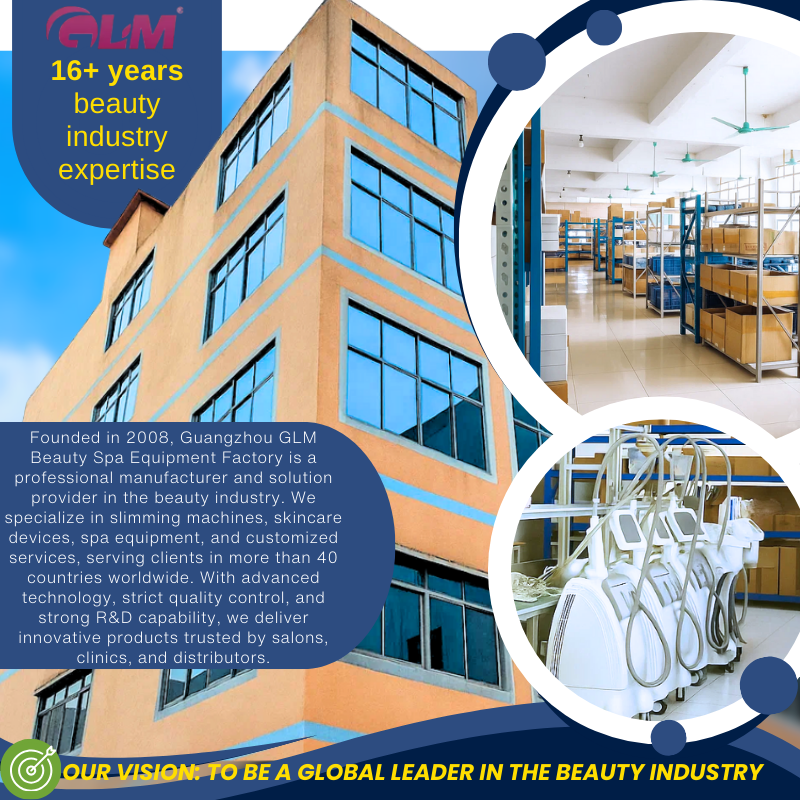
Founded in 2008, Guangzhou GLM Beauty Spa Equipment Factory specializes in research, development, manufacture and selling of beauty and slimming machines. Our production base is located in Guangzhou City, Guangdong Province, China. Since our foundation, we have introduced advanced technologies and equipment, to assure high quality and high performance of our products. With professional marketing guide and excellent after-sales service, our products have been exported to over 20 countries and regions, including Southeast Asia, the Middle East, Europe and the United States, won worldwide praises and gained a good reputation