Introduction
Laser hair removal has evolved significantly from a basic hair-reduction treatment into a sophisticated professional aesthetic service. Today, beauty clinics and professional salons are looking for more than simply a powerful laser. They want equipment that can deliver consistent treatment performance, accommodate different skin and hair characteristics, improve client comfort, and support efficient daily operations.
As the aesthetic industry continues to develop, the next generation of laser hair removal technology is expected to focus on personalization, multi-wavelength systems, intelligent energy management, improved cooling, portability, and operational efficiency.
For professional operators, these trends are important because the value of a laser hair removal system is not determined by one technical specification alone. Treatment versatility, user control, workflow efficiency, client experience, and long-term equipment reliability all influence the practical return on an investment.
The future of laser hair removal is therefore not simply about making lasers stronger. It is about making professional treatments more adaptable, controlled, comfortable, and efficient.
Background: Why Laser Hair Removal Technology Is Changing
Traditional hair removal methods such as shaving, waxing, and mechanical epilation remain widely used, but they require frequent maintenance and may cause discomfort, skin irritation, or ingrown hairs for some clients.
Laser hair removal offers a different approach by targeting the hair follicle with controlled light energy. When the appropriate wavelength and energy parameters are selected, the laser can preferentially heat the melanin-containing structures associated with the hair follicle while limiting unnecessary exposure to surrounding tissue.
However, not every client has the same skin tone, hair color, hair thickness, or treatment requirements. This creates a major challenge for professional clinics: a single fixed treatment approach cannot provide the same experience for every client.
This is one of the main reasons laser technology is moving toward greater flexibility.
Professional operators increasingly need systems that can support different treatment areas and client profiles while allowing trained practitioners to adjust parameters according to the treatment plan.
At the same time, clients are becoming more informed. They increasingly ask about treatment comfort, technology type, expected treatment schedules, cooling systems, and the differences between professional and home-use devices.
These changing expectations are pushing manufacturers to develop equipment that combines performance with usability.
Technology and Mechanism: Where Laser Hair Removal Is Heading
1. Multi-Wavelength Technology Will Become More Important
One of the most important trends in professional laser hair removal is the development of multi-wavelength platforms.
Common diode laser wavelengths include 755 nm, 808 nm, and 1064 nm. Each wavelength has different characteristics in terms of penetration depth and interaction with melanin.
The 755 nm wavelength is often associated with stronger melanin absorption and can be useful for targeting finer or lighter hair characteristics under appropriate professional protocols.
The 808 nm wavelength is widely used as a versatile option for conventional hair removal applications and is commonly incorporated into professional diode laser systems.
The 1064 nm wavelength penetrates deeper and has lower melanin absorption compared with shorter wavelengths, making it particularly valuable when professional operators need greater flexibility for clients with darker skin types.
Instead of relying on a single wavelength, modern systems increasingly combine multiple wavelengths in one platform.
This allows practitioners to select or combine wavelengths according to individual treatment requirements rather than using exactly the same approach for every client.
For clinics, a multi-wavelength platform can also reduce the need to purchase several separate systems, helping improve equipment utilization and treatment versatility.
2. Intelligent Energy Management
Future laser hair removal devices are also expected to become more intelligent in the way energy is delivered.
In conventional systems, operators manually select parameters such as fluence, pulse duration, repetition rate, and spot size. Professional training remains essential because these parameters must be selected according to the treatment area, client characteristics, and device specifications.
The next generation of systems can provide more structured parameter management and user guidance.
Advanced interfaces may help operators monitor treatment settings, treatment modes, pulse counts, cooling status, and other operating information more efficiently.
This does not mean replacing professional judgment. Instead, technology can help standardize workflows and reduce unnecessary operational complexity.
For busy clinics, a clearer interface can have practical value. When multiple treatments are performed throughout the day, intuitive controls can help operators work more efficiently and maintain consistent procedures.
3. Advanced Cooling for Better Client Comfort
Cooling technology will remain a major area of development.
Laser energy generates heat as it interacts with the target tissue. Although controlled thermal effects are necessary for treatment, excessive surface heating can negatively affect client comfort.
Modern professional systems therefore increasingly integrate cooling technologies such as contact cooling, sapphire cooling, air cooling, or combinations of different cooling approaches.
An effective cooling system can help protect the skin surface and make the treatment experience more comfortable.
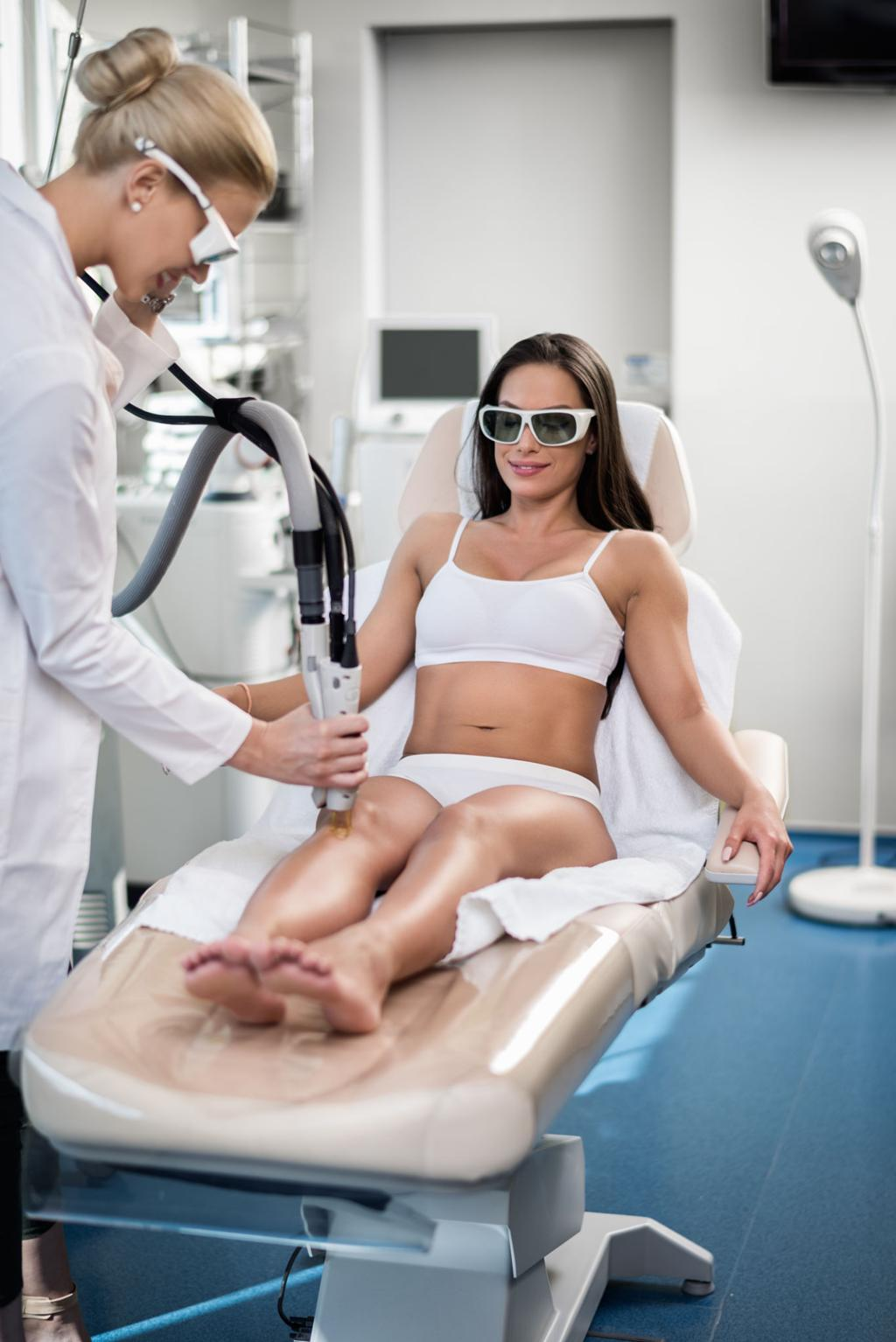
This is especially important for large treatment areas such as the legs, back, arms, or chest, where operators may deliver a large number of pulses during a single session.
From a business perspective, comfort is more than a technical feature. A more comfortable treatment experience can influence client satisfaction, willingness to complete a recommended treatment plan, and the likelihood of returning for future services.
4. Faster Treatment Through Larger Spot Sizes and Higher Repetition Rates
Treatment efficiency is another major direction for future development.
Professional clinics need equipment that can handle both small precision areas and larger body zones. Technologies such as larger spot sizes, optimized pulse delivery, and higher repetition rates can help reduce treatment time when used within appropriate operating parameters.
For example, facial areas may require precision and careful control, while legs or backs require greater coverage efficiency.
A flexible system that supports different spot sizes or treatment modes can therefore provide greater practical value than a device designed around only one treatment scenario.
Faster treatment does not simply mean delivering more energy more quickly. The goal is to create a balanced system in which energy delivery, cooling, pulse repetition, and operator control work together.
For clinics, improved efficiency can translate into better room utilization and the ability to organize more appointments during the working day.
Advantages and Comparison: Professional Systems vs. Home-Use Devices
The development of professional laser technology also highlights the difference between clinical equipment and consumer-oriented devices.
Home-use hair-removal products are generally designed around simplicity, convenience, and lower operating complexity. They may use lower energy levels and simplified control systems so that consumers can operate them without professional training.
Professional equipment, in contrast, is designed for trained operators working within structured treatment protocols.
Professional systems typically provide greater parameter control, larger treatment capacity, more advanced cooling, larger treatment areas, and more comprehensive operating interfaces.
This distinction is important for clinics because professional treatment is not simply about the laser source itself. It is about the complete system: energy delivery, cooling, handpiece design, control interface, treatment workflow, and operator expertise.
For example, a professional clinic may need to treat multiple clients with different treatment areas on the same day. A system with adjustable parameters, multiple treatment modes, effective cooling, and ergonomic handpieces can offer significantly greater operational flexibility.
The future of professional laser hair removal will therefore likely emphasize complete treatment platforms rather than isolated technical specifications.
Applications and Client Needs
Facial Hair Removal
Facial areas require careful treatment because the skin can be more sensitive and treatment zones are relatively small.
Professional operators need precise control and an appropriately sized treatment spot. Equipment with flexible settings can make it easier to adapt the treatment approach to different facial areas while maintaining an efficient workflow.
Underarm Treatments
Underarm hair removal is one of the common applications for professional laser systems.
Because the area is relatively small but often contains coarse hair, operators need a balance between effective energy delivery and client comfort.
Fast pulse repetition combined with reliable cooling can make the treatment process more efficient while improving the overall experience.
Legs, Arms, and Larger Body Areas
Large areas require high treatment efficiency.
A professional system with an appropriately sized spot, stable energy output, efficient cooling, and ergonomic handpiece can help reduce unnecessary treatment time.
This is particularly valuable for clinics that offer full-body or multi-area treatment packages.
Different Skin and Hair Characteristics
Perhaps the biggest future trend is personalization.
Instead of treating every client using the same fixed settings, professional clinics are increasingly focused on adapting treatment protocols according to individual characteristics.
Skin tone, hair thickness, hair density, treatment area, previous treatment history, and client comfort can all influence the treatment strategy.
Multi-wavelength technology can support this approach by giving professional operators more options when selecting the most appropriate wavelength configuration.
The Role of Smart and Connected Devices
Another emerging direction is the integration of digital technology into professional aesthetic equipment.
Future systems may increasingly support treatment records, operating data, maintenance reminders, user management, and device diagnostics.
For larger clinics or multi-room businesses, digital management can become particularly useful.
Instead of treating the laser as an isolated machine, clinics can increasingly view it as part of a broader digital treatment ecosystem.
This shift may also help manufacturers improve after-sales service. Equipment performance data and diagnostic information can potentially make troubleshooting and preventive maintenance more efficient.
However, smart functionality should always support—not replace—professional operation and clinical judgment.
What These Trends Mean for Beauty Clinics
For clinic owners, the future of laser hair removal technology creates both opportunities and new purchasing considerations.
The most attractive device is not necessarily the one with the highest headline power. A better investment may be a system that offers a balanced combination of versatility, reliability, cooling performance, treatment efficiency, operator control, and serviceability.
A multi-wavelength diode laser platform, for example, can potentially serve a wider range of treatment requirements than a highly specialized single-purpose device.
Similarly, an ergonomic handpiece may seem like a small design detail, but it can become important when an operator performs repeated treatments throughout a working day.
Manufacturers are therefore moving toward equipment design that considers the entire treatment workflow.
For professional buyers, several questions are becoming increasingly important:
- Can the system accommodate different treatment areas?
- Does it provide flexible wavelength or parameter options?
- How effective is the cooling system?
- Is the interface easy for trained operators to use?
- Can the device support high treatment volume?
- Is the handpiece comfortable for extended operation?
- What technical support and maintenance services are available?
- Can the equipment adapt as the clinic expands its service portfolio?
These questions shift the purchasing decision from “How powerful is the laser?” to “How effectively can this system support my business?”
Conclusion
The future of laser hair removal technology is moving toward smarter, more flexible, and more efficient professional solutions.
Multi-wavelength platforms, improved cooling, faster treatment capabilities, intelligent parameter management, ergonomic design, and digital connectivity are likely to shape the next generation of professional laser systems.
For beauty salons and aesthetic clinics, these developments offer more than technical improvements. They can support better treatment flexibility, improved workflow efficiency, enhanced client comfort, and stronger service differentiation.
As the market becomes increasingly competitive, professional equipment will need to deliver a complete treatment experience rather than focusing on a single specification.
The most valuable laser hair removal systems of the future will be those that combine technology with practical usability—giving trained professionals greater control while helping clinics build efficient, scalable, and client-focused treatment services.
For equipment manufacturers and professional buyers alike, the direction is clear: the future of laser hair removal is not simply about more energy. It is about smarter energy, better control, greater adaptability, and a more complete professional treatment platform
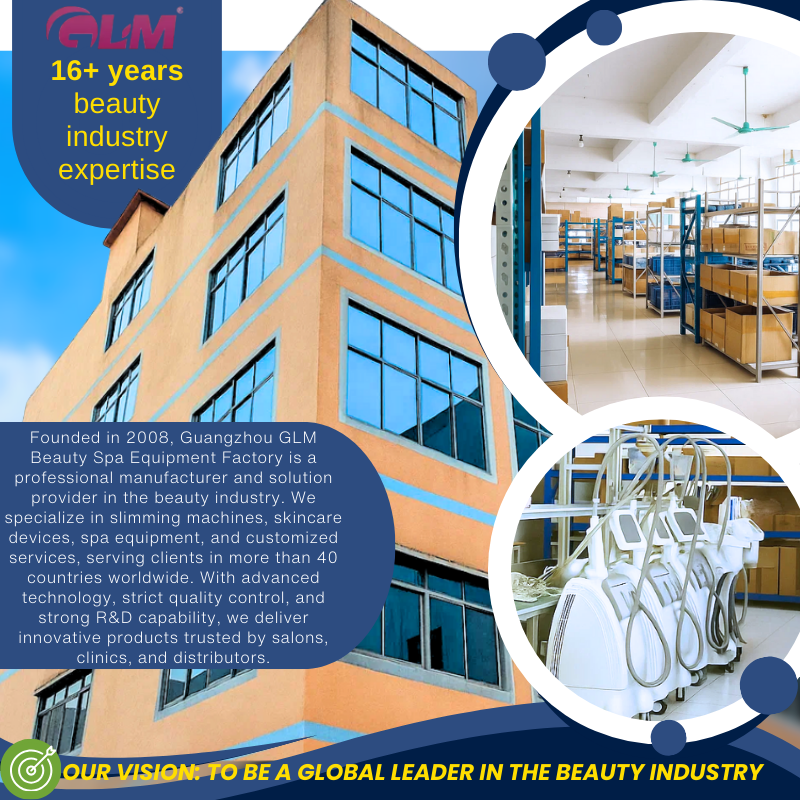
Founded in 2008, Guangzhou GLM Beauty Spa Equipment Factory specializes in research, development, manufacture and selling of beauty and slimming machines. Our production base is located in Guangzhou City, Guangdong Province, China. Since our foundation, we have introduced advanced technologies and equipment, to assure high quality and high performance of our products. With professional marketing guide and excellent after-sales service, our products have been exported to over 20 countries and regions, including Southeast Asia, the Middle East, Europe and the United States, won worldwide praises and gained a good reputation