Introduction
Artificial intelligence is no longer limited to software platforms, smartphones, or large technology companies. It is increasingly becoming part of the professional beauty and aesthetic equipment industry, changing how clinics assess clients, plan treatments, monitor results, and deliver personalized services.
For professional aesthetic centers, this shift represents more than simply adding an “AI” label to a beauty machine. The real opportunity lies in combining artificial intelligence with established energy-based technologies such as radio frequency (RF), ultrasound, LED, laser, EMS, vacuum, and other professional treatment systems.
Traditional aesthetic equipment has primarily focused on delivering controlled energy to a specific area. AI-powered equipment introduces another layer of intelligence: analyzing information, identifying patterns, supporting treatment decisions, and helping operators create more consistent treatment experiences.
This evolution is particularly relevant as clients become more informed and increasingly expect personalized aesthetic solutions. Instead of asking only, “What machine do you use?”, clients are more likely to ask, “Why is this treatment right for my skin?”
That question is helping drive the rise of AI-powered beauty equipment in professional clinics and aesthetic centers.
Background: Why Aesthetic Centers Need Smarter Equipment
Professional aesthetic treatments have traditionally relied heavily on visual observation, operator experience, consultation, and standardized machine parameters.
These methods remain important, but they also have limitations.
Two clients may appear to have similar skin concerns while having very different levels of pigmentation, hydration, redness, texture irregularity, sensitivity, or aging-related changes. A simple visual assessment may not always capture these differences consistently.
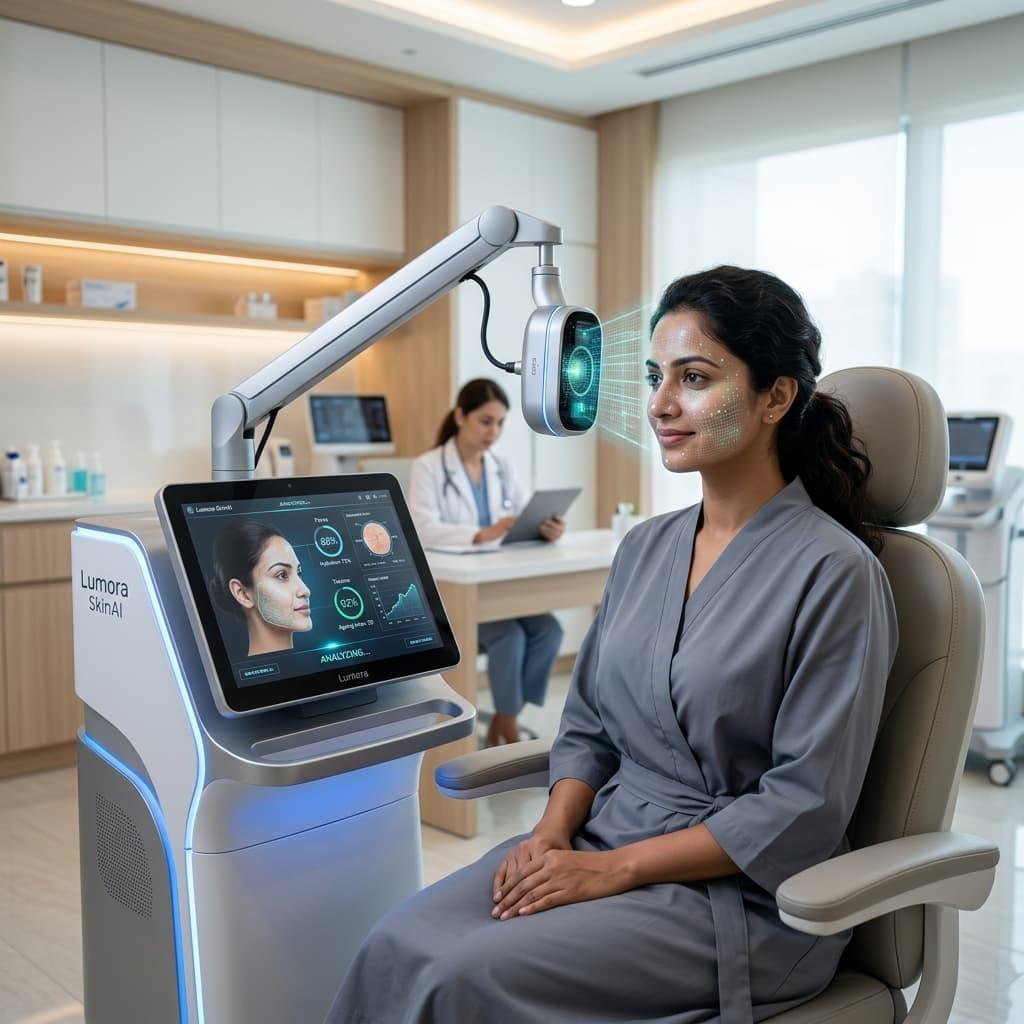
AI-supported analysis can add a more structured layer to the consultation process. Modern systems may use high-resolution imaging, multiple light spectra, facial mapping, image recognition, and algorithmic analysis to evaluate different skin characteristics.
Some professional AI skin analysis systems, for example, are designed to evaluate parameters such as wrinkles, pores, pigmentation, redness, oiliness, texture, firmness, and other visible or image-derived characteristics.
This does not mean that AI should replace trained professionals. Instead, its strongest value is as a decision-support tool.
For an aesthetician, therapist, or clinician, the technology can help turn a subjective consultation into a more structured process:
Analyze → Understand → Personalize → Treat → Monitor → Adjust
This workflow is becoming increasingly attractive for clinics that want to provide a more professional and measurable client experience.
Technology and Mechanism: How AI-Powered Beauty Equipment Works
AI-powered aesthetic equipment generally combines several technologies rather than relying on artificial intelligence alone.
1. Intelligent Skin and Facial Imaging
The first stage is data collection.
A professional system may use high-resolution cameras, controlled lighting, multispectral imaging, facial mapping, or other imaging technologies to capture information about the client's skin.
Depending on the equipment, different imaging modes can highlight different characteristics. For example, certain wavelengths or lighting conditions can make pigmentation, redness, pores, texture, or other skin features easier to identify.
AI algorithms can then process the captured images and recognize patterns that may be difficult to quantify through ordinary visual inspection.
The result is not simply a photograph. It becomes a structured digital assessment that can support professional consultation.
2. AI-Based Data Analysis
After image acquisition, artificial intelligence processes the collected information.
Machine-learning and computer-vision algorithms can be trained to recognize specific visual characteristics and compare them against defined parameters.
This can allow a system to generate measurements, scores, visual maps, or categorized skin concerns.
For example, instead of telling a client that their skin “looks slightly dehydrated,” an AI analysis platform may present a more structured assessment of moisture-related indicators, texture, pores, or other measurable characteristics.
Recent research has highlighted the potential of AI to improve the objectivity and reproducibility of skin-quality evaluation compared with purely subjective visual grading.
3. Treatment Recommendation and Personalization
The next step is where AI becomes particularly valuable for professional beauty equipment.
Once the system has analyzed the client's condition, the software can help operators organize treatment recommendations based on predefined professional protocols.
For example, a clinic may combine:
- AI skin analysis
- RF skin tightening
- LED phototherapy
- Ultrasound treatment
- EMS muscle stimulation
- Laser-based treatments
- Vacuum and body contouring technologies
The AI component does not necessarily control every treatment parameter automatically. Instead, it can serve as an intelligent layer that helps professionals select appropriate treatment pathways according to the client's goals and measured characteristics.
This approach supports a more personalized treatment experience while keeping the professional operator at the center of the process.
4. Progress Tracking
One of the most practical advantages of AI-powered systems is the ability to compare results over time.
A professional clinic can capture standardized images before and after a treatment course and use software to compare changes.
This creates a visual and data-based treatment history.
For clients, seeing measurable progress can make the treatment journey easier to understand. For clinics, it provides useful documentation for follow-up consultations and long-term treatment planning.
Figure: AI-assisted skin analysis can connect consultation, treatment planning, and progress tracking in one professional workflow.
Advantages of AI-Powered Beauty Equipment
More Personalized Treatment Planning
One of the biggest advantages of AI integration is personalization.
Traditional equipment often provides a fixed set of functions and adjustable parameters. AI adds the possibility of using client-specific information to support how those functions are selected and combined.
For professional clinics, this can make treatment plans feel less standardized and more individualized.
Instead of offering exactly the same facial or body treatment to every client, operators can use analysis results to create treatment pathways based on specific concerns and treatment objectives.
More Consistent Consultations
The quality of a consultation can vary depending on the operator's experience.
AI does not eliminate professional judgment, but it can provide a standardized reference point.
This is especially useful for clinics with multiple treatment rooms or multiple staff members. A standardized analysis system can help different operators work from a more consistent set of data.
International expert consensus on AI in aesthetic medicine has specifically emphasized standardized and objective assessment as an important application of AI technology.
Better Client Communication
Aesthetic treatments are highly visual.
Clients may not fully understand technical terms such as collagen remodeling, dermal heating, RF energy, or skin barrier function. However, they can often understand a visual skin map or before-and-after comparison much more easily.
AI-powered analysis can therefore become a communication tool.
Instead of simply explaining a treatment verbally, professionals can show clients where specific concerns are located and explain why a particular treatment strategy may be appropriate.
This can create a more transparent consultation experience.
Improved Treatment Follow-Up
Professional aesthetic services are rarely about a single visit.
Many treatments require multiple sessions, maintenance, or combination protocols.
AI-enabled documentation can help clinics track changes across treatment cycles. This makes it easier to discuss progress and determine whether a treatment strategy should be maintained, adjusted, or combined with another technology.
Professional Equipment vs. Basic Home Devices
AI technology is also changing the difference between professional aesthetic equipment and consumer skincare devices.
Many home-use beauty devices are designed around convenience, portability, and relatively simple treatment routines. Professional equipment, by contrast, can combine more powerful technologies, larger treatment areas, advanced cooling or safety systems, professional imaging, configurable parameters, and operator-guided protocols.
When AI is integrated into professional systems, the value is not simply the AI algorithm itself.
The greater advantage comes from the combination of:
Professional Hardware + Intelligent Software + Trained Operator + Treatment Protocol
This combination can create a more comprehensive treatment workflow than a standalone consumer device.
Applications in Professional Beauty Clinics
AI-powered beauty equipment can be applied across multiple areas of professional aesthetics.
Facial Skin Management
AI skin analysis can be used during consultations to evaluate visible skin characteristics and organize personalized skincare or aesthetic treatment plans.
A clinic may then combine analysis with RF, LED, ultrasound, electroporation, oxygen-based treatments, or other facial technologies depending on the service portfolio.
Anti-Aging and Skin Tightening
For clients concerned about fine lines, skin laxity, or loss of firmness, AI-supported facial analysis can help establish a baseline before a treatment program begins.
RF and other energy-based technologies can then be incorporated into a structured treatment plan, with progress documented over subsequent sessions.
Acne and Skin-Texture Management
AI imaging can help visualize and document concerns related to pores, oiliness, redness, and uneven texture.
For clinics offering comprehensive skin-management programs, this creates an opportunity to connect analysis with customized treatment combinations rather than relying on a single machine or single procedure.
Body Contouring and Wellness Services
The same concept can extend beyond facial treatments.
Professional clinics offering body contouring, vacuum therapy, EMS, RF, cavitation, or other technologies can use digital assessment and progress tracking to create more structured client journeys.
In these applications, AI may become less about “diagnosing” and more about organizing data, documenting progress, and supporting personalized service planning.
Premium Consultation Experience
AI can also become part of a clinic's overall customer experience.
A modern consultation room equipped with digital imaging, intelligent analysis, treatment visualization, and professional aesthetic equipment can create a stronger sense of technology and expertise.
For premium beauty centers, this experience itself can become part of the service proposition.
What Clinic Owners Should Consider
AI should not be adopted simply because it is a popular technology trend.
Clinic owners should evaluate whether the system actually improves their workflow.
Important considerations include:
- What skin or body parameters can the system analyze?
- Is the imaging process standardized?
- Can results be stored and compared over time?
- Is the software easy for operators to use?
- Can the system support multiple treatment protocols?
- Can it integrate with existing aesthetic equipment?
- Does the manufacturer provide operator training?
- What safety features and professional certifications apply to the device?
- How is client data stored and protected?
AI should support professional decision-making rather than create unrealistic promises.
The strongest systems are those where intelligent analysis is combined with reliable hardware, practical software, clear protocols, and professional operator training.
The Future of AI-Powered Aesthetic Equipment
The next generation of professional beauty equipment is likely to become increasingly interconnected.
Instead of separate machines performing isolated functions, future systems may combine imaging, analysis, treatment control, progress tracking, and client management into a connected ecosystem.
AI could help clinics move from a machine-centered model toward a data-supported treatment model.
For example, a future consultation could begin with automated facial imaging, continue with AI-supported skin assessment, generate a personalized treatment pathway, connect that pathway with available professional devices, and record treatment results automatically.
Recent systematic reviews of AI, augmented reality, and robotics in aesthetic practice indicate that these technologies are becoming increasingly integrated into professional aesthetic workflows, although evidence and implementation remain areas of active development.
This means the future of AI in aesthetics is not necessarily about replacing the aesthetician or clinician.
It is about giving professionals better information and better tools.
Conclusion
The rise of AI-powered beauty equipment represents an important shift in the professional aesthetic industry.
AI can transform traditional equipment from a simple energy-delivery platform into a more intelligent treatment ecosystem. By combining skin analysis, facial imaging, data processing, personalized recommendations, and progress tracking with professional technologies such as RF, LED, ultrasound, EMS, laser, and vacuum systems, aesthetic centers can build more structured and personalized treatment experiences.
The most valuable AI-powered equipment will not simply be the machine with the most impressive technology specifications.
It will be the system that helps professionals understand clients more clearly, communicate treatment plans more effectively, deliver consistent services, and track results over time.
For beauty clinics and aesthetic centers planning their next generation of equipment, AI is therefore more than a trend. It is becoming an important direction for professional, data-supported, and personalized aesthetic services
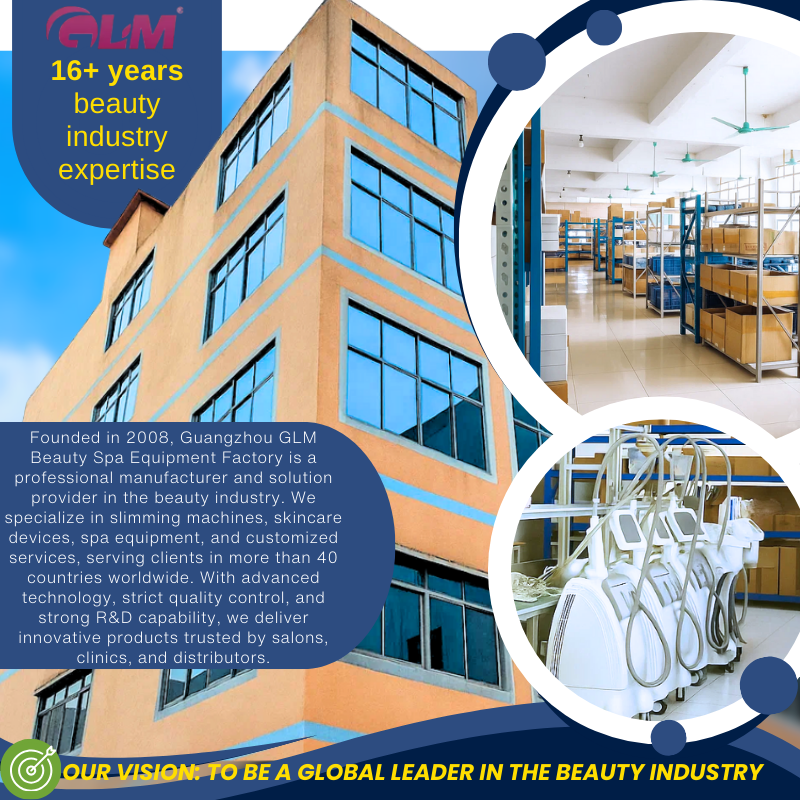
Founded in 2008, Guangzhou GLM Beauty Spa Equipment Factory specializes in research, development, manufacture and selling of beauty and slimming machines. Our production base is located in Guangzhou City, Guangdong Province, China. Since our foundation, we have introduced advanced technologies and equipment, to assure high quality and high performance of our products. With professional marketing guide and excellent after-sales service, our products have been exported to over 20 countries and regions, including Southeast Asia, the Middle East, Europe and the United States, won worldwide praises and gained a good reputation