Introduction
The beauty industry is entering a new phase of skincare innovation: the shift from simply applying active ingredients to actively improving how those ingredients interact with the skin.
For decades, professional aesthetic treatments have relied on topical products, injections, microneedling, and other methods to deliver ingredients beyond the skin’s surface. While these approaches can be effective for specific applications, they also come with practical challenges, including discomfort, downtime, inconsistent absorption, or the need for highly controlled clinical procedures.
Needle-free transdermal delivery is emerging as an important alternative.
By using technologies such as electroporation, sonophoresis, iontophoresis, microjet delivery, and other physical penetration-enhancement methods, modern aesthetic devices can temporarily modify the skin barrier or create controlled pathways that help selected active ingredients move beyond the surface layer. Research into these approaches has been ongoing for years, while newer professional aesthetic systems are bringing the concept closer to everyday treatment-room applications.
For beauty clinics and professional salons, the significance is not simply that treatments can be performed “without needles.” The larger opportunity is to build treatment protocols around controlled energy delivery, standardized operation, product compatibility, and a more comfortable client experience.
This is where the next generation of transdermal aesthetic equipment is beginning to differentiate itself.
Background: Why Skin Absorption Is So Difficult
The skin is designed to protect the body from the outside environment. That protective function, however, creates a major challenge for professional skincare.
The outermost layer of the skin, known as the stratum corneum, acts as a highly effective barrier. It limits the movement of many substances into deeper layers, particularly larger or hydrophilic molecules. Recent literature continues to identify this barrier as one of the primary limitations of conventional topical delivery.
This creates a familiar problem for aesthetic professionals.
A serum may contain peptides, antioxidants, vitamins, growth-factor-related ingredients, or other cosmetic actives, but simply placing the formulation on the skin does not guarantee that a meaningful amount will reach the intended layer.
Traditional topical application depends largely on passive diffusion.
In a professional treatment environment, however, practitioners increasingly want more than passive application. They want a treatment system that can help optimize contact, penetration conditions, consistency, and treatment workflow.
This has created growing interest in physical methods of transdermal enhancement.
Instead of forcing a needle through the skin, needle-free systems use controlled physical energy to temporarily increase skin permeability or assist the movement of appropriately formulated ingredients.
The objective is not necessarily to “break” the skin. In many approaches, the goal is to create a temporary, controlled change in the barrier properties of the skin.
Technology & Mechanism: How Needle-Free Absorption Works
Needle-free delivery is not a single technology. It is a category that includes several different mechanisms.
1. Electroporation: Using Controlled Electrical Pulses
Electroporation uses short electrical pulses to temporarily increase the permeability of biological membranes.
In transdermal applications, electrical pulses can induce temporary pathways or structural changes in the skin barrier, helping certain molecules move across the stratum corneum more effectively than passive diffusion alone. The effectiveness depends on parameters such as voltage, pulse duration, number of pulses, and formulation characteristics.
For professional aesthetic equipment, this creates an interesting treatment concept.
A practitioner applies an appropriate cosmetic formulation to the treatment area and uses the device under controlled operating parameters. Rather than relying entirely on manual massage or passive absorption, the device provides a physical mechanism designed to facilitate ingredient transport.
This makes electroporation particularly relevant to professional facial protocols focused on hydration, skin conditioning, brightening, and rejuvenation-oriented skincare.
However, professional operators must understand that electrical parameters and product compatibility matter. More energy does not automatically mean better delivery. Proper device design, controlled output, treatment protocols, and appropriate formulations are essential.
2. Sonophoresis: Using Ultrasound Energy
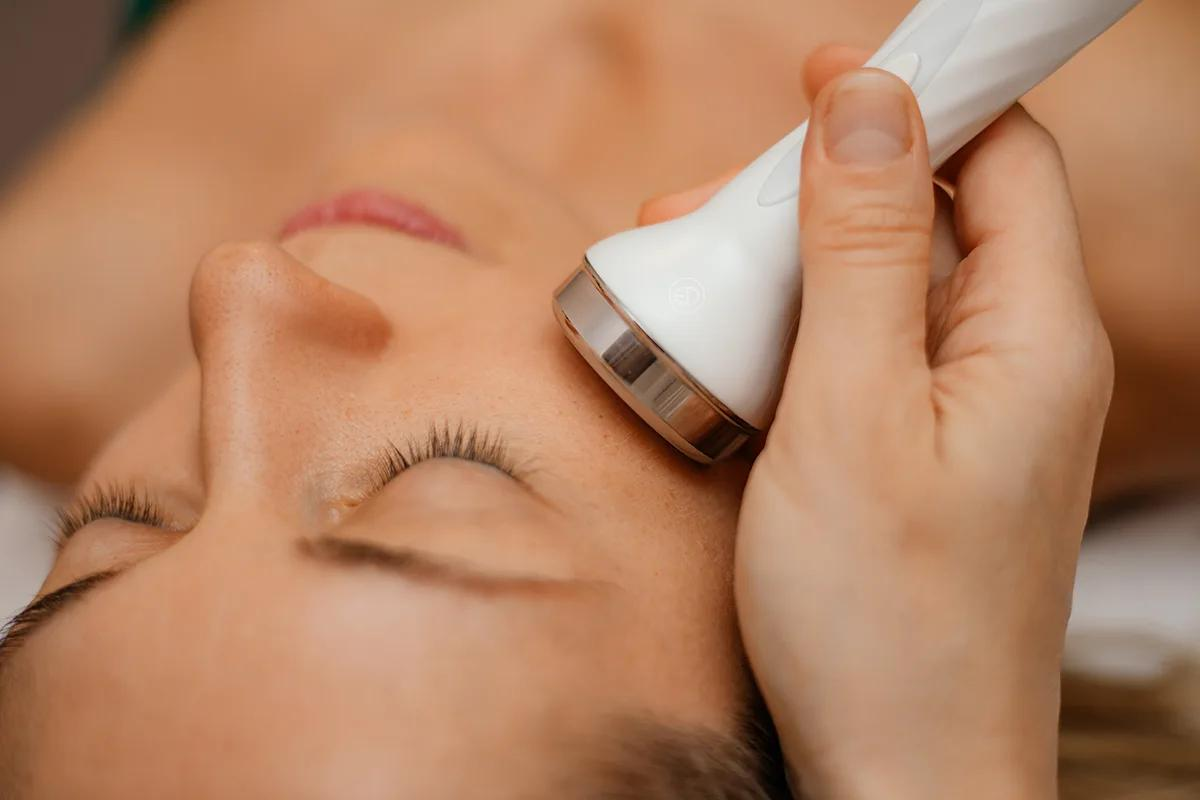
Another important technology is sonophoresis, which uses ultrasound to enhance skin permeability.
Ultrasound can interact with the skin and surrounding medium through mechanisms including acoustic cavitation, acoustic streaming, and changes in diffusion pathways. Research has demonstrated that ultrasound can increase transdermal transport compared with passive delivery under certain conditions.
From a beauty clinic perspective, ultrasound-assisted delivery has a practical advantage: it can be incorporated into treatment workflows that already use ultrasound-based facial technologies.
The treatment head moves across the target area while the formulation is maintained in contact with the skin. Depending on the equipment configuration, ultrasound energy may be used as part of a broader protocol rather than as an isolated treatment.
This creates opportunities for professional clinics to combine cleansing, hydration, massage, ultrasound-based treatment, and active-ingredient delivery into a structured facial program.
3. Iontophoresis: Supporting the Movement of Charged Ingredients
Iontophoresis uses a low-level electrical current to help move charged molecules through the skin.
The mechanism differs from electroporation. Instead of primarily creating temporary permeability changes through stronger pulses, iontophoresis uses electrical forces to assist the movement of suitable charged substances and can also influence transport through electroosmotic effects.
This makes formulation characteristics particularly important.
A professional device cannot compensate for an unsuitable formulation. The active ingredient, molecular characteristics, concentration, electrical properties, and treatment parameters all influence the final result.
For equipment manufacturers and aesthetic professionals, this reinforces an important principle: transdermal delivery is a system, not simply a machine function.
4. Microjet and Hybrid Needle-Free Systems
More recent systems are exploring another approach: high-velocity microjet delivery.
Instead of using a solid needle, a precisely controlled liquid jet can deliver material toward or into the skin while avoiding conventional needle-based injection. Some emerging professional systems combine microjetting with electroporation or plasma-based technologies to create a multi-stage delivery concept.
This represents an important direction for the industry.
The future of transdermal aesthetics may not belong to one technology alone. Instead, professional devices may increasingly combine multiple physical mechanisms to improve treatment flexibility and control.
[Internal Image – Needle-Free Transdermal Delivery Mechanism]
Suggested infographic content:
Skin surface → Stratum corneum → Temporary permeability enhancement → Active ingredient movement → Deeper skin layers
Visual labels:
Electroporation: Controlled electrical pulses
Sonophoresis: Ultrasound-assisted permeability
Iontophoresis: Electrical driving force
Microjet: High-velocity liquid delivery
Use a clean medical-aesthetic style diagram with a cross-section of skin, a professional treatment handpiece, serum droplets, and directional arrows showing controlled ingredient movement.
Advantages & Comparison: Why Needle-Free Delivery Is Gaining Attention
The appeal of needle-free absorption is not based on one advantage. It comes from the combination of comfort, workflow, controllability, and treatment positioning.
A More Comfortable Treatment Experience
For many clients, the word “needle” immediately creates concerns about pain, anxiety, bruising, or recovery.
Needle-free technologies can provide an alternative for clients who want professional skin treatments without conventional needle-based procedures.
This does not mean every needle-free system is completely sensation-free. Depending on the technology and operating parameters, clients may experience warmth, tingling, vibration, pressure, or other sensations.
Nevertheless, the absence of conventional needles can make these technologies attractive for treatment programs designed around comfort and convenience.
Minimal Disruption to the Skin Barrier
Traditional microneedling deliberately creates controlled microchannels in the skin. Microneedle systems remain an important area of cosmetic and dermatological research, particularly for delivering larger molecules and achieving intradermal access.
Needle-free approaches take a different route.
Electroporation, ultrasound, and electrical enhancement methods seek to modify permeability without relying on conventional needles. This can make them suitable for treatment programs where practitioners want to focus on topical active delivery while minimizing mechanical disruption.
More Consistent Professional Workflows
Professional beauty equipment offers another advantage that is sometimes overlooked: standardization.
A manual serum application depends heavily on operator technique. A professional device can provide defined energy output, treatment modes, timing, intensity settings, and handpiece design.
For clinics treating multiple clients each day, repeatability matters.
A structured protocol can make it easier for operators to maintain consistent treatment steps and integrate transdermal delivery into facial packages or customized skincare programs.
An Alternative to Traditional Topical Application
The comparison is not necessarily “needle-free versus needles.”
For many beauty businesses, the more relevant comparison is:
Passive topical application vs. device-assisted delivery.
Topical products remain fundamental to skincare, but professional equipment can add a physical treatment component that changes the delivery environment.
This creates opportunities for clinics to develop more sophisticated service menus without turning every skincare treatment into an invasive procedure.
Applications & Client Needs
The strongest opportunity for needle-free transdermal systems lies in their ability to support customized professional skincare protocols.
Hydration and Skin Conditioning
Hydration-focused treatments are among the most straightforward applications.
Professional operators may combine suitable hydrating formulations with ultrasound, electroporation, or other penetration-enhancement technologies as part of a facial protocol.
The equipment becomes more than a standalone machine. It becomes a tool for structuring a complete treatment experience.
Rejuvenation-Oriented Treatments
Clients increasingly seek treatments designed around smoother-looking, healthier-looking, and more youthful-looking skin without extensive downtime.
Needle-free delivery can be incorporated into rejuvenation-oriented protocols alongside cleansing, exfoliation, massage, LED therapy, RF, or other non-invasive technologies.
The key is to position transdermal delivery as one component of a broader professional treatment strategy rather than treating it as a miracle technology.
Brightening and Uneven Skin Tone Care
For clients concerned about dull-looking skin or uneven appearance, professional clinics may use carefully selected cosmetic formulations together with delivery-enhancement technologies.
Again, the device does not replace the formulation.
Instead, it provides a controlled physical mechanism that may help improve the interaction between the formulation and the skin.
Post-Treatment Skincare
Another potential application is supporting professional skincare routines following selected non-invasive aesthetic procedures.
Depending on the procedure, formulation, device instructions, and local regulations, practitioners may incorporate appropriate topical products into post-treatment care.
This is an area where professional training becomes particularly important. Not every ingredient is appropriate for every procedure, and “deeper delivery” is not automatically desirable immediately after every aesthetic treatment.
Premium Facial Programs
From a business perspective, needle-free delivery can also support premium treatment design.
A salon or aesthetic clinic can build packages around:
- Deep hydration
- Skin revitalization
- Professional serum infusion
- Customized facial care
- Rejuvenation-focused protocols
- Multi-technology facial programs
This allows the equipment to become part of a broader service architecture.
Rather than selling a machine based on one function, clinics can use it to create repeatable treatment programs that combine equipment, professional products, operator expertise, and client consultation.
Why Professional Equipment Matters
The difference between a professional transdermal system and a basic home skincare device is not simply power.
Professional equipment is designed around controlled operation and treatment protocols.
Important considerations include:
- Adjustable treatment parameters
- Stable energy output
- Ergonomic handpiece design
- Treatment-time control
- Multiple operating modes
- Safety mechanisms
- Easy cleaning and maintenance
- Compatibility with professional treatment workflows
- Operator training and standardized protocols
For manufacturers, this also means that device development should go beyond adding another “infusion” function to a multifunction machine.
The more valuable approach is to design a complete delivery platform.
A well-designed system should help the operator answer practical questions:
What type of formulation is being used?
Which treatment area is being addressed?
Which energy mode is appropriate?
How long should the treatment last?
How should the handpiece move across the skin?
What client profile is suitable for the treatment?
This shift—from a simple device function to a professional treatment protocol—is one of the most important developments in aesthetic equipment.
The Future: From Needle-Free to Precision Delivery
The next evolution of transdermal aesthetics will likely focus less on simply increasing penetration and more on precision.
Recent research is increasingly exploring combinations of physical delivery technologies, including electroporation, sonophoresis, iontophoresis, microneedles, and hybrid systems. A 2026 clinical study, for example, examined an integrated multimodal transdermal device combining physical enhancement mechanisms to improve serum absorption.
This points toward a broader industry trend.
Future aesthetic systems may increasingly offer:
Smarter parameter control
Instead of one fixed intensity, devices may provide more precise adjustment based on treatment objectives.
Multimodal delivery
Different energy technologies may work together within a single treatment platform.
Customized protocols
Operators may select treatment parameters according to skin condition, treatment area, formulation, and client objectives.
Better treatment documentation
Professional systems may increasingly incorporate digital records, parameter tracking, and standardized protocols.
Greater integration with professional skincare
The boundary between cosmetic formulation and aesthetic equipment will continue to become less distinct.
The result could be a new generation of aesthetic treatments where the device is not merely delivering energy—it is helping manage the entire ingredient-delivery process.
Conclusion
Needle-free absorption represents an important evolution in professional aesthetic technology.
The underlying concept is straightforward: instead of relying entirely on passive topical absorption or conventional needles, controlled physical technologies can be used to modify the skin’s permeability or assist ingredient transport.
Electroporation, sonophoresis, iontophoresis, microjet delivery, and emerging hybrid systems each approach this challenge differently. Their applications, limitations, and regulatory requirements also vary, meaning that professional operators should select technologies based on validated device specifications, appropriate formulations, training, and local regulations.
For beauty clinics and aesthetic centers, the real value of needle-free transdermal systems is their potential to create more structured, comfortable, customizable, and professional treatment experiences.
For equipment manufacturers, the opportunity goes further.
The future is not simply about creating a machine that can “infuse serum.” It is about developing professional platforms that combine controlled energy, intelligent treatment parameters, ergonomic design, suitable formulations, and standardized workflows.
As aesthetic clients increasingly look for effective treatments with minimal disruption, needle-free transdermal delivery is positioned to become an important part of the next generation of professional skincare equipment.
The needle may not disappear from aesthetic medicine—but for many non-invasive skincare applications, the future of professional delivery may increasingly happen without one
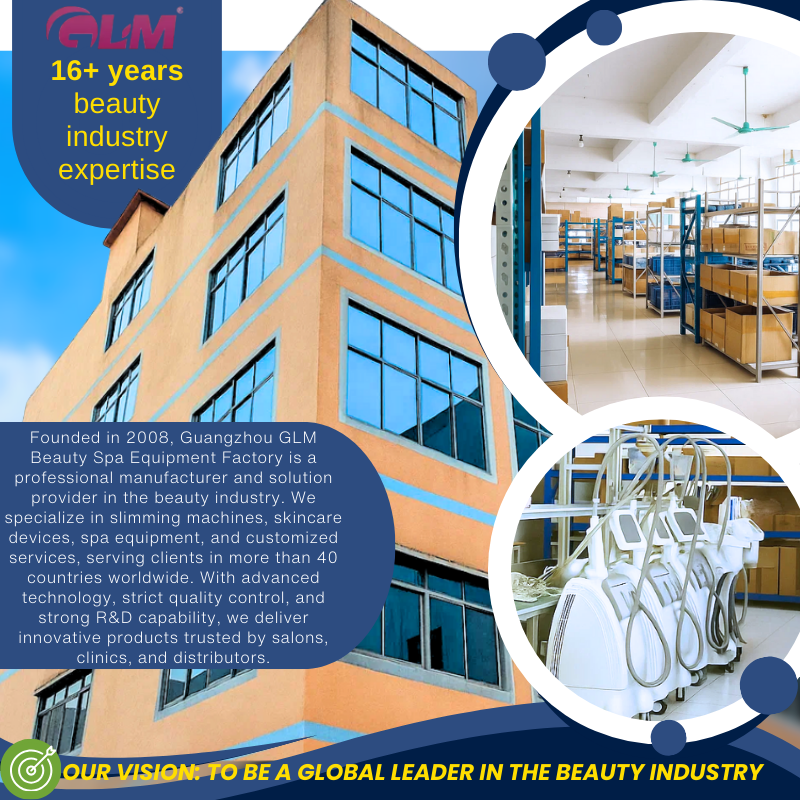
Founded in 2008, Guangzhou GLM Beauty Spa Equipment Factory specializes in research, development, manufacture and selling of beauty and slimming machines. Our production base is located in Guangzhou City, Guangdong Province, China. Since our foundation, we have introduced advanced technologies and equipment, to assure high quality and high performance of our products. With professional marketing guide and excellent after-sales service, our products have been exported to over 20 countries and regions, including Southeast Asia, the Middle East, Europe and the United States, won worldwide praises and gained a good reputation