Introduction
Healthy-looking skin is influenced by more than skincare products. Behind every radiant complexion and smooth body contour is a complex network of blood vessels, connective tissues, fluids, and metabolic processes working continuously beneath the skin.
Circulation plays an important role in this system. Blood flow helps deliver oxygen and nutrients to tissues while supporting the removal of metabolic by-products. At the same time, lymphatic circulation helps manage excess fluid and supports the body's natural fluid balance.
For professional beauty salons and aesthetic clinics, circulation has therefore become an important consideration when designing facial and body treatment protocols. Modern aesthetic equipment can provide controlled forms of mechanical stimulation, thermal energy, suction, or electrical stimulation to complement traditional manual techniques.
Technologies such as radiofrequency (RF), vacuum massage, roller massage, and EMS are increasingly incorporated into professional aesthetic platforms. Rather than replacing healthy lifestyle habits or medical care, these technologies can become valuable tools for improving the overall treatment experience and supporting visible skin and body-care goals.
Understanding the relationship between circulation and aesthetic treatments allows beauty professionals to choose technologies more strategically—and create treatment protocols that are both more targeted and more personalized.
Background: Why Circulation Matters for Skin and Body Appearance
The skin is a living organ that constantly interacts with the systems beneath it. Blood circulation supplies tissues with oxygen and nutrients, while the lymphatic system contributes to fluid movement and waste clearance.
When circulation is temporarily reduced or sluggish, the skin may appear dull, tired, or less vibrant. Fluid retention can also contribute to a feeling of puffiness, particularly in certain facial and body areas.
This does not mean that every visible skin concern is caused by poor circulation. Skin aging, hydration, lifestyle, genetics, hormonal factors, body composition, and environmental exposure can all influence appearance.
However, circulation is one important component of overall skin and tissue condition.
For aesthetic professionals, this creates an interesting opportunity. Instead of focusing exclusively on the surface of the skin, treatment protocols can also consider the physical condition of the underlying tissues.
This is where professional aesthetic equipment becomes useful.
A trained operator can control treatment parameters such as energy level, suction intensity, treatment duration, movement pattern, and treatment area. This allows the procedure to be adapted according to the client's skin condition, treatment objective, and comfort level.
Technology and Mechanism: How Aesthetic Devices Interact With Circulation
1. Vacuum Technology and Mechanical Stimulation
Vacuum technology is one of the most recognizable approaches used in professional body treatments.
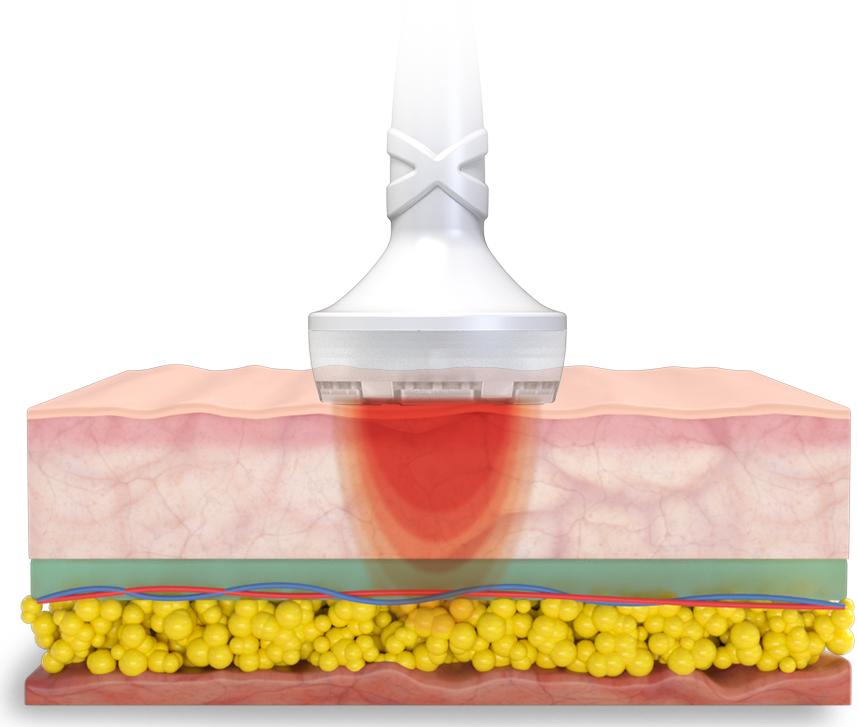
A vacuum handpiece creates controlled suction against the skin. When combined with appropriate movement, the mechanical action can create a massage-like effect on the treated area.
Professional aesthetic systems often combine vacuum with roller movement or RF energy. Industry devices describe vacuum as a way to support local blood microcirculation and lymphatic drainage, while clinical research has also investigated perfusion changes associated with aesthetic RF treatments.
From a treatment perspective, vacuum technology can be useful for clients who want body-care programs focused on:
- The appearance of cellulite
- Temporary puffiness or fluid retention
- Skin smoothness
- Body contouring programs
- Relaxing massage-style treatments
- Preparing tissues for combined aesthetic procedures
The key advantage for professional operators is control. Instead of relying solely on manual massage, a professional device can provide more consistent suction and movement patterns when used according to the manufacturer's protocol.
2. Radiofrequency and Controlled Thermal Energy
Radiofrequency is another important technology in modern aesthetic equipment.
RF devices deliver electromagnetic energy into tissue, where resistance to the electrical current produces heat. Depending on the technology and treatment parameters, RF can be used in professional protocols targeting skin tightening, texture improvement, and body contouring.
Research and professional literature have examined RF's relationship with tissue perfusion and lymphatic responses, while RF is widely used in aesthetic dermatology for applications such as skin tightening and rejuvenation.
From a circulation perspective, controlled warming can be particularly relevant because thermal stimulation changes local tissue conditions. However, professional treatment should focus on controlled and appropriate heating rather than simply maximizing temperature.
This is one reason professional equipment matters.
A quality RF system should allow the operator to manage parameters carefully and maintain appropriate contact and movement. The objective is not simply to make the skin hot, but to deliver energy in a controlled and repeatable manner.
3. Roller Massage and Mechanical Circulation Support
Roller handpieces add another dimension to professional body treatments.
Mechanical rollers can create rhythmic stimulation across the skin and superficial tissues. When combined with vacuum suction, the treatment can resemble a more structured form of mechanical massage.
For body-care programs, roller technology is commonly incorporated into treatments addressing the appearance of cellulite, uneven skin texture, and localized body concerns.
The combination of mechanical movement and vacuum can also make the treatment more dynamic than a static handpiece. This allows the operator to work across larger body areas such as the thighs, abdomen, hips, arms, or back.
For busy salons, this can be particularly valuable because multifunctional platforms may combine several treatment technologies within one system.
4. EMS and Muscle Stimulation
Circulation is not only related to the skin itself. Muscle activity also influences local physiological processes.
EMS devices use electrical stimulation to trigger controlled muscle contractions. In aesthetic applications, EMS may be incorporated into body-conditioning and contouring programs.
The concept is relatively straightforward: controlled muscle contraction creates physical activity within the treated area, while the treatment itself can complement other body-care technologies.
Some modern aesthetic devices combine EMS with suction or RF, creating multifunctional treatment platforms. Research into combined beauty devices has investigated the effects of suction, RF, and EMS on body skin and contour-related outcomes.
For professional operators, the value of combination technology is not simply having more functions. It is the ability to create a structured protocol around different client needs.
Advantages and Comparison: Professional Equipment vs. Basic Home Care
Manual massage, exercise, hydration, and a healthy lifestyle remain important parts of overall body and skin wellness. Professional aesthetic equipment should be viewed as a complementary tool rather than a replacement for these fundamentals.
The difference is primarily in control, consistency, and treatment customization.
A basic home-care approach may depend heavily on the user's technique and consistency. Professional equipment, by comparison, can offer adjustable parameters, dedicated handpieces, larger treatment areas, and repeatable operating procedures.
For example, a professional RF and vacuum platform can allow an operator to adjust suction or energy according to the treatment area. A smaller handpiece may be selected for facial or delicate areas, while a larger applicator or roller can be used for body treatments.
This level of customization is particularly important because different body areas have different tissue characteristics and treatment requirements.
Another advantage is protocol integration.
A professional clinic may combine:
Vacuum → Mechanical Massage → RF → Skin Care
or develop different sequences depending on the client's objectives.
This approach transforms individual technologies into a more complete treatment experience.
Modern multifunctional aesthetic platforms increasingly combine RF, vacuum, cavitation, EMS, LED, or other technologies, allowing clinics to offer multiple treatment categories from a single equipment platform.
Applications: Where Circulation-Focused Treatments Fit Into Professional Services
Facial Treatments
Facial treatments often focus on skin radiance, texture, firmness, and the appearance of puffiness.
Gentle mechanical stimulation, appropriate RF technology, and carefully selected massage techniques can be incorporated into professional facial protocols.
For example, RF may be used as part of a skin-tightening or rejuvenation program, while gentle massage or vacuum technology may be incorporated where appropriate.
The important point is that facial protocols require lower intensity and greater precision than many body treatments.
Body Contouring and Cellulite Care
Body treatments represent one of the most common areas where circulation-related technologies are incorporated.
Clients may be concerned about cellulite, uneven skin texture, localized fullness, skin laxity, or temporary fluid retention.
Professional systems combining vacuum, RF, rollers, and other technologies are designed around these types of aesthetic concerns. Several commercial professional platforms specifically position vacuum and RF combinations for body contouring, cellulite appearance, skin tightening, and circulation-related treatment goals.
The value of the technology is not that it promises an instant transformation. Instead, it gives professionals another way to structure consistent treatment programs.
Post-Treatment and Maintenance Programs
Circulation-supportive technologies can also be incorporated into maintenance-focused programs.
For clients who have already completed a body-care or skin-tightening course, periodic professional treatments may help maintain the overall appearance of the skin and body.
However, protocols should always be selected according to the individual's condition, treatment history, and the manufacturer's operating instructions.
Professional operators should also understand contraindications and recognize situations where a client requires medical assessment rather than an aesthetic treatment.
Understanding Client Needs
Today's aesthetic clients are increasingly looking for treatments that provide multiple benefits within one appointment.
They may want smoother-looking skin, improved firmness, a more defined body contour, and a relaxing treatment experience at the same time.
This is one reason multifunctional aesthetic equipment has become attractive to salons and clinics.
Instead of purchasing separate systems for every single service, a multifunctional platform may allow an operator to create different protocols using different handpieces and technologies.
For example:
Client Goal: Skin Firmness
RF + controlled thermal treatment + professional skincare
Client Goal: Body Smoothness
Vacuum + roller massage + RF
Client Goal: Body Conditioning
EMS + complementary body-care technologies
Client Goal: Relaxing Body Treatment
Mechanical massage + controlled vacuum
The specific combination should always depend on the device specifications, client assessment, operator training, and applicable local regulations.
Building a Professional Circulation-Focused Treatment Protocol
A successful professional treatment is not simply about selecting the most powerful device.
A better approach is to build the protocol around five elements:
1. Client Assessment
Understand the client's skin condition, treatment history, objectives, and relevant contraindications.
2. Technology Selection
Choose the appropriate technology based on the target area and desired aesthetic outcome.
3. Parameter Control
Adjust energy, suction, duration, movement, and other settings according to the manufacturer's protocol and the client's tolerance.
4. Treatment Combination
Where appropriate, combine complementary technologies rather than relying on one function for every concern.
5. Consistent Follow-Up
Document treatment parameters and client responses so future sessions can be adjusted more accurately.
This professional approach is what separates a sophisticated aesthetic treatment from simply using a beauty device.
Conclusion
Circulation is an important part of healthy-looking skin and well-maintained body tissues. While it is only one factor among many, considering circulation can help beauty professionals develop more comprehensive treatment strategies.
Modern technologies such as vacuum massage, RF, roller systems, and EMS provide different forms of controlled mechanical, thermal, or electrical stimulation. When properly selected and professionally operated, these technologies can complement skincare, massage, and body-care programs.
For beauty salons and aesthetic clinics, the real value of circulation-focused equipment is not a single function. It is the ability to create structured, repeatable, and personalized treatment experiences.
As the professional beauty industry continues to move toward multifunctional and customized services, equipment that combines controlled energy delivery with mechanical stimulation may become increasingly valuable.
The future of aesthetic treatment is not simply about stronger technology. It is about using the right technology, at the right intensity, for the right client—and integrating it into a professional treatment strategy that supports healthier-looking skin and more confident body-care results
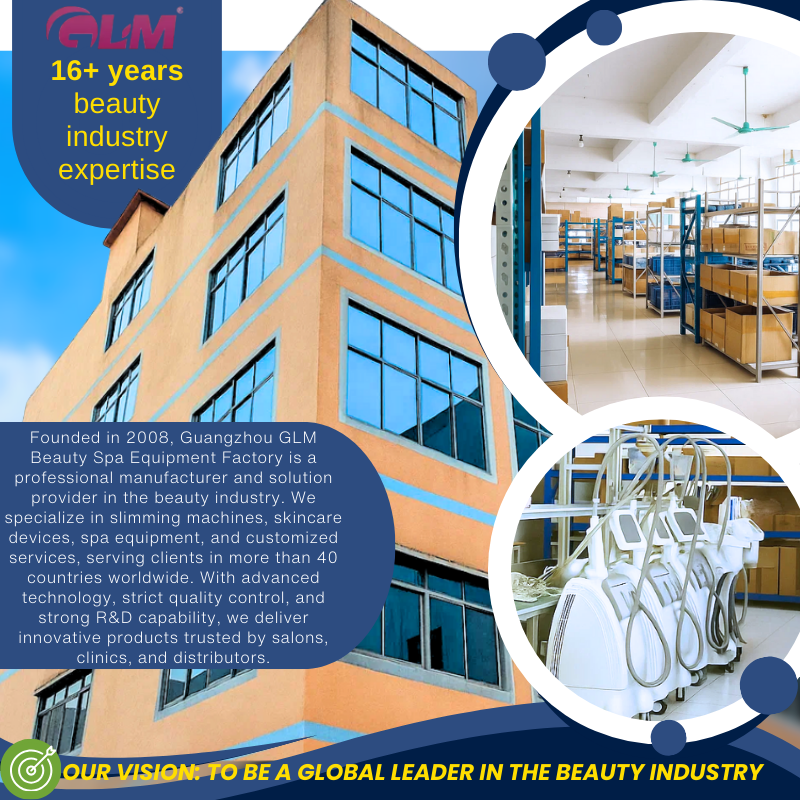
Founded in 2008, Guangzhou GLM Beauty Spa Equipment Factory specializes in research, development, manufacture and selling of beauty and slimming machines. Our production base is located in Guangzhou City, Guangdong Province, China. Since our foundation, we have introduced advanced technologies and equipment, to assure high quality and high performance of our products. With professional marketing guide and excellent after-sales service, our products have been exported to over 20 countries and regions, including Southeast Asia, the Middle East, Europe and the United States, won worldwide praises and gained a good reputation