Introduction
Technology has become an essential part of the modern beauty clinic. From AI-assisted skin analysis and high-intensity focused ultrasound to radiofrequency, microneedling, LED therapy, hydrodermabrasion, and body-contouring systems, professional equipment is changing how clinics assess skin concerns, design treatment plans, and deliver aesthetic services.
For today’s beauty professionals, technology is not simply about owning the newest machine. The real value comes from using the right technology for the right client, treatment objective, and professional protocol.
Modern clinics are increasingly moving toward consultation-led treatment pathways rather than offering isolated machine-based services. Industry discussions in 2026 highlight the growing importance of versatile equipment, integrated workflows, personalized treatment planning, and technologies that can fit naturally into a clinic’s existing service menu.
This shift creates an important opportunity for professional beauty businesses. With properly selected equipment and trained operators, technology can help clinics provide more structured treatments, expand their service portfolio, improve the client experience, and build long-term treatment programs.
Background: Why Beauty Clinics Are Becoming More Technology-Driven
Traditional beauty treatments have long relied on professional products, manual techniques, and the experience of the therapist. These elements remain important, but modern clients increasingly expect more personalized and measurable services.
A client may no longer simply ask for “better skin.” They may want to understand their skin condition, improve visible signs of aging, refine skin texture, reduce the appearance of pigmentation, improve body contours, or maintain results through a structured treatment plan.
This creates a challenge for beauty clinics.
A professional needs to assess the client accurately, select an appropriate technology, control treatment parameters, explain the procedure, and monitor progress. Simply having a machine in the treatment room does not guarantee a better outcome.
Technology therefore needs to become part of the entire client journey.
A modern workflow may begin with digital skin analysis, followed by consultation and treatment planning. The client might then receive a technology-based facial, RF treatment, HIFU session, LED therapy, or another professional service depending on their needs. Progress can subsequently be documented and reviewed during future appointments.
Professional clinics already demonstrate this combination of technologies in practice. For example, aesthetic practices may offer skin analysis alongside HIFU, RF microneedling, IPL, diode laser, and other energy-based technologies.
The machine is therefore becoming less of an isolated product and more of a component within a complete professional service.
Technology and Mechanism: How Modern Beauty Equipment Works
Different technologies address different layers, structures, and cosmetic concerns. Understanding their basic mechanisms helps operators build more logical treatment protocols.
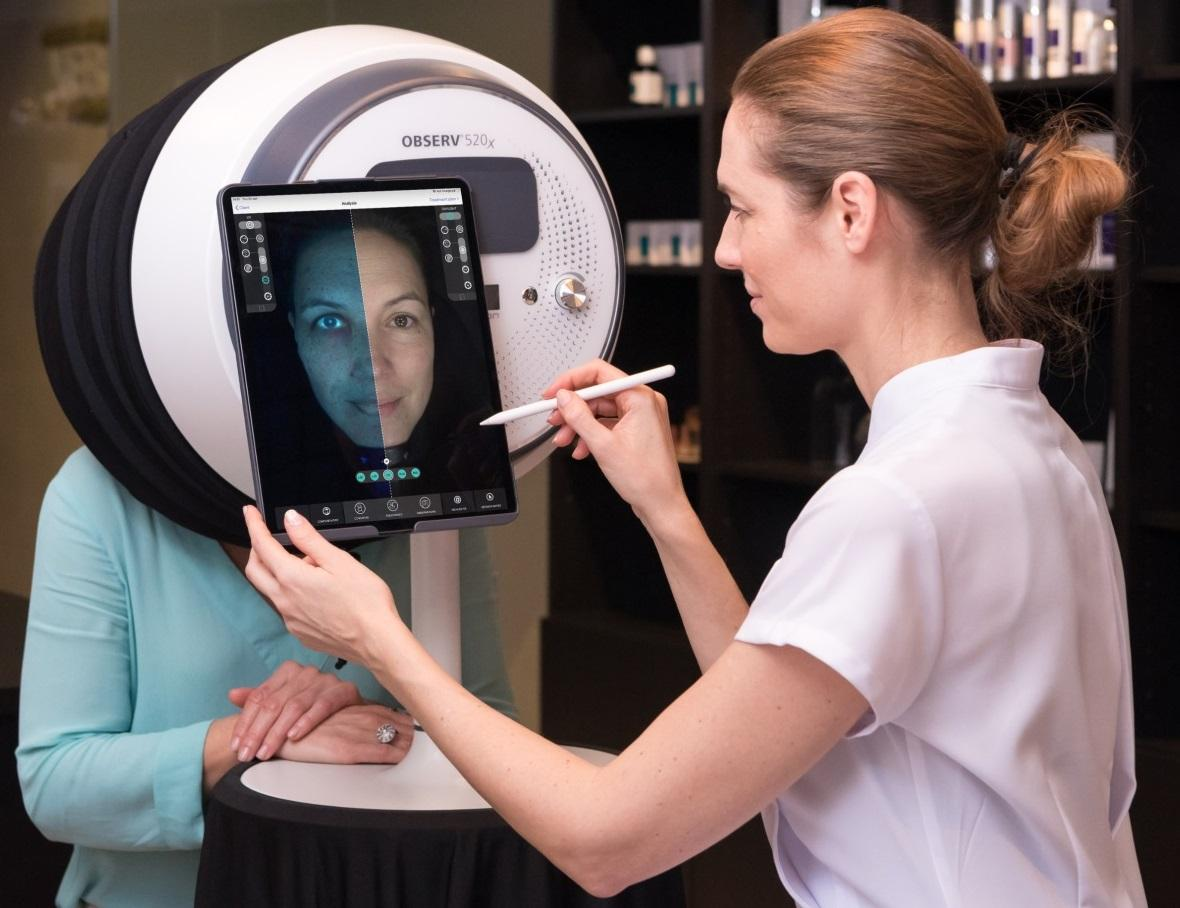
1. Skin Analysis Technology
A professional skin analyzer uses cameras, specialized lighting, sensors, or imaging systems to evaluate visible and less obvious skin characteristics.
Depending on the system, analysis may include:
- Skin texture
- Pore appearance
- Fine lines and wrinkles
- Pigmentation
- Redness
- Sebum
- Hydration
- UV-related skin changes
Advanced imaging systems can use different light sources to reveal characteristics that are difficult to assess under normal lighting. Some professional analysis systems, for example, use polarized and UV illumination to provide additional information about pigmentation, redness, texture, and other skin conditions.
For a beauty professional, the value is not simply the image itself. The analysis can create a visual starting point for consultation and provide a reference for future appointments.
This makes skin analysis particularly useful for clinics offering personalized skincare programs.
2. HIFU and Focused Ultrasound
High-Intensity Focused Ultrasound, commonly known as HIFU, uses concentrated ultrasound energy at controlled depths.
Rather than relying primarily on surface heating, focused ultrasound delivers energy to specific tissue depths. The localized thermal effect can support controlled tissue remodeling and collagen-related processes.
HIFU is commonly positioned within professional services focused on skin tightening, lifting, and facial contouring. Some professional systems provide different cartridges or depths to accommodate different treatment areas.
Its main advantage from an operator perspective is depth control. Instead of treating the entire surface in the same way, practitioners can select a treatment approach according to the target area and desired objective.
This is one reason focused ultrasound continues to appear in professional aesthetic treatment menus alongside RF, laser, and microneedling technologies.
3. Radiofrequency Technology
Radiofrequency, or RF, uses electromagnetic energy to generate controlled thermal effects within tissue.
In professional aesthetic treatments, RF is widely associated with skin tightening, texture improvement, and collagen-focused treatments. Depending on the device, RF energy can be delivered through different systems, including monopolar, bipolar, multipolar, or microneedling-based platforms.
RF microneedling takes this concept further by combining controlled micro-injury with RF energy delivered at selected depths. This allows practitioners to address skin texture, pores, fine lines, and certain scar-related concerns through a more targeted professional procedure.
Modern clinics increasingly use RF as part of broader treatment strategies rather than presenting it as a single-purpose technology.
4. LED and Light-Based Technologies
LED therapy uses specific wavelengths of light to interact with the skin without the same mechanism used by ablative laser treatments.
Different wavelengths are commonly selected for different cosmetic objectives. For example, red and near-infrared light are widely used in professional and cosmetic settings for skin-supportive applications, while blue light is commonly associated with blemish-focused protocols.
LED systems can be useful as standalone services or as complementary treatments within a broader facial program.
Their relatively simple treatment workflow also makes them attractive for clinics looking to build repeatable services around professional skincare and other technologies.
5. Hydrodermabrasion and Multi-Function Facial Systems
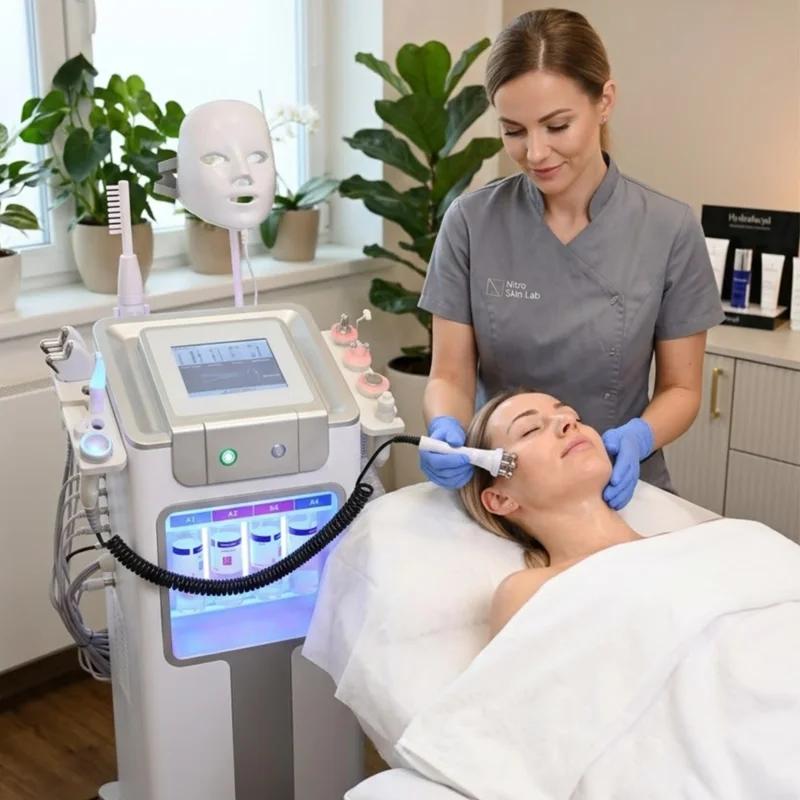
Modern facial platforms may combine cleansing, exfoliation, hydration, infusion, oxygen-related treatments, or other functions within one professional system.
Hydrodermabrasion, for example, uses a controlled flow of solution and suction to help cleanse and exfoliate the skin while supporting hydration-focused treatments.
For a clinic, multi-function facial equipment can create several service combinations without requiring a completely separate machine for every step.
However, versatility should not be confused with effectiveness. A machine with many functions only creates value when each function has a clear role in the treatment protocol
Advantages and Comparison: Professional Technology vs. Home Beauty Devices
The growth of consumer beauty devices has made technology more accessible. Handheld LED devices, home RF products, cleansing tools, and other compact systems can provide convenient maintenance between professional appointments.
However, professional clinic equipment serves a different purpose.
Greater Parameter Control
Professional systems are generally designed with more extensive controls and treatment parameters. Operators can select settings according to the treatment area, skin condition, technology, and established protocol.
This level of control is particularly important when a treatment depends on energy delivery, treatment depth, pulse characteristics, or other technical variables.
Professional Treatment Workflow
A professional treatment is more than the device itself.
It can include consultation, skin analysis, contraindication screening, treatment preparation, controlled operation, documentation, aftercare, and follow-up.
Home devices generally cannot reproduce the complete professional workflow.
Broader Treatment Capability
Professional platforms may support larger treatment areas, interchangeable handpieces, multiple cartridges, different energy levels, or specialized applicators.
This allows clinics to develop treatment menus around different client needs.
Operator Expertise
Technology does not replace professional judgment.
A trained operator understands how to select an appropriate treatment, adjust parameters, recognize unsuitable cases, communicate realistic expectations, and follow proper treatment procedures.
This human component is one of the biggest differences between professional aesthetic equipment and consumer beauty gadgets.
Applications: How Technology Supports Different Client Needs
The most effective technology strategy begins with client needs rather than machine specifications.
Anti-Aging and Skin Tightening
For clients concerned about laxity, fine lines, and reduced skin firmness, clinics may use technologies such as HIFU, RF, RF microneedling, or selected light-based treatments.
These technologies can be positioned within a longer-term skin maintenance program rather than as isolated procedures.
Skin Texture and Pore Concerns
Clients concerned about uneven texture, enlarged pores, or certain types of superficial scarring may benefit from professional protocols involving RF microneedling, microneedling, hydrodermabrasion, or other appropriate technologies.
The advantage of a professional clinic is the ability to combine treatment technology with skincare, consultation, and follow-up.
Hydration and Facial Rejuvenation
Hydrodermabrasion, infusion-focused systems, oxygen-related facial technologies, LED, and professional skincare can be combined to create structured facial programs.
These services can be particularly useful for clinics looking to create repeat appointments rather than relying only on one-time treatments.
Body Contouring and Body Care
Technology also plays an important role in professional body treatments.
Depending on the device, clinics may use technologies such as radiofrequency, ultrasound cavitation, vacuum systems, compression therapy, or other body-focused platforms.
The important point is that each technology should have a defined purpose. For example, RF may be incorporated into protocols focused on skin appearance and firmness, while vacuum-based systems may be used for massage-oriented or circulation-focused applications.
Professional body treatments require appropriate client assessment, realistic communication, trained operators, and clearly defined protocols.
Personalized Treatment Programs
Perhaps the most important application of technology is personalization.
Instead of offering every client the same facial or body treatment, clinics can use consultation and analysis to create a more individualized pathway.
For example:
Skin analysis → Consultation → Treatment selection → Professional device treatment → Aftercare → Progress review
This approach turns technology into part of a complete service experience.
Technology as a Business Tool for Modern Beauty Clinics
From a business perspective, professional equipment can do more than add another service to a menu.
A well-selected device can help a clinic:
- Expand treatment categories
- Create repeat-session programs
- Increase treatment variety
- Improve consultation quality
- Differentiate from basic salons
- Build more structured client journeys
- Introduce complementary services
- Increase the utilization of treatment rooms
However, purchasing more equipment is not automatically better.
Current industry guidance increasingly emphasizes operational fit: available treatment-room space, practitioner training, maintenance, accessories, workflow, and the actual demand of the clinic's target customers should all be considered before investment.
For example, a multifunction facial system may be highly practical for a facial-focused studio, while a larger aesthetic clinic may gain more value from specialized HIFU, RF, laser, or body-contouring equipment.
The best technology is therefore not necessarily the machine with the longest specification sheet.
It is the machine that can be used consistently, safely, professionally, and profitably within the clinic's existing workflow.
What Should Clinics Consider When Choosing Professional Equipment?
Before investing in a new beauty device, clinic owners and operators should evaluate several factors.
Treatment Demand
Does the technology address a concern that existing or potential clients actually have?
Operator Training
Can practitioners receive adequate technical training and understand the treatment protocol?
Parameter Flexibility
Does the system provide enough control to accommodate different treatment areas and client requirements?
Maintenance and Support
Are handpieces, accessories, consumables, replacement parts, warranty, and technical support readily available?
Treatment Room Efficiency
Can the device fit comfortably into the clinic without creating unnecessary setup or cleaning time?
Service Expansion
Can the equipment support multiple treatment pathways or complementary services?
Compliance and Documentation
Does the equipment meet the applicable requirements for the intended market, and can the clinic establish appropriate treatment records and protocols?
These factors often matter more than simply choosing the newest technology available.
Conclusion
Technology is reshaping the modern beauty clinic by making professional treatments more structured, measurable, customizable, and diverse.
From skin analysis and HIFU to RF, microneedling, LED, hydrodermabrasion, and body-contouring systems, each technology offers a different mechanism and application. The real value appears when these technologies are combined with professional expertise, appropriate treatment protocols, consultation, and long-term client care.
The future of beauty technology is therefore unlikely to be defined simply by how many machines a clinic owns.
Instead, successful clinics will focus on how effectively technology supports the complete client journey—from assessment and treatment selection to professional operation, aftercare, and progress tracking.
For equipment manufacturers and professional beauty businesses, this creates an important principle: advanced technology should not only look impressive in the treatment room. It should solve practical problems for operators and clients.
When the right technology is matched with the right professional workflow, beauty equipment becomes more than a machine. It becomes part of a modern clinic's ability to deliver consistent services, develop specialized treatment programs, and respond to increasingly personalized client expectations
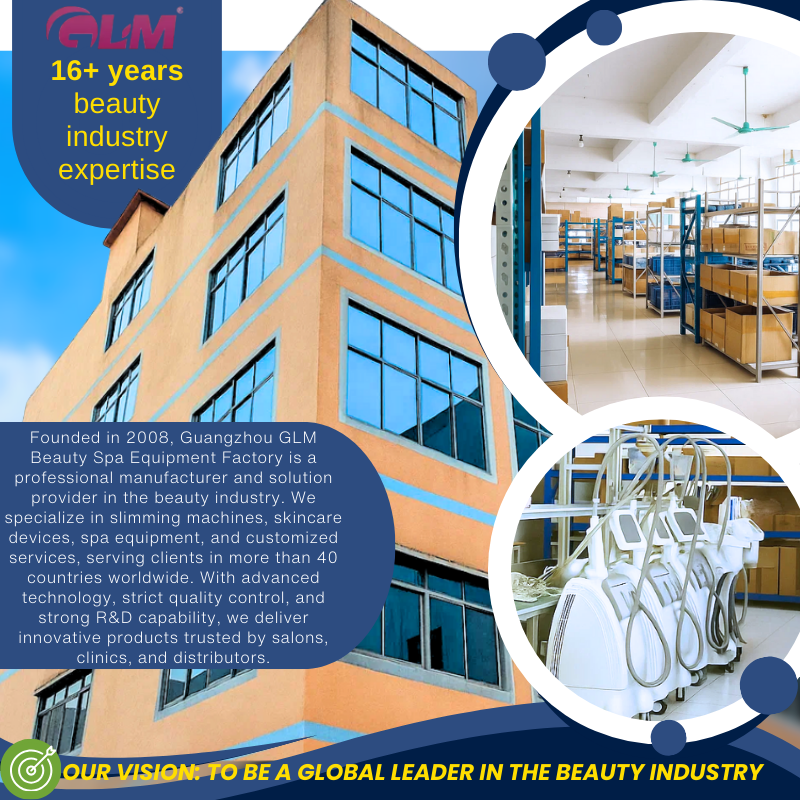
Founded in 2008, Guangzhou GLM Beauty Spa Equipment Factory specializes in research, development, manufacture and selling of beauty and slimming machines. Our production base is located in Guangzhou City, Guangdong Province, China. Since our foundation, we have introduced advanced technologies and equipment, to assure high quality and high performance of our products. With professional marketing guide and excellent after-sales service, our products have been exported to over 20 countries and regions, including Southeast Asia, the Middle East, Europe and the United States, won worldwide praises and gained a good reputation