
Introduction
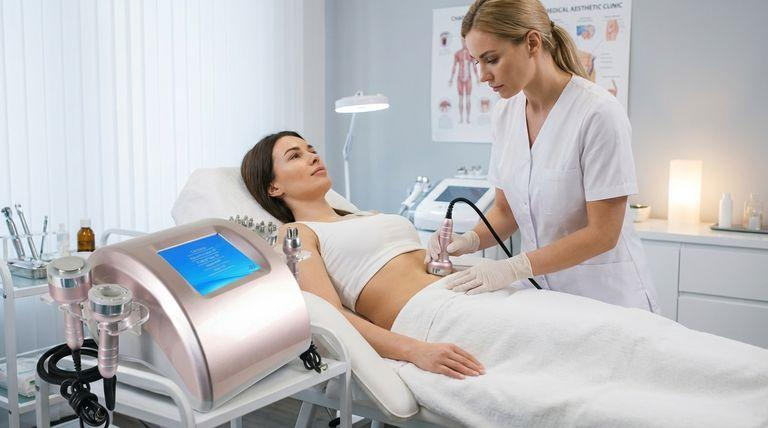
Ultrasonic cavitation has become an increasingly recognized technology in the professional body-contouring market. Unlike general weight-loss approaches, ultrasonic cavitation is designed around a more localized objective: addressing selected areas where clients have visible or persistent subcutaneous fat and want to refine their body contours.
For beauty salons, aesthetic clinics, and professional body-contouring centers, understanding ultrasonic cavitation treatment areas is just as important as understanding the technology itself. The same device may be used across several body zones, but each area requires appropriate applicator selection, movement technique, treatment intensity, and client assessment.
The abdomen, waist, flanks, thighs, hips, buttocks, back, and upper arms are among the areas commonly considered for professional body-contouring protocols. However, treatment should not simply be based on where a client wants fat reduction. Tissue thickness, anatomy, treatment-head design, device parameters, and safety considerations all influence whether an area is appropriate.
This is where professional ultrasonic cavitation equipment provides value. A properly designed system can give operators greater control over energy delivery and treatment coverage, allowing clinics to develop more structured protocols instead of applying the same procedure to every body area.
Background / Problem
Localized fat can be difficult to address through lifestyle changes alone. A client may maintain a relatively stable body weight while still being concerned about the abdomen, love handles, thighs, upper arms, or back.
These concerns have created demand for non-invasive body-contouring services. However, one common misunderstanding is that ultrasonic cavitation should be treated as a general slimming or weight-loss procedure. In professional practice, it is more appropriate to position the technology around localized body contouring and silhouette refinement.
The treatment area matters because different parts of the body have different anatomical characteristics. The abdomen generally provides a relatively broad treatment surface, while the upper arms or inner thighs require more controlled handling. Areas close to bones or sensitive anatomical structures may not be appropriate for standard cavitation protocols.
Professional operators therefore need to evaluate more than the visible fat deposit. They need to consider whether there is sufficient soft tissue, whether the applicator can maintain proper contact, whether the treatment head is suitable for the size of the area, and whether the selected device protocol is appropriate.
The U.S. FDA explains that therapeutic ultrasound can transmit energy into the fat layer and may cause fat cells to rupture, potentially reducing circumference in the treated area. It also emphasizes complete skin contact and the use of ultrasound gel, while identifying several situations where ultrasound body-contouring procedures should not be performed.
Technology / Mechanism
Ultrasonic cavitation uses ultrasound energy delivered through a treatment applicator placed against the skin with an appropriate coupling medium, typically ultrasound gel.
Depending on the device design and operating parameters, ultrasonic energy interacts with tissue beneath the skin. In cavitation-based body-contouring systems, the intended effect is to influence localized adipose tissue and support a reduction in the appearance or volume of targeted fat deposits.
The technology is particularly relevant to areas where clients can identify localized, pinchable soft tissue rather than generalized weight gain.
1. Abdomen
The abdomen is one of the most frequently requested ultrasonic cavitation treatment areas.
For professional clinics, abdominal treatment can be divided into upper, middle, and lower abdominal zones depending on the client's anatomy and treatment objective. The broad surface makes it relatively practical for a larger body-contouring applicator.
Typical client goals include:
- Refining the waistline
- Addressing localized abdominal fat
- Improving overall body proportions
- Supporting a more defined abdominal contour
Because the abdomen is a relatively large area, professional devices with appropriately sized treatment heads can improve coverage and treatment efficiency.
2. Waist and Flanks
The waist and flanks, commonly known as love-handle areas, are another major application zone.
Clients may specifically request treatment around the sides of the waist because these deposits can remain noticeable even when overall body weight is relatively stable.
For operators, treating the abdomen together with the flanks can create a more balanced contour rather than focusing on a single isolated spot. Device ergonomics are important here because the operator needs to maintain consistent contact while following the natural curve of the body.
3. Thighs
Both the inner and outer thighs may be considered in body-contouring programs when sufficient soft tissue is present and the selected device protocol allows treatment.
Inner-thigh treatment generally requires more careful positioning because the area has a different anatomical profile from the outer thigh. Outer thighs and hip areas may be incorporated into broader silhouette-refinement protocols.
For clinics, adjustable parameters and appropriately sized applicators can help operators adapt the treatment to different thigh areas rather than using identical settings for every client.
4. Hips and Buttocks
The hips and buttocks can also be included in professional body-contouring programs.
The objective is generally contour refinement rather than simply reducing volume. An operator may evaluate the relationship between the waist, hips, and upper thighs when developing a treatment plan.
This is one reason why professional consultation matters. A body-contouring treatment should consider the client's overall silhouette instead of treating every visible fat pocket independently.
5. Upper Arms
The upper arms are a smaller and more curved treatment area compared with the abdomen.
Clients may seek treatment for localized fullness around the posterior or lateral upper arm. A smaller or ergonomically designed applicator can make it easier for an operator to maintain consistent contact across the treatment zone.
This area also demonstrates why professional equipment design matters. A large treatment head may be efficient for the abdomen but less convenient for smaller body zones.
6. Back and Bra-Line Area
The lower back, upper back, and bra-line region may also be considered when localized soft tissue is present.
These areas can be challenging for clients because they are difficult to target through conventional self-directed routines. From a professional treatment perspective, the operator can assess the distribution of tissue and select a treatment zone according to the client's body shape.
Some professional systems combine cavitation with other technologies, such as radiofrequency or vacuum, although these technologies have different mechanisms and should not be presented as interchangeable with ultrasonic cavitation.
Advantages / Comparison
One of the major advantages of professional ultrasonic cavitation equipment is treatment-area flexibility.
A professional system can be designed with different applicator sizes, adjustable energy levels, ergonomic handpieces, and preset or customizable protocols. These features can help operators adapt treatment to large areas such as the abdomen and smaller areas such as the upper arms.
Compared with attempting to use a generic home device, professional treatment also benefits from operator assessment. The practitioner can determine whether the client's target area contains sufficient soft tissue, identify areas that should be avoided, maintain appropriate coupling, and monitor the client's response during treatment.
This does not mean that every professional cavitation device is automatically more effective than every home device. Rather, the main distinction is the professional treatment environment: trained operation, individualized assessment, controlled protocols, equipment maintenance, and appropriate client screening.
For clinics and salons, this approach can also support a broader service portfolio. One professional body-contouring platform may be incorporated into abdomen, waist, thigh, arm, hip, and back protocols, depending on the device's intended indications and applicator configuration.
Applications / Client Needs
A professional ultrasonic cavitation consultation should begin with the client's actual contouring objective.
For abdominal contouring
A client may want to address localized abdominal fullness and create a more balanced waist-to-body proportion. The operator can map the treatment area before selecting an appropriate applicator and protocol.
For waist refinement
Clients concerned about love handles may benefit from a treatment plan that considers both flanks and the surrounding waist area rather than focusing on one small section.
For thigh contouring
The treatment plan can distinguish between inner-thigh and outer-thigh concerns. Applicator size, movement pattern, and treatment coverage should be adapted accordingly.
For upper-arm contouring
Because the upper arm is smaller and more curved, precision and comfortable handling become particularly important. A professional operator can control the treatment head more accurately than a client attempting to treat a difficult area without assistance.
For multi-area body programs
Some clients are interested in overall silhouette refinement rather than one isolated body zone. In these cases, clinics can develop staged treatment programs covering the abdomen, waist, thighs, hips, or arms according to individual assessment.
The treatment plan should remain realistic. Ultrasonic cavitation should not be marketed as a replacement for weight management, exercise, or medical treatment. Results can vary according to the client's tissue characteristics, device parameters, treatment protocol, and consistency.
Safety and Professional Assessment
Treatment-area selection must always be combined with appropriate screening.
The FDA notes that ultrasound body-contouring procedures require proper skin contact and coupling gel and identifies contraindications including open wounds or compromised skin surfaces, active implanted electronic devices, and metal beneath the skin from an implant or injury. Potential complications can include discomfort, redness, swelling, blistering, burns, and nerve damage.
Professional education is therefore an important part of equipment value. A sophisticated machine is only one component of a safe treatment system. Operators also need appropriate training, manufacturer instructions, client screening, correct applicator handling, and a clear understanding of areas that should be avoided.
Conclusion
Ultrasonic cavitation treatment areas are not simply a list of body parts where a machine can be placed. Effective professional body contouring depends on matching the technology, applicator, treatment area, client anatomy, and treatment objective.
The abdomen, waist, flanks, thighs, hips, buttocks, upper arms, and selected back areas are commonly considered for localized body-contouring applications. However, suitability should always be assessed individually, and areas close to bones, sensitive structures, implants, compromised skin, or other contraindications require appropriate avoidance or professional evaluation.
For beauty salons and aesthetic clinics, the value of a professional ultrasonic cavitation machine lies not only in ultrasound energy itself. Applicator design, controllability, treatment coverage, ergonomic operation, and protocol flexibility all contribute to how effectively the equipment can be incorporated into a professional service.
When technology is combined with proper assessment and trained operation, ultrasonic cavitation can become a useful component of a modern body-contouring service—helping professionals address specific client concerns while maintaining realistic expectations and a structured treatment approach
Founded in 2008, Guangzhou GLM Beauty Spa Equipment Factory specializes in research, development, manufacture and selling of beauty and slimming machines. Our production base is located in Guangzhou City, Guangdong Province, China. Since our foundation, we have introduced advanced technologies and equipment, to assure high quality and high performance of our products. With professional marketing guide and excellent after-sales service, our products have been exported to over 20 countries and regions, including Southeast Asia, the Middle East, Europe and the United States, won worldwide praises and gained a good reputation