Introduction
In the world of professional aesthetic treatments, few questions are asked more frequently than, "Which technology penetrates deeper—ultrasound or radio frequency (RF)?" While both technologies are widely used for skin tightening, facial rejuvenation, and anti-aging treatments, they work in fundamentally different ways and target different tissue layers.
For aesthetic clinics, beauty salons, and distributors of professional beauty equipment, understanding these differences is essential. Selecting the appropriate technology not only improves treatment outcomes but also helps practitioners recommend personalized treatment plans that align with each client's skin condition, age, and cosmetic goals.
The answer is not as simple as stating that one technology is "better" than the other. Instead, ultrasound and RF complement one another by addressing different anatomical structures beneath the skin. Their unique penetration depths, heating mechanisms, and biological effects make each technology suitable for specific applications.
In this guide, we'll explore how ultrasound and RF work, compare their penetration capabilities, examine their clinical advantages, and explain why many modern aesthetic clinics integrate both technologies into comprehensive skin rejuvenation programs.
Background: Why Penetration Depth Matters
Skin aging is a multi-layered process rather than a single surface problem. Fine lines, wrinkles, sagging skin, volume loss, and reduced elasticity originate from changes occurring at different depths beneath the skin.
Professional practitioners understand that effective treatment depends on targeting the correct tissue layer instead of simply delivering more energy.
Generally speaking, the skin consists of several important layers:
- Epidermis
- Dermis
- Subcutaneous fat
- Superficial Musculoaponeurotic System (SMAS)
Each layer plays a different role in maintaining youthful skin.
For example:
- The epidermis influences skin texture and pigmentation.
- The dermis contains collagen and elastin fibers responsible for firmness.
- The subcutaneous fat contributes to facial contours.
- The SMAS layer provides structural support for facial lifting.
As people age, collagen production slows, elastin fibers weaken, and connective tissues gradually lose strength. The result is skin laxity, deeper wrinkles, enlarged pores, and reduced facial definition.
This is where energy-based aesthetic technologies become valuable.
Instead of relying solely on topical skincare products—which primarily affect the skin's surface—professional devices deliver controlled energy beneath the skin to stimulate natural tissue remodeling.
However, not every technology reaches the same depth.
Some treatments are designed to improve superficial skin quality, while others target deeper support structures responsible for lifting and tightening. Understanding this distinction is one of the key factors in achieving predictable, natural-looking results.
Understanding Ultrasound Technology
Ultrasound utilizes high-frequency acoustic waves rather than electrical energy.
These sound waves travel through tissue with remarkable precision and can be focused at predetermined depths without significantly affecting the skin surface.
This ability makes focused ultrasound one of the few non-invasive technologies capable of delivering thermal coagulation points deep beneath the skin while leaving the epidermis largely unharmed.
When ultrasound energy converges at the target depth, localized temperatures typically reach approximately 60–70°C, triggering immediate collagen contraction and initiating a long-term wound-healing response.
Over the following weeks and months, fibroblasts produce new collagen and elastin fibers, gradually improving skin firmness and lifting effects.
One of ultrasound's greatest advantages is its ability to precisely target multiple tissue depths by using different treatment cartridges.
Typical penetration depths include:
| Treatment Depth | Primary Target | Common Application |
|---|---|---|
| 1.5 mm | Superficial dermis | Fine lines and skin texture |
| 3.0 mm | Deep dermis | Collagen remodeling and skin tightening |
| 4.5 mm | SMAS layer | Non-surgical facial lifting |
| 6.0–13.0 mm* | Body tissues (selected systems) | Body contouring and fat reduction |
*Available on certain professional body-focused ultrasound platforms.
Unlike surface-heating technologies, focused ultrasound concentrates energy at specific focal points, creating microscopic thermal injury zones while minimizing heat diffusion to surrounding tissues.
Because of this characteristic, ultrasound treatments are particularly effective for:
- Mild to moderate facial laxity
- Jawline definition
- Brow lifting
- Neck tightening
- Double chin improvement
- Long-term collagen regeneration
- Non-surgical facial lifting procedures
For aesthetic clinics seeking deeper structural rejuvenation, ultrasound has become an important solution because it can reach tissue layers that many other non-invasive technologies cannot effectively access.
How Radio Frequency (RF) Works
Unlike ultrasound, radio frequency technology generates heat through electrical energy rather than acoustic waves.
RF devices emit alternating electrical currents that encounter natural resistance within biological tissues. This resistance converts electrical energy into heat, gradually increasing tissue temperature across the treatment area.
Instead of creating highly focused thermal points, RF generally produces a broader and more uniform heating pattern, making it especially effective for stimulating collagen throughout the dermis.
The therapeutic temperatures achieved during RF treatments are carefully controlled to encourage collagen remodeling without damaging surrounding tissues. Depending on the device design and treatment protocol, skin temperatures are commonly maintained within a range that promotes fibroblast activity and supports the production of new collagen and elastin over time.
Different RF systems are engineered to reach different tissue depths. Monopolar RF is known for its ability to penetrate more deeply, while bipolar and multipolar RF primarily target more superficial layers with greater control over energy distribution. Advanced professional platforms may also combine RF with vacuum suction, microneedling, or cooling technologies to enhance treatment precision and patient comfort
Technology Mechanism (Continued)
One of RF's greatest strengths is its versatility. By adjusting electrode configuration, power output, pulse duration, and treatment parameters, practitioners can customize treatments for different skin conditions and anatomical areas.
Unlike focused ultrasound, which delivers energy to discrete focal points at predetermined depths, RF distributes heat throughout a broader tissue volume. This larger treatment zone often results in more uniform collagen stimulation across the dermis, making RF particularly effective for improving overall skin quality rather than targeting a single structural layer.
Professional RF systems are commonly categorized as follows:
| RF Technology | Typical Treatment Depth | Primary Benefits |
|---|---|---|
| Bipolar RF | Superficial to mid dermis | Fine lines, skin texture, delicate facial areas |
| Multipolar RF | Mid dermis | Skin tightening, collagen stimulation, maintenance treatments |
| Monopolar RF | Deep dermis and subcutaneous tissue | Skin tightening, contour refinement, body treatments |
| Fractional RF Microneedling | Dermis with controlled micro-injuries | Acne scars, enlarged pores, wrinkles, skin resurfacing |
Because RF heats tissue more diffusely, it is frequently selected for treatments involving:
- Overall facial rejuvenation
- Skin tightening
- Wrinkle reduction
- Enlarged pores
- Acne scar improvement
- Skin texture refinement
- Body contouring
- Cellulite appearance reduction
- Maintenance anti-aging programs
For many clients, RF treatments also provide a comfortable treatment experience with minimal downtime, making them well suited for routine aesthetic maintenance.
Ultrasound vs RF: Which Penetrates Deeper?
The short answer is:
Focused ultrasound generally penetrates deeper than conventional RF technologies.
However, penetration depth alone does not determine which treatment is more effective. The optimal choice depends on the tissue layer requiring treatment and the patient's clinical goals.
The comparison below highlights the key differences.
| Feature | Ultrasound | Radio Frequency (RF) |
|---|---|---|
| Energy Type | Acoustic waves | Electrical energy |
| Heating Pattern | Focused thermal coagulation points | Volumetric tissue heating |
| Typical Treatment Depth | 1.5–13 mm (system dependent) | Approximately 1–6 mm (technology dependent) |
| Deepest Target | SMAS and deeper soft tissue | Dermis and subcutaneous tissue |
| Primary Effect | Structural lifting and collagen regeneration | Skin tightening and texture improvement |
| Precision | Highly focused | Broad and uniform |
| Best For | Lifting sagging tissue | Improving skin quality and elasticity |
| Downtime | Minimal | Minimal |
This comparison illustrates that the two technologies should not be viewed as competitors. Instead, they address different biological structures.
Ultrasound is designed to influence deeper supporting tissues responsible for facial lifting.
RF is optimized for enhancing collagen throughout the dermis, improving skin firmness, elasticity, and surface appearance.
Many experienced practitioners therefore ask a different question:
Which tissue layer needs treatment?
Answering that question typically leads to the appropriate technology—or, in many cases, a combination of both.
Why Deeper Isn't Always Better
Consumers often assume that deeper penetration automatically produces superior results. In clinical practice, that assumption is not always accurate.
Each aesthetic concern originates in a specific tissue layer.
For example:
- Fine lines primarily develop within the superficial dermis.
- Enlarged pores are associated with collagen loss around hair follicles.
- Acne scars affect varying depths of the dermis.
- Mild skin laxity often involves dermal collagen depletion.
- More advanced facial sagging is associated with deeper connective tissues and the SMAS.
Treating superficial concerns with unnecessarily deep energy may not improve results.
Conversely, attempting to lift significant tissue laxity using only superficial heating may provide limited structural improvement.
This is why professional consultation and accurate skin assessment remain essential before selecting a treatment protocol.
Modern aesthetic devices increasingly support multiple treatment modes, enabling practitioners to tailor energy delivery according to each patient's age, skin thickness, treatment area, and aesthetic objectives.
Rather than relying on a "one-size-fits-all" approach, professional treatment planning emphasizes precision, personalization, and long-term tissue health.
Clinical Advantages of Ultrasound
Focused ultrasound has become an important technology for non-invasive lifting because it can stimulate collagen remodeling at tissue depths that are difficult to reach using many other external energy-based devices.
Its primary advantages include:
1. Deep Structural Targeting
Ultrasound can precisely deliver energy to multiple depths, including the SMAS layer, supporting natural lifting without surgery.
2. High Precision
Energy is concentrated at microscopic focal points, reducing unnecessary heating of surrounding tissues.
3. Progressive Results
Collagen remodeling continues for several months after treatment, providing gradual and natural-looking improvement.
4. Minimal Recovery Time
Most patients can resume daily activities shortly after treatment.
5. Excellent for Facial Contouring
Ultrasound is particularly effective for improving:
- Jawline definition
- Neck laxity
- Brow elevation
- Lower face tightening
- Mild to moderate facial sagging
However, ultrasound is generally less effective for improving superficial skin texture, enlarged pores, and acne scars, where RF-based technologies often demonstrate stronger performance.
Clinical Advantages of RF
Radio frequency remains one of the most widely adopted technologies in aesthetic medicine because of its versatility and ability to address a broad range of cosmetic concerns.
Key benefits include:
Uniform Collagen Stimulation
RF delivers consistent thermal energy throughout the dermis, encouraging widespread collagen remodeling.
Improved Skin Quality
Patients commonly experience improvements in:
- Skin firmness
- Elasticity
- Fine wrinkles
- Overall skin texture
- Pore appearance
Flexible Treatment Options
Professional RF platforms can be configured for facial rejuvenation, body contouring, cellulite management, scar revision, and skin resurfacing, depending on the technology incorporated.
Comfortable Maintenance Treatments
Because RF treatments are generally associated with minimal downtime, they are often incorporated into ongoing anti-aging programs that help maintain collagen production over time.
For clinics seeking a versatile device capable of treating multiple indications, RF technology continues to be a cornerstone of many aesthetic treatment portfolios
Applications & Client Needs
Selecting between ultrasound and RF should always begin with a comprehensive skin assessment rather than a preference for one technology over another. Every client presents unique concerns related to skin quality, tissue laxity, age, lifestyle, and treatment expectations. Professional practitioners evaluate these factors to determine which energy source—or combination of technologies—will deliver the most appropriate outcome.
For clients in their late twenties to thirties, preventative collagen stimulation is often the primary objective. At this stage, RF treatments are frequently recommended to maintain skin firmness, improve elasticity, and delay visible signs of aging before significant tissue laxity develops.
Clients in their forties and fifties typically experience more noticeable facial sagging and reduced structural support. Focused ultrasound can provide targeted stimulation at deeper tissue layers, helping improve facial contours and lifting without surgery. Many clinics incorporate RF either before or after ultrasound sessions to enhance skin texture while deeper tissues continue their natural remodeling process.
Body treatments also benefit from selecting the appropriate technology according to treatment goals. RF is commonly chosen for skin tightening after weight loss, cellulite management, and improving overall skin quality. Ultrasound-based body systems may be used in selected protocols where deeper tissue targeting or body contouring is desired.
Ultimately, the best treatment plan is individualized rather than standardized. Professional assessment remains the foundation of safe and effective aesthetic outcomes.
Why Many Professional Clinics Combine Ultrasound and RF
As aesthetic technologies continue to evolve, an increasing number of professional clinics no longer view ultrasound and RF as competing treatments. Instead, they recognize that the two technologies complement one another by addressing different biological structures within the skin.
A combination approach offers several advantages:
- Ultrasound targets deeper connective tissues responsible for structural lifting.
- RF improves collagen density throughout the dermis.
- Multiple skin concerns can be addressed within a comprehensive treatment program.
- Results often appear more balanced and natural because both skin quality and tissue support are improved.
- Treatment plans can be customized according to age, anatomy, and long-term maintenance goals.
Many advanced aesthetic platforms now integrate multiple energy modalities into a single treatment workflow. This allows practitioners to deliver personalized protocols while improving clinical efficiency and expanding the range of treatable indications.
For distributors, clinics, and beauty equipment manufacturers, multi-technology platforms also provide greater flexibility to meet the diverse needs of today's aesthetic market.
Choosing the Right Professional Beauty Device
When evaluating professional aesthetic equipment, penetration depth should be considered alongside several other important factors.
Clinics should evaluate:
- Treatment indications and target patient population
- Available energy technologies
- Adjustable treatment parameters
- Safety features and temperature monitoring
- Operator training requirements
- Treatment comfort
- Maintenance costs
- Clinical versatility
- Regulatory certifications
- Long-term return on investment
Rather than focusing solely on maximum energy output or deepest penetration, practitioners should prioritize systems that deliver consistent, controlled, and repeatable clinical outcomes.
For manufacturers, developing equipment with multiple treatment options, intelligent energy control, and ergonomic handpieces can significantly enhance both practitioner experience and patient satisfaction.
Conclusion
So, which penetrates deeper—ultrasound or RF?
In most professional aesthetic applications, focused ultrasound reaches deeper tissue layers than conventional radio frequency technologies, particularly when targeting the SMAS for non-surgical lifting.
However, deeper penetration does not automatically translate into better results. The effectiveness of any treatment depends on matching the technology to the appropriate anatomical layer and the client's specific aesthetic concerns.
Ultrasound excels in structural lifting and deep collagen remodeling, while RF remains highly effective for improving skin texture, elasticity, firmness, and overall skin quality. Together, these technologies form the foundation of many modern non-invasive aesthetic treatment programs.
For aesthetic clinics and professional beauty practitioners, understanding the strengths of each modality enables more personalized treatment planning and more predictable outcomes. As demand for minimally invasive cosmetic procedures continues to grow, integrating advanced energy-based technologies into clinical practice offers opportunities to expand services, improve client satisfaction, and deliver long-lasting, natural-looking results.
Ultimately, the question is not simply "Which penetrates deeper?" but rather "Which technology best addresses the client's needs?" In many cases, the answer is not one or the other—it is the thoughtful combination of both
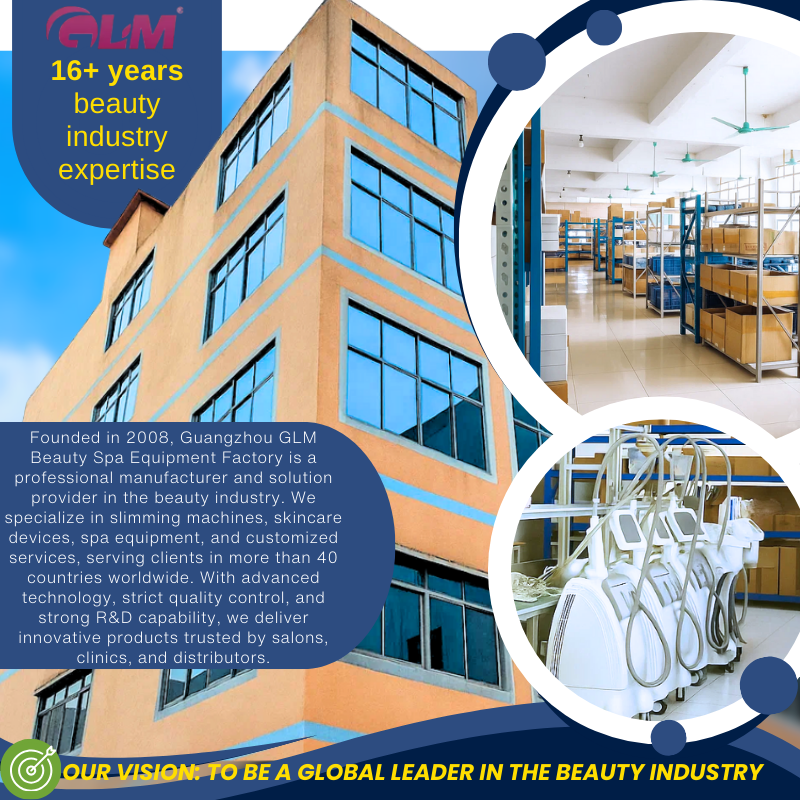
Founded in 2008, Guangzhou GLM Beauty Spa Equipment Factory specializes in research, development, manufacture and selling of beauty and slimming machines. Our production base is located in Guangzhou City, Guangdong Province, China. Since our foundation, we have introduced advanced technologies and equipment, to assure high quality and high performance of our products. With professional marketing guide and excellent after-sales service, our products have been exported to over 20 countries and regions, including Southeast Asia, the Middle East, Europe and the United States, won worldwide praises and gained a good reputation