
Introduction
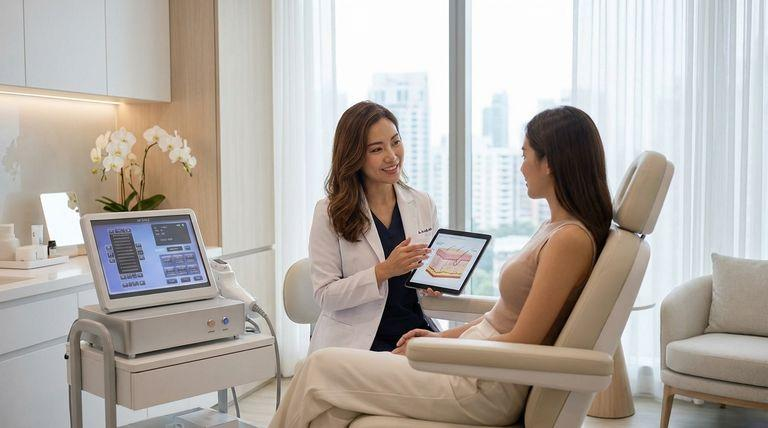
As non-invasive aesthetic treatments continue to gain popularity worldwide, High-Intensity Focused Ultrasound (HIFU) has become one of the most sought-after technologies for skin tightening and facial rejuvenation. Unlike injectables or surgical facelifts, HIFU stimulates the body's natural collagen regeneration process, helping clients achieve firmer, smoother, and younger-looking skin with minimal downtime.
One of the most common questions asked in aesthetic clinics is:
"What age should I start HIFU treatments?"
The answer is not as straightforward as choosing a specific birthday. Skin aging is influenced by genetics, lifestyle, sun exposure, environmental factors, and collagen loss rather than age alone. While some individuals begin noticing skin laxity in their late twenties, others may not require professional lifting treatments until their forties.
For professional beauty clinics and aesthetic practitioners, understanding how HIFU benefits different age groups is essential. Recommending treatments based on skin condition instead of age improves client satisfaction, treatment outcomes, and long-term loyalty.
This article explores how HIFU works, when clients should consider beginning treatment, and why professional HIFU systems remain one of the most valuable investments for modern aesthetic practices.
Background / Problem
Aging is a gradual biological process. Beginning around the age of 25, collagen production naturally decreases by approximately 1% each year. Elastin fibers become weaker, skin hydration declines, and facial support structures slowly lose firmness.
Initially, these changes are almost invisible. Clients may only notice that:
- Makeup no longer sits smoothly.
- Jawlines become less defined.
- Smile lines remain after facial expressions.
- Skin appears less firm than before.
- Fine wrinkles take longer to disappear.
By the mid-thirties, collagen depletion becomes more noticeable. The skin's natural repair ability slows, leading to mild laxity around the cheeks, eyebrows, neck, and jawline.
Without intervention, collagen loss continues to accelerate due to factors including:
- UV exposure
- Smoking
- Stress
- Poor sleep
- Weight fluctuations
- Hormonal changes
Many clients mistakenly believe they should wait until severe sagging appears before seeking treatment. However, once significant tissue laxity develops, reversing the changes becomes considerably more challenging.
Modern aesthetic medicine increasingly emphasizes preventive rejuvenation rather than corrective treatment. Instead of waiting for deep wrinkles or pronounced sagging, many professionals recommend stimulating collagen before visible aging becomes advanced.
This preventive philosophy explains why HIFU has become a cornerstone technology in many aesthetic clinics.
Technology / Mechanism
HIFU, or High-Intensity Focused Ultrasound, delivers concentrated ultrasound energy beneath the skin without damaging its surface.
Unlike laser technologies that primarily target superficial skin layers, HIFU penetrates deeper tissues, reaching multiple treatment depths such as:
- 1.5 mm
- 3.0 mm
- 4.5 mm
Professional HIFU devices can even utilize additional cartridges for body contouring applications.
The focused ultrasound energy creates precise thermal coagulation points at targeted depths, typically reaching temperatures around 60–70°C. These microscopic thermal zones trigger the body's natural wound-healing response without causing visible surface injury.
As a result, fibroblasts become activated and begin producing:
- New collagen
- Elastin
- Structural support proteins
Over the following two to three months, newly synthesized collagen gradually remodels the treated tissue. Clients experience progressive lifting, tightening, and improved skin elasticity while maintaining a natural appearance.
Unlike treatments that simply fill wrinkles temporarily, HIFU encourages the skin to regenerate from within.
Professional HIFU systems also offer practitioners greater flexibility through multiple treatment cartridges, adjustable energy levels, and customized treatment protocols tailored to individual facial anatomy and skin conditions.
This level of precision is difficult for home-use devices to achieve due to their lower energy output and limited treatment depth.
Advantages / Comparison
Why Age Alone Should Not Determine Treatment Timing
A common misconception is that HIFU is designed exclusively for people over forty.
In reality, professional practitioners evaluate several factors beyond chronological age:
- Skin laxity
- Collagen quality
- Facial volume
- Lifestyle
- UV damage
- Weight changes
- Individual aging patterns
For example, a 29-year-old with extensive sun exposure and significant collagen depletion may benefit from HIFU sooner than a healthy 38-year-old with excellent skin quality.
This individualized assessment is one reason why professional clinics consistently achieve more predictable outcomes than one-size-fits-all treatment approaches.
Clients in Their 20s
Most individuals in their early twenties generally have abundant collagen and firm connective tissues.
Routine HIFU treatments are usually unnecessary for this group.
However, there are exceptions where preventive treatments may be appropriate:
- Early skin laxity caused by rapid weight loss
- Premature aging due to excessive UV exposure
- Strong genetic predisposition to early aging
- Preventive maintenance before visible sagging develops
For these clients, practitioners typically recommend conservative treatment settings focused on collagen preservation rather than aggressive lifting.
The objective is maintaining youthful skin for longer rather than correcting severe aging.
Clients Between 30 and 40
Many aesthetic professionals consider the early-to-mid thirties to be the ideal period for introducing HIFU.
During this stage:
- Collagen production begins to slow significantly.
- Mild skin laxity becomes visible.
- Fine lines gradually increase.
- Jawline definition softens.
- Facial firmness decreases.
Because structural deterioration remains relatively mild, collagen stimulation produces highly favorable outcomes.
Clients in this age group often report:
- Firmer skin texture
- Sharper facial contours
- Improved cheek support
- Reduced appearance of nasolabial folds
- Better skin elasticity
Perhaps more importantly, regular collagen stimulation can delay more advanced aging changes, helping clients maintain youthful facial structure with fewer invasive procedures later in life.
Rather than reversing decades of aging, HIFU works exceptionally well by slowing the aging process before significant tissue descent occurs
Clients in Their 40s
For many clients in their forties, HIFU becomes a valuable non-surgical option for addressing moderate skin laxity. At this stage, collagen depletion has become more pronounced, and visible signs of aging are often easier to recognize.
Common concerns include:
- Mild to moderate sagging along the jawline
- Drooping cheeks
- Deepening nasolabial folds
- Loose skin beneath the chin
- Early neck laxity
- Reduced eyebrow position
Professional HIFU treatments can produce noticeable lifting by stimulating new collagen formation in the deeper structural layers of the skin. Although the results are generally not as dramatic as a surgical facelift, many clients appreciate achieving a refreshed, natural appearance without incisions or lengthy recovery periods.
Treatment plans are often customized based on the client's skin condition, with maintenance sessions recommended every 12 to 18 months to support ongoing collagen renewal.
Clients Aged 50 and Above
Clients over fifty can still benefit from HIFU, but treatment expectations should be realistic.
As aging progresses, collagen reserves decline significantly, facial fat compartments shift, and ligament support weakens. HIFU can improve skin firmness and provide a modest lifting effect, but it cannot replace surgery when severe tissue laxity is present.
For this age group, many aesthetic clinics combine HIFU with complementary professional treatments such as:
- Radio Frequency (RF)
- Microneedling RF
- LED light therapy
- Hydration-focused facial treatments
- Professional skincare programs
A comprehensive treatment strategy often delivers better overall skin quality than relying on a single technology alone.
Professional HIFU vs Home-Use Devices
As the popularity of HIFU continues to grow, numerous home-use lifting devices have entered the market. While these products may appeal to consumers seeking convenience, they differ substantially from professional systems used in aesthetic clinics.
Professional HIFU devices typically offer:
- Higher and more consistent energy output
- Multiple treatment cartridges for different depths
- Precise focal point control
- Adjustable treatment parameters
- Larger treatment coverage
- Stable clinical performance
- Professional consultation and treatment planning
These advantages allow practitioners to tailor treatments according to each client's facial anatomy, skin thickness, and aging concerns.
By comparison, home-use devices generally operate at significantly lower energy levels for safety reasons. While they may provide temporary improvements in skin appearance, they are usually unable to stimulate collagen at the same depth or intensity as professional equipment.
For clients seeking meaningful lifting and long-term collagen remodeling, treatments performed by trained professionals using clinical-grade devices remain the preferred option.
Applications / Client Needs
Professional HIFU systems have become versatile tools for aesthetic clinics because they address a wide range of client concerns.
Facial Rejuvenation
One of the most common applications is overall facial lifting. Clients seeking a refreshed appearance without surgery often choose HIFU to improve skin firmness while preserving natural facial expressions.
Jawline Definition
Loss of jawline definition is frequently one of the earliest visible signs of aging. Focused ultrasound energy helps tighten supporting tissues, creating a more sculpted facial contour.
Neck Tightening
Loose skin around the neck can make clients appear older than they feel. HIFU offers a non-invasive option for improving skin firmness in this delicate treatment area.
Brow Lifting
Mild eyebrow drooping may contribute to a tired appearance. Appropriate HIFU protocols can produce subtle lifting effects that help open the eye area.
Body Tightening
Many advanced HIFU platforms include body treatment cartridges designed for areas such as:
- Abdomen
- Upper arms
- Thighs
- Flanks
- Buttocks
These applications are increasingly popular among clients seeking skin tightening after weight loss or pregnancy.
Why Professional Clinics Continue to Invest in HIFU Technology
Demand for non-invasive aesthetic procedures continues to increase worldwide. Clients are looking for treatments that provide visible improvement with minimal downtime and natural-looking results.
For professional clinics, HIFU offers several business advantages:
- Expands non-surgical service offerings
- Attracts preventive anti-aging clients
- Supports high-value treatment packages
- Encourages repeat maintenance visits
- Integrates well with other aesthetic technologies
- Appeals to clients who are not ready for surgery
Modern HIFU platforms with multiple cartridges, intelligent operating systems, and customizable treatment protocols allow clinics to treat a broader range of indications while improving operational efficiency.
For manufacturers and distributors, providing reliable, clinically effective HIFU equipment also helps aesthetic professionals deliver consistent treatment outcomes, strengthening client trust and long-term business growth.
Conclusion
So, what age is best to start HIFU treatments?
There is no universal answer because every individual's skin ages differently. However, many aesthetic professionals agree that the early thirties are often the ideal time to begin preventive collagen stimulation. Starting treatment before significant skin laxity develops can help maintain facial firmness, delay visible aging, and reduce the need for more invasive procedures later.
That said, HIFU remains valuable across multiple age groups. Clients in their twenties may benefit from preventive maintenance when early signs of aging appear, while those in their forties and beyond can use HIFU to improve skin firmness and support comprehensive rejuvenation programs.
Ultimately, successful HIFU treatment depends less on chronological age and more on accurate skin assessment, individualized treatment planning, and the use of professional-grade equipment operated by trained practitioners. As demand for safe, effective, and non-invasive aesthetic solutions continues to grow, HIFU is expected to remain one of the most important technologies in modern aesthetic medicine
Founded in 2008, Guangzhou GLM Beauty Spa Equipment Factory specializes in research, development, manufacture and selling of beauty and slimming machines. Our production base is located in Guangzhou City, Guangdong Province, China. Since our foundation, we have introduced advanced technologies and equipment, to assure high quality and high performance of our products. With professional marketing guide and excellent after-sales service, our products have been exported to over 20 countries and regions, including Southeast Asia, the Middle East, Europe and the United States, won worldwide praises and gained a good reputation