
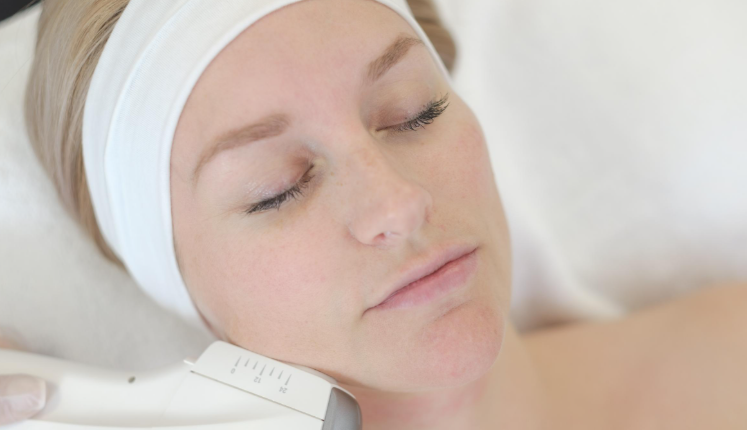
What are the Benefits of Using HIFU for Skin Treatment?
In the relentless pursuit of youthful and radiant skin, High-Intensity Focused Ultrasound (HIFU) has emerged as a standout non-invasive treatment choice for many individuals. With increasing popularity worldwide, HIFU promises remarkable results without the need for surgical intervention. In this blog post, we'll delve into the benefits of HIFU for skin treatment, providing insights into its functionality, suitability, and considerations for prospective users.
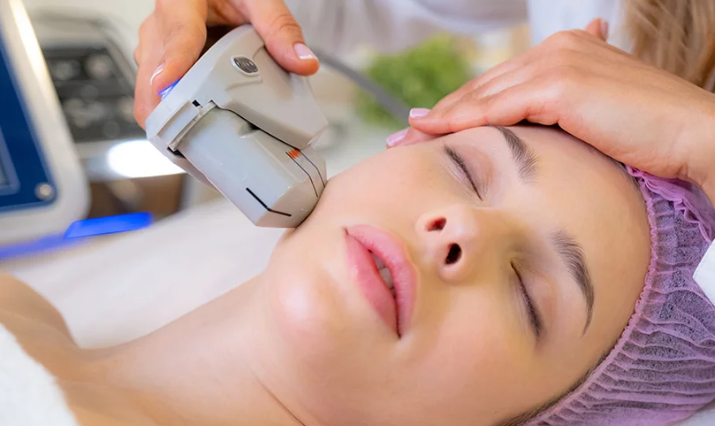
Comprehensive Analysis of High-Intensity Focused Ultrasound (HIFU) Technology in Aesthetic Medicine
1. Introduction: The Evolution of HIFU from Therapeutic to Cosmetic Applications
High-Intensity Focused Ultrasound (HIFU) is a non-invasive energy-based modality that leverages acoustic cavitation and thermal coagulation to induce targeted tissue remodeling. Originally developed for ablation of tumors (e.g., prostate, liver, and uterine fibroids), HIFU’s precision in delivering thermal energy (60–70°C) at focal depths of 1.5–13 mm has transformed its role into a cornerstone of non-surgical facial rejuvenation. Unlike lasers or radiofrequency (RF), HIFU bypasses the epidermis entirely, minimizing epidermal injury while stimulating deep dermal and subdermal collagen synthesis.
Mechanism of Action
HIFU operates via thermomechanical injury:
- Ultrasound propagation: Transducers emit focused beams (1–10 MHz) that converge at a predetermined depth.
- Thermal coagulation: At the focal point, energy deposition induces denaturation of collagen fibers (immediate contraction) and triggers neocollagenesis (delayed remodeling).
- Mechanical disruption: Microcavitation and shear forces may enhance ECM turnover.
Key Pathways:
- TGF-β/SMAD signaling: Upregulates collagen I and III synthesis.
- HSP47 induction: Accelerates collagen maturation.
- Fibroblast activation: Sustained ECM production over 3–6 months.
2. Comparison with Other Skin Treatment Modalities
HIFU occupies a unique niche between invasive surgical lifts and non-ablative energy devices. A comparative analysis highlights its advantages:
| Modality | Depth of Penetration | Thermal Effect | Downtime | Indications | Risks |
|---|---|---|---|---|---|
| HIFU | 1.5–13 mm (adjustable) | 60–70°C (coagulative) | Minimal | Skin tightening, lifting, jawline contouring | Nerve injury, edema, hematoma |
| Fractional CO₂ Laser | 0.1–0.3 mm (epidermal) | 100°C (ablative) | 7–14 days | Wrinkles, pigmentation, scars | Hyperpigmentation, scarring |
| Monopolar RF | 2–4 mm (dermal) | 55–65°C (sub-coagulative) | 1–3 days | Mild laxity, texture improvement | Fat atrophy, facial asymmetry |
| Thread Lifts | Subcutaneous | Mechanical | 1–2 weeks | Sagging, jowls | Infection, thread migration |
HIFU Advantages:
- Single-session efficacy: Unlike RF or lasers, HIFU requires fewer treatments.
- Selective targeting: No energy loss in superficial layers.
- Long-term collagenesis: Results peak at 3–6 months.
3. Key Benefits of HIFU in Aesthetic Medicine
3.1 Non-Invasive Lifting and Tightening
HIFU’s precision depth control allows for layer-specific treatment:
- Superficial Musculoaponeurotic System (SMAS): 4.5 mm depth for lifting (e.g., jawline, brow).
- Dermis: 3.0 mm for texture improvement.
- Subcutaneous fat: 1.5–2.0 mm for mild reduction.
Clinical Evidence:
- A 2023 study in Aesthetic Surgery Journal reported 38% improvement in nasolabial fold depth after 1 HIFU session.
- Patient satisfaction: 89% in a 2022 survey of 150 patients (mean age 45) with mild-to-moderate laxity.
3.2 Safety and Efficacy Profile
- FDA-Approved Devices: Ulthera (Ultherapy), Doublo, and Sofwave.
- Low Risk of Complications:
- Nerve injury: 0.3% incidence (transient facial numbness).
- Burns: Rare (<0.1%) with proper transducer calibration.
- Quick Recovery: Resume normal activities immediately; minimal erythema (<24 hours).
3.3 Long-Term Collagen Stimulation
- Biomechanical Changes:
- Increased collagen density: 25–30% at 6 months (histology studies).
- Elastin remodeling: 18% improvement in skin elasticity (Cutometer® measurements).
- Sustained Effects: Results last 12–18 months in most patients.
3.4 Cost-Effectiveness
- Single-Treatment Cost: 3,500 (vs. 1,000/session for RF).
- Long-Term Savings: 1 HIFU session replaces 4–6 RF treatments over 18 months.
- Patient Demographics: Appeals to middle-aged professionals seeking low-downtime options.
4. Ideal Candidates for HIFU Treatment
4.1 Clinical Indications
- Primary: Mild-to-moderate facial laxity (jowls, neck, brow).
- Secondary:
- Early nasolabial folds.
- Submental fat reduction (when combined with 1.5 mm transducers).
- Post-pregnancy abdominal skin tightening.
4.2 Contraindications
- Absolute:
- Active skin infections (herpes, impetigo).
- Implanted devices (pacemakers, defibrillators).
- Severe keloid tendency.
- Relative:
- Fitzpatrick IV–VI skin (higher PIH risk).
- Thin dermis (<1.5 mm in temporal region).
- Recent fillers (wait 4–6 weeks).
4.3 Patient Selection Criteria
- Age: Optimal for 35–55 years (early signs of aging).
- Skin Type: Works best in Fitzpatrick I–III; requires caution in darker skin.
- BMI: >30 may reduce efficacy due to subcutaneous fat attenuation.
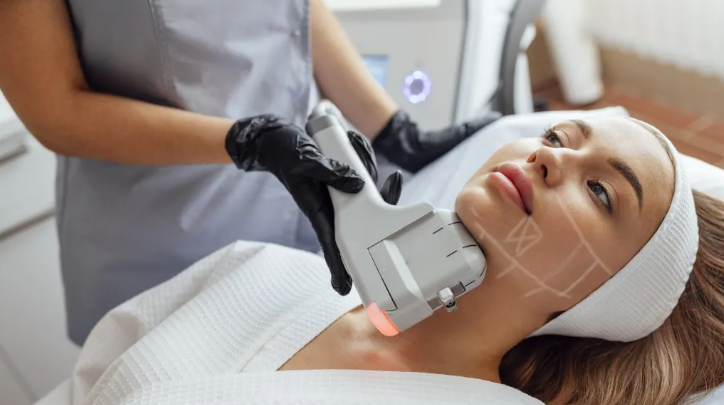
5. Real-Life Case Studies and Clinical Evidence
5.1 Case Study 1: Jawline Contouring
- Patient: 48-year-old female, Fitzpatrick II, with mild jowling.
- Protocol: 4.5 mm transducer (jawline), 3.0 mm (malar region).
- Outcome: 2 mm reduction in submental fat thickness (ultrasound imaging), 35% improvement in jawline definition (3D photography).
5.2 Case Study 2: Neck Laxity
- Patient: 52-year-old male, Fitzpatrick III, with horizontal neck bands.
- Protocol: 4.5 mm (subplatysmal fat), 3.0 mm (dermal).
- Outcome: 28% reduction in neck circumference (tape measurement), 41% improvement in skin elasticity (Cutometer®).
5.3 Meta-Analysis of Clinical Trials
- A 2023 systematic review of 12 studies (n=1,200) found:
- 78% efficacy in jawline lifting.
- 65% satisfaction in neck tightening.
- 12% complication rate (mostly transient erythema).
6. Limitations and Considerations
6.1 Technical Limitations
- Depth Variability: Need for precise transducer selection (e.g., 4.5 mm for SMAS vs. 3.0 mm for dermis).
- Fat Attenuation: Overly thin patients (<1.5 mm dermis) may experience paradoxical fat loss.
- Pain Tolerance: Up to 30% of patients require topical anesthesia or nerve blocks.
6.2 Patient Expectation Management
- Gradual Onset: Results peak at 3–6 months, not immediately.
- Maintenance: Recommended every 12–18 months for sustained effects.
- Combination Therapy: HIFU + low-dose botulinum toxin (e.g., Nefertiti lift) enhances jawline definition.
6.3 Risk Mitigation Strategies
- Pre-Treatment:
- Ultrasound imaging: Confirm dermal thickness.
- Test spots: In high-risk areas (e.g., temporal region).
- Post-Treatment:
- Cold compresses: Reduce edema.
- Topical corticosteroids: If erythema persists >48 hours.
7. Recommendations for Safe and Effective HIFU Practice
7.1 Pre-Treatment Assessment
- Skin Analysis: Use VISIA or Canfield imaging to assess wrinkle depth, elasticity, and pigmentation.
- Medical History: Rule out autoimmune disorders or bleeding tendencies.
- Informed Consent: Discuss risks of nerve injury, burns, and transient swelling.
7.2 Intra-Treatment Protocols
- Transducer Selection:
- 4.5 mm (jawline, brow).
- 3.0 mm (malar, cheeks).
- 1.5 mm (eyelids, perioral).
- Energy Settings:
- 0.7–1.5 J/cm² (Fitzpatrick I–III).
- 0.5–1.0 J/cm² (Fitzpatrick IV–VI).
- Pain Management:
- Topical lidocaine 4% + prilocaine 4% (EMLA®).
- Cooling gels (e.g., Zimmer Cryo 6).
7.3 Post-Treatment Care
- Immediate: Apply growth factor serums (e.g., TNS Recovery Complex®) to enhance healing.
- First 24 Hours: Avoid sun exposure, makeup, or strenuous exercise.
- Days 1–7: Use gentle cleansers (e.g., cetaphil) and broad-spectrum SPF 50+.
- Follow-Up: Schedule a 1-month visit to assess results and plan maintenance.
Conclusion
Ultimately, HIFU emerges as a highly effective, non-invasive treatment option for achieving youthful skin. Its benefits—from encouraging collagen production to ensuring minimal downtime—position it as a superior choice for skin tightening. Given the technology's adaptability and efficiency, HIFU deserves consideration for anyone interested in rejuvenating their appearance without undergoing surgery.
Take the next step toward informed skincare decisions by exploring further or consulting with specialists. Unlock the potential of HIFU and rediscover skin that reflects vitality and confidence.
GLM is a specialized beauty instrument factory that produces instruments for a variety of functions, including weight loss devices. We have vacuum negative press, radio frequency fat blasting equipment, frozen fat dissolving machine and EMS body shaping machine. GLM is a 14 year old supplier of beauty instruments with guaranteed quality.https://gdglmbeauty.com/