
Introduction
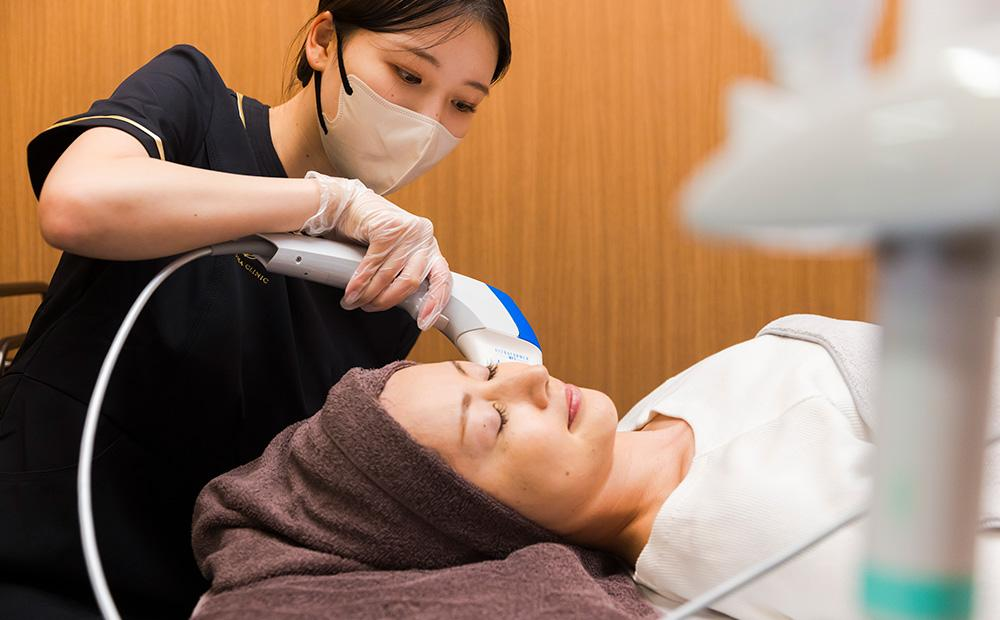
As the demand for non-invasive aesthetic treatments continues to grow, High-Intensity Focused Ultrasound (HIFU) has become one of the most recognized technologies in professional skin rejuvenation. Clients today are looking for effective treatments that improve skin firmness, reduce wrinkles, and restore facial contours without surgery or lengthy recovery periods. HIFU has emerged as a reliable solution because it works beneath the skin's surface while leaving the outer layer largely unaffected.
Unlike treatments that focus primarily on the epidermis, HIFU delivers concentrated ultrasound energy to deeper structural layers of the skin. This controlled energy stimulates the body's natural healing response, encouraging the production of fresh collagen and elastin over time. The result is gradual, natural-looking skin tightening and lifting rather than dramatic, artificial changes.
For professional aesthetic clinics, medical spas, and beauty salons, HIFU technology has become an important addition to anti-aging treatment portfolios. It offers practitioners an opportunity to provide clients with visible lifting results while avoiding the risks and downtime associated with surgical procedures. As technology continues to evolve, modern HIFU systems now feature improved precision, multiple treatment depths, and customizable parameters that enhance both treatment safety and client satisfaction.
This article explains how HIFU works, why it has become a preferred technology for skin rejuvenation, and how professional HIFU devices create value for aesthetic businesses seeking advanced, results-driven treatment solutions.
Background: Why Does Skin Lose Firmness?
Skin aging is a gradual biological process influenced by genetics, environmental exposure, and lifestyle factors. While daily skincare products help maintain the skin's surface, they cannot fully address structural changes occurring in deeper tissue layers.
Several key factors contribute to visible skin aging:
- Natural collagen depletion after the age of 25
- Reduced elastin production
- Loss of facial volume and tissue support
- Sun exposure and photoaging
- Repetitive facial expressions
- Slower cellular regeneration
- Lifestyle factors such as smoking, stress, and poor sleep
Collagen is the primary structural protein responsible for maintaining skin strength and elasticity. Unfortunately, collagen production decreases by approximately 1% each year after the mid-twenties. Existing collagen fibers also become fragmented and disorganized, reducing the skin's ability to remain firm and resilient.
As collagen weakens, clients commonly experience:
- Sagging cheeks
- Jawline laxity
- Mild to moderate skin looseness
- Fine lines around the eyes and mouth
- Nasolabial folds
- Neck wrinkles
- Reduced facial definition
Traditional skincare products can improve hydration and temporarily enhance skin appearance, but their active ingredients generally penetrate only the superficial layers of the skin. Even advanced cosmetic formulations have limited influence on the deeper support structures responsible for lifting and firmness.
For many years, surgical facelifts were considered the primary solution for significant skin laxity. Although surgery can produce dramatic lifting effects, it also involves anesthesia, incisions, recovery time, higher costs, and increased risk of complications. Many clients are not ready to undergo surgery but still want noticeable improvements.
This growing demand has accelerated the development of non-invasive aesthetic technologies capable of stimulating the body's own regenerative processes.
Among these innovations, HIFU stands out because it targets the foundational tissue layers that support the skin rather than simply treating surface imperfections. Instead of masking the signs of aging, it encourages the skin to rebuild itself through natural collagen remodeling.
From the perspective of professional clinics and aesthetic practitioners, this represents a significant advantage. Treatments that promote long-term biological improvement often generate higher client satisfaction than those offering only temporary cosmetic enhancement.
Additionally, modern consumers are increasingly educated about preventive aesthetics. Rather than waiting until severe skin laxity develops, many individuals begin professional treatments in their thirties and forties to maintain collagen levels before significant aging becomes visible. This shift has expanded the market for advanced skin tightening technologies and positioned HIFU as one of the most sought-after non-surgical lifting solutions in today's aesthetic industry.
However, achieving consistent and predictable results depends not only on the technology itself but also on the quality of the equipment, treatment protocols, and the expertise of trained practitioners. Professional HIFU systems are designed with adjustable energy settings, multiple treatment cartridges, and precise focusing capabilities that allow operators to tailor treatments to different facial areas and individual skin conditions. These features help maximize treatment effectiveness while maintaining a high standard of safety—advantages that consumer-grade devices often cannot match.
Understanding why HIFU works begins with understanding the science behind focused ultrasound energy. In the next section, we will explore the technology, treatment mechanism, and how professional HIFU devices stimulate collagen remodeling to achieve gradual, natural-looking skin rejuvenation
Technology & Mechanism: How Does HIFU Work for Skin Rejuvenation?
Understanding High-Intensity Focused Ultrasound
High-Intensity Focused Ultrasound (HIFU) is an advanced non-invasive technology that concentrates ultrasound energy at precise depths beneath the skin without damaging the epidermis. Instead of affecting the skin's surface, the energy converges at targeted focal points, creating controlled thermal coagulation zones within deeper tissue layers.
This principle is often compared to using a magnifying glass to focus sunlight. While the surrounding area remains relatively unaffected, the concentrated focal point reaches a much higher temperature. In HIFU treatments, this focused energy typically raises tissue temperatures to approximately 60–70°C, initiating a natural wound-healing response while preserving the surrounding tissue.
Because the energy is delivered with exceptional precision, HIFU can stimulate tissue remodeling without surgical incisions, injections, or extensive downtime.
The Science Behind Collagen Remodeling
The effectiveness of HIFU lies in its ability to trigger the body's natural collagen regeneration process.
When focused ultrasound energy reaches the target layer, it creates tiny thermal coagulation points (TCPs). These microscopic treatment zones are carefully spaced throughout the tissue, leaving surrounding structures intact.
The body responds through several biological stages:
Stage 1: Immediate Collagen Contraction
Heat causes existing collagen fibers to contract almost instantly. Although subtle, this initial contraction may provide a mild tightening effect immediately after treatment.
Stage 2: Healing Response Activation
The controlled thermal injury activates fibroblasts—the cells responsible for producing collagen and elastin.
Rather than damaging healthy skin, HIFU stimulates the body's own repair mechanism, encouraging tissue renewal from within.
Stage 3: New Collagen Production
Over the following weeks, fibroblasts begin synthesizing new collagen fibers.
Unlike temporary cosmetic improvements, this biological remodeling process strengthens the skin's internal support structure naturally.
Stage 4: Long-Term Tissue Remodeling
Collagen maturation continues for approximately two to six months after treatment.
As newly formed collagen organizes into stronger, healthier networks, clients gradually notice:
- Firmer skin
- Improved elasticity
- Better jawline definition
- Reduced wrinkles
- Enhanced facial contours
- A naturally lifted appearance
Because results develop progressively, the improvements often appear more natural than treatments that create immediate volume changes.
Why Treatment Depth Matters
One of HIFU's greatest advantages is its ability to reach multiple anatomical layers using interchangeable treatment cartridges.
Different depths target different structures:
| Treatment Depth | Primary Target | Common Applications |
|---|---|---|
| 1.5 mm | Superficial dermis | Fine lines, delicate eye area, forehead |
| 3.0 mm | Deep dermis | General facial tightening, collagen stimulation |
| 4.5 mm | SMAS layer | Facial lifting, jawline contouring, cheek tightening |
| 6.0–13 mm (Body cartridges) | Subcutaneous tissue | Body tightening and contouring on selected professional systems |
This multi-depth capability allows practitioners to customize treatments according to the client's skin condition, age, treatment area, and aesthetic goals.
Why Is the SMAS Layer So Important?
One of the defining characteristics of professional HIFU technology is its ability to target the Superficial Musculoaponeurotic System (SMAS).
The SMAS is a fibromuscular layer located beneath the skin and subcutaneous fat. It provides structural support for the face and is the same layer addressed during many surgical facelift procedures.
Traditional skincare products cannot reach this depth.
Most energy-based aesthetic treatments—including many laser and radio frequency devices—primarily affect the dermis. HIFU is unique because it can deliver focused energy directly to the SMAS layer without surgery.
Stimulating this deeper support structure allows practitioners to improve:
- Sagging cheeks
- Jawline definition
- Mild jowls
- Brow lifting
- Neck tightening
- Overall facial contour
This deeper approach is one of the reasons HIFU has become widely recognized as a non-surgical lifting technology.
Professional HIFU vs. Home-Use Devices
As consumer beauty technology has grown, many home-use devices claim to offer "HIFU-like" lifting benefits. However, there are significant differences between professional systems and consumer products.
1. Energy Output
Professional HIFU machines generate significantly higher and more consistent energy levels, enabling treatment at clinically effective depths.
Home-use devices typically operate at much lower energy settings to prioritize user safety, resulting in more modest outcomes.
2. Treatment Precision
Professional systems use highly engineered transducers that focus ultrasound energy with exceptional accuracy.
Advanced cartridges are designed to maintain consistent focal depth and energy delivery across the treatment area, reducing variability and improving treatment consistency.
3. Adjustable Parameters
Professional devices allow practitioners to customize:
- Energy level
- Treatment depth
- Line spacing
- Pulse length
- Shot density
- Treatment patterns
This flexibility enables personalized treatment plans for different skin types and aging concerns.
Home devices generally offer only a few preset modes with limited customization.
4. Clinical Expertise
Technology alone does not determine treatment success.
Professional operators evaluate facial anatomy, skin thickness, aging severity, contraindications, and treatment goals before designing individualized protocols.
Proper technique helps optimize lifting outcomes while maintaining a high standard of client safety.
5. Treatment Efficiency
Professional equipment can treat larger areas more efficiently while delivering uniform energy distribution.
For aesthetic clinics with growing client demand, this translates into:
- Shorter treatment sessions
- Improved workflow
- Greater treatment consistency
- Better client satisfaction
- Higher business productivity
Rather than simply generating heat, professional HIFU systems combine precision engineering, customizable treatment parameters, and clinical expertise to produce predictable collagen stimulation. This combination is what makes HIFU one of the most valuable technologies in modern aesthetic practice.
In the next section, we will compare HIFU with other popular skin rejuvenation technologies, examine its key advantages, and explore which clients benefit most from professional HIFU treatments
Advantages, Comparison, Applications & Conclusion
Advantages of Professional HIFU Treatments
As aesthetic technology continues to evolve, clients are presented with a growing number of non-surgical skin rejuvenation options. While lasers, radio frequency (RF), microneedling, and injectable treatments each have their place, HIFU occupies a unique position because it targets deeper structural tissues that many other technologies cannot reach.
For professional clinics and aesthetic practitioners, this creates opportunities to offer treatments that address skin laxity rather than focusing solely on surface-level improvements.
1. Non-Invasive Yet Effective
One of HIFU's greatest advantages is that it delivers lifting and tightening effects without surgery.
There are:
- No incisions
- No stitches
- No general anesthesia
- Minimal recovery time
- Low interruption to daily activities
Most clients return to work or normal routines immediately after treatment, making HIFU particularly attractive for individuals with busy lifestyles.
2. Natural-Looking Results
Unlike treatments that produce dramatic changes overnight, HIFU stimulates the body's own regenerative processes.
Because collagen remodeling occurs gradually over several months, improvements appear progressively.
Clients often appreciate that friends and family notice they look younger or more refreshed without obvious signs of cosmetic treatment.
3. Long-Lasting Benefits
Newly generated collagen continues strengthening the skin after treatment.
Depending on factors such as age, lifestyle, skin condition, and maintenance plans, results may remain visible for 12 months or longer.
Many aesthetic clinics recommend annual maintenance sessions to help preserve collagen production as part of a comprehensive anti-aging strategy.
4. High Treatment Precision
Modern HIFU systems allow practitioners to select multiple treatment depths and energy settings according to each client's needs.
This level of customization helps optimize outcomes while improving treatment safety across different facial areas.
5. Wide Range of Treatment Areas
Professional HIFU devices are suitable for numerous aesthetic applications.
Facial Treatments
- Brow lifting
- Forehead tightening
- Crow's feet
- Cheek lifting
- Nasolabial folds
- Jawline contouring
- Chin tightening
- Neck rejuvenation
Body Treatments
Depending on device configuration and cartridge availability, professional HIFU systems may also be used for selected body applications, including:
- Abdomen
- Upper arms
- Thighs
- Buttocks
- Flanks
- Knees
These treatments primarily focus on improving skin firmness and supporting body contouring rather than serving as weight-loss procedures.
HIFU Compared with Other Skin Rejuvenation Technologies
Every aesthetic technology has unique strengths. Rather than competing directly, many treatments complement one another within comprehensive treatment plans.
| Technology | Primary Target | Best For | Downtime |
|---|---|---|---|
| HIFU | Deep dermis + SMAS | Lifting and tightening | Minimal |
| Radio Frequency (RF) | Dermis | Mild skin tightening | Minimal |
| Microneedling RF | Dermis | Texture, scars, wrinkles | Mild |
| Fractional Laser | Epidermis + Dermis | Pigmentation and resurfacing | Moderate |
| Injectables | Muscles or volume loss | Dynamic wrinkles and facial contour | Minimal |
Professional practitioners frequently combine these technologies based on individual treatment goals.
For example:
- HIFU for structural lifting
- RF for collagen maintenance
- Hydrafacial treatments for skin hydration
- LED therapy to support recovery
- Microneedling for scar improvement
- Chemical peels for skin texture refinement
This multi-technology approach enables clinics to deliver more comprehensive treatment solutions while improving long-term client satisfaction.
Which Clients Are Good Candidates for HIFU?
Professional consultation is essential before every HIFU treatment.
Generally, ideal candidates include individuals who experience:
- Mild to moderate skin laxity
- Early facial aging
- Reduced jawline definition
- Mild sagging around the cheeks
- Fine lines and wrinkles
- Loose neck skin
- Preventive anti-aging concerns
Many practitioners find clients between their 30s and 60s benefit most from professional HIFU, although suitability depends more on skin condition than chronological age.
HIFU may not be appropriate for every client. Individuals with severe skin laxity, active skin infections, certain implanted medical devices, or other contraindications should undergo a thorough professional assessment before treatment.
Why Professional Equipment Makes the Difference
While treatment principles remain consistent, device quality significantly influences clinical outcomes.
Professional HIFU systems are engineered to provide:
- Stable energy output
- Accurate focal depth
- Multiple treatment cartridges
- Intelligent treatment software
- Ergonomic handpieces
- Consistent shot delivery
- Efficient treatment workflows
For clinics and aesthetic centers, investing in high-quality HIFU equipment supports not only treatment performance but also operational efficiency, client confidence, and long-term business growth.
Manufacturers that provide comprehensive operator training, technical support, software updates, and after-sales service further help practitioners maximize treatment consistency and return on investment.
As demand for non-invasive aesthetic procedures continues to increase worldwide, professional-grade HIFU devices remain a valuable technology for clinics seeking to expand premium anti-aging services.
Conclusion
High-Intensity Focused Ultrasound has transformed the landscape of non-surgical skin rejuvenation by offering a scientifically supported method for stimulating collagen production at the skin's foundational support layers.
Rather than simply improving the skin's surface, HIFU works from within, encouraging natural tissue regeneration that gradually restores firmness, elasticity, and facial definition. Its ability to target multiple treatment depths—including the SMAS layer—distinguishes it from many conventional aesthetic technologies and makes it an effective solution for clients seeking noticeable lifting without surgery.
For aesthetic clinics, medical spas, and professional beauty centers, HIFU represents more than just another treatment option. It is a versatile platform capable of addressing diverse anti-aging concerns while complementing other technologies such as radio frequency, microneedling, and facial rejuvenation systems.
As client expectations continue to shift toward minimally invasive procedures with natural-looking outcomes, investing in advanced professional HIFU equipment allows practitioners to deliver personalized treatment plans, improve client satisfaction, and strengthen the competitiveness of their aesthetic businesses.
When combined with experienced operators, evidence-based treatment protocols, and high-performance equipment, HIFU continues to set the benchmark for modern non-invasive skin lifting and collagen regeneration
Founded in 2008, Guangzhou GLM Beauty Spa Equipment Factory specializes in research, development, manufacture and selling of beauty and slimming machines. Our production base is located in Guangzhou City, Guangdong Province, China. Since our foundation, we have introduced advanced technologies and equipment, to assure high quality and high performance of our products. With professional marketing guide and excellent after-sales service, our products have been exported to over 20 countries and regions, including Southeast Asia, the Middle East, Europe and the United States, won worldwide praises and gained a good reputation