Introduction
Body sculpting has become an important category in modern aesthetic clinics and professional beauty salons. Clients are increasingly looking for ways to improve body contours, reduce the appearance of localized fat, smooth cellulite, and tighten loose-looking skin without undergoing surgery or extended downtime.
This has created a growing market for professional body sculpting machines. However, one question appears again and again: What is the best body sculpting machine?
The answer is not simply one machine or one technology.
The best body sculpting machine is the one that matches the treatment goals of the client, the operator's expertise, the target body area, and the services a clinic wants to provide. Different technologies work through different mechanisms. Some focus on localized fat reduction, while others are better suited to skin tightening, cellulite appearance, muscle stimulation, or overall body contour refinement.
For professional salons and aesthetic clinics, multifunctional systems can be particularly valuable because they allow practitioners to create more personalized treatment programs rather than relying on a single treatment modality.
Background: Why Body Sculpting Technology Matters
Body sculpting, also called body contouring, is designed to improve the appearance and shape of specific areas of the body. It is not the same as general weight loss.
According to the U.S. Food and Drug Administration (FDA), non-invasive body contouring may be used for purposes such as changing the circumference of an area, reducing small localized areas of fat, improving muscle tone and firmness, or improving the appearance of cellulite. These procedures are not intended to treat obesity or replace healthy weight-management strategies.
This distinction is important for both clients and professional operators.
A client may come into a clinic with a relatively stable body weight but still have concerns about the abdomen, waist, thighs, hips, arms, or back. The goal may not be losing a large amount of weight. Instead, the client may want a more defined silhouette, smoother-looking skin, or improved firmness.
That is where professional body sculpting technology can become part of a broader aesthetic treatment plan.
For clinics, the challenge is choosing equipment that provides useful treatment flexibility while remaining practical for daily professional operation.
Technology and Mechanism: How Do Body Sculpting Machines Work?
There is no single technology behind body sculpting. Professional systems may use thermal energy, ultrasound, electromagnetic stimulation, mechanical massage, vacuum technology, or combinations of these approaches.
Understanding the basic mechanisms makes it easier to decide which machine is appropriate for a particular business.
1. Radiofrequency Body Sculpting
Radiofrequency (RF) technology uses controlled electrical energy to generate heat within targeted tissue.
In aesthetic body treatments, RF may be used to heat the skin and underlying tissue. Controlled heating can support a tighter-looking skin appearance, while some body-contouring applications are designed to affect localized fat and improve the appearance of cellulite. The FDA notes that RF-based body contouring can temporarily improve cellulite appearance or reduce circumference in treated areas, and may also contribute to a tighter-looking skin appearance.
For professional salons, RF is particularly attractive because it can be used across multiple body areas.
Common treatment areas include:
- Abdomen
- Waist and flanks
- Thighs
- Upper arms
- Back
- Hips
RF can therefore be a practical technology for clinics that want to offer both body contouring and skin-firming services.
2. Ultrasound Cavitation
Ultrasound-based body contouring uses acoustic energy delivered through the skin.
Depending on the specific technology and device design, ultrasound can interact with tissue and may contribute to changes in localized fat layers. FDA information describes therapeutic ultrasound body-contouring devices as using sound-wave energy that can cause fat-cell disruption and potentially reduce circumference in the treated area.
In professional beauty equipment, ultrasound cavitation is often positioned as a targeted body-contouring treatment rather than a general weight-loss solution.
For operators, treatment technique matters. Proper skin contact, appropriate coupling medium, correct settings, and controlled movement of the handpiece are important considerations.
3. Vacuum and Mechanical Massage
Vacuum technology uses controlled negative pressure to lift and manipulate the skin and superficial tissue.
When combined with mechanical massage or rollers, vacuum technology can be incorporated into treatments focused on the appearance of cellulite, skin texture, and body contour definition.
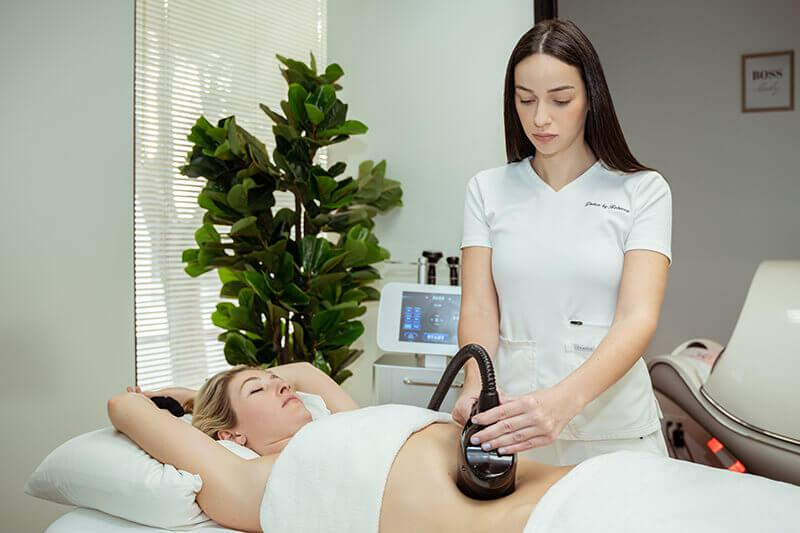
Vacuum-based systems can also be combined with RF in multifunctional equipment. This combination can make the treatment experience more versatile, allowing the practitioner to address both tissue heating and mechanical manipulation within a structured treatment protocol.
4. Cryolipolysis
Cryolipolysis, commonly known as fat freezing, uses controlled cooling to target localized fat.
The FDA describes cryolipolysis as a technology that uses cold temperatures to damage fat cells in a treated area, after which the body gradually clears the damaged cells.
Cryolipolysis can be attractive when the primary objective is localized fat reduction. However, it is not necessarily the ideal technology for every client or every clinic.
Professional operators need to consider treatment area, patient suitability, contraindications, equipment requirements, treatment time, and the regulatory status of the device in their market.
5. Electromagnetic Muscle Stimulation
Some modern body contouring platforms use electromagnetic energy to stimulate muscle contractions.
This technology is positioned differently from traditional fat-reduction technologies. Instead of focusing primarily on the fat layer, it targets muscle activity and can be incorporated into body-toning programs.
For clinics that want to provide a broader body-contouring portfolio, electromagnetic muscle stimulation can complement technologies focused on fat and skin.
What Is the Best Body Sculpting Machine for a Professional Salon?
If we look at the needs of a professional salon rather than a single client, the answer becomes more practical.
For many beauty businesses, a multifunctional body sculpting machine that combines technologies such as RF, ultrasound cavitation, vacuum, or mechanical massage can provide a strong balance between treatment flexibility and equipment utilization.
Why?
Because clients rarely have exactly the same concern.
One client may want to improve abdominal contour. Another may be more concerned about cellulite on the thighs. A third may want skin tightening after body-volume reduction. A multifunctional platform gives the operator more options when building treatment plans.
This type of equipment can also support different service packages.
For example, a clinic could structure its services around:
Contour & Firm: RF-focused treatment for clients concerned about skin firmness.
Smooth & Refine: Vacuum and mechanical techniques for the appearance of cellulite and uneven texture.
Contour Combination: Ultrasound cavitation combined with RF or vacuum-based techniques according to the device's intended use and treatment protocol.
The key is not simply having multiple handpieces. The real value comes from having technologies that can be selected according to client needs and used by trained professionals within appropriate protocols.
Advantages of Multifunctional Body Sculpting Equipment
1. Greater Treatment Versatility
A single multifunctional platform can support several aesthetic objectives.
Instead of investing in separate machines for every service, a clinic may be able to provide multiple body treatments from one professional system.
This can be especially useful for small and medium-sized salons that need to maximize treatment-room efficiency.
2. More Personalized Treatment Planning
Body contouring is not a one-size-fits-all service.
Different areas can have different characteristics. The abdomen may require a different approach from the upper arms or thighs.
A multifunctional device allows practitioners to select the appropriate technology and handpiece according to the client's treatment objective, body area, and professional assessment.
3. Better Integration Into Treatment Packages
From a business perspective, equipment becomes more valuable when it can support multiple service packages.
A salon may create individual sessions or multi-session programs around contouring, skin firming, cellulite appearance, or body maintenance.
This gives the business more opportunities to build recurring treatment plans rather than relying only on one-time appointments.
4. Professional Operation and Control
Professional body sculpting equipment is designed for trained operators who can control treatment parameters according to the device's intended use.
This is an important difference between professional equipment and many consumer-oriented beauty products.
A professional system may offer adjustable energy levels, dedicated handpieces, treatment timers, touchscreen controls, safety monitoring, and different operating modes depending on the platform.
However, more features do not automatically mean better treatment. Operators still need appropriate training and must follow the manufacturer's instructions and applicable local regulations.
Comparing Different Body Sculpting Technologies
| Technology | Main Focus | Typical Professional Application | Key Consideration |
|---|---|---|---|
| RF | Heating, firmness, contour appearance | Abdomen, thighs, arms, waist | Temperature and energy control |
| Ultrasound | Localized tissue/fat targeting | Abdomen, waist, thighs | Proper coupling and technique |
| Vacuum | Tissue manipulation, cellulite appearance | Thighs, hips, abdomen | Controlled negative pressure |
| Cryolipolysis | Localized fat reduction | Abdomen, flanks, thighs | Client suitability and cooling safety |
| Electromagnetic stimulation | Muscle activation and toning | Abdomen, buttocks, selected muscle areas | Correct positioning and protocol |
| Combination systems | Multiple aesthetic objectives | Whole-body treatment programs | Operator training and treatment planning |
The “best” technology therefore depends on what the clinic is trying to achieve.
A machine designed primarily for cryolipolysis may be an excellent choice for a business focused on localized fat reduction. An RF system may be more attractive to a clinic emphasizing skin firmness. A multifunctional RF, cavitation, and vacuum system may be more practical for a salon that wants a broader range of body-contouring services.
Professional Equipment vs. Home Devices
Another important consideration is the difference between professional and home-use equipment.
Professional body sculpting systems are typically designed around trained operation, controlled treatment parameters, interchangeable applicators, and repeated daily use in a commercial environment.
Home devices, by comparison, generally prioritize simplicity and convenience.
For professional clinics, equipment selection should go beyond appearance or marketing claims. Buyers should evaluate:
- Intended use
- Treatment areas
- Energy technology
- Handpiece configuration
- Parameter adjustment
- Safety features
- Operator training
- Maintenance requirements
- Manufacturer support
- Certifications and regulatory documentation
- Warranty and after-sales service
- OEM and private-label possibilities
Regulatory status is particularly important. The FDA emphasizes that non-invasive body contouring is still a procedure with potential benefits and risks, and that devices should be used according to their authorized intended uses.
For international buyers, requirements can vary considerably by country or region. A professional distributor or clinic should verify the applicable local requirements before purchasing and using equipment.
Applications and Client Needs
Professional body sculpting equipment can be incorporated into treatment programs for a variety of aesthetic concerns.
Abdomen and Waist
The abdomen and waist are among the most common areas associated with body contouring.
Clients may be looking to improve the appearance of localized fat, skin firmness, or overall body proportions. Depending on the device, practitioners may use RF, ultrasound, vacuum, or combination technologies as part of a customized protocol.
Thighs and Hips
The thighs and hips are frequently associated with cellulite concerns and uneven skin texture.
Vacuum, RF, mechanical, and combination treatments may be considered when the primary goal is improving the appearance of skin texture and contour.
Upper Arms
Upper-arm treatments often focus on the appearance of firmness and contour definition.
RF-based technology may be useful when skin tightening is an important part of the treatment objective, while other technologies can be incorporated depending on the client's needs and the device's intended use.
Back and Flanks
Back rolls and flank areas can be challenging for clients who want a smoother silhouette.
Professional body contouring systems with appropriately designed applicators can provide targeted treatment options for these areas.
How Should a Clinic Choose the Best Body Sculpting Machine?
Before purchasing equipment, clinic owners should ask five practical questions.
First: What services do your clients actually request?
If most inquiries are about cellulite and skin firmness, an RF and vacuum-oriented system may make more sense than purchasing a machine designed exclusively for another objective.
Second: How many treatment areas can the machine cover?
Versatility can directly affect equipment utilization.
Third: Is the system easy for trained staff to operate?
A machine with an advanced interface is useful only when staff can use it correctly and consistently.
Fourth: Does the manufacturer provide reliable technical support?
Training, manuals, troubleshooting, spare parts, warranty coverage, and after-sales support can significantly influence the long-term value of professional equipment.
Fifth: Is the equipment appropriate for your market?
Before purchasing, confirm certifications, intended uses, labeling requirements, import regulations, and local compliance obligations.
Conclusion
So, what is the best body sculpting machine?
There is no universal winner.
The best machine is the one that matches the clinic's treatment goals, client demand, operator capabilities, budget, and regulatory environment.
For businesses that want to provide a broad range of professional body-contouring services, multifunctional systems combining technologies such as radiofrequency, ultrasound cavitation, vacuum, and mechanical massage can offer significant flexibility. They can support different treatment objectives while helping salons and clinics build more comprehensive service portfolios.
At the same time, technology should never replace professional assessment. Body sculpting is not a substitute for weight-loss treatment, and results, suitability, risks, and expected outcomes can vary by technology and individual client.
For equipment buyers, the strongest long-term investment is not necessarily the machine with the most functions. It is the system that combines appropriate technology, reliable engineering, practical handpieces, operator-friendly controls, safety considerations, manufacturer support, and a clear fit with the clinic's business model.
In a competitive aesthetics market, the right body sculpting machine is more than a piece of equipment. It can become a platform for building professional treatment programs, expanding service offerings, and creating a more personalized experience for clients.
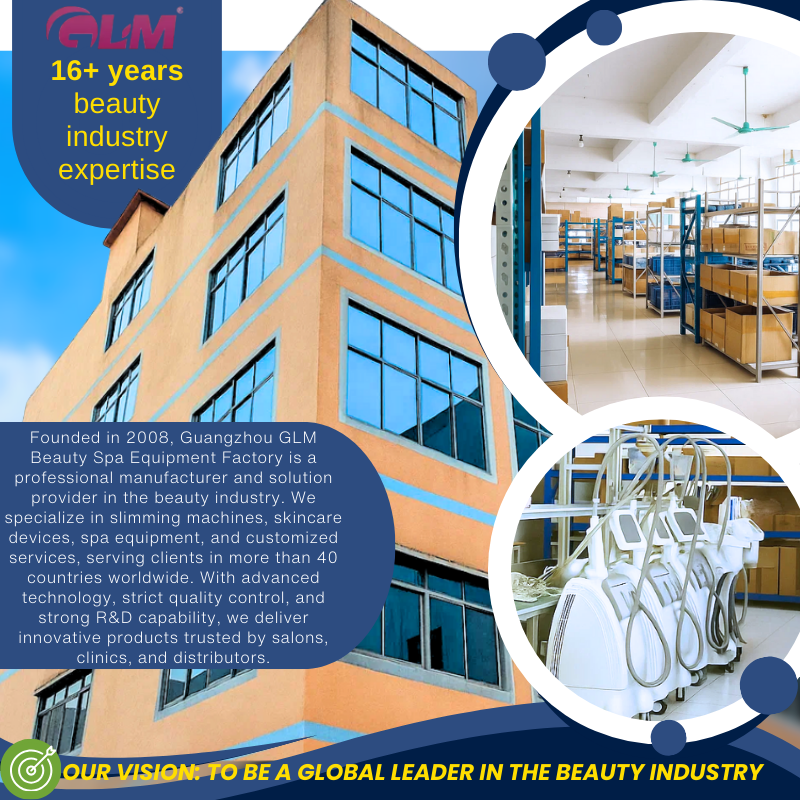
Founded in 2008, Guangzhou GLM Beauty Spa Equipment Factory specializes in research, development, manufacture and selling of beauty and slimming machines. Our production base is located in Guangzhou City, Guangdong Province, China. Since our foundation, we have introduced advanced technologies and equipment, to assure high quality and high performance of our products. With professional marketing guide and excellent after-sales service, our products have been exported to over 20 countries and regions, including Southeast Asia, the Middle East, Europe and the United States, won worldwide praises and gained a good reputation