

Laser Tattoo Removal: Detailed Explanation of Technical Principles, Equipment Selection and Treatment Strategies
Introduction
In recent years, with the gradual opening up and diversification of social concepts, tattoos, as a personalized form of expression, have been increasingly accepted. However, at the same time, due to factors such as changes in personal aesthetics, career demands or transitions in life stages, the number of people who hope to remove tattoo marks is also increasing day by day. The growth of this demand has directly driven the vigorous development of the tattoo removal market. According to data from market research institutions, the global tattoo removal market size reached approximately 990.46 million US dollars in 2023 and is expected to grow to about 3.57 billion US dollars by 2032, with a compound annual growth rate (CAGR) as high as 15.46%. This growth trend is particularly prominent among the younger generation, who are more inclined to remove or modify tattoos to align their image with their current identity or lifestyle.
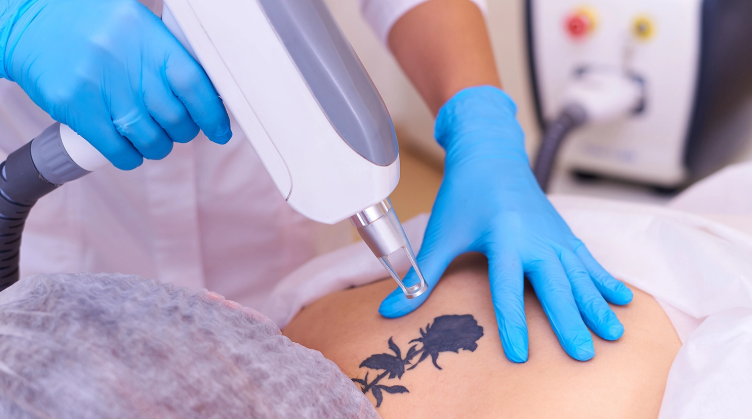
Among the methods of tattoo removal, laser removal technology has become the mainstream choice at present due to its characteristics of high efficiency, safety and relative controllability. This article will delve into the principle of laser tattoo removal, the key factors influencing the selection of lasers, the commonly used types of laser equipment, and the relevant key points during the treatment process, aiming to provide comprehensive and in-depth professional knowledge for professionals and people with tattoo removal needs.
The basic principle of laser tattoo removal
Laser tattoo removal is a treatment method based on the principle of selective photothermal action. The core process is to precisely irradiate the tattoo area with a laser beam of a specific wavelength. The high-intensity light pulses emitted by the laser can penetrate the surface layer of the skin and be absorbed by the tattoo ink particles. When ink particles absorb laser energy, they will rapidly heat up and undergo thermal expansion, and then break into tiny fragments. These smaller ink particles are then recognized by the body's own immune system as foreign substances. Through phagocytosis by macrophages and transportation by the lymphatic system, they are gradually cleared from the body, eventually causing the tattoo color to gradually fade until it completely disappears.
The absorption characteristics of laser energy by inks of different colors vary significantly, which is one of the key factors affecting the laser removal effect. For instance, black ink has a wide absorption spectrum and can absorb laser energy of almost all wavelengths, making it relatively easy to handle during the laser removal process. Other colored inks, such as red, green and blue, have a higher absorption efficiency for lasers of specific wavelengths due to their different molecular structures and chemical compositions. Therefore, in order to achieve the best removal effect, it is necessary to select the appropriate laser wavelength according to the color of the tattoo ink.
The key factors influencing the selection of lasers
Ink color
The color of tattoo ink is the primary factor in determining the choice of laser. Inks of different colors absorb lasers at different wavelengths, so lasers of corresponding wavelengths need to be used for treatment. For example, black ink is usually removed by using a 1064nm wavelength Nd:YAG laser or a 755nm wavelength purple jade laser. Red ink has a relatively high absorption rate for lasers with a wavelength of 532 nm. Green and blue inks may require ruby lasers with a wavelength of 694 nm or purple jade lasers with a wavelength of 755 nm, etc. In addition, some colored tattoos may contain ink of multiple colors, which requires the use of laser equipment with multiple wavelengths or adjustable wavelengths for treatment.
Skin type
An individual's skin type has a significant impact on the efficacy and safety of laser treatment. People with darker skin tones have more melanin in their skin. Melanin competes with tattoo ink to absorb laser energy, thereby increasing the risk of skin damage. Therefore, for people with dark skin, it is necessary to choose laser parameters with lower energy density and longer pulse width to avoid excessive damage to the surrounding normal skin tissue. At the same time, the application of certain laser devices on dark skin may be restricted, and doctors need to make careful choices based on the specific conditions of the patients.
Tattoo age
The age of the tattoo can also affect the effect of laser removal and the treatment plan. Over time, tattoo ink particles will gradually undergo natural decomposition and metabolism under the influence of the human immune system, resulting in the tattoo color gradually lightening. Therefore, compared with new tattoos, older tattoos may contain less and smaller ink particles and require fewer treatments to achieve better removal results. However, this does not mean that all old tattoos are easier to remove, as factors such as the preservation conditions of the tattoos and the quality of the ink can also affect the difficulty of their removal.
The size and depth of the tattoo
The size and depth of the tattoo are important factors in determining the number of treatments and the laser energy Settings. Larger tattoos usually contain more ink and require more treatments to be completely removed. The depth at which ink is embedded in the skin also affects the penetration depth and energy absorption efficiency of laser treatment. Deeper tattoos may require the use of lasers with higher energy and stronger penetration for treatment, but this also increases the risk of skin damage, necessating precise energy control and operational skills by doctors during the treatment process.
Immune response
An individual's immune system status plays a crucial role in the effectiveness of tattoo removal. A strong immune system can more effectively identify and remove the ink particles remaining after treatment, thereby accelerating the fading process of tattoos. On the contrary, people with weaker immune functions may need more treatment sessions to achieve the desired effect. In addition, some factors such as age, health condition, and lifestyle may also affect the function of the immune system. Before treatment, doctors need to assess the overall health condition of the patient.
Common types of laser equipment
Q-switched laser
The Q-switched laser is a traditional laser tattoo removal device. Its working principle is to compress the laser energy into extremely short high-energy pulses through Q-switched technology, thereby achieving efficient crushing of tattoo ink particles. The following are several common Q-switched lasers:
Nd:YAG laser
Nd:YAG lasers have two commonly used wavelengths: 1064nm and 532nm. Laser with a wavelength of 1064nm has a high absorption rate for dark inks such as black and blue, can effectively penetrate deep into the skin, and has a good removal effect on various types of tattoos, especially suitable for people with dark skin. The laser with a wavelength of 532 nm mainly targets warm-colored tattoos such as red and yellow. Its penetration depth is relatively shallow, but it has a high selective absorption of the ink of the corresponding color.
Ruby laser
The working wavelength of the ruby laser is 694 nm. It has special absorption characteristics for green and blue inks and is an ideal choice for dealing with these difficult-to-remove colors. However, due to its short wavelength, its penetration ability for dark skin is limited, and it is easily absorbed by melanin in the skin. Therefore, it is usually recommended for lighter skin tones. For dark skin, it may not be very suitable or the treatment parameters need to be carefully adjusted.
Purple jade laser
The working wavelength of the purple jadeite laser is 755 nm. It shows good performance in removing green and black ink, but its effectiveness for other colors is relatively average. This type of laser is more suitable for fairer skin types. However, it may not produce the best therapeutic effect for darker skin tones because melanin may compete with the ink to absorb laser energy, increasing the risk of skin damage.
Picosecond laser
Picosecond lasers represent a major technological breakthrough in the field of laser tattoo removal in recent years. Compared with traditional Q-switched lasers, the pulse width of picosecond lasers is shorter, usually at the picosecond (10⁻¹² seconds) level. This ultrashort pulse can generate a stronger photomechanical effect, more effectively breaking ink particles into smaller fragments, thereby enhancing the removal efficiency and reducing the number of treatments. The following are several common picosecond lasers:
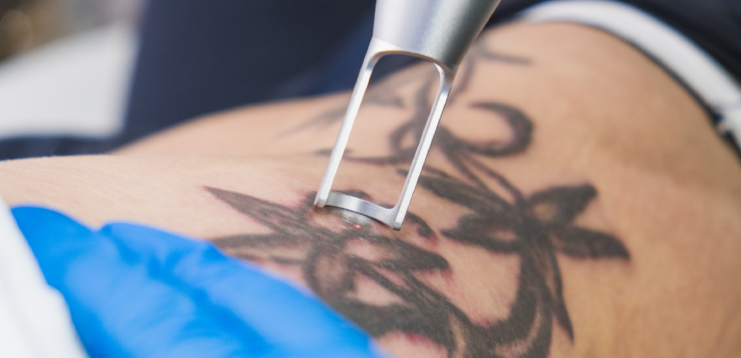
PicoSure
The PicoSure picosecond laser adopts advanced ultra-short pulse technology, which can generate extremely short pulse widths and effectively decompose tattoos of various colors, including some stubborn green and blue tattoos. Compared with traditional laser technology, PicoSure is particularly renowned for its ability to significantly reduce the number of treatment sessions, greatly shortening the treatment time and recovery cycle for patients. In addition, due to the precision of its picosecond technology, patients experience relatively less discomfort during the treatment process and have a shorter recovery time.
PicoWay
The PicoWay picosecond laser is also widely recognized for its high efficiency in quickly removing various ink colors. It can emit lasers of multiple wavelengths to precisely treat tattoos of different colors, minimizing the discomfort during the treatment process to the greatest extent. This kind of laser can also shorten the treatment time and accelerate the healing time, thus becoming a popular choice for many doctors.
Enlighten
The Enlighten picosecond laser combines nanosecond and picosecond pulse technologies, offering a wider range of treatment options. It has two wavelengths (532nm and 1064nm), enhancing its ability to handle both dark and bright inks. This laser is particularly effective for all skin types, whether it is light or dark skin. It can develop personalized treatment plans based on the specific conditions of patients, making it a comprehensive solution for tattoo removal.
Treatment strategies for laser tattoo removal
The number of treatments and the interval time
The number of treatments required for laser tattoo removal varies depending on a variety of factors, including the color, size, depth of the tattoo, individual skin type, and immune response. Generally speaking, a single dark tattoo usually requires 3 to 8 treatments to be completely removed. Professional color tattoos, due to their complex colors and high-quality ink, may require more laser treatments, usually 6 to 10 sessions. Amateur tattoos are relatively simple and usually require 3 to 5 treatments to be effectively removed. Some special tattoos, such as those with a large coverage area, dark color and complexity, may require more than 10 treatments.
For patients treated with picosecond laser technology, due to its highly efficient removal ability, usually only 2 to 3 treatments are needed to achieve similar results. However, this does not mean that all patients can complete the treatment in such a short time, as individual differences still exist.
The interval between treatments is also one of the important factors affecting the therapeutic effect. Generally speaking, the recommended interval between two laser treatments is 6 to 8 weeks. This is because after laser treatment, the skin needs a certain amount of time to repair and recover, and at the same time, the human immune system also needs time to clear the remaining ink particles. If the treatment interval is too short, the skin may not recover fully, increasing the risk of complications. If the interval is too long, it may affect the progress and effect of the treatment.
Precautions during the treatment process
Before undergoing laser tattoo removal treatment, patients need to have a thorough communication with their doctors, informing them of their health conditions, allergy history, and whether they are taking any medications, etc. Doctors will conduct a detailed assessment of the patient's tattoo, formulate a personalized treatment plan, and explain the treatment process, possible risks and expected effects to the patient.
During the treatment process, patients may experience a certain degree of pain or discomfort. Doctors usually administer local anesthesia or surface anesthesia based on the patient's condition to alleviate the pain. After the treatment, the treated area may experience reactions such as redness, swelling, pain and scabbing. These are normal treatment reactions and usually subside gradually within several days to several weeks. Patients need to follow the doctor's instructions for care, keep the treatment area clean and dry, avoid direct sunlight, and refrain from scratching or rubbing the treatment area to prevent infection or affect healing.
During the recovery period after treatment, patients also need to pay attention to sun protection, as ultraviolet rays may aggravate pigmentation and affect the treatment outcome. At the same time, it is necessary to follow a healthy lifestyle, maintain good sleep and dietary habits, which is helpful to enhance the function of the immune system and promote the fading of tattoos.
Conclusion
Laser tattoo removal, as a safe and effective method of tattoo removal, plays an important role in meeting people's demand for image change. However, to achieve the best removal effect, it is necessary to select the appropriate laser equipment and treatment plan based on the specific circumstances of the tattoo (such as color, size, depth, etc.), personal skin type, and immune response, among other factors. Q-switched lasers and picosecond lasers each have their own characteristics and advantages. Doctors need to make a comprehensive assessment and selection based on the individual differences of patients.
In addition, patients also need to actively cooperate with the doctor's guidance during the treatment process and follow the precautions before and after the treatment to ensure the safety and effectiveness of the treatment. With the continuous development and innovation of laser technology, it is believed that in the future, laser tattoo removal technology will be more precise, efficient and safe, bringing better treatment experiences and effects to more people in need of tattoo removal.
GLM is a specialized beauty instrument factory that produces instruments for a variety of functions, including weight loss devices. We have vacuum negative press, radio frequency fat blasting equipment, frozen fat dissolving machine and EMS body shaping machine. GLM is a 14 year old supplier of beauty instruments with guaranteed quality.https://gdglmbeauty.com/