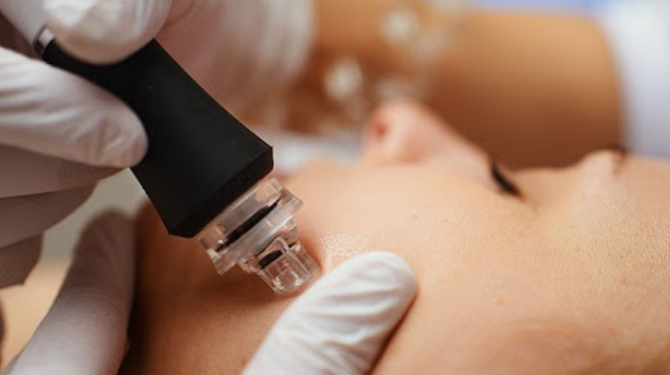
Microcrystalline dermabrasion and microneedle therapy: A Comprehensive Analysis of Professional Skin Regeneration Techniques
In the contemporary field of aesthetic medicine and skin care, microdermabrasion and microneedling therapy, as two revolutionary non-surgical skin regeneration techniques, have become core service items in professional institutions and medical aesthetic clinics. These two technologies achieve skin rejuvenation through completely different mechanisms of action, providing personalized solutions for beauty seekers with different needs. This article will systematically analyze the scientific principles, clinical indications, operation norms and commercial application values of these two technologies, providing comprehensive technical references for beauty institutions, medical clinics and professional distributors.
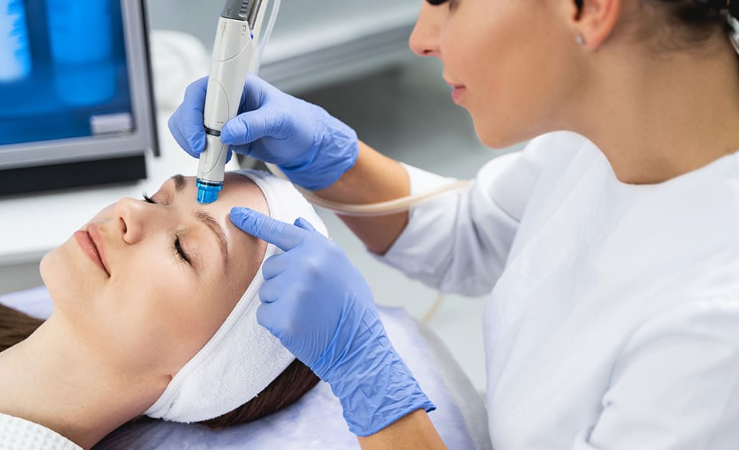
In-depth analysis of technical principles and mechanisms of action
The biomechanical mechanism of microcrystalline dermabrasion
Microdermabrasion (Microdermabrasion) is a epidermal regeneration technique based on the principle of physical exfoliation, and its core technical features are as follows:
Two-phase action system: Modern microcrystalline dermabrasion equipment adopts a "jet-suction" collaborative working mechanism. It uses positive pressure to spray medical-grade alumina crystals or diamond micro-particles (with a particle size of 50-100μm), and simultaneously uses a negative pressure system (with a vacuum degree maintained at 300-500 MMHG) to immediately remove the exfoliation products, achieving clean and efficient keratin renewal.
Cell dynamic effect: The treatment depth is precisely controlled from the stratum corneum to the granular layer (50-80μm). Through mechanical stimulation, the mitotic activity of basal cells can be upregulated, and the epidermal replacement cycle can be shortened from the normal 28 days to 7-10 days.
Hemodynamic changes: The shear force generated by the treatment can increase the capillary blood flow in the dermal papillary layer by 40-60%, significantly improving tissue oxygenation and nutrient delivery.
The trauma repair mechanism of microneedle therapy
Microneedling Therapy is a regenerative medical technique that stimulates dermal reconstruction through controllable micro-trauma.
Mechanical signal transduction: The microchannels formed by the puncture of the needle body (diameter 0.1-0.3mm) (depth 0.25-3mm) can activate the platelet-derived growth factor (PDGF) and transforming growth factor -β (TGF-β) signaling pathways, initiating the trauma repair cascade reaction.
Collagen remodeling process: Within 72 hours after treatment, the proliferation activity of dermal fibroblasts increases by 3 to 5 times. The synthesis of type I collagen reaches its peak at 4 to 6 weeks (increasing by approximately 200%), and the remodeling of the elastin network persists until 12 weeks.
Enhanced transdermal delivery: The formation of microchannels can increase the transdermal absorption rate of local drugs by 10 to 20 times, providing an ideal delivery route for the combined application of growth factors (such as EGF, bFGF) or antioxidants (vitamin C, glutathione).
Clinical indications and treatment plan design
Precise indications for microcrystalline dermabrasion
Table 1: Reference Standards for Clinical treatment regimens of microcrystalline dermabrasion
Clinical indications, therapeutic parameters, course interval, expected therapeutic effect
For epidermal pigmentation, apply a pressure of 0.5-1.0bar. Once a week for 6 times, the color spots of Diamond Stone will be reduced by 60-75%
For open acne, apply a pressure of 1.2-1.5bar. Use the crystal grinding head once every two weeks for four times to improve pore cleanliness by 80%
Photoaging (Glogau grade I-II) at a pressure of 0.8-1.2bar, combined with maintenance treatment once a month in a mixed mode, results in a 50% improvement in texture and an increase in gloss
Postoperative keratin management: 0.3-0.5bar pressure. The gentle mode starts to promote drug penetration by 30% two weeks after the operation
The hierarchical treatment strategy of microneedle therapy
Table 2: Guide to Microneedle Depth Selection Based on Skin Issues
The recommended depth (mm) of the target tissue problem is during the repair period with adjuvant preparations
Epidermal reconstruction: 0.2-0.5 hyaluronic acid for 12-24 hours
Remodeling the superficial dermis with 0.5-1.5 polypeptide solution for 2-3 days
Scar tissue reconstruction: 1.5-2.5 vitamin C for 5-7 days
The subcutaneous fibrous bands were released at 2.5-3.0 PRP for 7-10 days
Note: The treatment frequency should be spaced 4 to 6 weeks apart, and a complete course of treatment usually requires 3 to 6 sessions
Technical comparison and Risk management
Core technology differences
Organizational role level:
Microcrystalline dermabrasion: Confined to the epidermis (with a thickness of approximately 0.1-0.2mm)
Microneedle therapy: Can reach the reticular dermis (up to 3mm)
Cellular response:
Microcrystalline dermabrasion: Mainly induces the proliferation and differentiation of keratinocytes
Microneedle therapy: Simultaneously activates multiple responses of keratinocytes, fibroblasts and vascular endothelial cells
Clinical effective time:
Microcrystalline dermabrasion: Instant optical effect (lasting 1-2 weeks)
Microneedle therapy: Delayed biological effects (onset in 2 weeks, peak in 3 months)
Complication prevention system
Risk control of microcrystalline dermabrasion
Contraindications: Active herpes, progressive rosacea
Parameter warning: The vacuum pressure does not exceed 2.0bar
Postoperative management: It is recommended to avoid using products containing ethanol within 24 hours
Safety Specifications for Microneedle therapy
Absolute contraindications: Collagen vascular diseases, immunosuppressed states
Deep monitoring: No more than 0.5mm for bony areas such as the forehead
Sterility requirements: Disposable needles must be used and disinfection should follow surgical standards
Business operation and value-added service design
Customer stratified service model
Rapid Care Series (Microcrystalline dermabrasion Dominant) :
Lunch Break Beauty Package (30 minutes)
Pre-marital skin preparation plan
Weekly member maintenance course
Medical Aesthetics Series (dominated by microneedle therapy) :
Acne scar repair treatment course
Anti-aging and rejuvenation project
Postpartum stretch mark improvement plan
Suggestions for Equipment selection
High-end equipment configuration plan:
Microcrystalline dermabrasion system: Select professional models with intelligent pressure sensing and multi-mode grinding heads (such as GLM MD-500)
Microneedle equipment: It is recommended to use an electric microneedle (with a frequency adjustable from 100 to 600Hz) in combination with a depth locking function (such as GLM MN-700)
Combined treatment platform: Consider integrating a composite system of microcrystalline introduction and radiofrequency microneedling
Benefit analysis model
Economic benefit of single treatment:
Microcrystalline skin smoothing: Direct cost $8-12, charge $80-150 (10 times premium)
Microneedle therapy: Direct cost $15-25, charge $200-400 (15 times premium)
Customer lifetime value
Maintenance type customers (microcrystalline) : Average annual consumption of $800- $1,200
Therapeutic customers (microneedle) : Average annual consumption of $1,500 - $3,000
Technological development trend
Intelligent upgrade: AI skin analysis system and automatic parameter matching technology
Combination of biological agents: Application of microneedles + exosomes/stem cell conditioned medium
Home professional equipment: FDA Class II certified home microneedle devices (depth limit 0.3mm)
Ecological service chain: A complete solution from equipment sales to consumables supply and technical training
Conclusion
Microcrystalline dermabrasion and microneedle therapy form a perfect technical complementarity in the field of skin regeneration. Professional institutions should establish a scientific indication assessment system based on the degree of histological changes, skin repair ability and expected goals of the clients. In the next five years, with the development of precision dermatology, these two technologies will be deeply integrated with genetic testing and biomarker monitoring, promoting cosmetic dermatology to move towards a new era of individualization and quantification. It is recommended that industry practitioners continuously pay attention to the technological iteration of equipment, and at the same time strengthen the systematic study of skin physiology and wound healing theory to provide truly medical-grade skin management services.
GLM is a specialized beauty instrument factory that produces instruments for a variety of functions, including weight loss devices. We have vacuum negative press, radio frequency fat blasting equipment, frozen fat dissolving machine and EMS body shaping machine. GLM is a 14 year old supplier of beauty instruments with guaranteed quality.https://gdglmbeauty.com/